Archive
Ephemeris: 05/28/2025 – Our weekly look at the whereabouts of the naked-eye planets
This is Ephemeris for Wednesday, May 28th. Today the Sun will be up for 15 hours and 15 minutes, setting at 9:18, and it will rise tomorrow at 6:01. The Moon, 2 days past new, will set at 11:50 this evening.
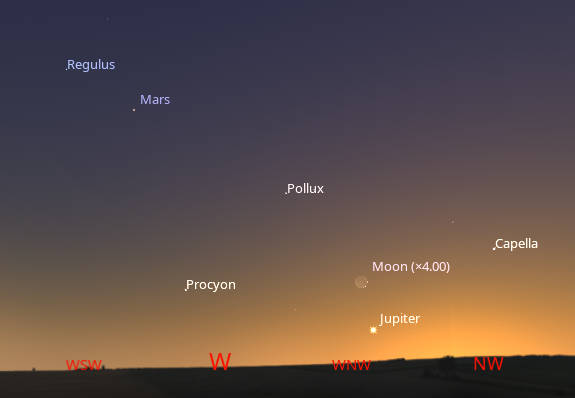
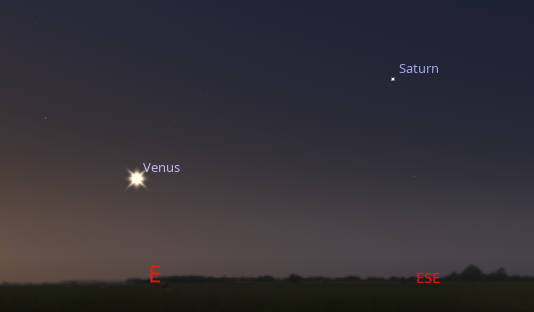
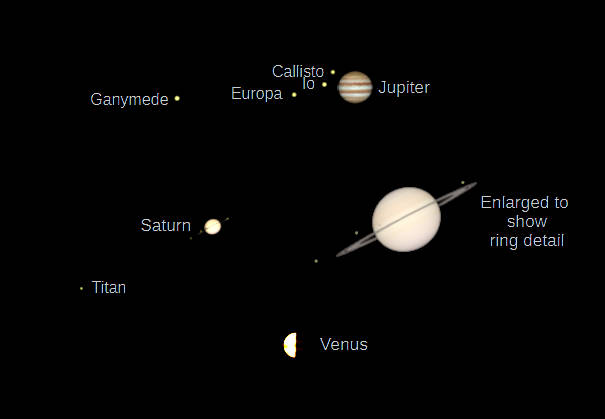
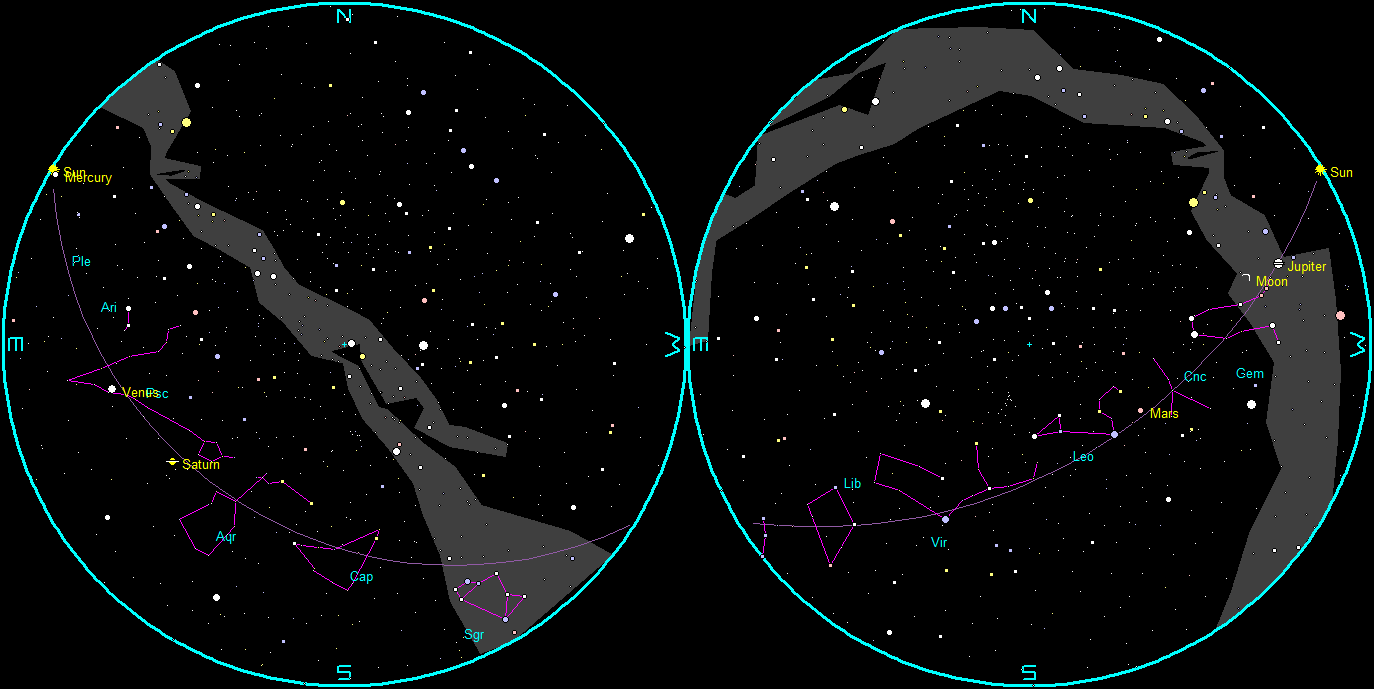
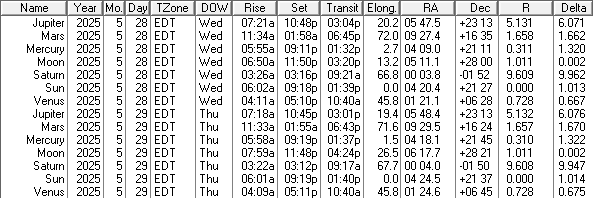
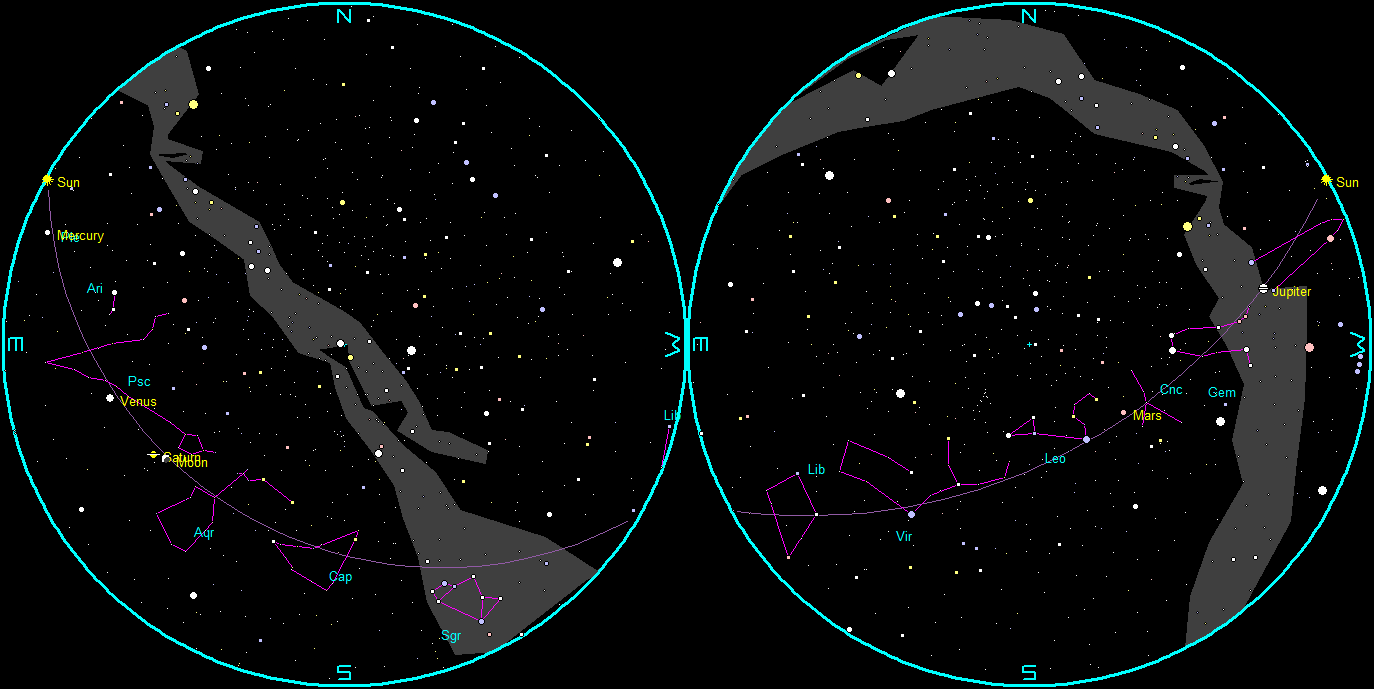
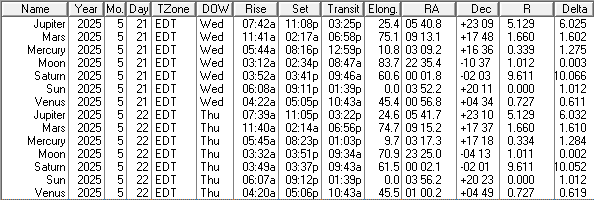
Let’s take our weekly look at the whereabouts of the naked-eye planets. At 10 PM this evening two naked eye planets will be out. Jupiter, is now low in the west-northwestern sky Underneath the waxing crescent Moon. The fading Mars, with its distinctive reddish hue, is in the west-southwest, at that time. It’s slowly approaching the bright star Regulus in Leo the lion, which it will pass on June 16th. By 5 AM Venus will be seen very low in the east, as the Morning Star, with Saturn to the right and a bit above it. Venus will require a low eastern horizon then. But it will rise and be visible until close to 5:45. For those with telescopes, Saturn’s rings are now opening up again, and will for the next 7 years.
The astronomical event times given in this blog are for the Traverse City/Interlochen area of Michigan (Lat 44.7° N, Long 85.7° W; EDT, UT – 4 hours) unless stated otherwise. Times will be different for other locations.
Addendum
Ephemeris: 05/27/2025 – The many faces of the Big Dipper
This is Ephemeris for Tuesday, May 27th. Today the Sun will be up for 15 hours and 13 minutes, setting at 9:17, and it will rise tomorrow at 6:02. The Moon, 1 day past new, will set at 10:44 this evening.
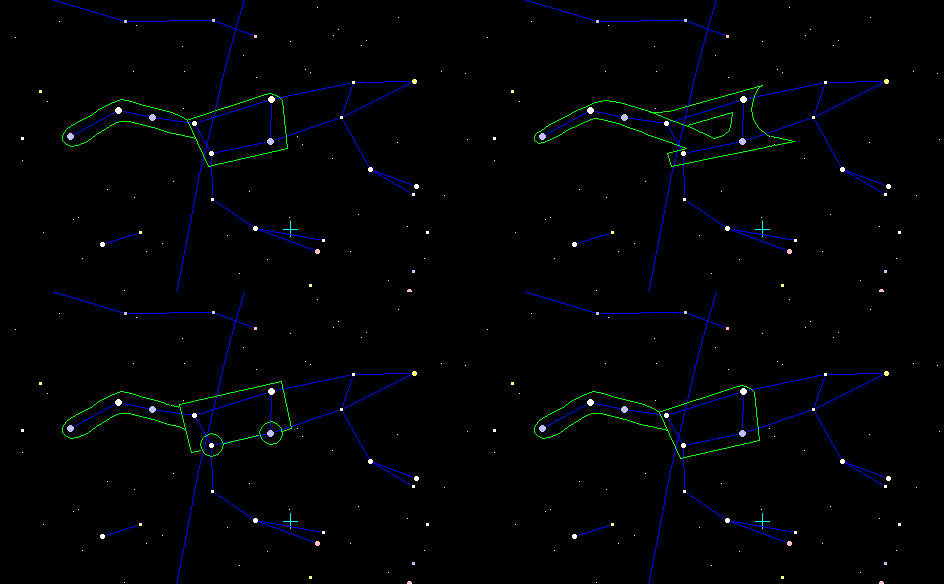
The Big Dipper is overhead, actually north of overhead this evening when it gets dark for us in Michigan, it’s seven stars shining brightly. The Big Dipper is not an actual constellation, recognized internationally. It’s part, the hind part, of Ursa Major, the great bear. The Big Dipper is an asterism or informal constellation. It is a distinctly North American constellation. For fugitive slaves, fleeing the southern states in the days before the Civil War, the Drinking Gourd, as they called it, showed the direction north to freedom. In England the dipper stars become the Plough (plow), or Charles’ Wain (Charlemagne’s Wagon). In France, known for culinary delights it is the saucepan, or the cleaver. Many cultures saw what was familiar to them in these seven bright stars.
The astronomical event times given in this blog are for the Traverse City/Interlochen area of Michigan (Lat 44.7° N, Long 85.7° W; EDT, UT – 4 hours) unless stated otherwise. Times will be different for other locations.
Addendum
Ephemeris: 05/26/2025 – About globular star clusters
This is Ephemeris for Memorial Day, Monday, May 26th. Today the Sun will be up for 15 hours and 12 minutes, setting at 9:16, and it will rise tomorrow at 6:03. The Moon is new today, and won’t be visible.
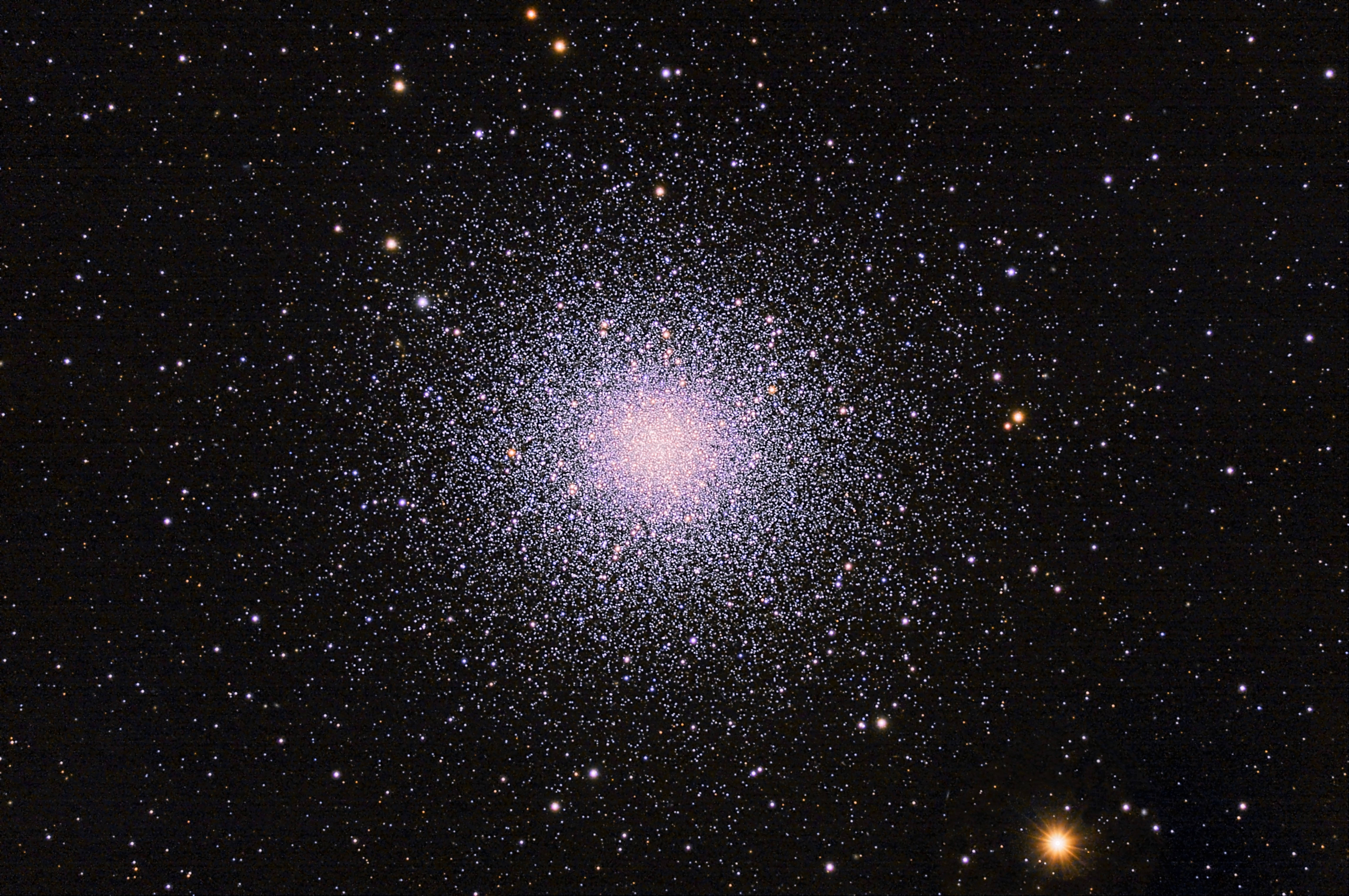
The constellation Hercules, out in the evening sky now, contains the brightest globular star cluster in the northern sky. A globular star cluster, about 25 thousand light years away. It’s an ancient assemblage of hundreds of thousands to millions of stars in a big ball. About 150 of these star clusters, that we know of, exist in the Milky Way. They form a spherical distribution around the Milky Way concentrated towards the center. The ages of these clusters runs to over 10 billion years. It is thought that they formed first out of the gas of the Milky Way and so did not participate in the collapse of the gas into the disk of the Milky Way we know today from which later stars were formed. We see them in other galaxies.
The astronomical event times given in this blog are for the Traverse City/Interlochen area of Michigan (Lat 44.7° N, Long 85.7° W; EDT, UT – 4 hours) unless stated otherwise. Times will be different for other locations.
Addendum
Ephemeris: 05/23/2025 – M13, The Great Hercules Star Cluster
This is Ephemeris for Friday, May 23rd. Today the Sun will be up for 15 hours and 6 minutes, setting at 9:13, and it will rise tomorrow at 6:05. The Moon, halfway from last quarter to new, will rise at 4:13 tomorrow morning.
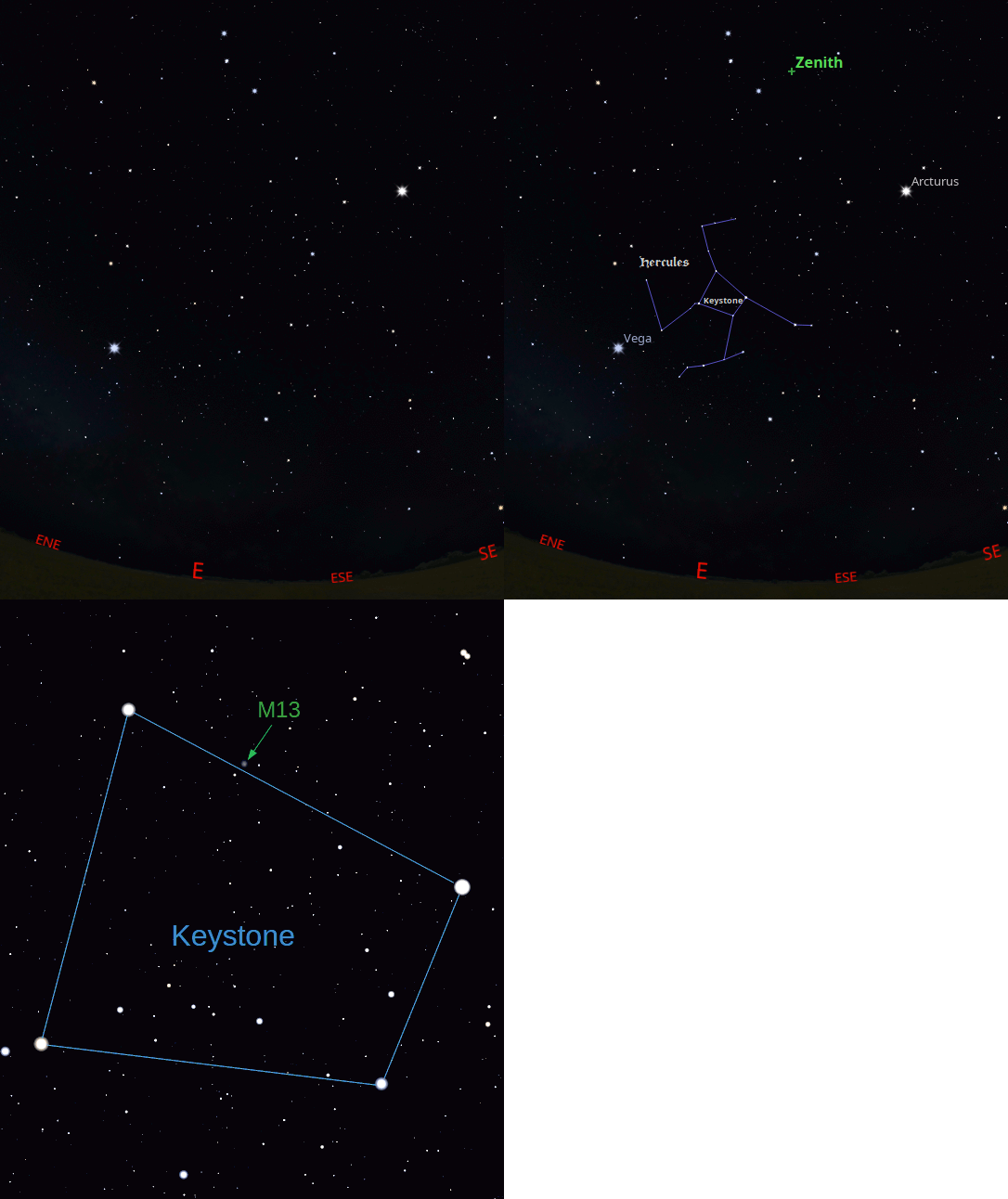
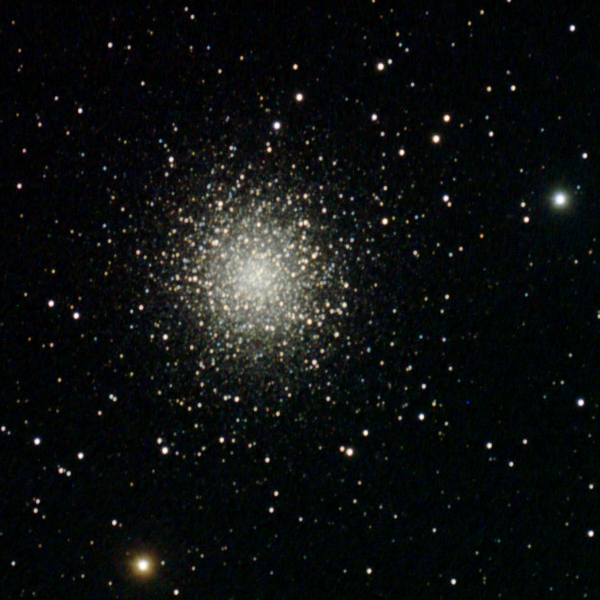
The constellation Hercules the hero can be found between the bright stars Vega which is fairly low in the east northeast and Arcturus high in the southeast. It’s about 1/3 of the way from Vega to Arcturus. His most distinctive feature is the keystone a box of four stars wider at the top than the bottom. Along the western edge of the keystone can be seen, sometimes with the naked eye, but better with binoculars as a small spot about 1/3 of the way down from the top star to the bottom star. It looks like a fuzzy spot. In telescopes smaller than 8 inch diameter, at least with my eyes, it stays fuzzy, but in larger telescopes it begins to crystallize out into a myriad of stars. It is the Great Hercules Globular Star Cluster. Number 13 on late 18th century astronomer Charles Messier’s catalog of fuzzy objects that weren’t the comets he was looking for. We know it as Messier 13, or M13.
The astronomical event times given in this blog are for the Traverse City/Interlochen area of Michigan (Lat 44.7° N, Long 85.7° W; EDT, UT – 4 hours) unless stated otherwise. Times will be different for other locations.
Addendum
Ephemeris: 05/22/2025 – Finding Hercules among the spring stars
This is Bob Moler with Ephemeris for Thursday, May 22nd. Today the Sun will be up for 15 hours and 5 minutes, setting at 9:12, and it will rise tomorrow at 6:06. The Moon, 2 days past last quarter, will rise at 3:51 tomorrow morning.
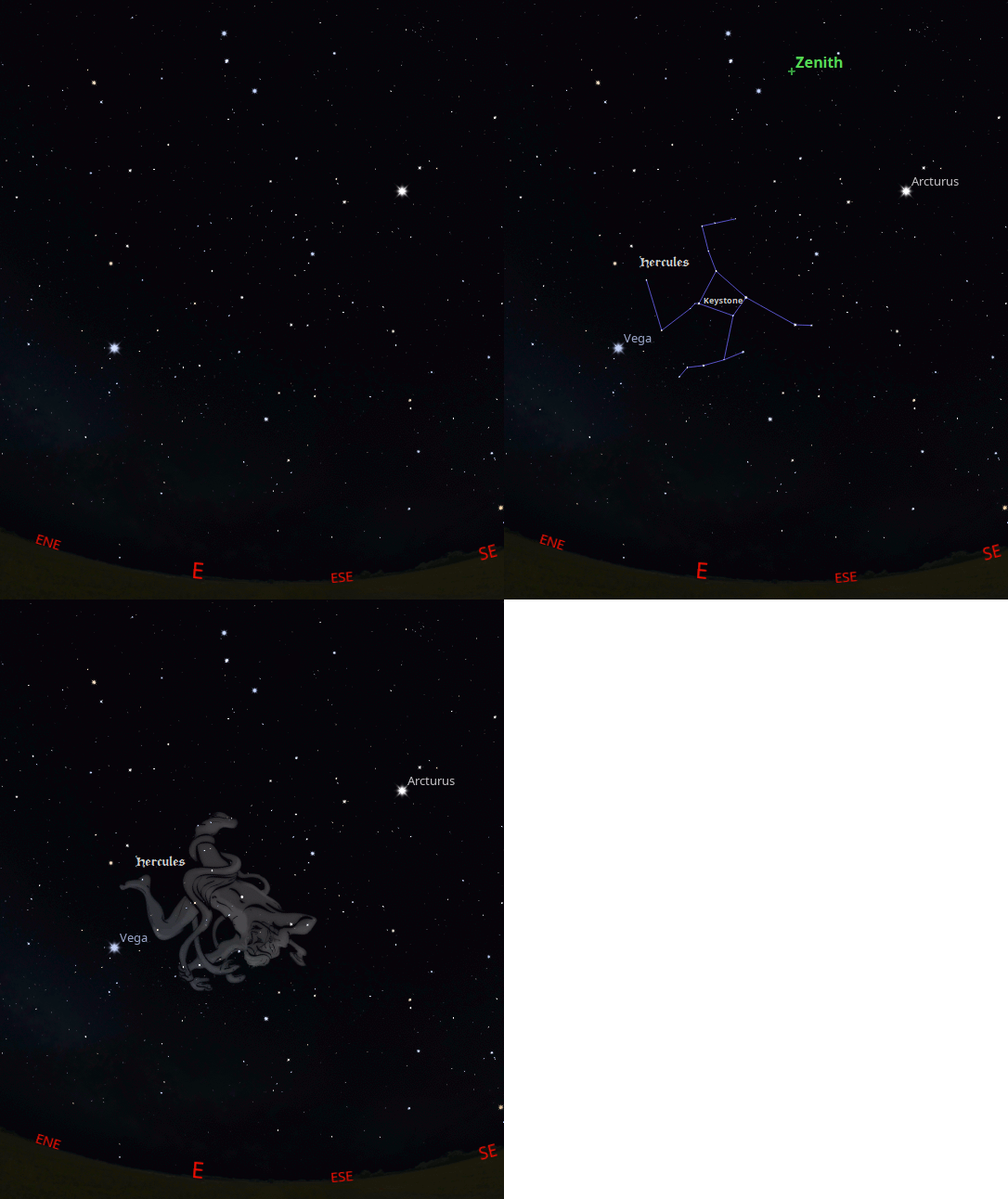
In the eastern sky at 11 PM about a third of the way along the line from the bright star Vega in the east northeast and Arcturus high in the southeast is the constellation of Hercules the hero. It’s kind of hard to spot, although it’s one distinctive feature is the box of four stars called the Keystone of Hercules which means it’s wider at the top than at the bottom. That is his body. He’s upside down in the sky according to how they draw the picture of Hercules. Most of his stars are reasonably dim. This is the great hero of Greek myth. While in the winter sky the bright and splashy constellation of Orion the hunter, was kind of a hard luck hero, with no real accomplishments. Hercules has an astronomical jewel that I’ll talk about tomorrow.
The astronomical event times given in this blog are for the Traverse City/Interlochen area of Michigan (Lat 44.7° N, Long 85.7° W; EDT, UT – 4 hours) unless stated otherwise. Times will be different for other locations.
Addendum
Ephemeris: 05/21/2025 – Checking where the naked-eye planets are
This is Bob Moler with Ephemeris for Wednesday, May 21st. Today the Sun will be up for 15 hours and 3 minutes, setting at 9:11, and it will rise tomorrow at 6:07. The Moon, 1 day past last quarter, will rise at 3:32 tomorrow morning.
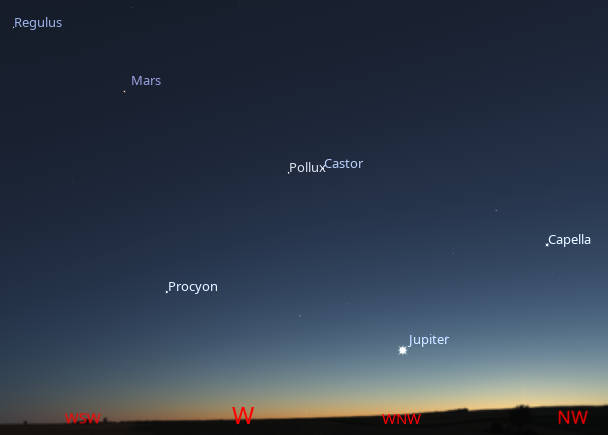
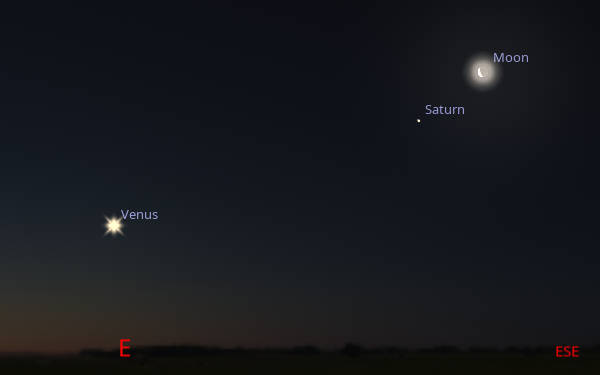
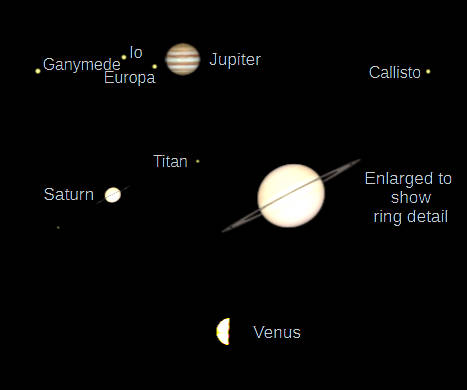
Let’s take our weekly look at the whereabouts of the naked-eye planets. At 10 PM this evening two naked eye planets will be out. Jupiter, is now low in the west-northwestern sky. The rapidly fading Mars, with its distinctive reddish hue, is in the west-southwest, at that time. Once it’s darker binoculars can be used to spot the Beehive Star Cluster to its lower right. By 5 AM Venus will be seen very low in the east, as the Morning Star, with Saturn and the waning crescent Moon in an upward line to the right and a bit above it. Venus will require a low eastern horizon then. But it will rise and be visible until close to 5:45 or later. For those with telescopes, Saturn’s rings are now opening up again, and will for the next 7 years.
The astronomical event times given in this blog are for the Traverse City/Interlochen area of Michigan (Lat 44.7° N, Long 85.7° W; EDT, UT – 4 hours) unless stated otherwise. Times will be different for other locations.
Addendum
Ephemeris: 05/20/2025 – Corona Borealis, Ariadne’s Crown
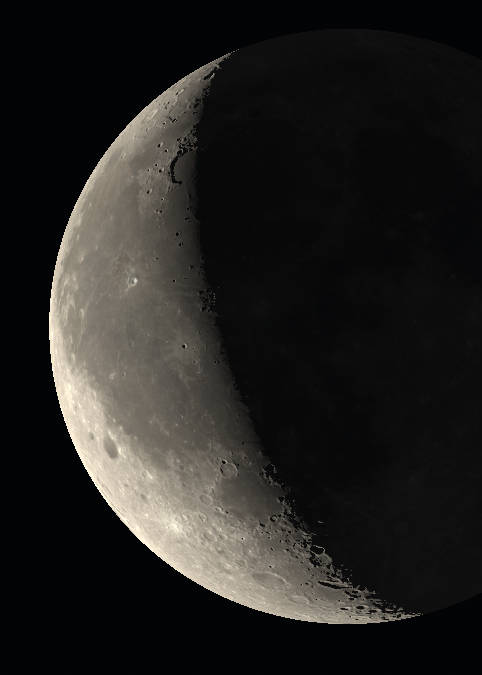
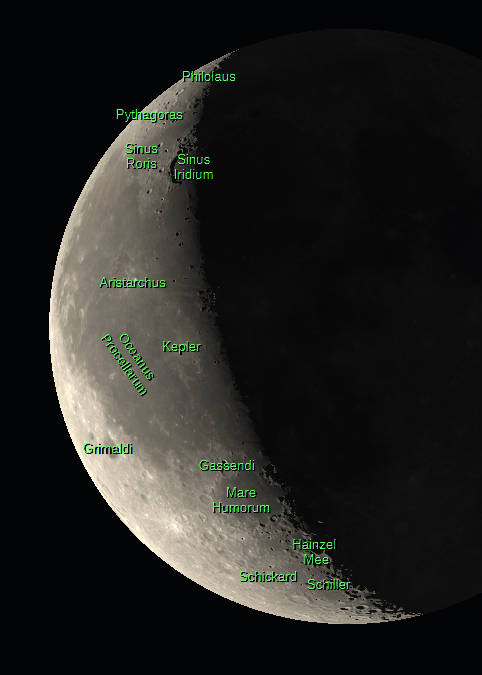
This is Ephemeris for Tuesday, May 20th. Today the Sun will be up for 15 hours and 1 minute, setting at 9:10, and it will rise tomorrow at 6:08. The Moon, at last quarter today, will rise at 3:12 tomorrow morning.
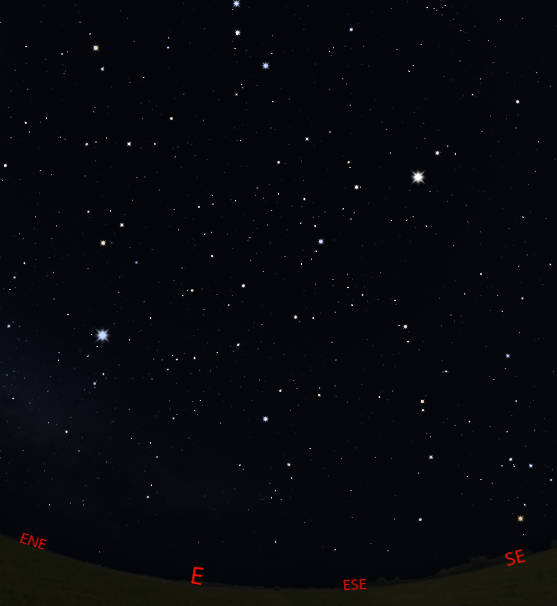
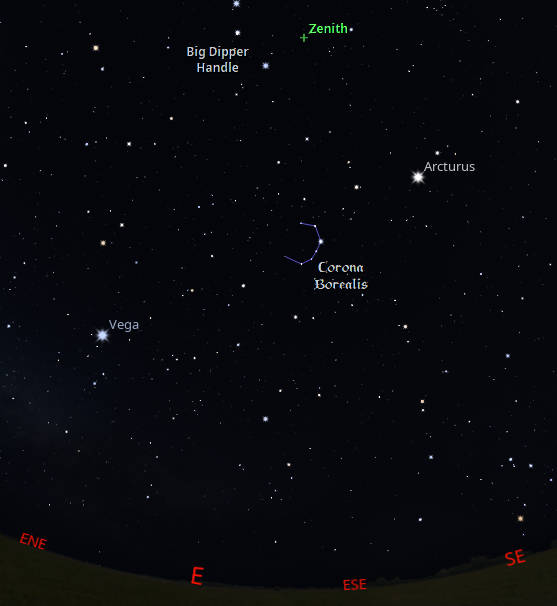
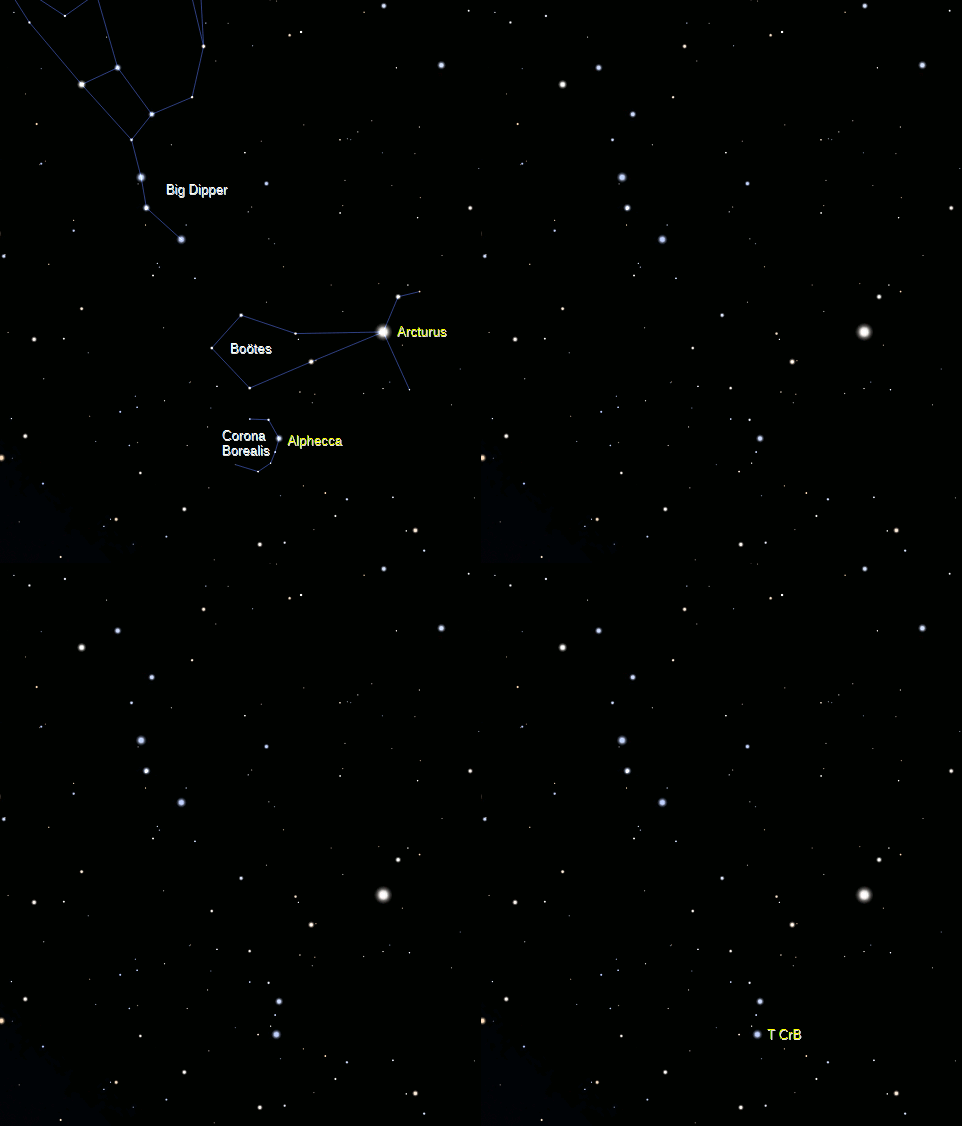
There are two bright stars in the eastern part of the sky. High in the southeast at 11 PM is Arcturus, and in the east northeast, lower down is the star Vega. A third of the way between Arcturus and Vega is a small arc of stars called Corona Borealis, the northern crown. It is a small constellation. The brightest star in it is called Alphecca. According to Greek mythology it is the crown given to Princess Ariadne, daughter of King Minos of Crete. Of interest in the next year or so is a possibility of a nova or bright star appearing just south of that arc of stars for about a week. It is a recurrent nova, which explodes about every 80 years. The last time was in 1946, so the next time would be within the next year or so. And astronomers are breathlessly waiting for that to happen.
The astronomical event times given in this blog are for the Traverse City/Interlochen area of Michigan (Lat 44.7° N, Long 85.7° W; EDT, UT – 4 hours) unless stated otherwise. Times will be different for other locations.
Addendum
Ephemeris: 05/19/2025 – Finding Libra the scales
This is Ephemeris for Monday, May 19th. Today the Sun will be up for 14 hours and 59 minutes, setting at 9:09, and it will rise tomorrow at 6:09. The Moon, 1 day before last quarter, will rise at 2:51 tomorrow morning.
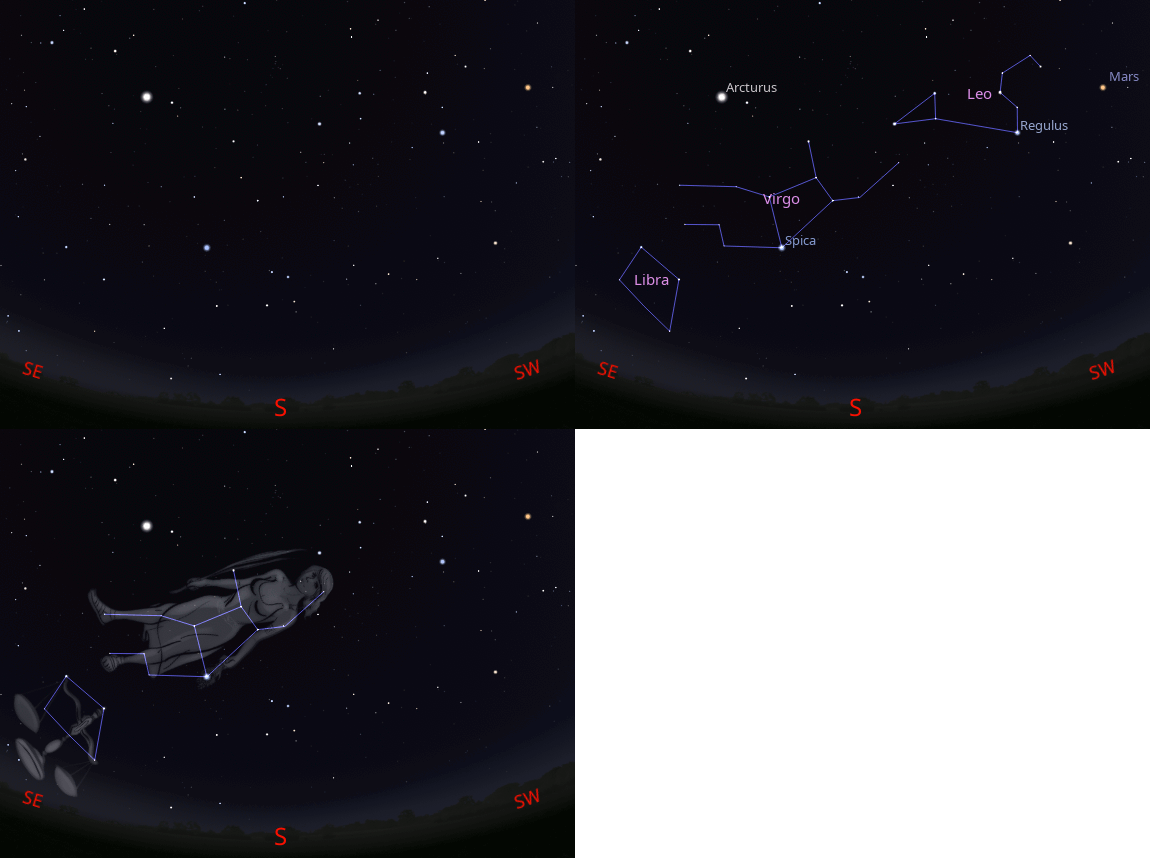
Libra the scales or balance is a dim constellation which is seen low in the southeast in the evening now. It is one of the constellations of the Zodiac. The term Zodiac means circle of animals, so Libra doesn’t exactly fit. The ancient Babylonians recognized it. Back then it may have represented the equality of day and night because the Sun would have been at the autumnal equinox in Libra at that time. The early Greeks, and possibly the Arabs, did not see Libra as being separate from the constellation of Scorpius the scorpion, which is rising to its lower left. Its two brightest stars have Arabic names meaning north claw and south claw. Scorpions have claws, and last I’ve checked, balances do not.
The astronomical event times given in this blog are for the Traverse City/Interlochen area of Michigan (Lat 44.7° N, Long 85.7° W; EDT, UT – 4 hours) unless stated otherwise. Times will be different for other locations.
Addendum
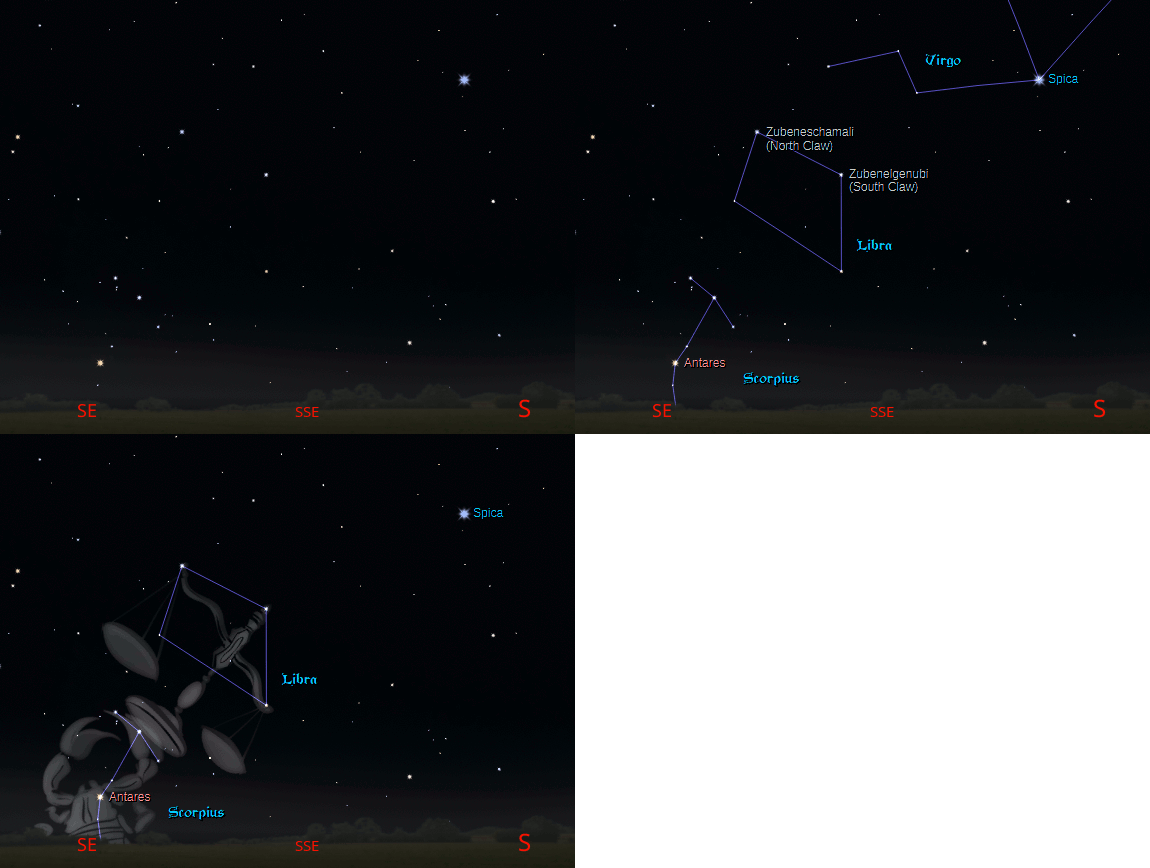
A bit of trivia: At 14 letters Zubeneschamali is the longest star name.
In a previous post I noted that Libra was associated with Virgo which also represents Astraea the goddess of Justice, with Libra, being her Scales of Justice.
Ephemeris: 05/16/2025 – Two bright stars, alike but different
This is Bob Moler with Ephemeris for Friday, May 16th. Today the Sun will be up for 14 hours and 52 minutes, setting at 9:05, and it will rise tomorrow at 6:12. The Moon, halfway from full to last quarter, will rise at 1:21 tomorrow morning.
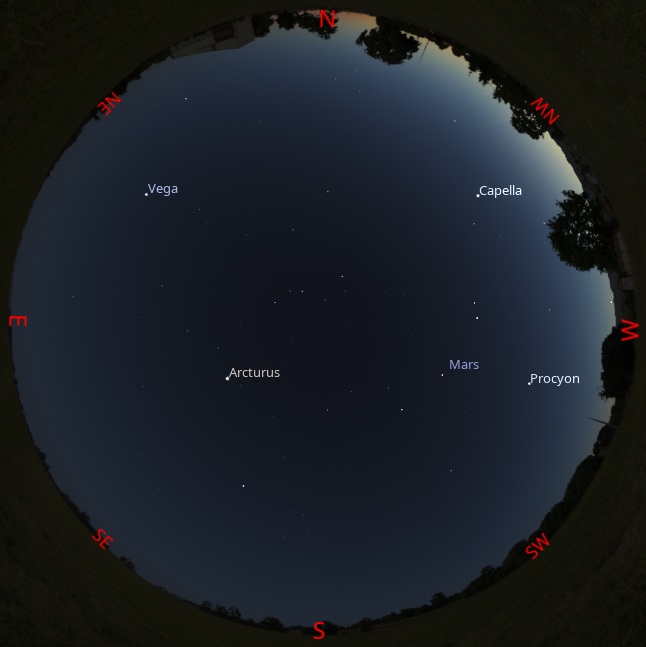
Two stars which I’ve been known to confuse in the twilit sky in late spring and late summer are Arcturus and Vega. These stars have about the same brightness and in some lists of stars swap places between the 4th and 5th brightest stars in the sky. Arcturus is an orangish star, now high in the southern sky in the evening, while Vega is a pure white star which to my eyes tends towards a little tinge of blue. Vega is high in the south, actually almost overhead, in the late summer. Now, in mid to late Spring Vega is rather low in the northeastern sky. Arcturus is a cool star on the outside which has depleted the hydrogen in its core and is a red giant star, while the younger and more massive Vega, still turning hydrogen into helium.
The astronomical event times given in this blog are for the Traverse City/Interlochen area of Michigan (Lat 44.7° N, Long 85.7° W; EDT, UT – 4 hours) unless stated otherwise. Times will be different for other locations.
Addendum
Ephemeris: 05/15/2025 – Finding Virgo the virgin in the spring sky
This is Ephemeris for Thursday, May 15th. Today the Sun will be up for 14 hours and 50 minutes, setting at 9:04, and it will rise tomorrow at 6:13. The Moon, 3 days past full, will rise at 12:36 tomorrow morning.
Located below the bright star Arcturus, high in the southeast, and below and left of Leo the lion, which is high in the south, lies the constellation of Virgo the virgin with its bright star Spica. Other than Spica, Virgo contains only dim stars. It’s quite large, extending to the upper right, and to the left of Spica. Virgo represents several goddesses. The Greek harvest goddess Persephone, whose Roman name is Ceres, which is the root of our word cereal, is one. The bright star Spica is the ear of wheat that she’s holding in her hand. Some see her standing at an odd angle, I see her reclining. Virgo also represents Astraea the goddess of Justice, with her scales, the constellation Libra, at her feet low in the southeast.
The astronomical event times given in this blog are for the Traverse City/Interlochen area of Michigan (Lat 44.7° N, Long 85.7° W; EDT, UT – 4 hours) unless stated otherwise. Times will be different for other locations.
Addendum