Archive
05/26/2021 – Ephemeris – Let’s search for the naked-eye planets for this week
There is a lunar eclipse this morning. See https://bobmoler.wordpress.com/2021/05/25/05-25-2021-ephemeris-viewing-the-lunar-eclipse-tomorrow-morning/
This is Ephemeris for Wednesday, May 26th. Today the Sun will be up for 15 hours and 12 minutes, setting at 9:16, and it will rise tomorrow at 6:03. The Moon, at full today, will rise at 9:57 this evening.
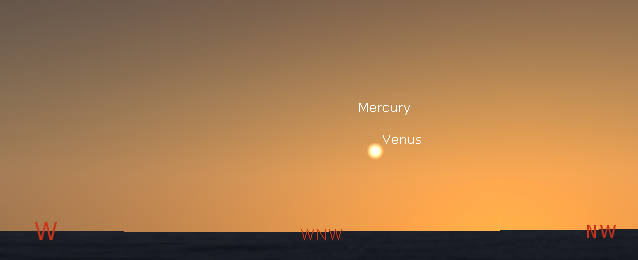
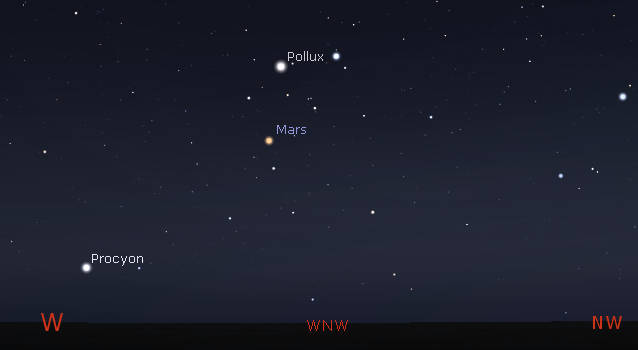
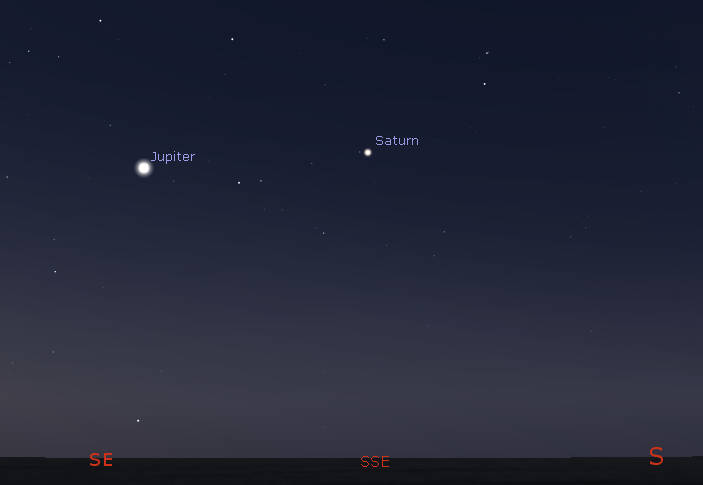
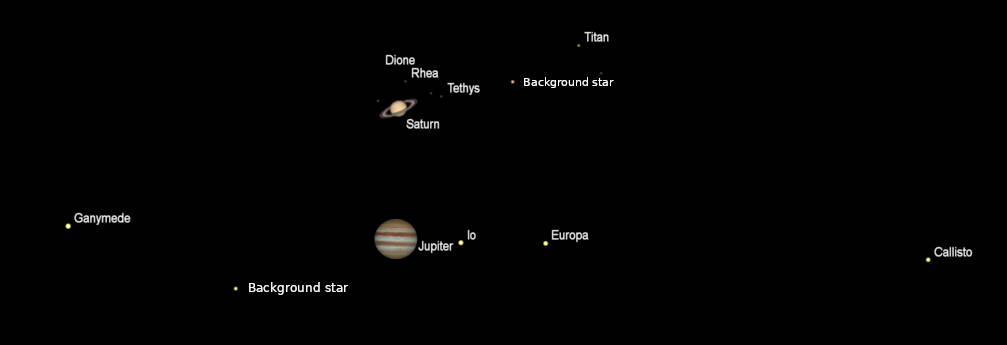
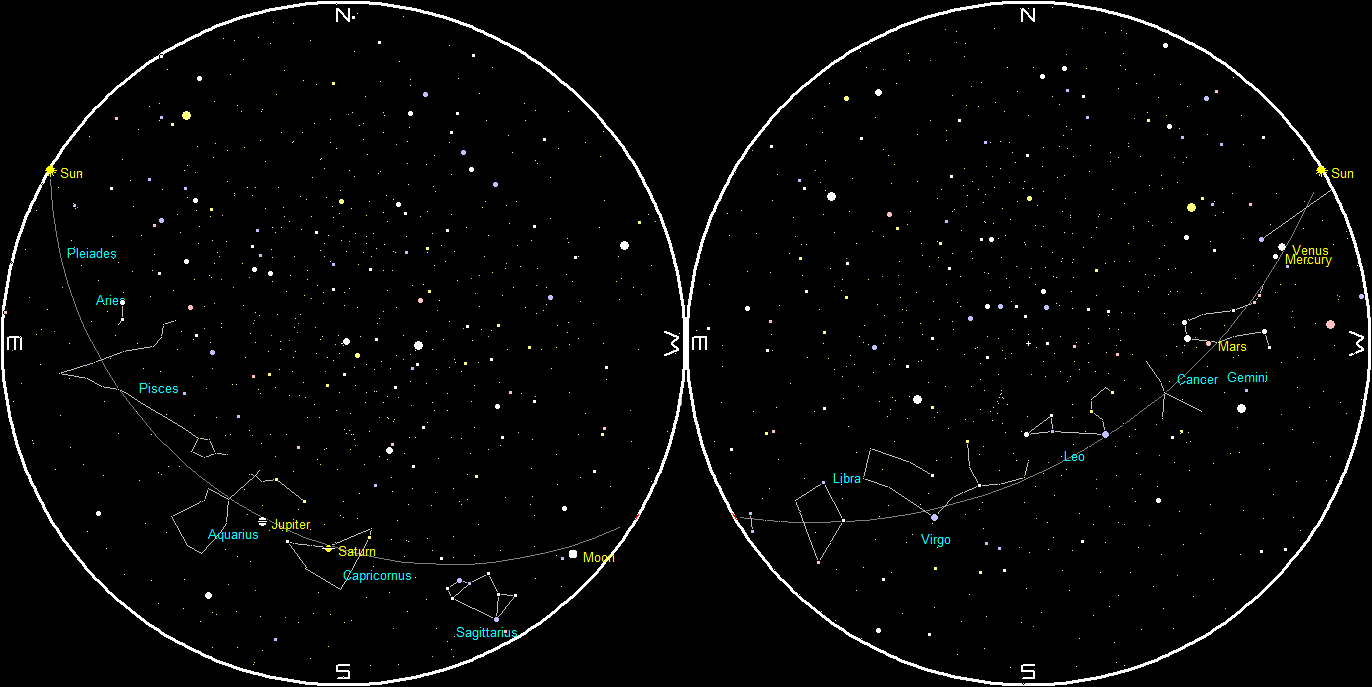
Let’s search for the naked-eye planets for this week. Venus might be spotted low in the west-northwest twilight by 10 pm. Mercury will be a bit above and left of Venus, but is now too dim to spot. Venus will set at 10:36 pm. Mars can be found in the west at 10:30 tonight, in the constellation of Gemini the twins. Tonight it’s on the left side of the constellation, below Gemini’s brightest star, Pollux. Mars will set at 12:37 am. Jupiter and Saturn, are in the morning sky. Saturn will rise at 1:36 am. It’s seen with the stars of Capricornus. Brighter Jupiter, now within the boundaries of Aquarius, will rise at 2:21 am. By 5 am they will be in the southeast in the morning twilight.
The astronomical event times given are for the Traverse City/Interlochen area of Michigan. They may be different for your location.
Addendum
05/25/2021 – Ephemeris – Viewing the lunar eclipse tomorrow morning
This post is for the appearance of the May 26th lunar eclipse in Michigan.
This is Ephemeris for Tuesday, May 25th. Today the Sun will be up for 15 hours and 10 minutes, setting at 9:15, and it will rise tomorrow at 6:04. The Moon, 1 day before full, will set at 6:09 tomorrow morning.
If we are really lucky tomorrow morning, and it is clear all the way down to the southwestern horizon at dawn we will witness the start of an eclipse of the Moon near sunrise and moonset. The eclipse starts at 4:48 am, but nothing unusual will be visible as the Moon starts to enter Earth’s outer, penumbral shadow. Perhaps by 5:15 the left edge of the Moon might appear dimmer than the right side. The Moon will be getting deeper in that shadow for the next half hour until at 5:45 it begins to enter the Earth’s inner shadow, the umbra. The only light in the umbra is that bent into it by the simultaneous sunrises and sunsets around the Earth. For the next 20 to 25 minutes the shadow will increase until the Sun rises and shortly after that the Moon sets around 6:09.
The astronomical event times given are for the Traverse City/Interlochen area of Michigan. They may be different for your location.
Addendum
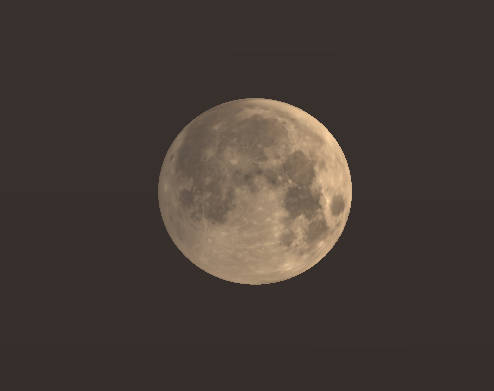
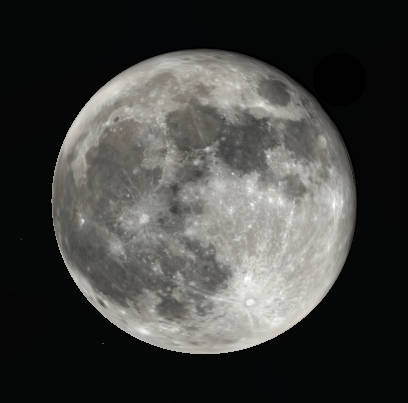
Simulated image of the Moon deep in the penumbra of the lunar eclipse of May 26, 2021 at 5:40 am. Notice that the left side of the Moon is darker than the right side. I find that the effect is more noticeable when wearing sunglasses to cut down the Moon’s bright glare. Created using Stellarium.
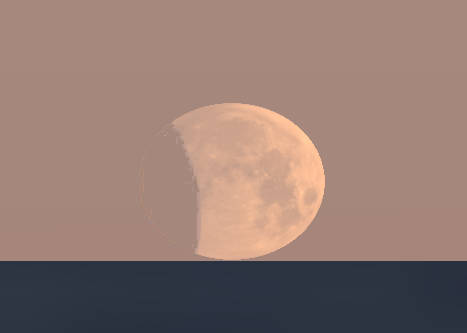
Simulated view of the partially eclipsed Moon of May 26, 2021 setting on a flat horizon. Created using Stellarium and touched up by using GIMP.
| Time | Event |
| 4:47 am | Nautical twilight starts |
| 4:48 am | The Moon enters penumbra (Nothing to see, the dimming on the left side is imperceptible) |
| 5:15 am | The penumbral shadow should become visible at the left edge of the Moon by this time |
| 5:45 am | The Moon enters the umbra (The partial part of the eclipse begins) |
| 6:04 am | Sunrise for Traverse City |
| 6:09 am | Moon sets for Traverse City |
The sunrise and moon set times may vary by more than a few minutes depending on your location.
05/24/2021 – Ephemeris – Get ready for Wednesday morning’s lunar eclipse
This is Bob Moler with Ephemeris for Monday, May 24th. Today the Sun will be up for 15 hours and 8 minutes, setting at 9:14, and it will rise tomorrow at 6:04. The Moon, 2 days before full, will set at 5:33 tomorrow morning.
If we are really lucky Wednesday morning, and it is clear all the way down to the southwestern horizon at dawn, we will witness the start of an eclipse of the Moon as the Sun rises and the Moon sets. The first inkling that something strange is happening to the Moon will come around 5:15 am or so. The Moon will be deep in the Earth’s outer, partial, shadow called the penumbra and the left side of the Moon should appear darker than the rest of it. The brightening of the twilight should enhance the effect. The partial phase of the eclipse will start at 5:45, where the left edge of the Moon will actually begin to disappear into the Earth’s inner shadow, the umbra. Within 20 to 25minutes later the Sun will rise and shortly after the Moon will set.
The astronomical event times given are for the Traverse City/Interlochen area of Michigan. They may be different for your location.
Addendum
Simulated image of the Moon deep in the penumbra of the lunar eclipse of May 26, 2021 at 5:40 am. Notice that the left side of the Moon is darker than the right side. I find that the effect is more noticeable when wearing sunglasses to cut down the Moon’s bright glare. Created using Stellarium.
Simulated view of the partially eclipsed Moon of May 26, 2021 setting on a flat horizon. Created using Stellarium and touched up by using GIMP.
| Time | Event |
| 4:47 am | Nautical twilight starts |
| 4:48 am | The Moon enters penumbra (Nothing to see, the dimming on the left side is imperceptible) |
| 5:15 am | The penumbral shadow should become visible at the left edge of the Moon by this time |
| 5:45 am | The Moon enters the umbra (The partial part of the eclipse begins) |
| 6:04 am | Sunrise for Traverse City |
| 6:09 am | Moon sets for Traverse City |
The sunrise and moon set times may vary by more than a few minutes depending on your location.
05/18/2021 – Ephemeris – Eclipses visible in Northern Michigan this year
This is Ephemeris for Tuesday, May 18th. Today the Sun will be up for 14 hours and 56 minutes, setting at 9:08, and it will rise tomorrow at 6:10. The Moon, 1 day before first quarter, will set at 2:57 tomorrow morning.
This year we will see in part or in full three eclipses from our Northern Michigan location. The first will be the start of a total lunar eclipse next week Wednesday, May 26th. It will start just before sunrise, which for a full moon is around moonset. Our next eclipse will be a solar eclipse that starts, for us, before sunrise on June 10th. In fact, most of the eclipse will occur before sunrise for us in Northern Michigan. The farther north and east of us the more of the eclipse you’ll see. I’ll have more information on the lunar in the next week of programs. And the solar eclipse as we approach that date. We have a final lunar eclipse this year. That will occur in the wee morning hours of November 19th, a partial, but almost total eclipse.
The astronomical event times given are for the Traverse City/Interlochen area of Michigan. They may be different for your location.
Addendum
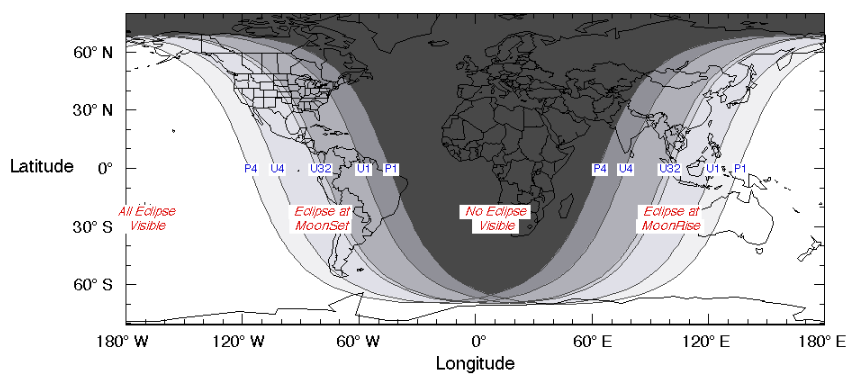
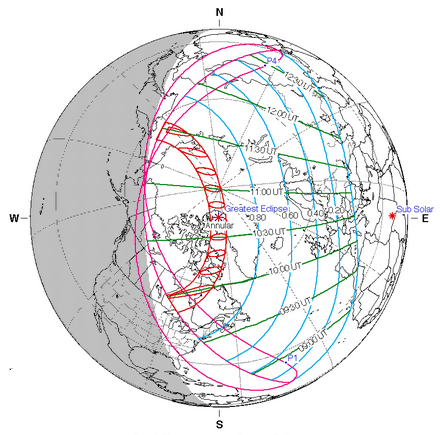
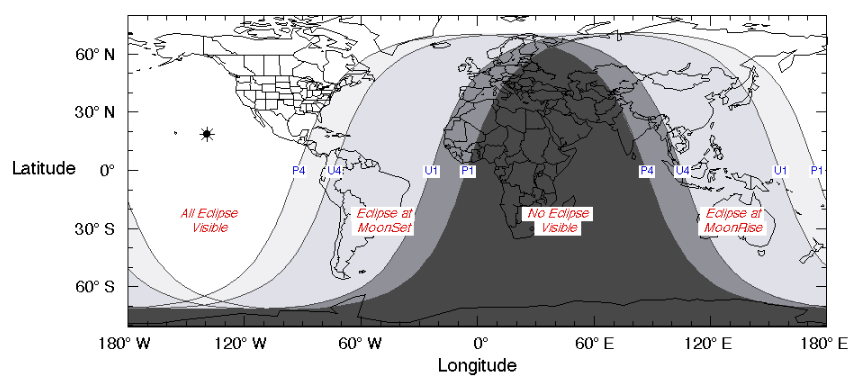
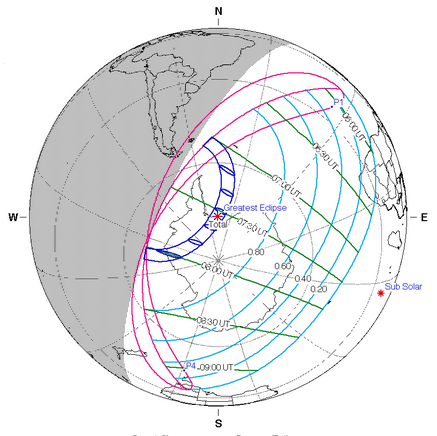
The four eclipses that occur in 2021
We in Northern Michigan we’ll see part of the first two and all of the third.
May 26, 2021 Total Lunar Eclipse
June 10, 2021 Annular Solar Eclipse
November 19, 2021 Partial Lunar Eclipse
December 4, 2021 Total Solar Eclipse
05/17/2021 – Ephemeris – The Moon tonight
This is Ephemeris for Monday, May 17th. Today the Sun will be up for 14 hours and 54 minutes, setting at 9:06, and it will rise tomorrow at 6:11. The Moon, 2 days before first quarter, will set at 2:25 tomorrow morning.
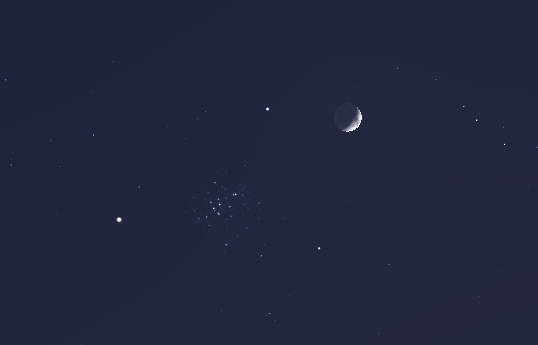
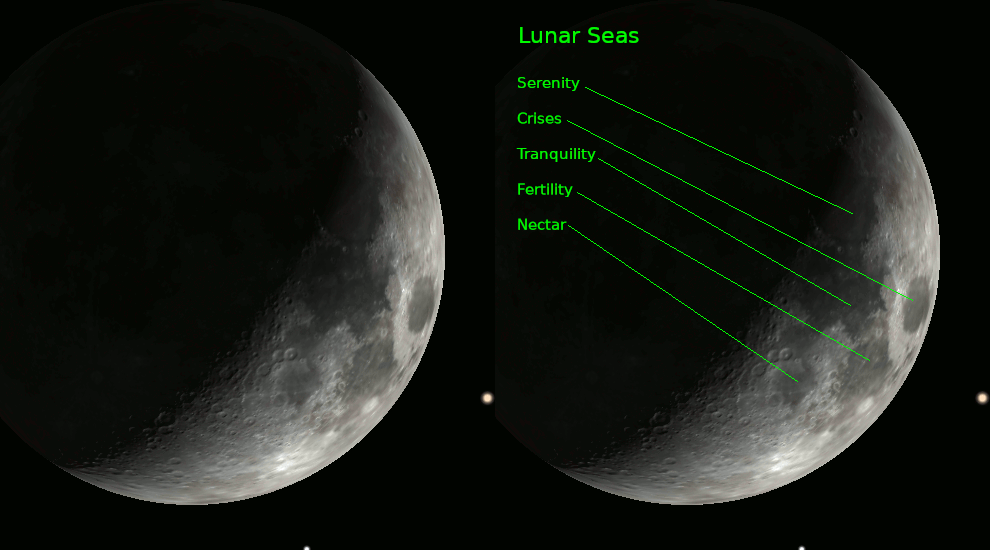
The Moon tonight reveals a bit more territory than it did last night, and will every night until full moon. The Moon’s solar day equals a lunar month of about 29 and a half of our days. As seen in binoculars, below and left of The distinctly oval Sea of Crises, or Mare Crisium, is the Sea of Fertility, or Mare Fecunditatis. To the left of the Sea of Crises, the Sea of Tranquility (Tranquilitatis) where the Apollo 11 crew landed. Above that half of Sea of Serenity has come into daylight. Tonight the Beehive star cluster will be visible below and left of the Moon. It should be easily visible in binoculars and has a vaguely triangular shape. It was known to the ancients as Praesepe, the manger, who saw it as a glowing spot on moonless nights.
The astronomical event times given are for the Traverse City/Interlochen area of Michigan. They may be different for your location.
Addendum
05/04/2021 – Ephemeris – We cross Halley’s Comet debris this week
This is Bob Moler with Ephemeris for Tuesday, May 4th. Today the Sun will be up for 14 hours and 23 minutes, setting at 8:51, and it will rise tomorrow at 6:26. The Moon, 1 day past last quarter, will rise at 4:20 tomorrow morning.
The Eta Aquariid meteor shower will reach their peak for us Thursday morning the 6th. The Eta Aquariids are caused by bits of Halley’s Comet, passing the Earth’s orbit heading out from the Sun. The Orionids of late October are debris of Halley’s comet passing the Earth’s orbit heading in toward the Sun. The Eta Aquariids are named for the star nearest the radiant of the meteor shower. The constellation of Aquarius has many shower radiants, which is why the shower is named for a star in Aquarius. The radiant rises shortly before 3:30am and astronomical twilight begins an hour later. There’s perhaps another half hour of visibility after that. The peak will occur Thursday morning where 20 meteors per hour or more might be seen.
The astronomical event times given are for the Traverse City/Interlochen area of Michigan. They may be different for your location.
Addendum
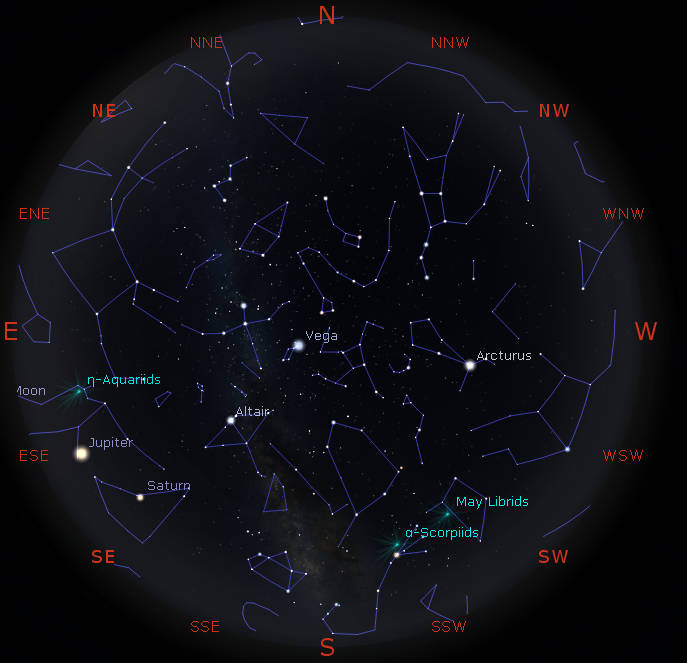
two other minor meteor showers are active then with only a handful of meteors an hour
compared to the Eta Aquariids’ somewhat higher rates. The funny looking “n” character
next to Aquariid is the Greek letter Eta. Chart created using Stellarium.
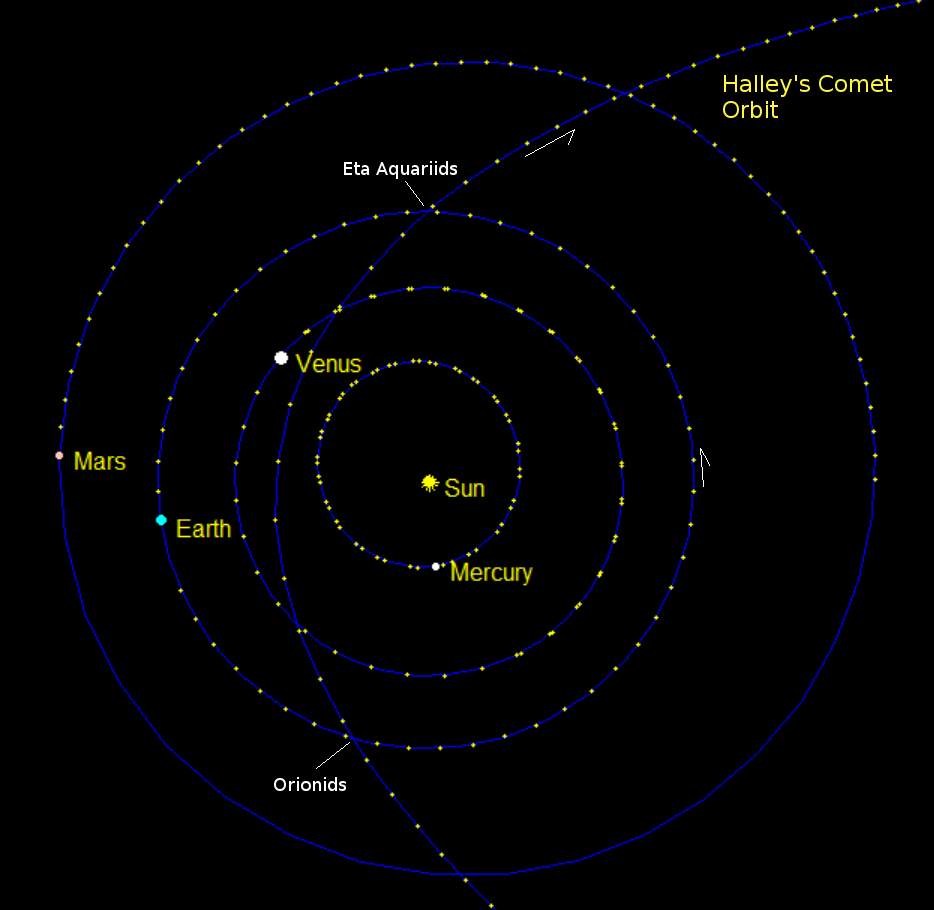
the inner solar system, and the Eta Aquariids when it’s leaving.
Credit my LookingUp program.
04/27/2021 – Ephemeris – What is the opposite of the Harvest Moon effect?
This is Bob Moler with Ephemeris for Tuesday, April 27th. Today the Sun will be up for 14 hours and 4 minutes, setting at 8:43, and it will rise tomorrow at 6:36. The Moon, 1 day past full, will rise at 9:43 this evening.
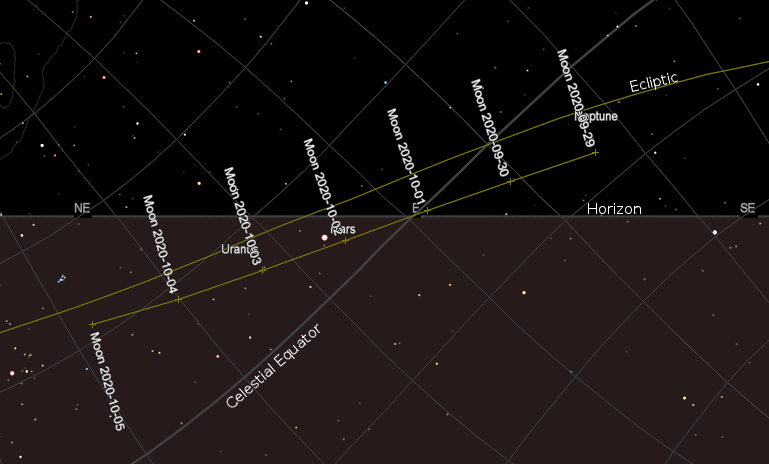
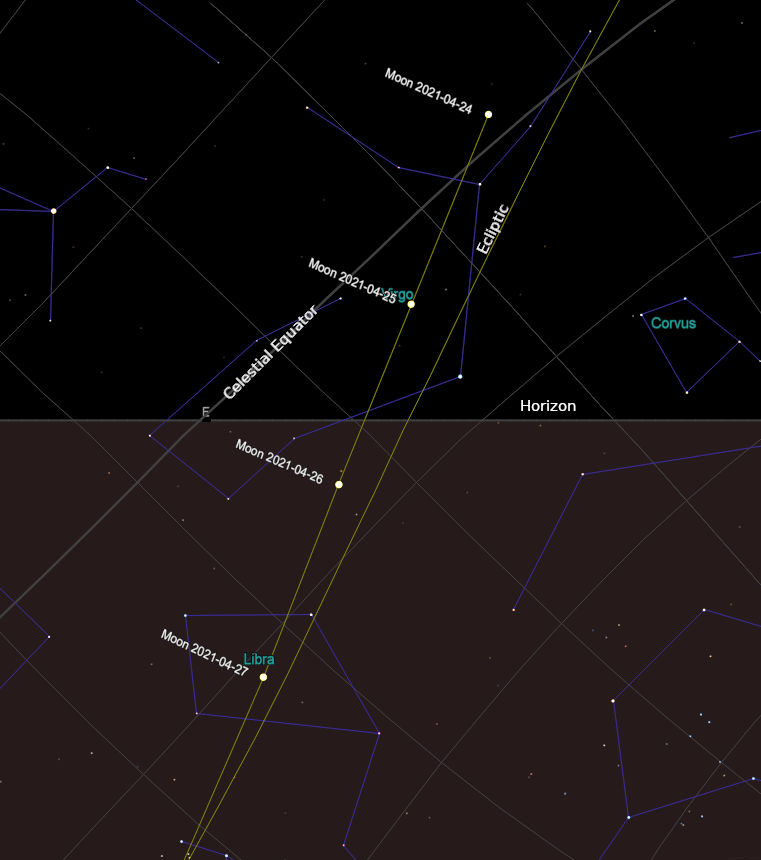
Let’s think back to last fall and the Harvest Moon. The big deal about the Harvest Moon is the Moon lingers, rising or being bright in twilight to help illuminate the harvesters of old by effective lengthening the effects of daylight. The spring bright Moon after full moon rises much later night to night. Six months ago the difference in the rise times of the Moon between the full moon and the next day was 20 minutes. Today the Moon will rise 96 minutes later than it did yesterday. The reason is the beside moving eastward, it is also moving southward to where the Sun was in late fall. So it rises much later each night than it did after full moon last fall. As it is the dark skies are moving to later and later in the evening due to the spring season and daylight time.
The astronomical event times given are for the Traverse City/Interlochen area of Michigan. They may be different for your location.
Addendum
04/23/2021 – Ephemeris – The gibbous Moon tonight
This is Ephemeris for Friday, April 23rd. Today the Sun will be up for 13 hours and 53 minutes, setting at 8:38, and it will rise tomorrow at 6:43. The Moon, halfway from first quarter to full, will set at 5:49 tomorrow morning.
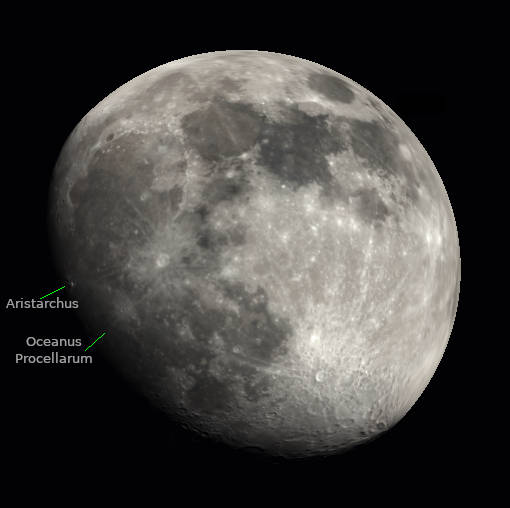
The Moon tonight is bright. The sunrise line or terminator on the Moon is crossing the large gray plain called Oceanus Procellarum, the largest of the Moon’s seas. These seas were figments of the first telescopic observer’s imagination. They are really huge impact basins into which interior lava flowed. On the upper left edge of the moon near the terminator is a bright spot visible in binoculars. In a telescope it is a crater called Aristarchus. It is a fairly new crater, probably 450 million years old. As a rule the brighter the crater the newer it is. Aristarchus is the brightest spot on the moon when it is seen during a full moon. Over the years visual astronomers have seen hazes and bright spots from time to time in and near Aristarchus.
The astronomical event times given are for the Traverse City/Interlochen area of Michigan. They may be different for your location.
Addendum
04/19/2021 – Ephemeris – The Moon tonight, Yutu the Jade Rabbit
This is Ephemeris for Monday, April 19th. Today the Sun will be up for 13 hours and 42 minutes, setting at 8:33, and it will rise tomorrow at 6:49. The Moon, 1 day before first quarter, will set at 3:47 tomorrow morning.
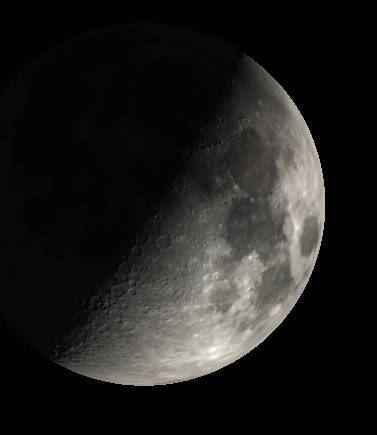
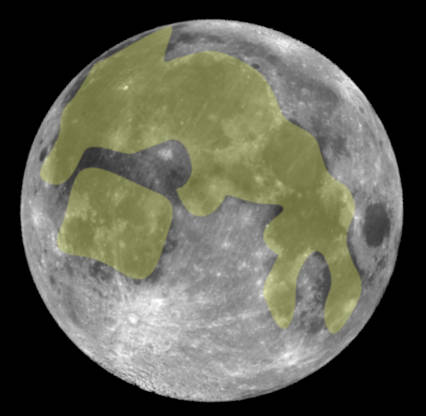
Let’s take a look at the Moon tonight. Binoculars or a small telescope will be handy for seeing the lunar features. The Moon will be at actual first quarter at 3 am tomorrow morning so the terminator or in this case sunrise line on the Moon will cut it nearly in half. To the naked eye the face of the Man in the Moon isn’t yet noticeable, but the top part of the upside down Chinese rabbit Yutu can be glimpsed. His ears are the seas of Fertility and Nectar, his head is the Sea of Tranquility, and the top part of his body is the Sea of Serenity. The lower part of his body and his arms pulverizing medicine with a mortar and pestle will have to wait until the Moon is nearer full. Yutu is the pet rabbit of the Chinese Moon goddess Chang’e.
The astronomical event times given are for the Traverse City/Interlochen area of Michigan. They may be different for your location.
Addendum
04/15/2021 – Ephemeris – The Moon tonight – libration
This is Bob Moler with Ephemeris for Thursday, April 15th. Today the Sun will be up for 13 hours and 30 minutes, setting at 8:28, and it will rise tomorrow at 6:56. The Moon, 4 days past new, will set at 12:14 tomorrow morning.
The crescent Moon tonight is in the constellation of Taurus the bull. The bright star Aldebaran will be just to the left of the Moon. In binoculars the dark oval spot visible on the Moon is the Sea of Crises or Mare Crisium a small dark lava plain. The Moon’s rotation is quite uniform, however its orbit isn’t circular, so the Moon’s appearance seems to rock a bit back and forth over the month. It’s an effect called libration. And one way to track that is to note how close the Sea of Crises is to the edge of the Moon. A week from now that sea will appear its closest to the edge. Astronomers call the edge of the Moon the limb. The phase line between day and night on the Moon is called the terminator. Now as the Moon is waxing, it is the morning or sunrise terminator.
The astronomical event times given are for the Traverse City/Interlochen area of Michigan. They may be different for your location.
Addendum