Archive
07/08/2021 – Ephemeris – How to find the constellation of Cygnus the swan
This is Ephemeris for Thursday, July 8th. Today the Sun will be up for 15 hours and 23 minutes, setting at 9:29, and it will rise tomorrow at 6:06. The Moon, 1 day before new, will rise at 5:23 tomorrow morning.
Halfway up the sky in the east at 11 pm is the constellation of Cygnus the swan, flying south through the Milky Way. It is also called the Northern Cross. At the left, the tail of the swan or the head of the cross is the bright star Deneb, one of the stars of the Summer Triangle. The next star to the right is Sadr the intersection of the body and the wings of the swan seen in flight, or the intersection of the two pieces of the cross. There are two or three stars farther to the right that delineate the swan’s long neck or upright of the cross, that ends with the star Alberio, a beautiful double star in telescopes, in the beak of the swan or foot of the cross. The crosspiece of the cross extends to the stars on either side of the intersection star Sadr, while the swan’s wings extend for a couple more stars each side.
The astronomical event times given are for the Traverse City/Interlochen area of Michigan (EDT, UT-4). They may be different for your location.
Addendum
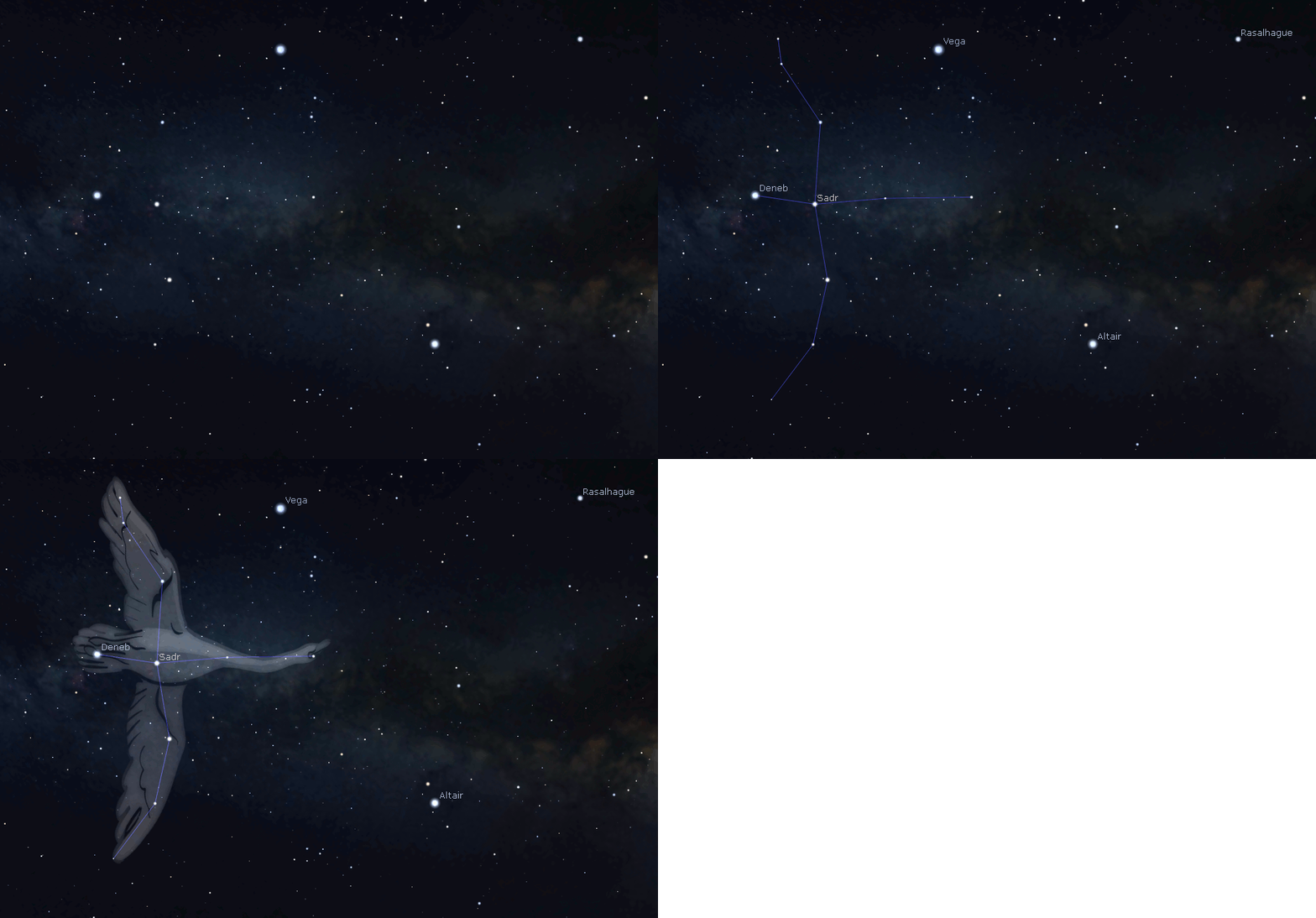
Animated Cygnus finder chart. Included also are, beside Deneb, the other stars of the Summer Triangle: Vega and Altair and their constellations Lyra the harp and Aquila. See if you can find them. Click on the image to enlarge it. Created using Stellarium.
06/30/2021 – Ephemeris – Let’s search for the naked-eye planets for this week
This is Ephemeris for Wednesday, June 30th. Today the Sun will be up for 15 hours and 31 minutes, setting at 9:32, and it will rise tomorrow at 6:01. The Moon, 1 day before last quarter, will rise at 1:35 tomorrow morning.
Let’s search for the naked-eye planets for this week. Venus can be spotted low in the west-northwest twilight by 10 pm or a little after. It will set at 11:06 pm. Venus will be spending the rest of summer low in the western sky for the rest of summer, and not be a conspicuous as it usually is. Mars can be found in the west-northwest at 11pm. It’s in Cancer and will set at 11:25 pm as it is slowly losing its race with the Sun. Saturn and Jupiter, are seen best in the morning sky. Saturn will rise before midnight at 11:15 pm. It’s seen with the stars of Capricornus. Brighter Jupiter, to the left of Saturn, will rise at 12:06 am. By 5 am, these two planets will be in the south in the morning twilight.
The astronomical event times given are for the Traverse City/Interlochen area of Michigan (EDT, UT-4). They may be different for your location.
Addendum
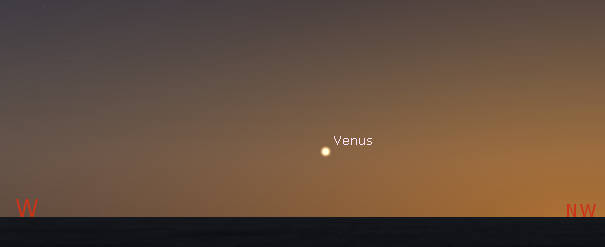
Venus in evening twilight at 10:30, about an hour after sunset. Mars is in the picture, but the twilight is overpowering it. Created using Stellarium.
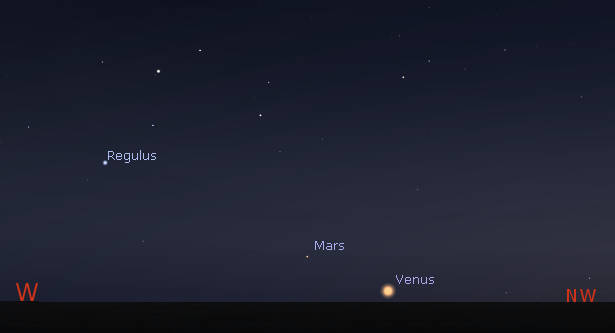
Mars with Venus setting at 11 pm, an hour and a half after sunset. Also, visible may be the bright star Regulus in the constellation of Leo the lion with the asterism of the Sickle or backwards question mark that delineate the head and mane of the beast. Created using Stellarium.
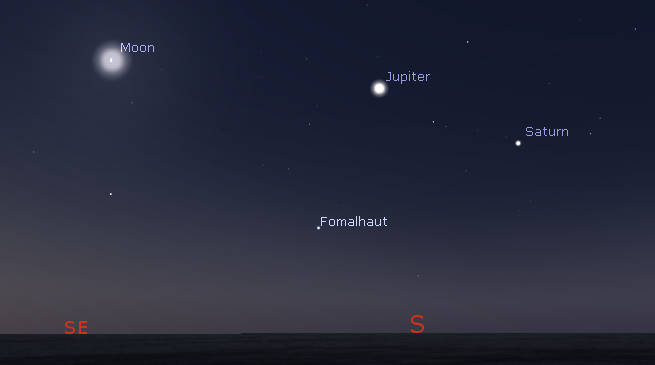
Saturn, Jupiter and the Moon in morning twilight of 5 am, about an hour before sunrise. Created using Stellarium.
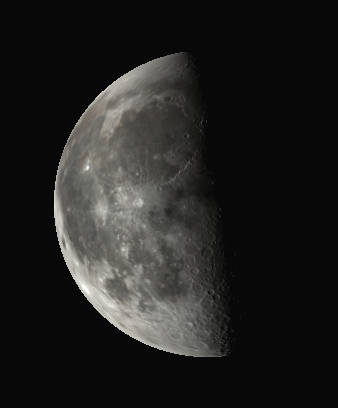
The Moon at last quarter as it might be seen in binoculars or small telescope at 5 am, July 1, 2021. Created using Stellarium.
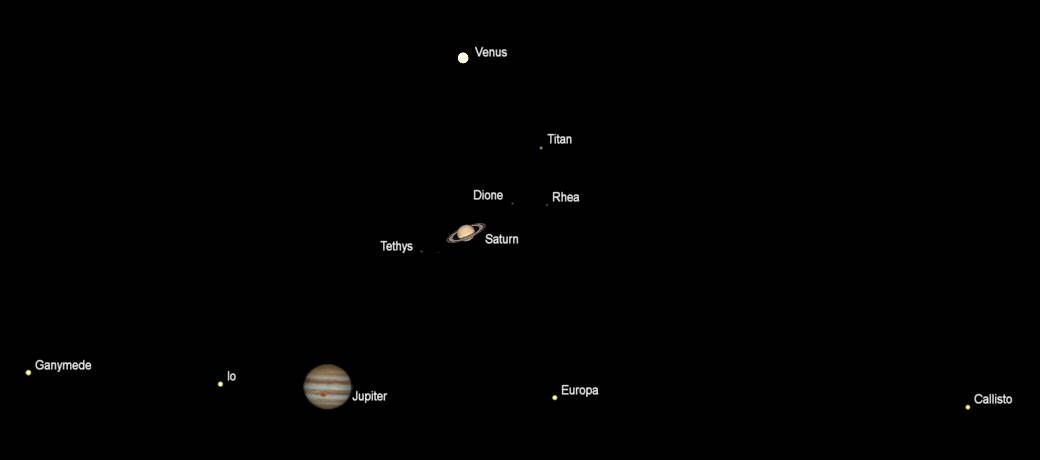
The planets as seen in a telescope (north up) with the same magnification for the night of June 30/July 1, 2021. Times of the display are: Venus, 10:30 pm; Saturn and Jupiter, 5 am. Apparent diameters: Venus, 11.19″; Saturn 18.29″, its rings 42.62″; Jupiter, 45.30″. Mars has an apparent diameter of only 3.86″ and is not represented. The ” symbol means seconds of arc (1/3600th of a degree.) Click on the image to enlarge it. Created using Cartes du Ciel (Sky Charts).
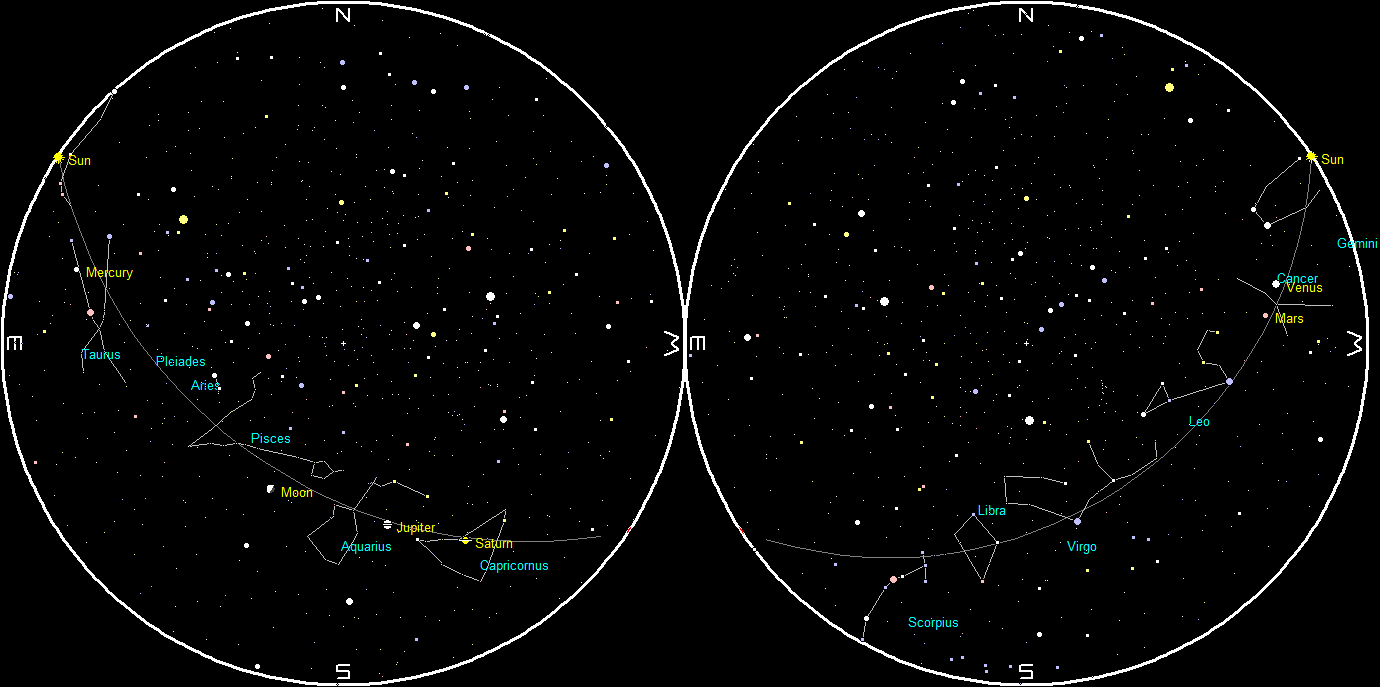
Planets and the Moon at sunset and sunrise of a single night, starting with sunset on the right on June 30, 2021. The night ends on the left with sunrise on the July 1st. Click on the image to enlarge. Created using my LookingUp program.
06/29/2021 – Ephemeris – The Summer Triangle
This is Ephemeris for Tuesday, June 29th. Today the Sun will be up for 15 hours and 32 minutes, setting at 9:32, and it will rise tomorrow at 6:00. The Moon, 2 days before last quarter, will rise at 1:14 tomorrow morning.
Dominating the eastern sky at 11 pm are three bright stars. These are all first magnitude stars, members of the group of 21 brightest stars in the night sky. Highest, in the east, is Vega, the brightest of the three. It and a small, slim parallelogram of stars below it belong to the constellation of Lyra the harp. Below it to the northeast is Deneb, dimmest of the three at the head of the horizontally appearing Northern Cross, an informal constellation or asterism. Properly, Deneb is in the tail of Cygnus the swan flying south through the Milky Way. The third star of the three is Altair, lower still, but in the east-southeast at the head of Aquila the Eagle. These three stars are in a large asterism called the Summer Triangle, which will be with us through summer and fall.
The astronomical event times given are for the Traverse City/Interlochen area of Michigan (EDT, UT-4). They may be different for your location.
Addendum
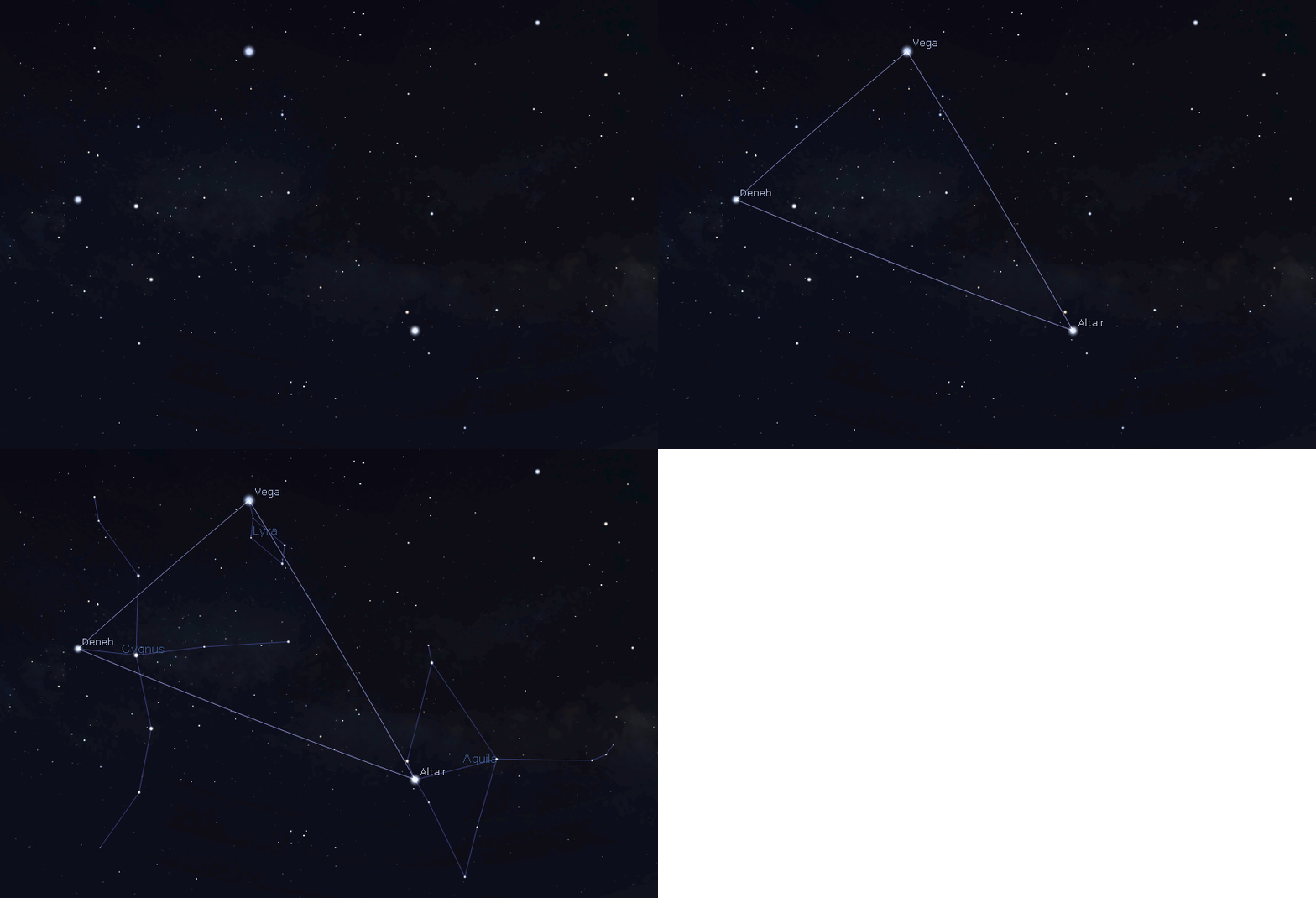
The Summer Triangle finder animation showing first the unlabeled sky, Then the Summer Triangle with the stars labeled, then the constellations of those stars. Click on the image to enlarge it. Created using Stellarium and GIMP.
06/22/2021 – Ephemeris – Mars is poised to cross in front of the Beehive Star Cluster tonight
This is Bob Moler with Ephemeris for Tuesday, June 22nd. Today the Sun will be up for 15 hours and 34 minutes, setting at 9:32, and it will rise tomorrow at 5:57. The Moon, 2 days before full, will set at 4:41 tomorrow morning.
Tonight, the planet Mars will be at the western edge of the Beehive star cluster. Tomorrow night, Mars will be seen against its stars. Normally, the Beehive star cluster is easily seen in binoculars. The problem is, that both the cluster and Mars will be low in the west-northwestern sky, only six to seven degrees above a sea or lake horizon near the optimal time to spot them of 11 pm. It has been 8 months since Mars was opposite the Sun in our skies, and relatively close to us. Back then it was as bright as Jupiter and relatively close to the Earth. Now, Mars is 221 million miles (356 million kilometers) and 5 times farther aw0ay, about half the distance to Jupiter. It’s tiny in telescopes and very hard to pick out of the dim twilight glow of 11 pm.
The astronomical event times given are for the Traverse City/Interlochen area of Michigan (EDT, UT-4). They may be different for your location.
Addendum
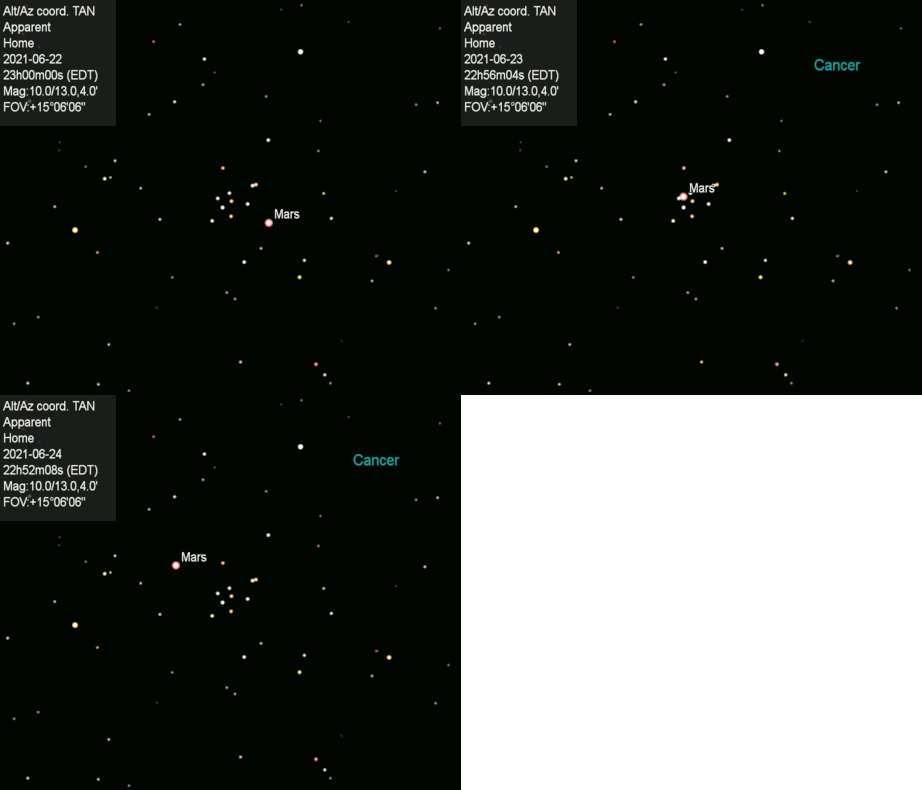
Mars passing in front of M44 as a GIF animation. This is difficult to spot with binoculars low in the west-northwest at 11 pm on the nights of June 22nd, 23rd and 24th. The Beehive star cluster is a relatively close and sparse cluster. On dark nights in early spring, the cluster looks like a fuzzy spot to the naked-eye. It reveals its true nature in binoculars. Created using Cartes du Ciel.
06/21/2021 – Ephemeris – A quick look at three of the naked-eye planets
This is Ephemeris for Monday, June 21st. Today the Sun will be up for 15 hours and 34 minutes, setting at 9:32, and it will rise tomorrow at 5:57. The Moon, 3 days before full, will set at 4:02 tomorrow morning.
I have a couple of pieces of planetary news. Venus will pass south of the star Pollux in Gemini tonight. That means in their current orientation, low on the west-northwestern horizon, that Pollux will appear above and right of the much brighter Venus. This may be visible by 10:30 pm. Venus will set tonight at 11:07. You’ll need a really low western horizon to see it. In the morning sky, Saturn is backtracking to the west slowly, and now Jupiter has stopped its eastward motion and is stationary today and will start its retrograde or westward motion. Both retrograde motions are caused by the Earth, which is in the process of passing these planets. We will pass Saturn August 2nd, and pass Jupiter August 19th. We call these events, oppositions.
The astronomical event times given are for the Traverse City/Interlochen area of Michigan (EDT, UT – 4hr). They may be different for your location.
Addendum
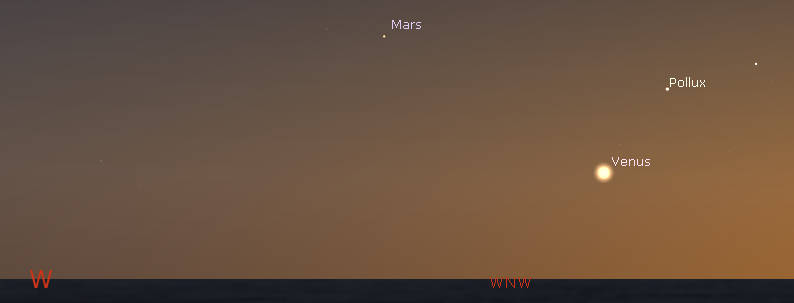
Venus, Pollux and Mars in the evening twilight tonight at 10:30 pm. Venus and Pollux in evening twilight. Venus will be about 5 degrees above the sea or lake horizon at that time. Venus and Mars will cross their apparent paths and be in conjunction on July 13th. Click on the image to enlarge. Created using Stellarium.
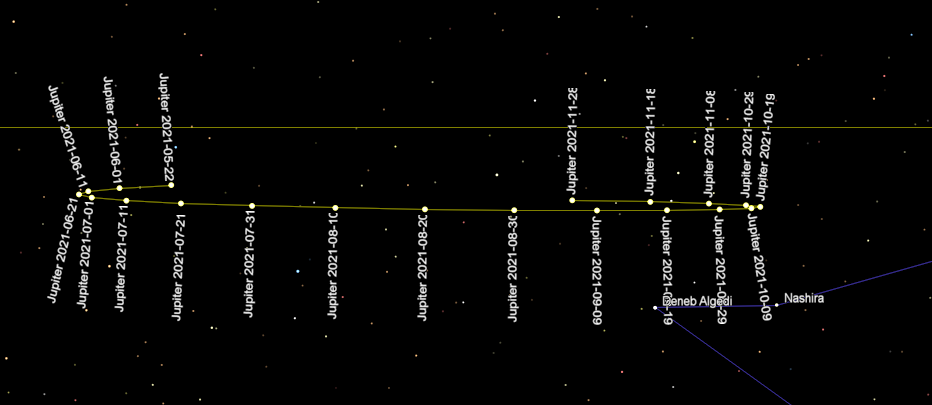
Jupiter’s retrograde path, June 21, to October 20, 2021. The constellation lines in the lower right are for the eastern end of Capricornus. We pass Jupiter, officially called opposition from the Sun, on August 20th. The solid yellow line above Jupiter’s apparent path is the Ecliptic, the Sun’s apparent path in the sky. Click on the image to enlarge. Created using Cartes du Ciel (Sky Charts).
06/17/2021 – Ephemeris – Congress approves more money for NASA’s lunar lander
This is Bob Moler with Ephemeris for Thursday, June 17th. Today the Sun will be up for 15 hours and 34 minutes, setting at 9:31, and it will rise tomorrow at 5:56. The Moon, at first quarter tonight, will set at 2:18 tomorrow morning. | Tonight’s Moon will be almost exactly cut in half by the sunrise terminator, since the precise moment of first quarter will be at 11:54 this evening. Speaking of the Moon, Congress has approved NASA spending of 10 billion dollars over 5 years on the Human Lander System for the Artemis Moon program. This would allow more than one bidder to win the lander contract. SpaceX’s Lunar Starship was the only one to win a contract. NASA and Congress wanted two to win, but couldn’t afford more than SpaceX. Now comes the rub… Congress will have to appropriate the money out of the budget every year for this. The target date for the first landing is 2024, which I’m pretty sure is already out of reach.
The astronomical event times given are for the Traverse City/Interlochen area of Michigan (EDT, UT-4). They may be different for your location.
Addendum
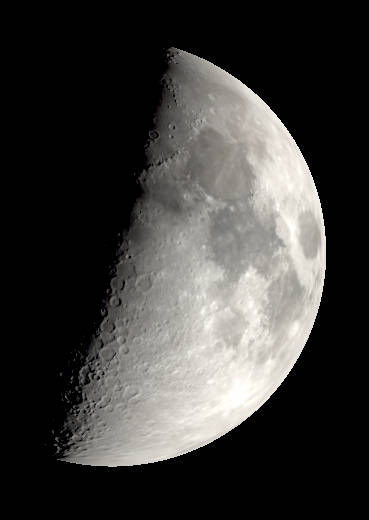
First Quarter Moon with binoculars or low power telescope as it might appear tonight at 11 pm. Created using Stellarium.

Three Lunar Lander proposals. Credit Dynetics, SpaceX, and Blue Origin. Credit NASA.
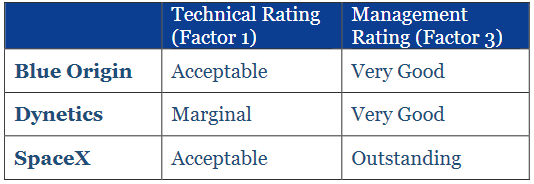
Technical and Management Adjectival Ratings from https://www.nasa.gov/sites/default/files/atoms/files/option-a-source-selection-statement-final.pdf
Also, SpaceX’s bid was the lowest by a wide margin. With the extra funds, it looks like Blue Origin will be the second successful bidder.
06/11/2021 – Ephemeris – Spotting the one-day-old Moon
This is Bob Moler with Ephemeris for Friday, June 11th. Today the Sun will be up for 15 hours and 31 minutes, setting at 9:28, and it will rise tomorrow at 5:56. The Moon, 1 day past new, will set at 10:56 this evening.
Tonight the thin crescent Moon, some 40 hours old, or more properly 40 hours from eclipsing the Sun, will be to the right and a bit below the bright planet Venus. It might be possible to spot it. I do remember spotting the tiny sliver of a Moon the next evening after a solar eclipse in 1970. But that was in March*, when the ecliptic, the path of the Sun and near the path of all the planets and the Moon, was angled more vertically than it is this time of year. That means that the Moon and planets, when near the Sun, are lower in the sky after sunset than they would be in late winter and early spring. Venus is slowly moving away from the Sun, from our vantage point, while Mars, above and left of it, is slowly retreating toward the Sun. Their apparent paths will cross on July 13th.
The astronomical event times given are for the Traverse City/Interlochen area of Michigan. They may be different for your location.
* On the program, I mistakenly said April.
Addendum
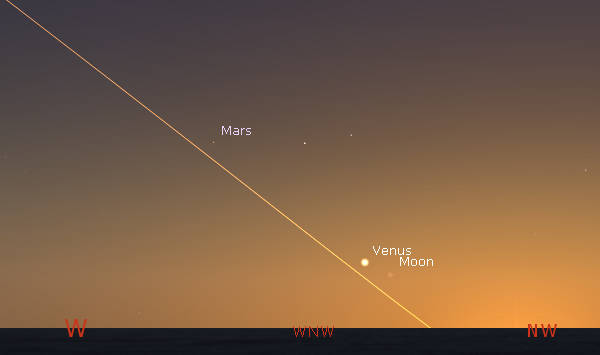
Sunset sky and ecliptic (orange line) 45 minutes after sunset tonight, June 11, 2021. Note the low angle of the ecliptic, the apparent path of the Sun and near the path of the planets. The angle will get even lower as summer progresses. So planets close to the Sun will set shortly after the Sun. Created using Stellarium.
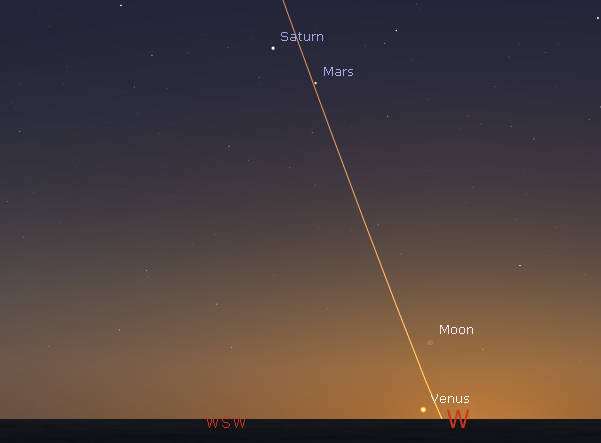
This is the sky one day after the March 7, 1970 eclipse and 45 minutes after sunset. Being March, note how steep the angle of the ecliptic, so planets close to the Sun are higher in the sky. Also, twilight ends quicker in March than in June.
Ephemeris Extra – Sunrise solar eclipse
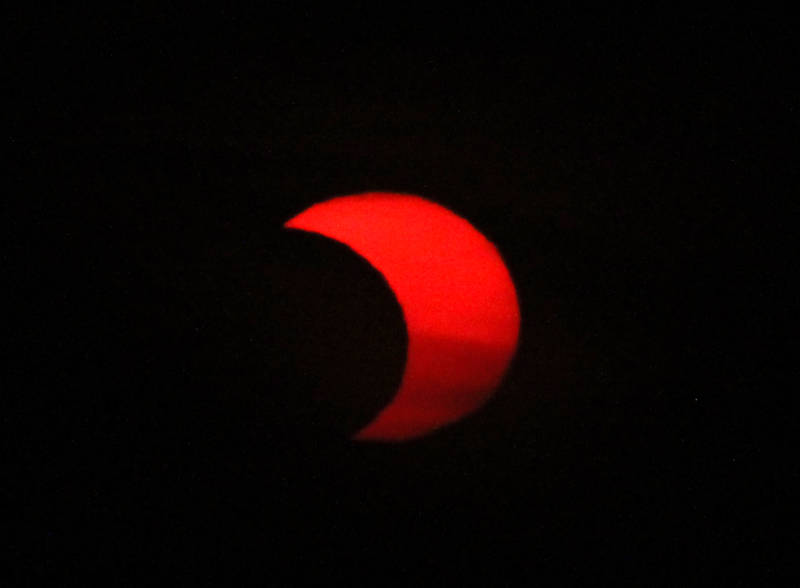
The partially eclipsed Sun this morning, taken through a solar filter, so it’s redder than it actually was. Taken shortly after 6 am from Traverse City, MI West Middle School. There were quite a bit of clouds on the horizon. Credit Bob Moler.
Here is an unfiltered view taken a few minutes earlier:
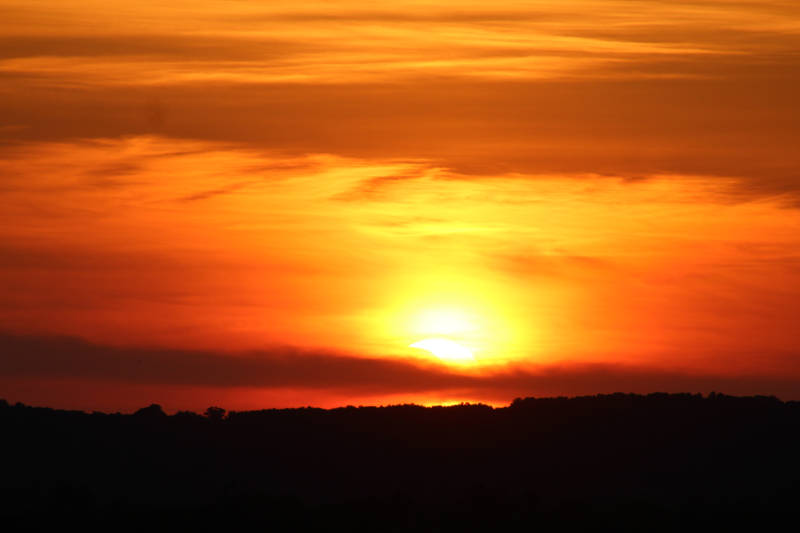
Here is an unfiltered shot of the Sun bisected by a cloud. Credit Bob Moler.
06/09/2021 – Ephemeris – The Sun will be partially eclipsed as it rises tomorrow morning
I’ll review the planets tomorrow. However, tomorrow morning, if it’s clear down to the northeastern horizon, we will get to observe, safely, the Sun rise while being in eclipse. Here’s today’s program:
This is Ephemeris for Wednesday, June 9th. Today the Sun will be up for 15 hours and 30 minutes, setting at 9:27, and it will rise tomorrow at 5:57. The Moon, 1 day before new today, will rise with the Sun at 5:57 tomorrow morning.
The Moon rising with the Sun will also be eclipsing the Sun, so the Sun will have a big bite taken out of its left side as it rises tomorrow. We will be witnessing the last 40 some minutes of the eclipse as the Sun rises. The Sun is dangerous to look at. If you have eclipse glasses from the 2017 eclipse, use those. Otherwise, use pinhole projection from one side of a box to the opposite side. The longer the box, the bigger and dimmer the image. If using a corrugated cardboard box, make a big hole at the pinhole end, cover it with a thin piece of cardboard or aluminum foil. Punch several holes of various sizes spaced out on that end to project multiple images of the Sun, so you can choose the best to view. Good luck!
The astronomical event times given are for the Traverse City/Interlochen area of Michigan. They may be different for your location.
Addendum
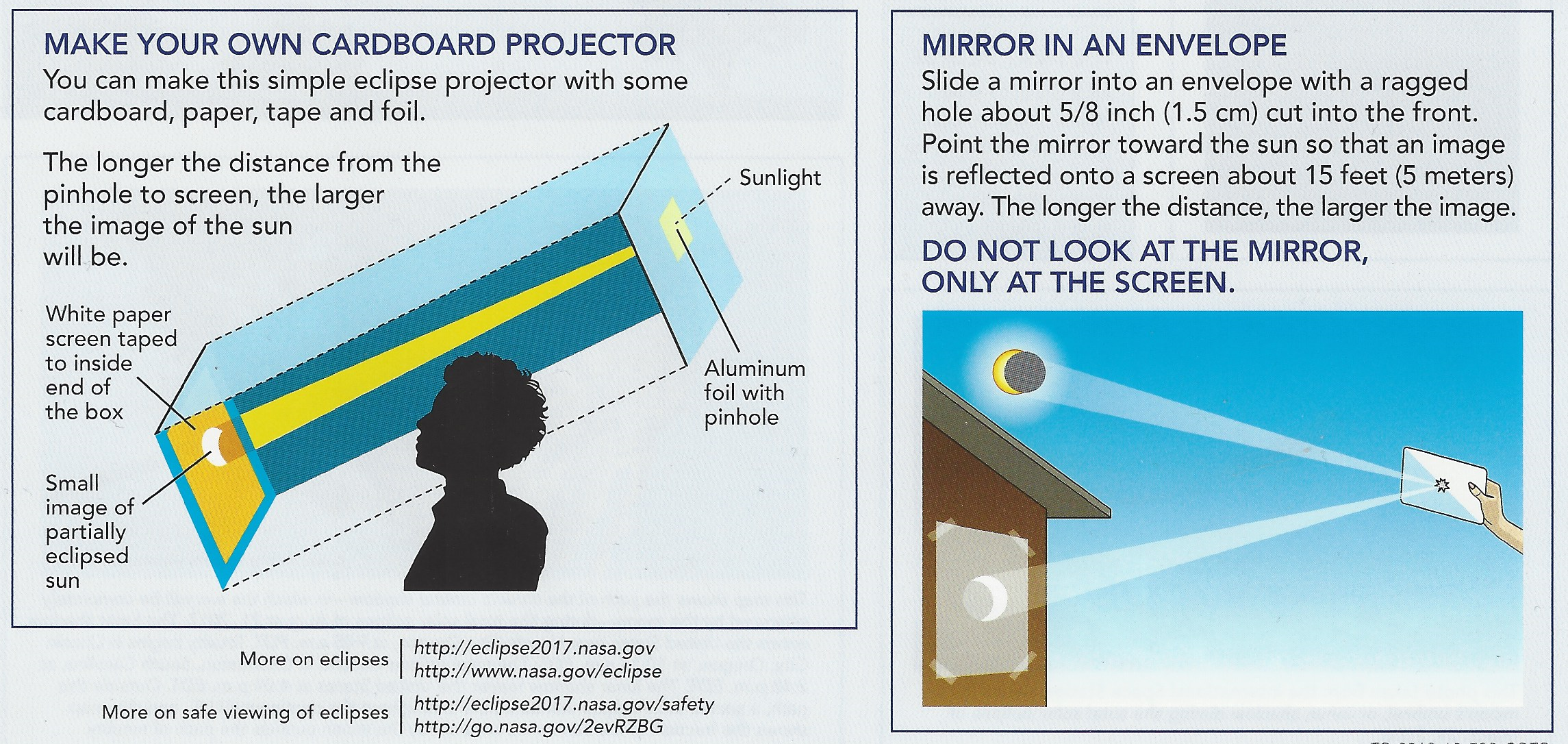
Pinhole projection is the simplest way to project the Sun’s image. A long box can be used to project the image inside. The diameter of the pinhole is a compromise between sharpness and brightness of the image. The farther the image is projected, the larger and dimmer it is. The throw of the image can be increased by using a mirror masked with a quarter of an inch or larger hole and sending the image 10 or more feet away. Credit NASA.
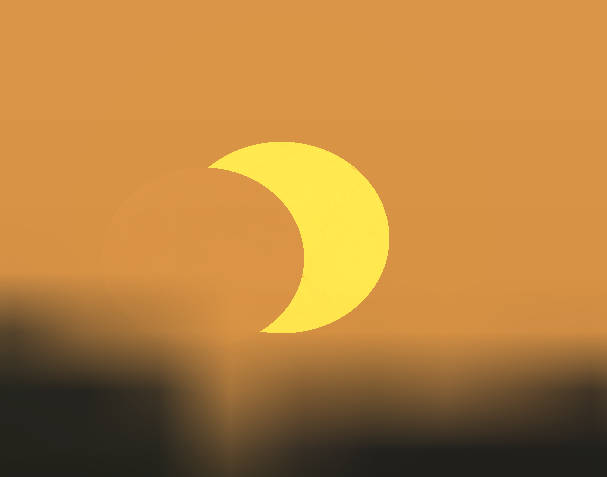
A Stellarium creation of what the eclipsed Sun would appear about 10 minutes after rising as seen from the Traverse City/Interlochen area.
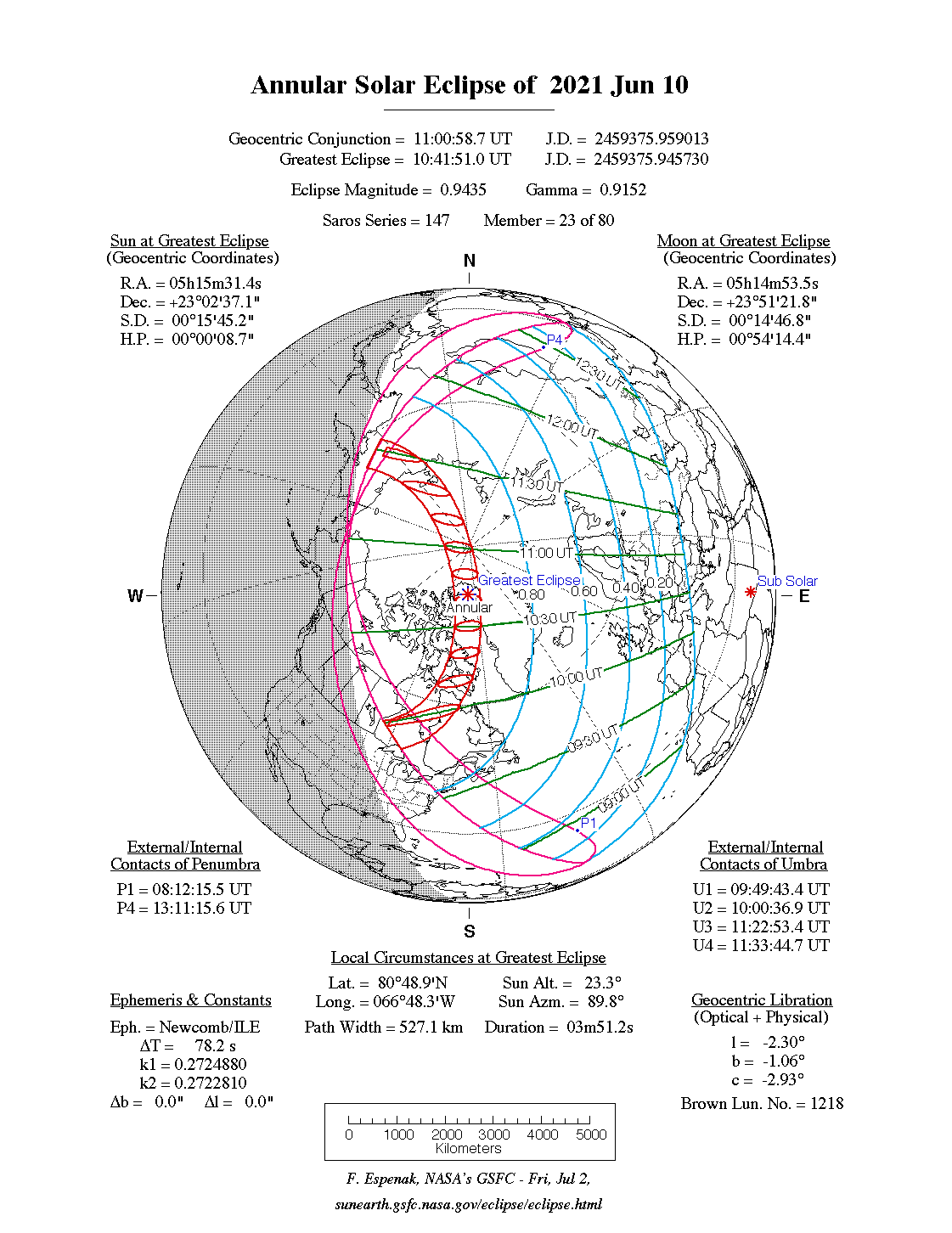
The visibility map for the June 10, 2021 annular solar eclipse. In an annular eclipse, the Moon is too far away and appears too small to cover the face of the Sun. So, at maximum, a ring of bright Sun surrounds the Moon. It’s sometimes called a ring of fire. For locations within the big floppy figure 8, the eclipse either ends near sunrise (bottom lobe) or starts near sunset (top lobe). The double line with the ellipses in it is the path of where the ring is visible, the path of annularity. Locations within the grid on the right will see a partial eclipse. Credit: NASA/GSFC/Fred Espenak, adapted from https://eclipse.gsfc.nasa.gov/SEplot/SEplot2001/SE2021Jun10A.GIF
06/07/2021 – Ephemeris – The Little Dipper, aka Ursa Minor
This is Ephemeris for Monday, June 7th. Today the Sun will be up for 15 hours and 28 minutes, setting at 9:26, and it will rise tomorrow at 5:57. The Moon, 3 days before new, will rise at 4:54 tomorrow morning.
One of the constellations I don’t talk about much, except in passing is Ursa Minor, the Little Bear, better known as the Little Dipper. As a dipper goes, its handle is bent the wrong way. Anyway, this time of year in the evening, it’s standing on the tip of it’s handle the North Star Polaris. Polaris is pointed to by the front two stars of the Big Dipper. As dippers go they pour their contents into each other. The second and third-brightest stars of the Little Dipper are at the front of the bowl, and are Kochab and Pherkad, the Guard Stars, that is Guardians of the Pole. To the Anishinaabe native peoples of our area the Little Dipper is Maang, the Loon.
The astronomical event times given are for the Traverse City/Interlochen area of Michigan. They may be different for your location.
Addendum
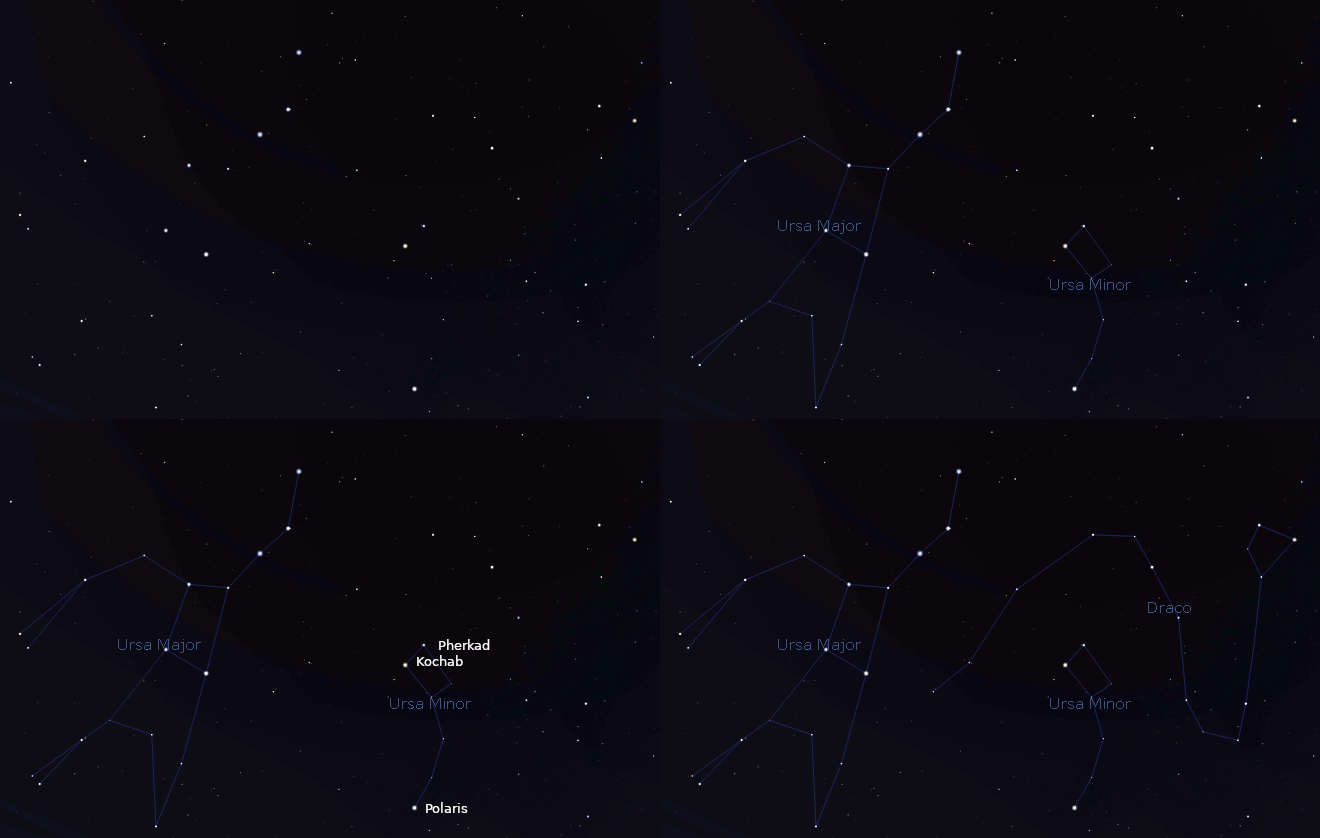
Little Dipper finder animation with bonus frame with Draco the dragon. Click on the image to enlarge. Created using Stellarium. Animation and star names added with GIMP.

