Archive
04/30/2018 – Ephemeris – Venus-Earth resonances, and Jupiter & the Moon tonight
Ephemeris for Monday, April 30th. The Sun rises at 6:34. It’ll be up for 14 hours and 12 minutes, setting at 8:46. The Moon, 1 day past full, will rise at 9:30 this evening.
Jupiter will be near the moon tonight. The gravitational force between the planets produces some interesting resonances in their orbital periods. Venus has three different kinds with the Earth. First, Venus orbits the Sun 13 times in the same time it takes the Earth to orbit the Sun 8 times. This is a 13 to 8 resonance. This sets up the 5 Venus Cycles equaling 8 years resonance the Mayan’s discovered. A Venus cycle of 584 days takes Venus to go from Morning Star to Evening Star and back again. The next one wasn’t discovered until we started to bounce radar signals off Venus. We found it rotates backwards, and very slowly at that. Its rotation with respect to the stars is longer than its year. And it so happens that every passage near the Earth the same side of Venus is facing us.
The times given are for the Traverse City/Interlochen area of Michigan. They may be different for your location.
Addendum
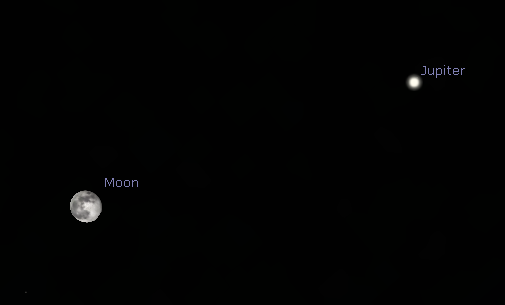
The Moon and Jupiter at 10 p.m. tonight, April 30, 2018. Created using Stellarium.
04/03/2018 – Ephemeris – How to spot Zodiacal Light
Ephemeris for Tuesday, April 3rd. The Sun will rise at 7:19. It’ll be up for 12 hours and 53 minutes, setting at 8:12. The Moon, 3 days past full, will rise at 11:44 this evening.
Zodiacal light is a faint but towering glow that can be seen after the end of astronomical twilight on a moonless night. It is seen in the west in the evening in late winter and early spring and in the east in the morning in late summer and early autumn. The axis of the glow is the ecliptic, the plane of the Earth’s orbit, indeed that of all the planets, along which lie the constellations of the zodiac. Right now the end of twilight is about 10 p.m. and advancing at a rate of a minute or two each night. The cause of zodiacal light is dust, micron sized dust from comets and asteroids. Most of these lie in the plane of the solar system, which is why zodiacal light is centered on the ecliptic and the constellations of the zodiac and increases in brightness and width toward the Sun. Spotting Zodiacal Light takes dark adapted eyes, time and patience.
The times given are for the Traverse City/Interlochen area of Michigan. They may be different for your location.
Addendum
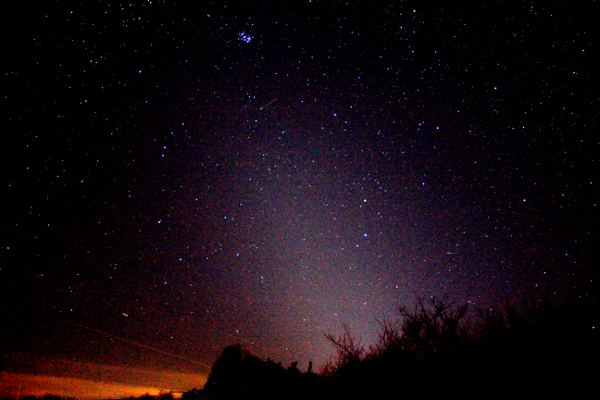
Much enhanced Zodiacal Light from the my back yard at 9:31 p.m. March 16, 2018, 5 minutes after the official end of astronomical twilight. Canon EOS Rebel T5 18mm f.l., f/3.5, 6 sec. ISO 12,800 . The clouds on the left appear to be illuminated by the lights of the towns of Beulah and Frankfort 20+ miles away. Note the Pleiades at the top of the image.
03/26/2018 – Ephemeris – The Moon will slide below the Beehive star cluster tonight
Ephemeris for Monday, March 26th. The Sun will rise at 7:34. It’ll be up for 12 hours and 28 minutes, setting at 8:02. The Moon, 2 days past first quarter, will set at 5:34 tomorrow morning.
Tonight the gibbous Moon will be seen among the stars of Cancer the crab. It will just about completely drown Cancer’s dim stars out. That is no exception to one of the famous group of stars in Cancer, the Beehive star cluster. It is going to take binoculars or a small telescope to spot them. The star cluster will be at the 11 o’clock position from the Moon. When looking for the cluster try to keep the Moon out of your field of view. The cluster is about 4 moon-widths away, so aim high and slowly aim those binoculars down. There will be other times in the next few months to catch the Moon near the Beehive, when the Moon will be a not so overwhelming crescent as the cluster moves westward in the evening sky with the rest of the stars.
The times given are for the Traverse City/Interlochen area of Michigan. They may be different for your location.
Addendum
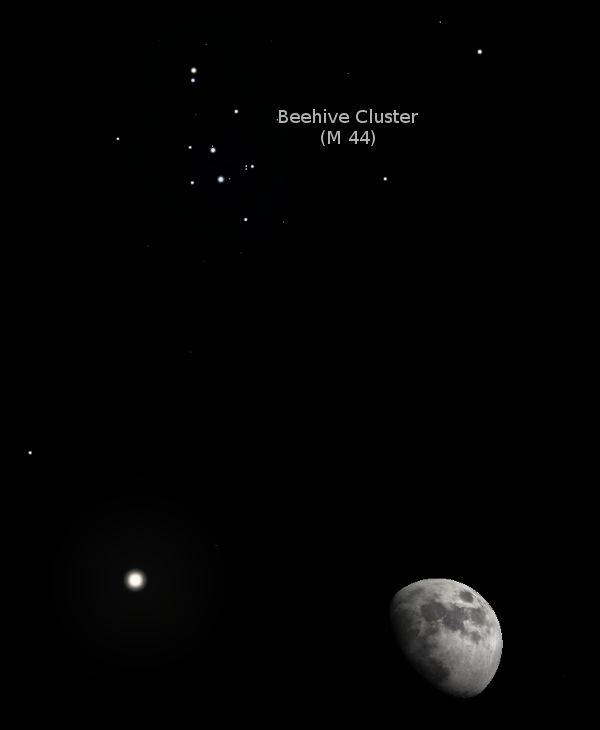
The Moon and the Beehive Star Cluster tonight at 9 p.m. March 26, 2018. The star cluster will be very difficult to spot. Created using Stellarium, however I had to boost the brightness of the stars and eliminate the atmosphere control to darken the sky enough to see the cluster. Good luck!
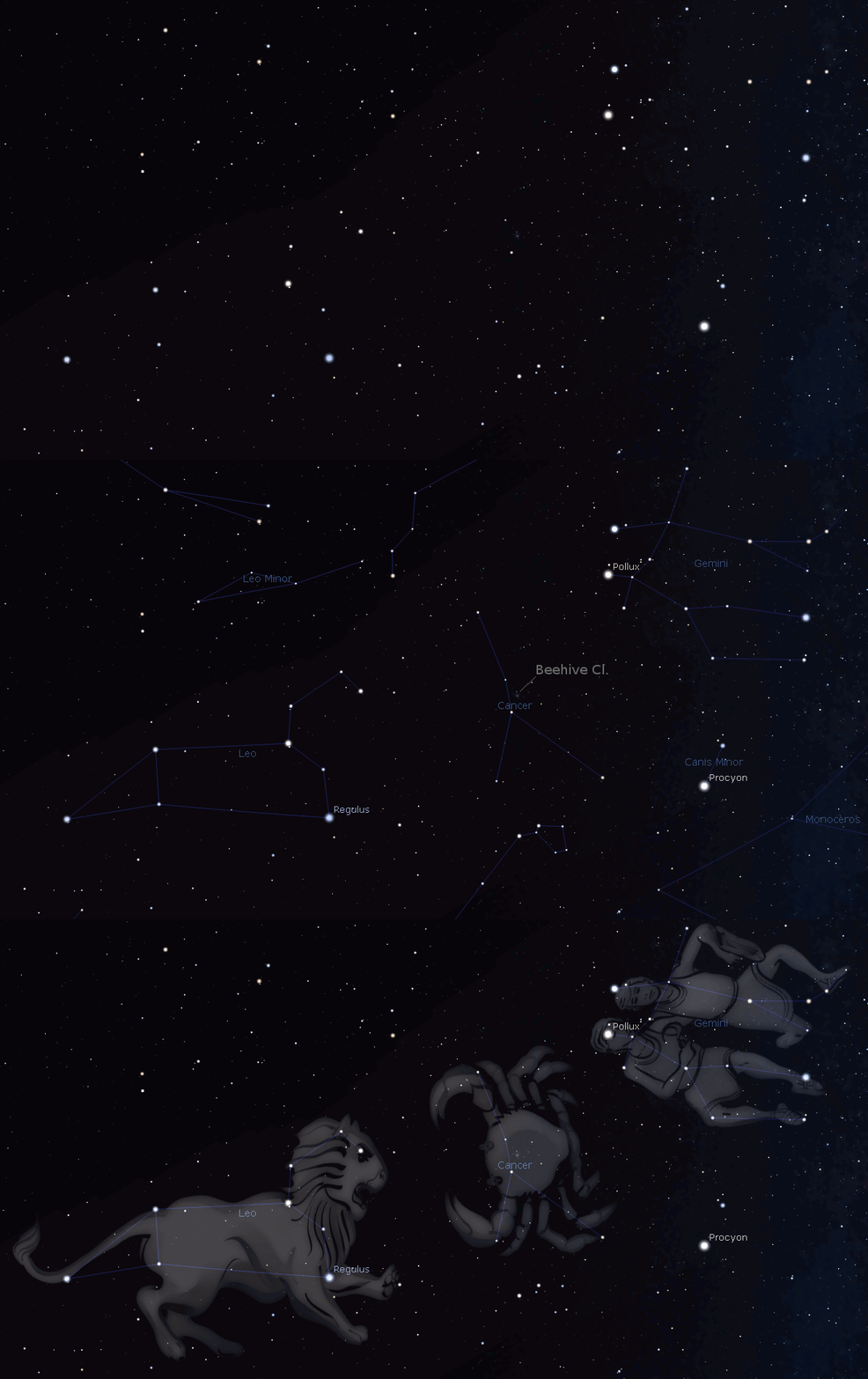
Cancer the crab finder chart for a dark night. Note the beehive cluster, also known to amateur astronomers as M44, along with other catalog names. Prior to the invention of the telescope this cluster was known as Praesepe which means “Manger”. Created using Stellarium and GIMP.
03/19/2018 – Ephemeris – The dim zodiacal constellation of Cancer the crab
Ephemeris for Monday, March 19th. The Sun will rise at 7:47. It’ll be up for 12 hours and 6 minutes, setting at 7:54. The Moon, 2 days past new, will set at 10:21 this evening.
At 10 this evening, the faint constellation, and member of the Zodiac, Cancer the crab is located in the south half way between the bright stars Castor and Pollux of the constellation Gemini, high in the south and the bright star Regulus in Leo the lion in the southeast. Cancer is very dim, looking like an upside-down Y or even a K if all its stars can be made out. In the center of Cancer is a fuzzy spot to the unaided eye. In binoculars or a low power telescope this fuzzy spot becomes a cluster of stars. It is the Beehive cluster. At 577 light years away, according to the latest measurements, it is one of the closest star clusters. A week from tonight the Moon will pass below this cluster, by about 4 of its diameters.
The times given are for the Traverse City/Interlochen area of Michigan. They may be different for your location.
Addendum
Cancer the crab finder chart. Note the beehive cluster, also known to amateur astronomers as M44, along with other catalog names. Prior to the invention of the telescope this cluster was known as Praesepe which means “Manger”. Created using Stellarium and GIMP.
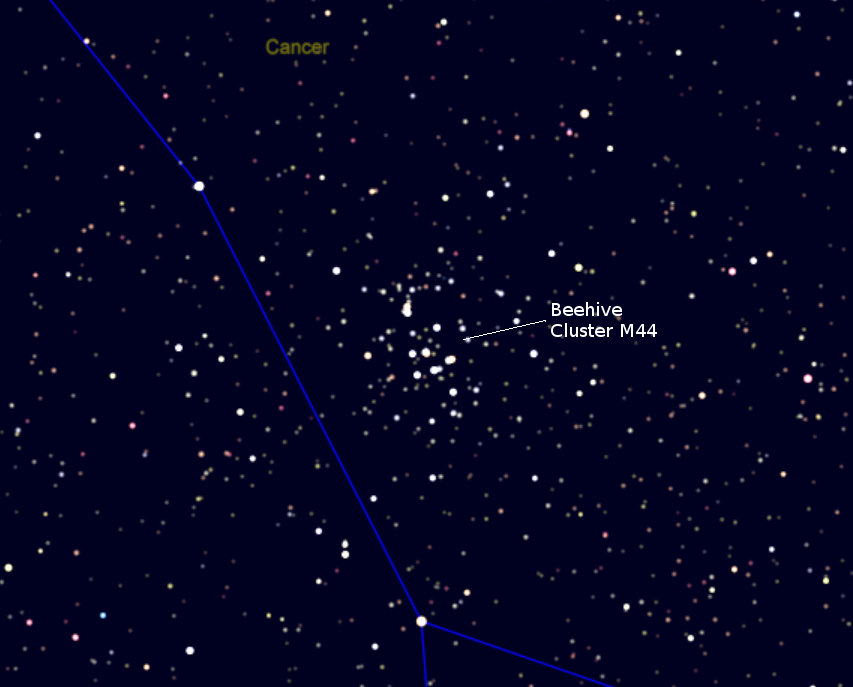
The Beehive star cluster, M44. Its ancient name was the Praesepe or manger when glimpsed by the naked eye. Created using Cartes du Ciel (Skycharts)
03/14/2018 – Ephemeris – A Pi Day look at the bright planets
Ephemeris for Pi Day, Wednesday, March 14th. The Sun will rise at 7:57. It’ll be up for 11 hours and 50 minutes, setting at 7:47. The Moon, 3 days before new, will rise at 7:15 tomorrow morning.
Pi day: the first three digits of the mathematical constant pi is 3-14. Let’s take our weekly look at the bright planets. All 5 of the naked eye planets are visible now. Three of them are visible this morning. Before it gets light Jupiter will be in the west-southwest, with Mars in the south and Saturn a bit left of the red planet. Jupiter will rise at 12:44 tomorrow morning. Mars will rise at 3:42. And Saturn will rise at 4:19 a.m. In the evening sky Venus will be visible low in the western twilight from about 8:15 p.m. until before it sets at 9:06. Mercury is much dimmer but above and a bit right of Venus, tonight about 8 Moon widths at 1 o’clock from Venus. It will set at 9:26. Mercury will appear higher than Venus in the sky for 6 more nights.
The times given are for the Traverse City/Interlochen area of Michigan. They may be different for your location.
Addendum
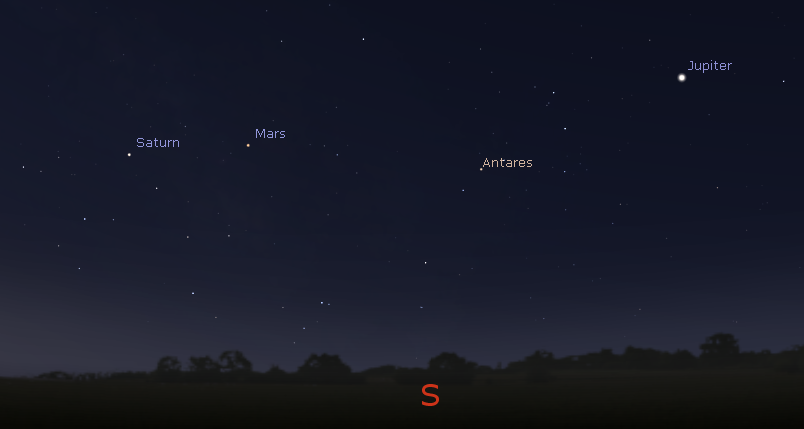
The morning planets of Jupiter, Mars and Saturn plus the Moon. Seen at 7 a.m. EDT this morning March 14, 2018. Click on image to enlarge. Created using Stellarium.
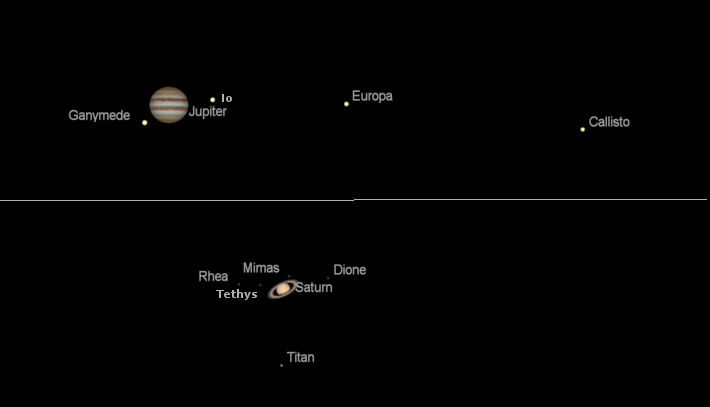
Jupiter and Saturn with their brighter satellites tomorrow morning at 6 a.m. March 8, 2018. They are displayed at the same scale. Saturn in about twice as far as Jupiter. Its disk is a bit smaller than Jupiter’s so it appears about half as large. The extent of the rings appear to be about the same as Jupiter’s diameter. Created using Cartes du Ciel (Sky Charts).

Venus and Mercury, low in the west at 8:15 p.m., March 14, 2018. Created using Stellarium.
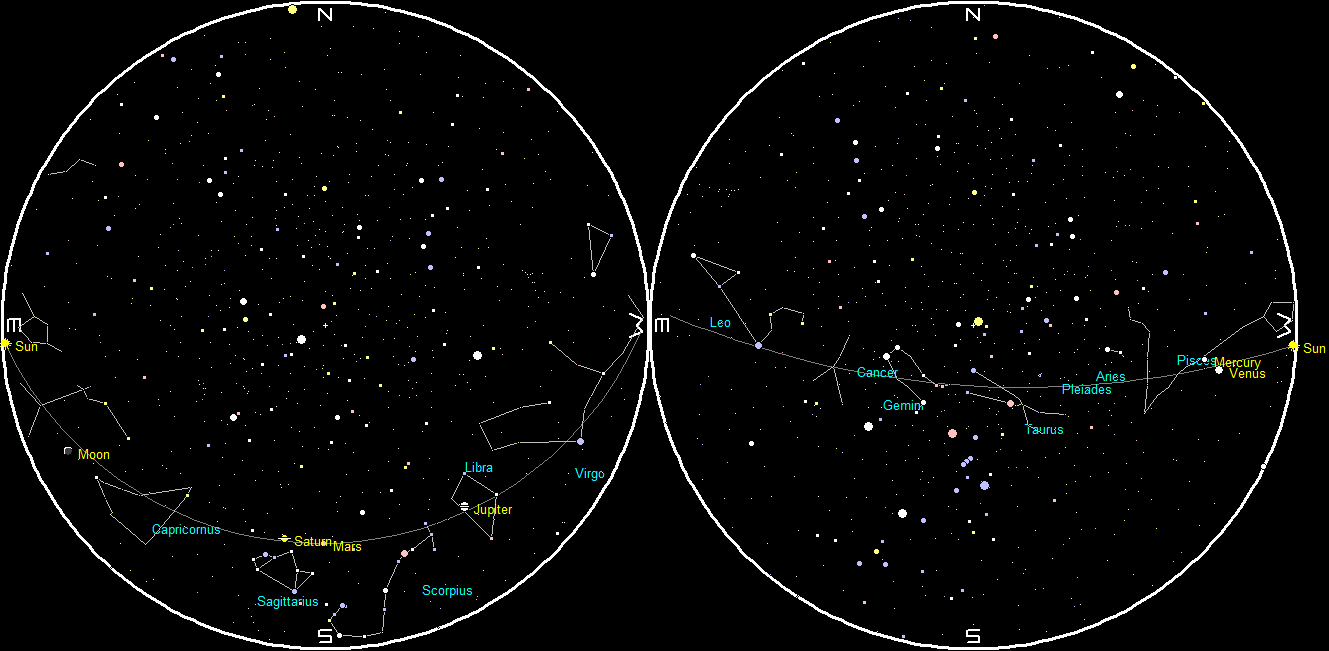
Planets at sunset and sunrise of a single night starting with sunset on the right on March 14, 2018. The night ends on the left with sunrise on the 15th. Click on the image to enlarge. Created using my LookingUp program.
02/13/2018 – Ephemeris – The Big Dipper as a pointer to other stars and constellations
Ephemeris for Tuesday, March 13th. The Sun will rise at 7:58. It’ll be up for 11 hours and 47 minutes, setting at 7:46. The Moon, 4 days before new, will rise at 6:42 tomorrow morning.
With the Big Dipper up in the northeastern sky it is a sign that spring is coming. At 9 p.m. The Big Dipper can be used to find other stars and constellations. The Big Dipper’s most famous function is in locating Polaris the North Star. It’s a good way of finding directions at night. The altitude of Polaris, that is angle above the horizon, will give one’s approximate latitude north of the equator. Another constellation that can be found is Leo the lion. It is rising in the east in the evening, but it can also be found from the Big Dipper by imagining that a hole were drilled in the bottom of the bowl to let the water leak out. It would fall on Leo’s back. The Big Dipper can be used to find two more stars, but they have not yet risen.
The times given are for the Traverse City/Interlochen area of Michigan. They may be different for your location.
Addendum
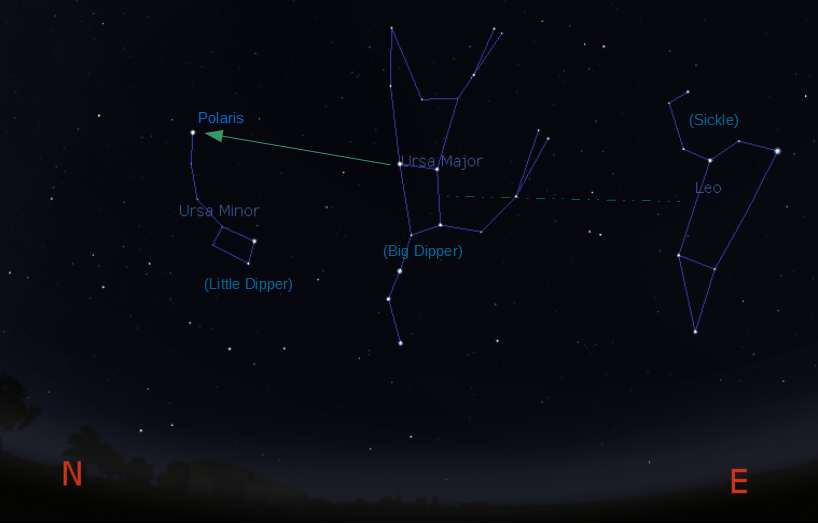
The Big Dipper points to Polaris, the, North Star, and to Leo the lion at 9 p.m., March 13th. In another hour the 4th brightest night-time star Arcturus will appear above the eastern horizon pointed to by the arc of the handle of the Big Dipper. We’ll revisit the Big Dipper next month when Arcturus and Spica will also be found by the use of the Big Dipper. Created using Stellarium and Libre Office.
03/06/2018 – Ephemeris – The Moon will pass the morning planets for the rest of the week
Ephemeris for Tuesday, March 6th. The Sun will rise at 7:11. It’ll be up for 11 hours and 25 minutes, setting at 6:37. The Moon, 3 days before last quarter, will rise at 11:57 this evening.
From tomorrow morning through the rest of the week the Moon will be passing above the morning planets one by one. Tomorrow morning the waning gibbous Moon will appear above and left of Jupiter the brightest of the morning planets in the south at 6 a.m. By Friday morning the then last quarter Moon will be approaching Mars and will be to the right and above the red planet. Saturday morning the then waning crescent Moon will appear above and right between Mars and Saturn. Sunday morning the waning crescent Moon will be left of Saturn. I love waning crescent Moons in morning twilight. In a couple of weeks, on the evening of the 19th to be exact the waxing crescent moon will pass Venus and Mercury.
The times given are for the Traverse City/Interlochen area of Michigan. They may be different for your location.
Addendum
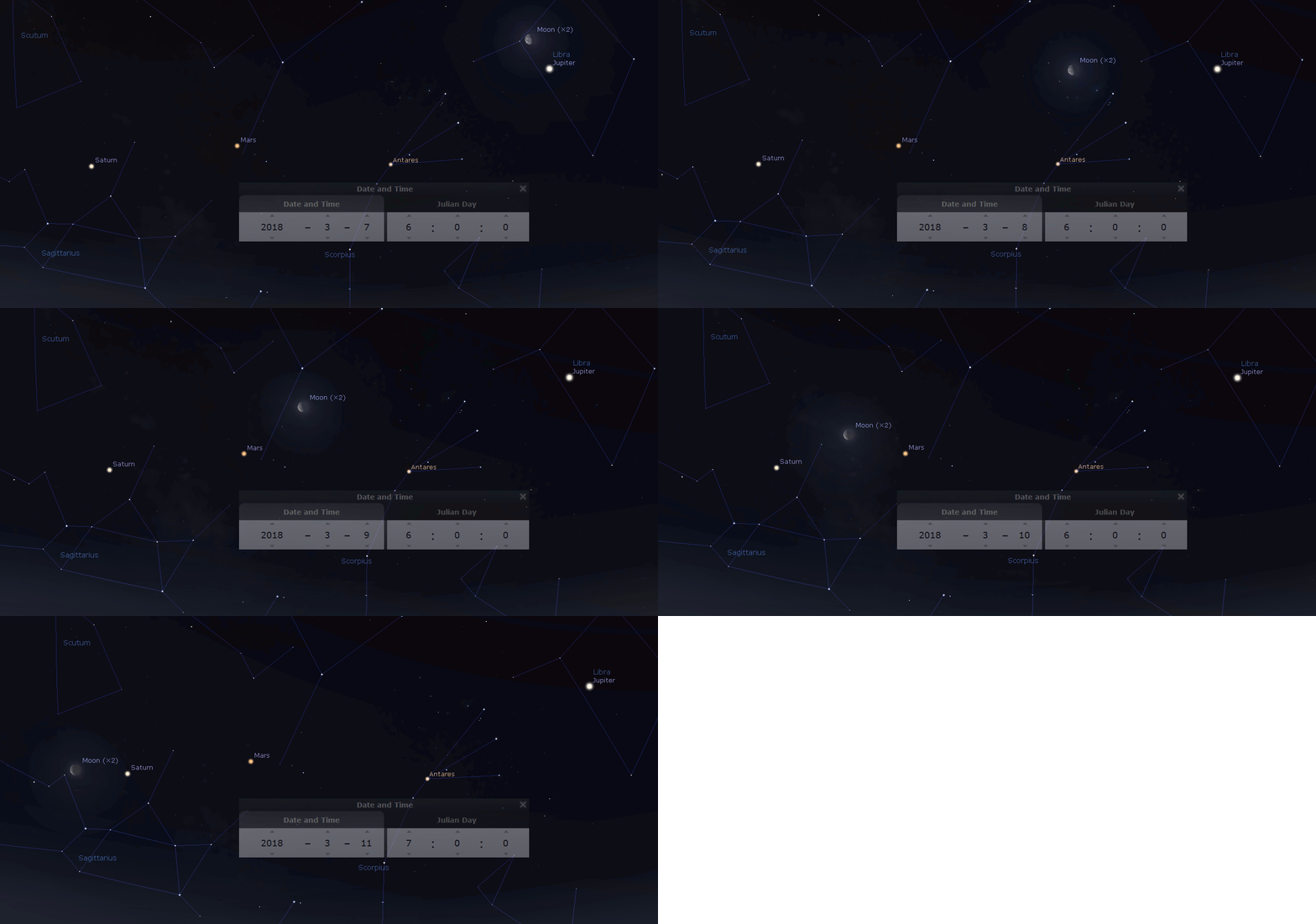
The Moon and morning planets at 6 a.m. each morning Wednesday through Sunday March 7-11, 2018. The Moon’s size has been doubled to show its phase. Note that due to Earth’s revolution of the Sun, that the sky will rotate about one degree westward per day. Click on the image to enlarge. Created using Stellarium and GIMP.
03/05/2018 – Ephemeris – Spring is coming: Leo is rising
Ephemeris for Monday, March 5th. The Sun will rise at 7:13. It’ll be up for 11 hours and 22 minutes, setting at 6:35. The Moon, half way from full to last quarter, will rise at 10:53 this evening.
The constellation Leo the lion is now rising in the east at 9 pm. It’s below and left of the Big Dipper higher up in the east-northeast. Leo is marked by two sets of easily recognizable stars. The front of him is a backward question mark of stars, also known as the Sickle that mark his head and mane, along with the front part of his body. Regulus is the star at the bottom of that backwards question mark. It’s the Little King Star. The hind end of him is a triangle of stars ending with another bright star, but not as bright as Regulus. It’s Denebola which means Lion’s tail. It is thought when the Sun was in this constellation long ago that the lions were driven by the heat to quench their thirst in the Nile river. Ancients physicians thought medicines were poison when the Sun was here also.
The times given are for the Traverse City/Interlochen area of Michigan. They may be different for your location.
Addendum
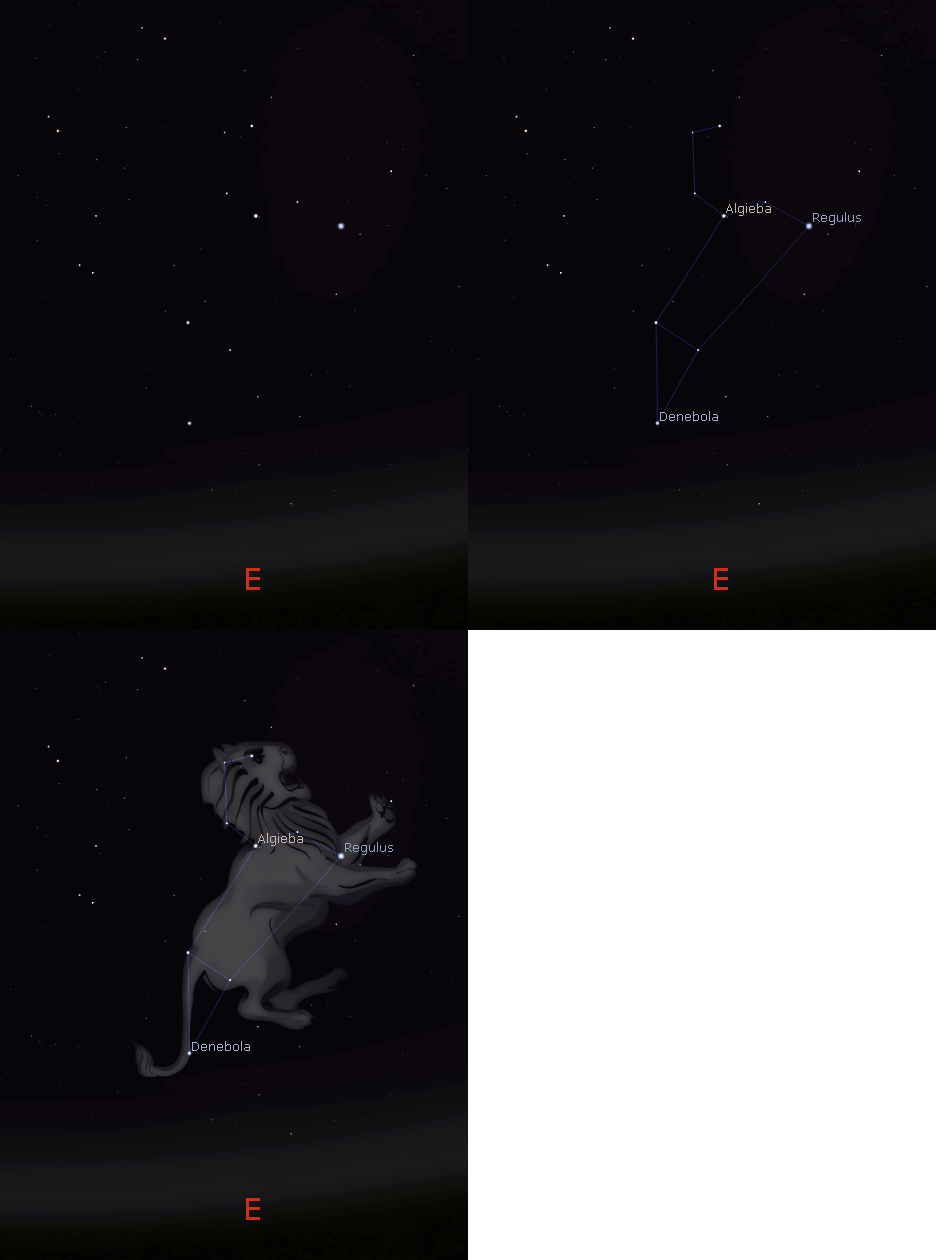
The constellation Leo animation. Created using Stellarium and GIMP.
Algieba is a binary star, which should be able to be split with any good telescope. The magnitude 2.4 and 3.6 components are separated by 4.6 arc seconds. Binary stars are one type of object that benefit from using high power to resolve. The stars are very close in temperature, so each appears a yellow-orange color offering no color contrast.
02/27/2018 – Ephemeris – The bright spot on the Moon tonight
Ephemeris for Tuesday, February 27th. The Sun will rise at 7:23. It’ll be up for 11 hours and 4 minutes, setting at 6:27. The Moon, 2 days before full, will set at 6:38 tomorrow morning.
The moon tonight is bright. The sunrise line or terminator on the moon is crossing the large gray plain called Oceanus Procellarum, the largest of the moon’s seas. These seas were figments of the first telescopic observers imagination. They are really huge impact basins into which interior lava flowed. On the upper left edge of the moon near the terminator is a bright spot on the moon visible in binoculars. In a telescope it is a crater called Aristarchus. It is a fairly new crater, probably less than a billion years old. As a rule the brighter the crater the newer it is. Aristarchus is the brightest spot on the moon. Over the years visual astronomers have seen hazes and bright spots from time to time in and near Aristarchus.
The times given are for the Traverse City/Interlochen area of Michigan. They may be different for your location.
Addendum
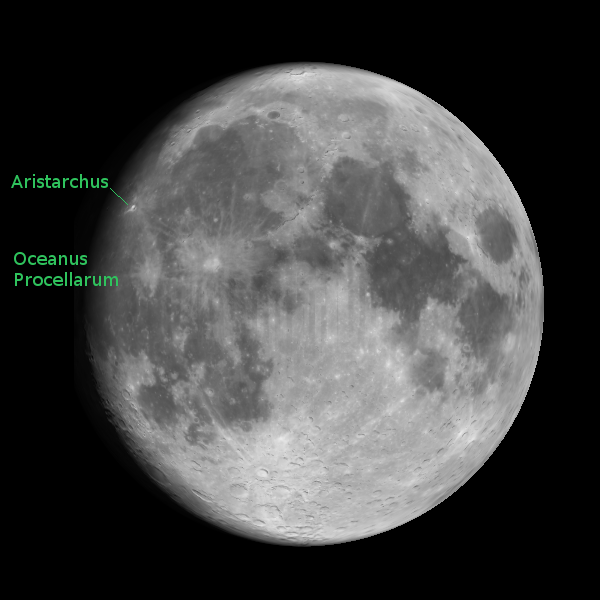
The Moon tonight at 9 p.m. February 27, 2018. Created using Virtual Moon Atlas.
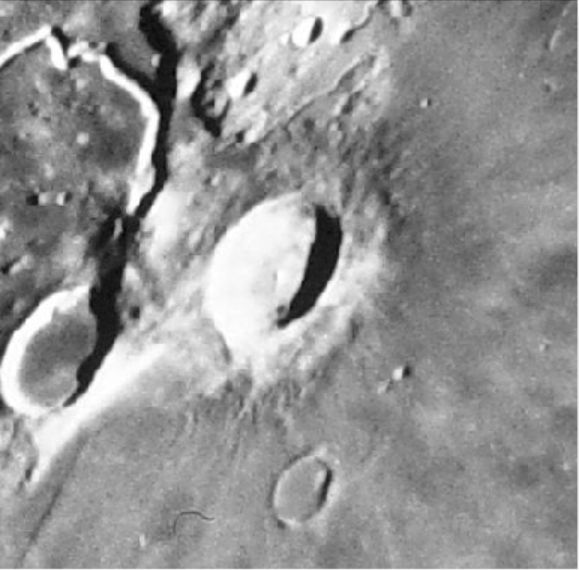
The crater Aristarchus. Credit: Lunar and Planetary Institute.
02/06/2018 – Ephemeris – Monoceros the Unicorn
Ephemeris for Tuesday, February 6th. The Sun will rise at 7:55. It’ll be up for 10 hours and 2 minutes, setting at 5:58. The Moon, 1 day before last quarter, will rise at 1:09 tomorrow morning.
Among all the constellations in the sky of animals real and mythical, there is also a unicorn. It’s called Monoceros, and inhabits the southeastern sky at 9 p.m. bounded by Orion on the right, Canis Major, the great dog below and Canis Minor, the little dog to the left. Unfortunately for observers without optical aid Monoceros, though large, is devoid of any but the faintest stars. Maybe that’s why no one sees unicorns anymore. It has many faint stars because the Milky Way runs through it. To the telescope it is a feast of faint nebulae or clouds of gas and dust, the birth place of stars, including the red rose of the Rosette Nebula, and the strange and tiny Hubble’s Variable Nebula. It also contains beautiful telescopic triple star system, Beta (β) Monocerotis.
The times given are for the Traverse City/Interlochen area of Michigan. They may be different for your location.
Addendum
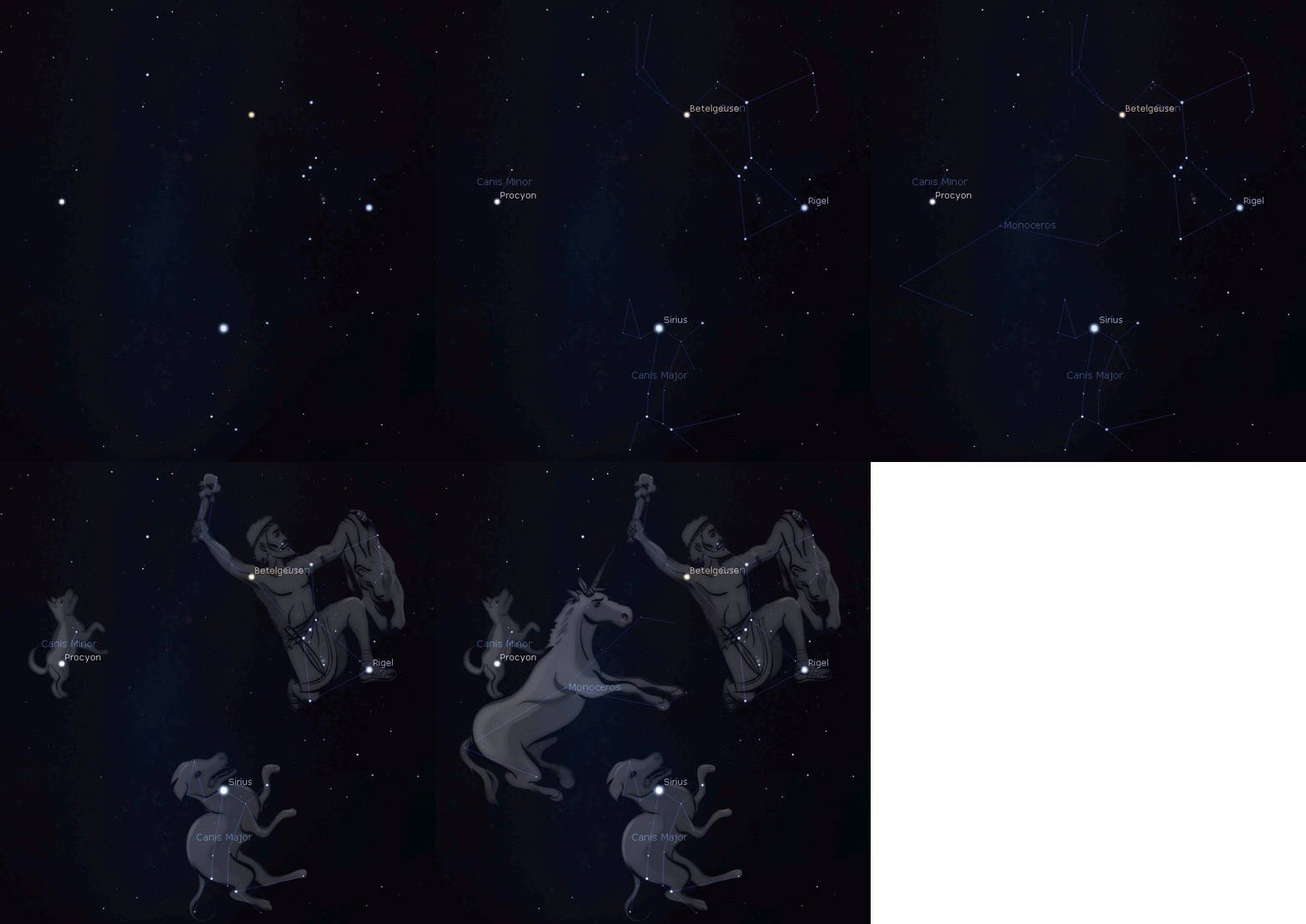
Monoceros finder chart animation. Created using Stellarium and GIMP.
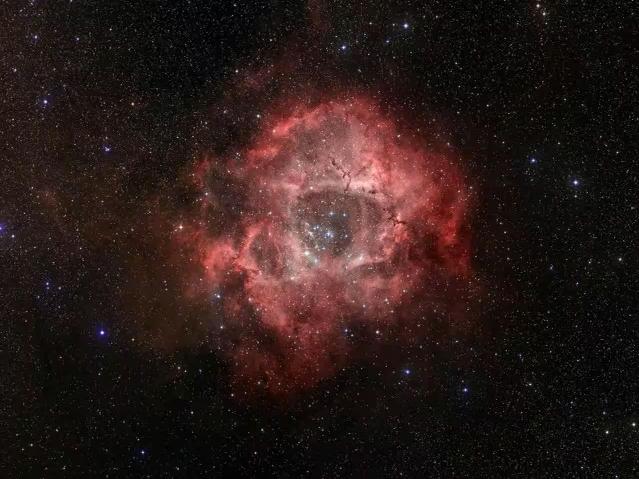
Rosette Nebula in the infrared from the Spitzer Space Telescope. Credit: NASA/JPL/Caltech
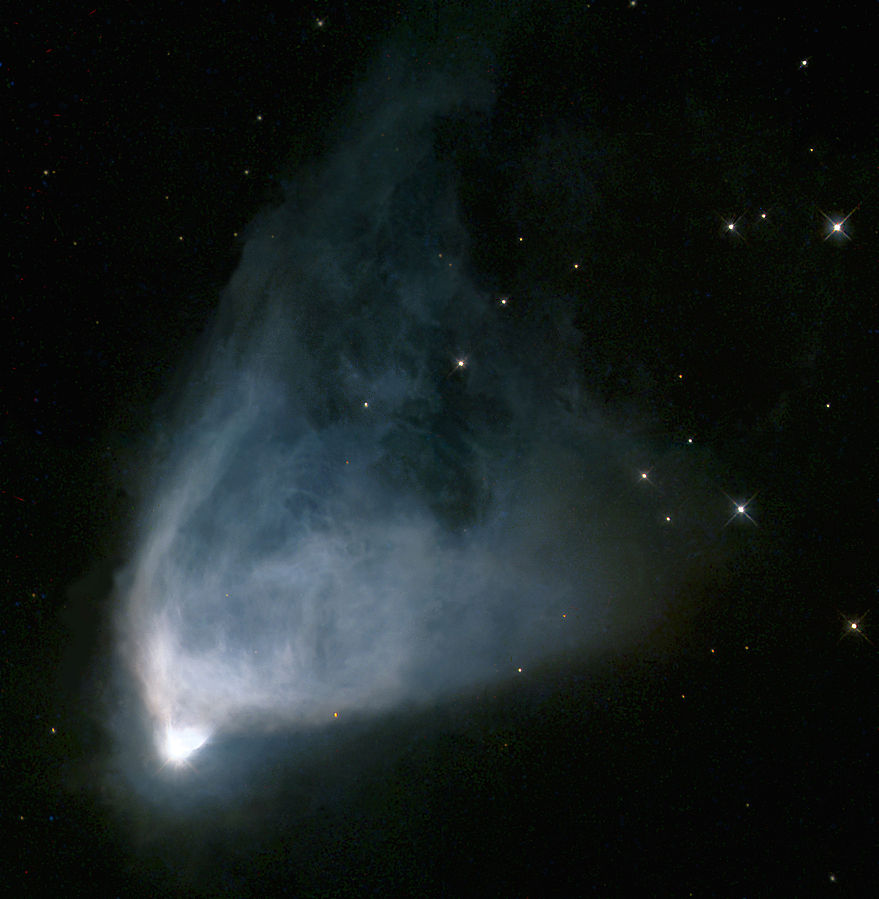
Hubble’s Variable Nebula photographed appropriately enough by the Hubble Space Telescope. Credit: NASA/ESA and The Hubble Heritage Team (AURA/STScI).
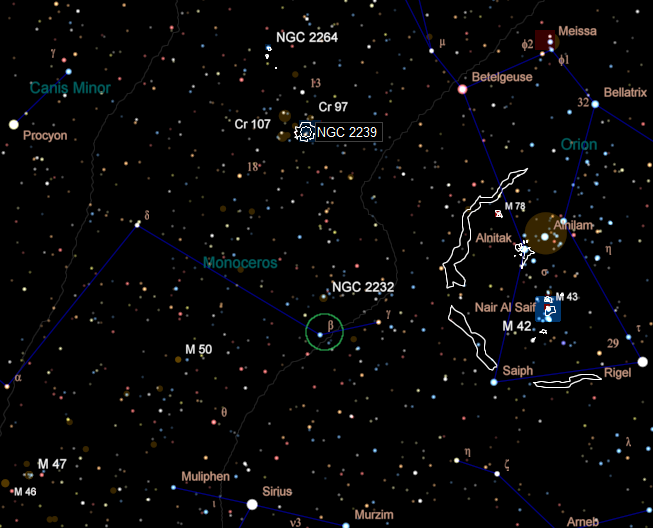
Looking at some faint objects in Monoceros. NGC 2239 is the star cluster in the center of the Rosette Nebula. The nebula itself is extremely faint. It shows in photographs, but I’ve never seen it visually. The green circle shows Beta Monocerotis, the triple star. All these stars are extremely blue-white hot. Created using Cartes du Ciel (Sky Charts).
Also in the chart above is the semicircular Barnard’s Loop, a supernova remnant a great long exposure photography target.

