Ephemeris: 09/01/2025 – Previewing September skies
This is Ephemeris for Labor Day, Monday, September 1st. Today the Sun will be up for 13 hours and 13 minutes, setting at 8:18, and it will rise tomorrow at 7:06. The Moon, 1 day past first quarter, will set at 12:52 tomorrow morning.
Let’s look at the skies for the month of September. The sun will be moving at its greatest speed in its retreat to the south. Daylight hours in the Interlochen/Traverse City area and will drop from 13 hours and 13 minutes today to 11 hours and 44 minutes on the 30th. The altitude of the Sun above the southern horizon at local noon will be 54 degrees today, and will descend to 42 degrees on the 30th. Local noon at mid-month will be around 1:37 pm. The season of summer is getting short, so enjoy it while you can. Summer ends and autumn begins at 2:20 PM on September 22nd, the autumnal equinox. This year the Harvest Moon, the nearest full moon to the equinox, will fall next month, this month it’s the Corn Moon.
The astronomical event times given in this blog are for the Traverse City/Interlochen area of Michigan (Lat 44.7° N, Long 85.7° W; EDT, UT – 4 hours) unless stated otherwise. Times will be different for other locations.
Addendum
September Evening Star Chart
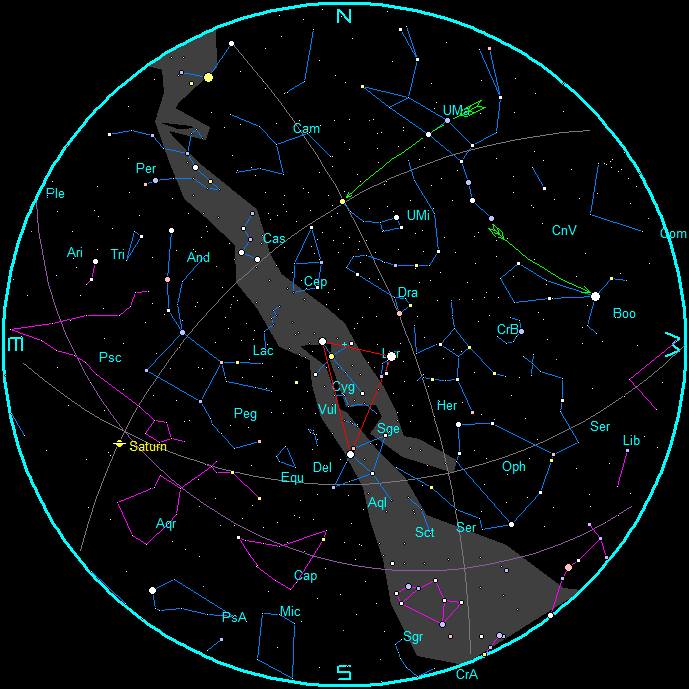
The planets and stars are plotted for the 15th at 10 p.m. EDT in the evening and 6 a.m. for the morning chart. These are the chart times. Note that Traverse City is located approximately 45 minutes behind our time meridian, West 75° longitude. (An hour 45 minutes behind our daylight saving time meridian during EDT). To duplicate the star positions on a planisphere you may have to set it to 1 hour 45 minutes earlier than the current time.
September Morning Star Chart
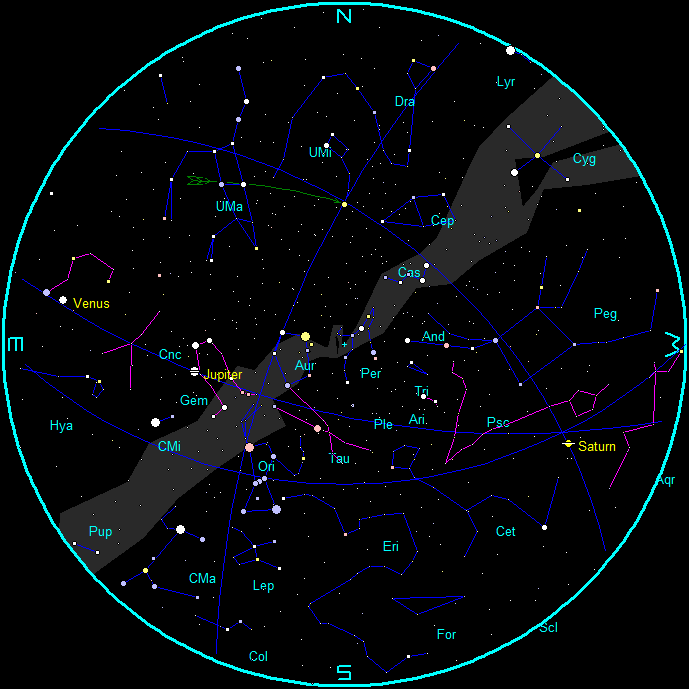
For a list of constellation names to go with the abbreviations, click here.
- Pointer stars at the front of the bowl of the Big Dipper point to Polaris, the North Star.
- Leaky dipper drips on Leo.
- Follow the arc of the handle of the Big Dipper to the star Arcturus.
- The Summer Triangle is in red.
Twilight Limits, Nautical and Astronomical
| EDT | |||||||
| Morning | Twilight | Evening | Twilight | Dark | Night | Moon | |
| Date | Astro. | Nautical | Nautical | Astro. | Start | End | Illum. |
| 2025-09-01 | 5h23m | 6h01m | 21h28m | 22h06m | 0h01m | 5h23m | 0.68 |
| 2025-09-02 | 5h24m | 6h02m | 21h26m | 22h04m | 0h53m | 5h24m | 0.77 |
| 2025-09-03 | 5h26m | 6h04m | 21h24m | 22h02m | 1h54m | 5h26m | 0.85 |
| 2025-09-04 | 5h27m | 6h05m | 21h22m | 22h00m | 3h05m | 5h27m | 0.92 |
| 2025-09-05 | 5h29m | 6h06m | 21h20m | 21h58m | 4h20m | 5h29m | 0.97 |
| 2025-09-06 | 5h30m | 6h08m | 21h18m | 21h55m | – | – | 1.00 |
| 2025-09-07 | 5h32m | 6h09m | 21h16m | 21h53m | – | – | 1.00 |
| 2025-09-08 | 5h33m | 6h10m | 21h14m | 21h51m | – | – | 0.97 |
| 2025-09-09 | 5h35m | 6h12m | 21h12m | 21h49m | – | – | 0.92 |
| 2025-09-10 | 5h36m | 6h13m | 21h10m | 21h47m | – | – | 0.84 |
| 2025-09-11 | 5h38m | 6h14m | 21h08m | 21h44m | – | – | 0.75 |
| 2025-09-12 | 5h39m | 6h16m | 21h06m | 21h42m | 21h42m | 22h19m | 0.64 |
| 2025-09-13 | 5h41m | 6h17m | 21h04m | 21h40m | 21h40m | 23h06m | 0.53 |
| 2025-09-14 | 5h42m | 6h18m | 21h02m | 21h38m | 21h38m | – | 0.41 |
| 2025-09-15 | 5h44m | 6h19m | 21h00m | 21h36m | 21h36m | 0h05m | 0.31 |
| 2025-09-16 | 5h45m | 6h21m | 20h58m | 21h34m | 21h34m | 1h15m | 0.21 |
| 2025-09-17 | 5h46m | 6h22m | 20h56m | 21h32m | 21h32m | 2h29m | 0.13 |
| 2025-09-18 | 5h48m | 6h23m | 20h54m | 21h29m | 21h29m | 3h44m | 0.07 |
| 2025-09-19 | 5h49m | 6h25m | 20h52m | 21h27m | 21h27m | 4h57m | 0.03 |
| 2025-09-20 | 5h51m | 6h26m | 20h50m | 21h25m | 21h25m | 5h51m | 0.00 |
| 2025-09-21 | 5h52m | 6h27m | 20h48m | 21h23m | 21h23m | 5h52m | 0.00 |
| 2025-09-22 | 5h53m | 6h28m | 20h46m | 21h21m | 21h21m | 5h53m | 0.02 |
| 2025-09-23 | 5h55m | 6h30m | 20h44m | 21h19m | 21h19m | 5h55m | 0.05 |
| 2025-09-24 | 5h56m | 6h31m | 20h42m | 21h17m | 21h17m | 5h56m | 0.10 |
| 2025-09-25 | 5h57m | 6h32m | 20h40m | 21h15m | 21h15m | 5h57m | 0.17 |
| 2025-09-26 | 5h59m | 6h33m | 20h38m | 21h13m | 21h20m | 5h59m | 0.25 |
| 2025-09-27 | 6h00m | 6h35m | 20h36m | 21h11m | 21h56m | 6h00m | 0.33 |
| 2025-09-28 | 6h01m | 6h36m | 20h35m | 21h09m | 22h43m | 6h01m | 0.42 |
| 2025-09-29 | 6h03m | 6h37m | 20h33m | 21h07m | 23h39m | 6h03m | 0.52 |
| 2025-09-30 | 6h04m | 6h38m | 20h31m | 21h05m | – | 6h04m | 0.62 |
Twilight calendar was generated using Cartes du Ciel (Sky Charts).
See my blog post: Twilight Zone for the definitions of the different periods of twilight here: https://bobmoler.wordpress.com/2018/09/27/.
NASA Calendar of Planetary Events
Sep  1  Mo            Venus: 31.2° W
     1  Mo   6:04 PM  Moon South Dec.: 28.6° S
     7  Su   2:09 PM  Full Moon
     7  Su   2:13 PM  Total Lunar Eclipse
     7  Su   7:08 PM  Moon Ascending Node
     8  Mo   4:09 PM  Moon-Saturn: 4° S
    10  We   8:10 AM  Moon Perigee: 364800 km
    12  Fr   5:48 PM  Moon-Pleiades: 1° S
    12  Fr  11:28 PM  Mars-Spica: 2.2° N
    13  Sa   6:46 AM  Mercury Superior Conjunction
    14  Su   6:33 AM  Last Quarter
    14  Su   5:23 PM  Moon North Dec.: 28.6° N
    16  Tu   7:06 AM  Moon-Jupiter: 4.7° S
    16  Tu   1:58 PM  Moon-Pollux: 2.5° N
    17  We   1:24 PM  Moon-Beehive: 2.1° S
    19  Fr   4:59 AM  Venus-Regulus: 0.5° N
    19  Fr   7:11 AM  Moon-Regulus: 1.4° S
    19  Fr   7:46 AM  Moon-Venus: 0.9° S
    20  Sa   7:13 PM  Moon Descending Node
    21  Su   1:10 AM  Saturn Opposition
    21  Su   3:42 PM  Partial Solar Eclipse (Not here.
                      In New Zealand and Antarctica)
    21  Su   3:54 PM  New Moon
    22  Mo   2:20 PM  Autumnal Equinox
    23  Tu   7:29 AM  Neptune Opposition
    23  Tu   5:31 PM  Moon-Spica: 1.2° N
    24  We  10:50 AM  Moon-Mars: 4.3° N
    26  Fr   5:46 AM  Moon Apogee: 405600 km
    27  Sa   1:34 PM  Moon-Antares: 0.7° N
    29  Mo   2:09 AM  Moon South Dec.: 28.6° S
    29  Mo   7:54 PM  First Quarter
Oct  1  We            Venus: 23.9° W
Sky Events Calendar by Fred Espenak and Sumit Dutta (NASA’s GSFC), with modifications by the author.
http://eclipse.gsfc.nasa.gov/SKYCAL/SKYCAL.html.
If you go to the above site, you can print out a list like the above for the entire year or calendar pages for your time zone.
Sun and Moon Rising and Setting Events
LU             Ephemeris of Sky Events for Interlochen/TC
September, 2025    Local time zone: EDT
+-----------------------------------------------------------------------+
| DATE |  SUN     SUN  DAYLIGHT|   TWILIGHT*    |MOON  RISE OR    ILLUM |
|      |  RISE    SET    HOURS |  END    START  |PHASE SET** TIME FRACTN|
+=======================================================================+
|Mon  1| 07:05a  08:18p  13:13 | 09:24p  05:59a |      Set  12:52a   66%|
|Tue  2| 07:06a  08:17p  13:10 | 09:22p  06:00a |      Set  01:54a   75%|
|Wed  3| 07:07a  08:15p  13:07 | 09:20p  06:01a |      Set  03:04a   84%|
|Thu  4| 07:09a  08:13p  13:04 | 09:18p  06:03a |      Set  04:19a   91%|
|Fri  5| 07:10a  08:11p  13:01 | 09:16p  06:04a |      Set  05:36a   96%|
|Sat  6| 07:11a  08:09p  12:58 | 09:14p  06:06a |      Set  06:53a   99%|
+------+-----------------------+----------------+-----------------------+
|Sun  7| 07:12a  08:07p  12:55 | 09:12p  06:07a |Full  Rise 08:10p  100%|
|Mon  8| 07:13a  08:05p  12:52 | 09:10p  06:08a |      Rise 08:30p   98%|
|Tue  9| 07:14a  08:04p  12:49 | 09:08p  06:10a |      Rise 08:51p   93%|
|Wed 10| 07:16a  08:02p  12:46 | 09:06p  06:11a |      Rise 09:14p   86%|
|Thu 11| 07:17a  08:00p  12:43 | 09:04p  06:12a |      Rise 09:43p   77%|
|Fri 12| 07:18a  07:58p  12:39 | 09:02p  06:14a |      Rise 10:19p   66%|
|Sat 13| 07:19a  07:56p  12:36 | 09:00p  06:15a |      Rise 11:06p   55%|
+------+-----------------------+----------------+-----------------------+
|Sun 14| 07:20a  07:54p  12:33 | 08:58p  06:16a |L Qtr Rise 12:05a   44%|
|Mon 15| 07:22a  07:52p  12:30 | 08:56p  06:17a |      Rise 01:14a   33%|
|Tue 16| 07:23a  07:50p  12:27 | 08:54p  06:19a |      Rise 02:29a   23%|
|Wed 17| 07:24a  07:49p  12:24 | 08:52p  06:20a |      Rise 03:44a   15%|
|Thu 18| 07:25a  07:47p  12:21 | 08:50p  06:21a |      Rise 04:56a    8%|
|Fri 19| 07:26a  07:45p  12:18 | 08:48p  06:23a |      Rise 06:06a    3%|
|Sat 20| 07:27a  07:43p  12:15 | 08:46p  06:24a |      Rise 07:13a    1%|
+------+-----------------------+----------------+-----------------------+
|Sun 21| 07:29a  07:41p  12:12 | 08:44p  06:25a |New   Set  07:33p    0%|
|Mon 22| 07:30a  07:39p  12:09 | 08:42p  06:26a |      Set  07:50p    1%|
|Tue 23| 07:31a  07:37p  12:06 | 08:40p  06:28a |      Set  08:07p    4%|
|Wed 24| 07:32a  07:35p  12:03 | 08:38p  06:29a |      Set  08:27p    9%|
|Thu 25| 07:33a  07:33p  12:00 | 08:37p  06:30a |      Set  08:50p   15%|
|Fri 26| 07:35a  07:32p  11:56 | 08:35p  06:31a |      Set  09:19p   23%|
|Sat 27| 07:36a  07:30p  11:53 | 08:33p  06:33a |      Set  09:56p   31%|
+------+-----------------------+----------------+-----------------------+
|Sun 28| 07:37a  07:28p  11:50 | 08:31p  06:34a |      Set  10:42p   40%|
|Mon 29| 07:38a  07:26p  11:47 | 08:29p  06:35a |F Qtr Set  11:38p   50%|
|Tue 30| 07:39a  07:24p  11:44 | 08:27p  06:36a |      Set  12:44a   60%|
+-----------------------------------------------------------------------+
* Nautical Twilight
** Moonrise or moonset, whichever occurs between sunset and sunrise
Generated using my LookingUp for DOS app.
Ephemeris: 08/29/2025 – Late August crescent Moon stays low in the western sky
This is Ephemeris for Friday, August 29th. Today the Sun will be up for 13 hours and 22 minutes, setting at 8:24, and it will rise tomorrow at 7:03. The Moon, 2 days before first quarter, will set at 10:48 this evening.
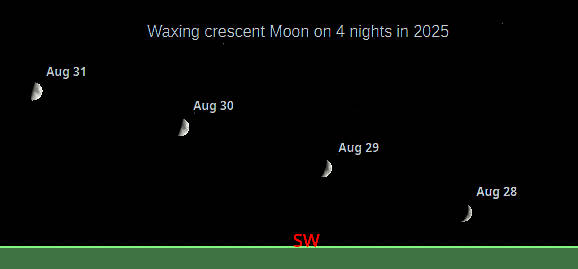
There’s an interesting feature that I’ve noticed about the Moon this time of year. When there’s a waxing crescent Moon in the evening, in late summer to early autumn, it’s seen pretty low in the southwestern sky after sunset. Tonight it’ll be two days before first quarter so it’ll be a fat crescent. However, when it’s seen after sunset, it will be very low in the southwestern sky. Contrast that for early risers, at this time of year the waning crescent Moon moves at a steep angle to the horizon, as do the planets now in the east. And of course the opposite is true for late winter and early spring moons. By the way, the Harvest Moon is in early October this year. The Harvest Moon is the nearest full moon to the autumnal equinox.
The astronomical event times given in this blog are for the Traverse City/Interlochen area of Michigan (Lat 44.7° N, Long 85.7° W; EDT, UT – 4 hours) unless stated otherwise. Times will be different for other locations.
Addendum
Ephemeris: 08/28/2025 – The first stars
This is Ephemeris for Thursday, August 28th. Today the Sun will be up for 13 hours and 25 minutes, setting at 8:26, and it will rise tomorrow at 7:02. The Moon, 3 days before first quarter, will set at 10:23 this evening.
Astronomers think that the first stars that formed after the Big Bang were very different from the stars we see around us today. They are called Population 3* stars. In fact, none of them have survived to this time. Back then there were no heavy elements, just hydrogen and helium. This allowed much more massive stars to form than stars today. The reason is the lack of heavier elements that make the interior of the star to be more opaque. This allows the core’s radiant energy to counteract the gravity of the star’s mass better and limit the stars’ growth. Supermassive stars burn hotter and live much shorter lives, exploding to spew the core contents of heavier elements, enriching the nebulae from which later stars form.
The astronomical event times given in this blog are for the Traverse City/Interlochen area of Michigan (Lat 44.7° N, Long 85.7° W; EDT, UT – 4 hours) unless stated otherwise. Times will be different for other locations.
Addendum
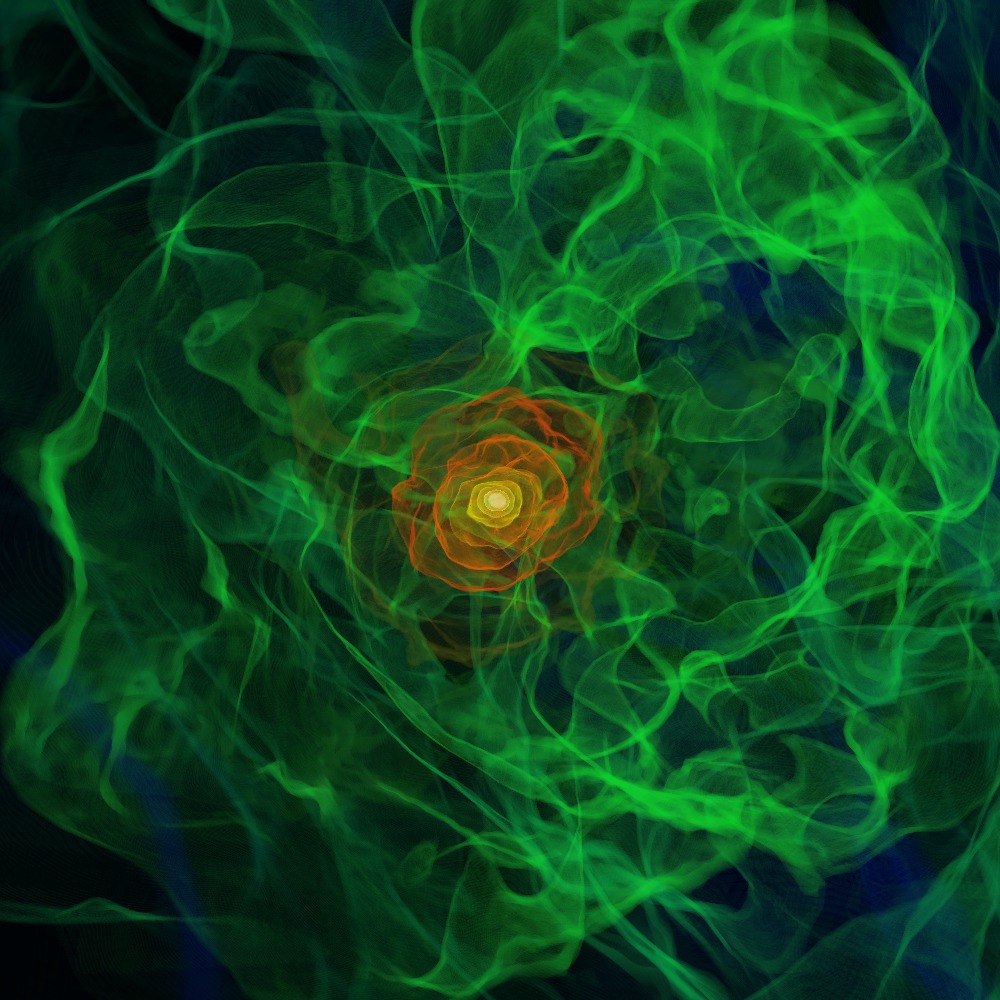
The above illustration comes from an article by Daegene Koh: Population III stars: The Universe’s ultimate reclusive pop stars.
* Stars are grouped into 3 populations based on their order of being recognized. The stars around us are population 1 stars. They have a lot of, what astronomers call, metals in their atmospheres. To an astronomer, when talking about stars, metals are any elements heavier than helium. Older stars we find in globular star clusters or in the centers of galaxies are classed as Population 2. They have lower amounts of metals in their atmosphere. The term for the amount of metals in a star’s atmosphere is called metallicity. Population 3 stars are the stars that are born just after The Big Bang when the universe was filled with just hydrogen and helium with possible tiny amounts of lithium and beryllium. These stars can grow very massive, and live very short lives, which is why we don’t see them anywhere near us. To spot the Population 3 stars we need a time machine. Fortunately we have one, the telescope. In looking back in space we are looking back in time, since the speed of light is finite. And the greatest time machine of all is the James Webb Space Telescope. Astronomers are hoping they can look back far enough to see Population 3 stars. Not individually, I don’t think, they’re too far away for that. But whole galaxies of them, at the dawn of time.
Like I’ve been saying in a whole bunch of contexts… They don’t make them like that anymore!
Ephemeris: 08/27/2025 – Taking our weekly look at the whereabouts of the naked-eye planets
This is Ephemeris for Wednesday, August 27th. Today the Sun will be up for 13 hours and 28 minutes, setting at 8:27, and it will rise tomorrow at 7:00. The Moon, halfway from new to first quarter, will set at 10:02 this evening.
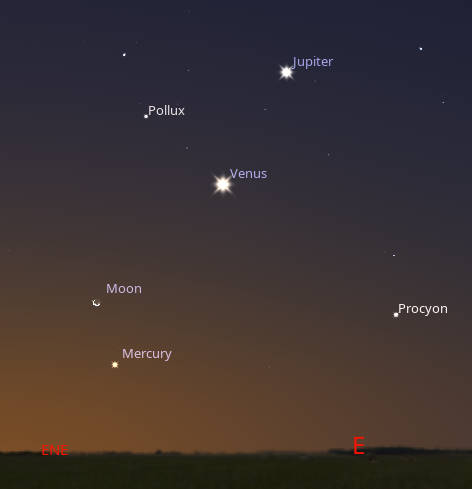
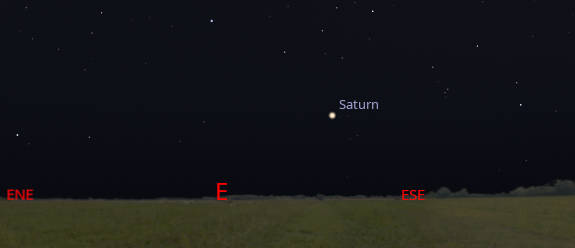
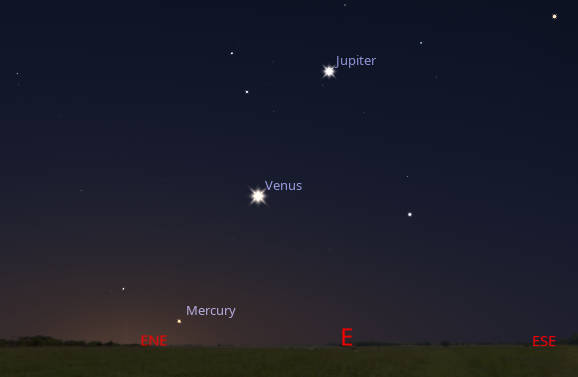
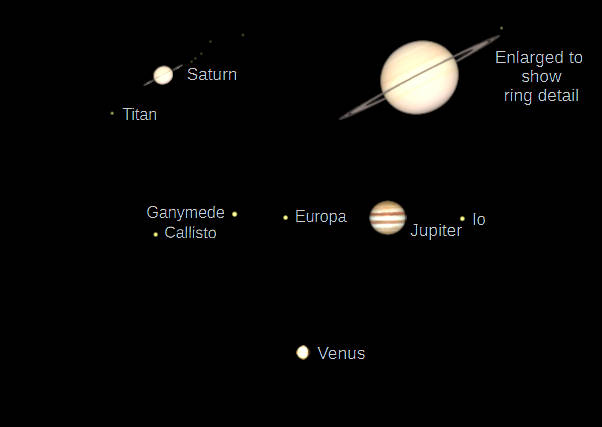
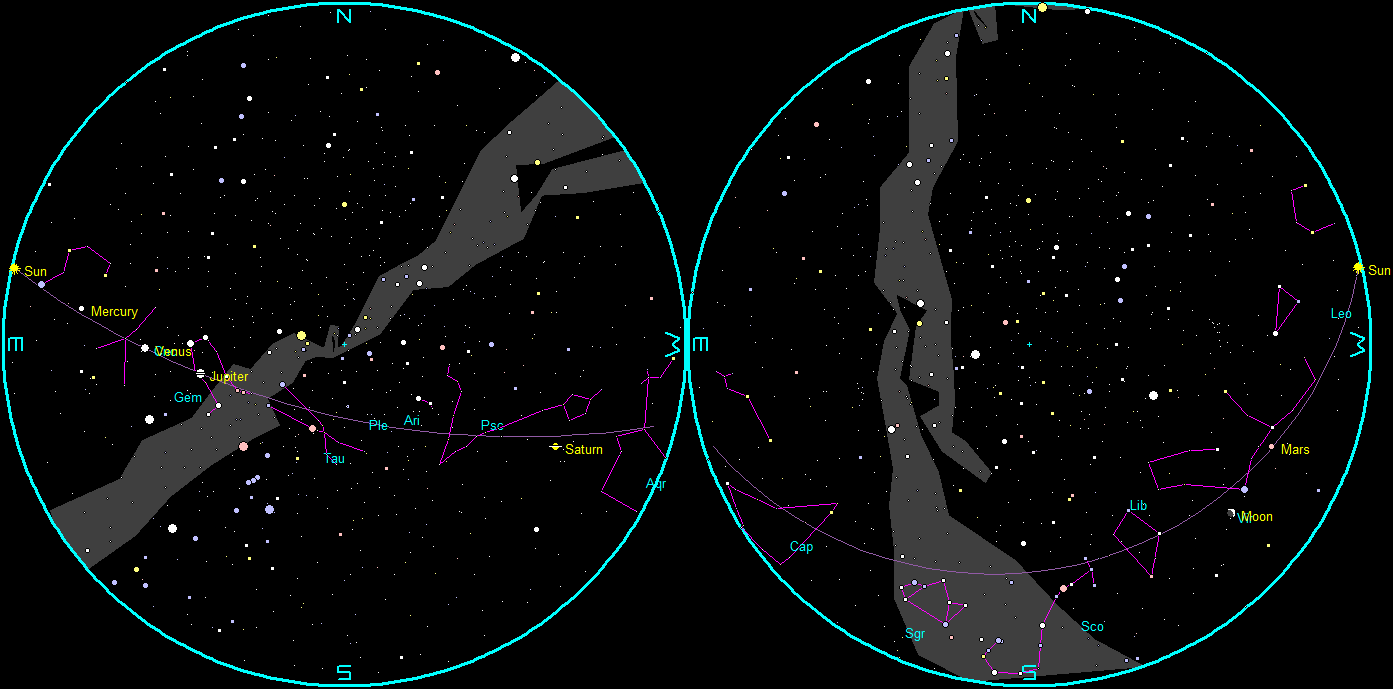
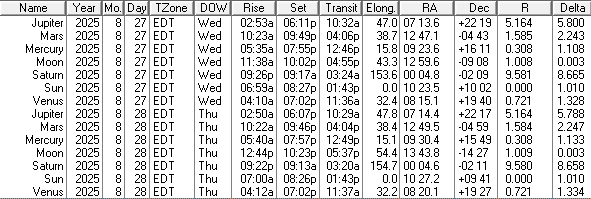
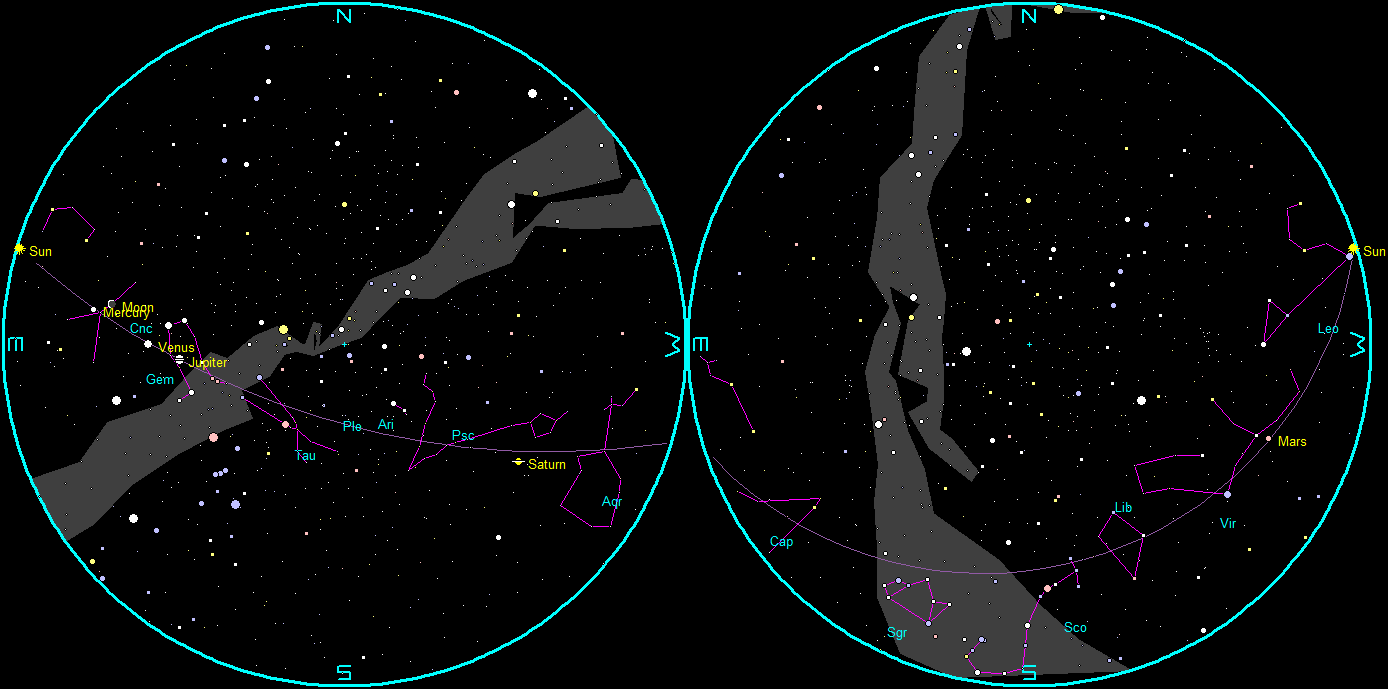
Let’s take our weekly look at the whereabouts of the naked-eye planets. The Red Planet Mars is too close to the direction of the Sun to spot. This is the curse of trying to view evening planets, which are near the direction of the Sun in late summer and early fall, for us at higher latitudes. Saturn now rises at 9:27 PM in the east. In a telescope Saturn sports a very thin ring, a bit more than 3° from being edge on. This angle will decrease to about a third of a degree by November 23rd before increasing. By 6 AM Saturn will be in the southwest. Jupiter will appear above the brighter Venus in the Eastern sky And among the brighter winter stars. Mercury will be in line with Venus and Jupiter very near the horizon.
The astronomical event times given in this blog are for the Traverse City/Interlochen area of Michigan (Lat 44.7° N, Long 85.7° W; EDT, UT – 4 hours) unless stated otherwise. Times will be different for other locations.
Addendum
Ephemeris: 08/26/2025 – Update on our expected nova T Coronae Borealis
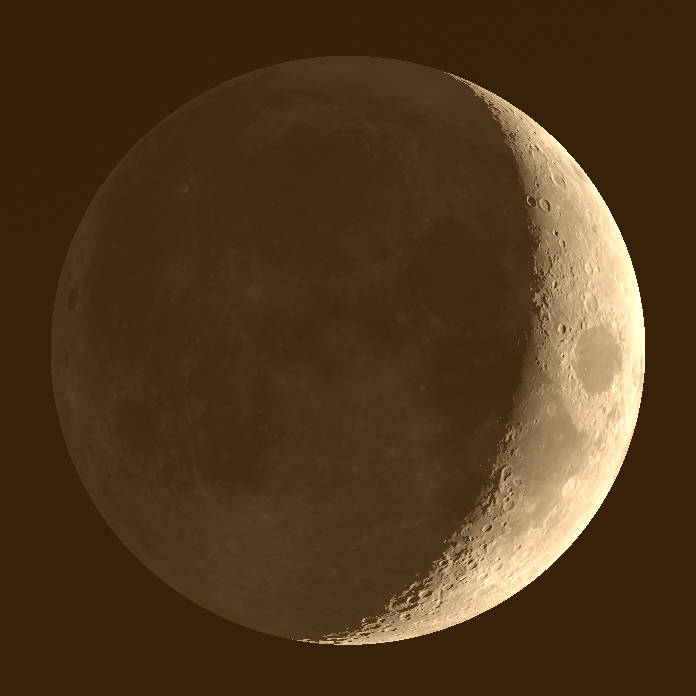
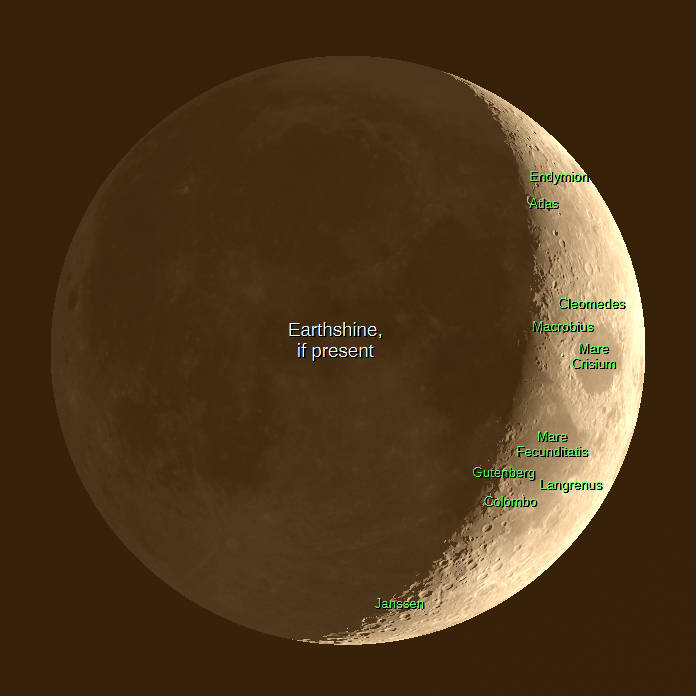
This is Ephemeris for Tuesday, August 26th. Today the Sun will be up for 13 hours and 31 minutes, setting at 8:29, and it will rise tomorrow at 6:59. The Moon, 3 days past new, will set at 9:44 this evening.
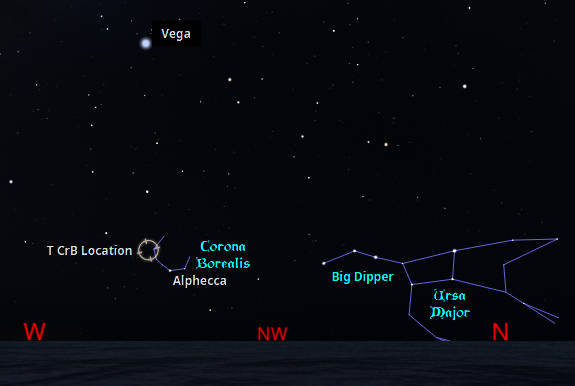
There is a star in the constellation of Corona Borealis, the Northern Crown, which astronomers are expecting to become a nova which means become rapidly very bright. The initial predictions favored last year, 2024, but it has yet to explode. The star’s designation is T Coronae Borealis, or T CrB for short. It’s a variable star designation. And an explosion occurs on one member of this binary star system about every 80 years. The last time was in 1946. Jean Schneider* of the Paris Observatory thinks they found a pattern within the 80-year time frame. The 227.6-day period of the white dwarf star orbiting its much larger primary. This seems to match the last three explosions. So the next likely date will be November 10th this year. We’ll see.
The astronomical event times given in this blog are for the Traverse City/Interlochen area of Michigan (Lat 44.7° N, Long 85.7° W; EDT, UT – 4 hours) unless stated otherwise. Times will be different for other locations.
* I found a link to this on the spaceweather.com website in a section called T CrB Nova Watch.
Addendum
Ephemeris: 08/25/2025 – Two fascinating constellations in and near the Summer Triangle
This is Bob Moler with Ephemeris for Monday, August 25th. Today the Sun will be up for 13 hours and 33 minutes, setting at 8:31, and it will rise tomorrow at 6:58. The Moon, 2 days past new, will set at 9:27 this evening.
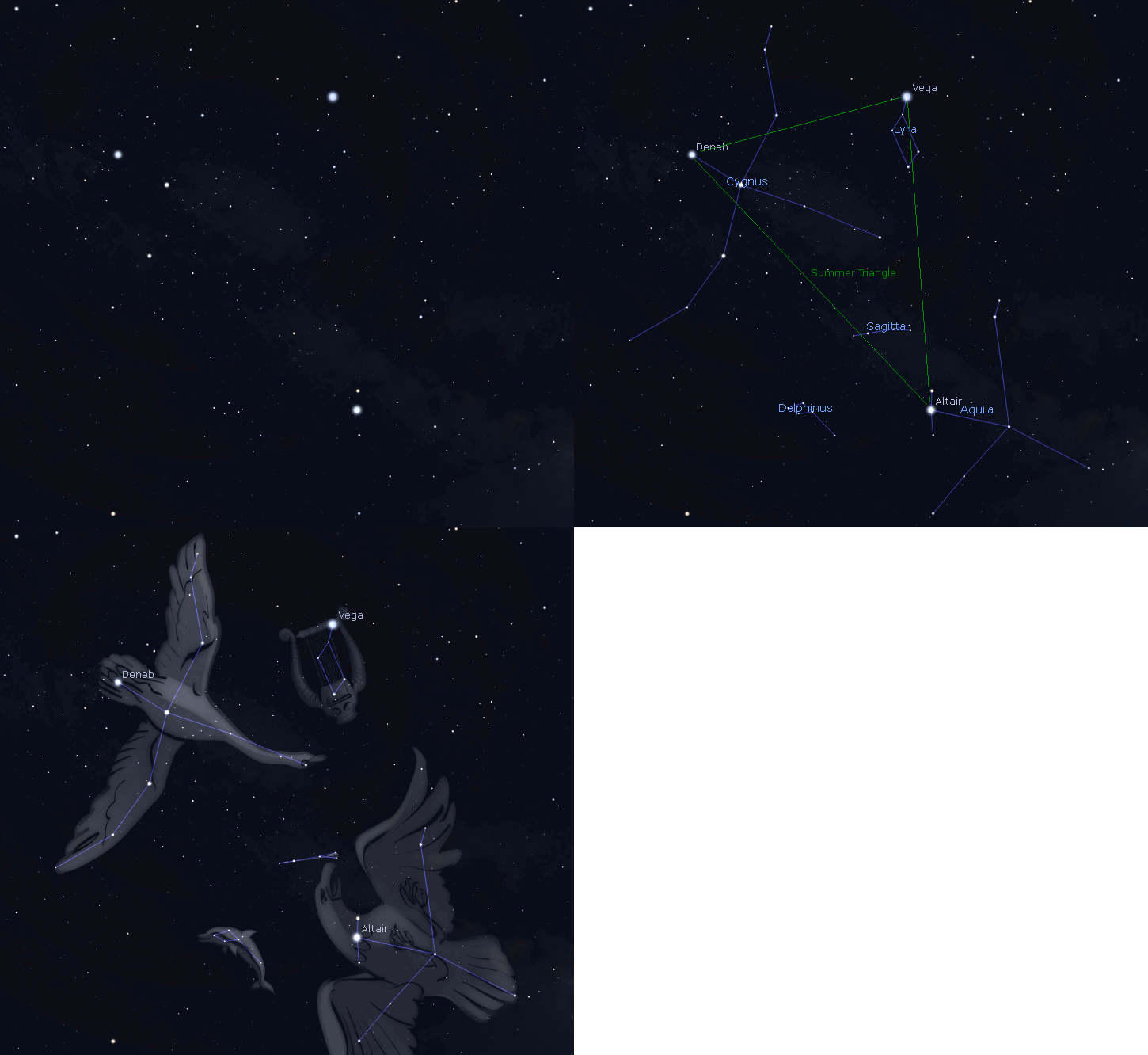
There are two small constellations in and near the Summer Triangle of bright stars. Both are near Altair the bottom star of the triangle in the southeast. The first is Delphinus the dolphin to the left of Altair. Delphinus is made-up of a small squished box of stars with another star below. It does look a dolphin leaping out of the water. The legendary Greek poet Arion, according to myth, was rescued by a dolphin. Also, the little squished box is an asterism called Job’s Coffin, though no one knows the origin of that name. The second constellation is above Altair, and within the Summer Triangle. It is called Sagitta the arrow. The stars do line up to look like a short arrow. It’s supposed to represent Cupid’s dart.
The astronomical event times given in this blog are for the Traverse City/Interlochen area of Michigan (Lat 44.7° N, Long 85.7° W; EDT, UT – 4 hours) unless stated otherwise. Times will be different for other locations.
Addendum
Ephemeris: 08/22/2025 – Star Party tomorrow night the 23rd
This is Ephemeris for Friday, August 22nd. Today the Sun will be up for 13 hours and 42 minutes, setting at 8:36, and it will rise tomorrow at 6:55. The Moon, 1 day before new, will rise at 7:10 tomorrow morning.
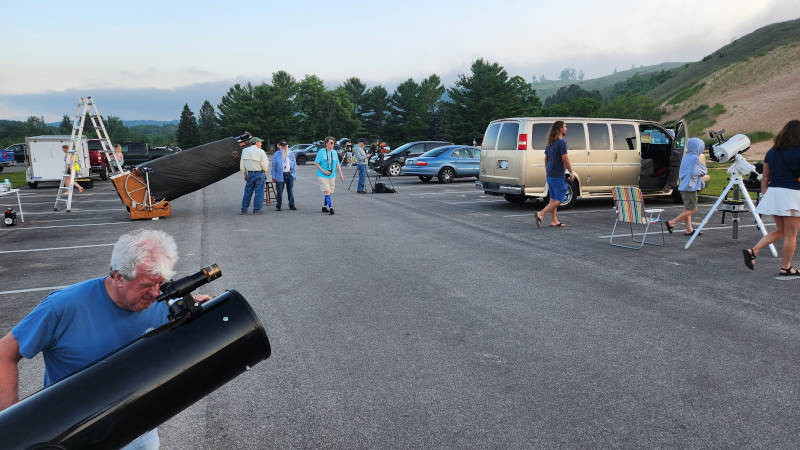
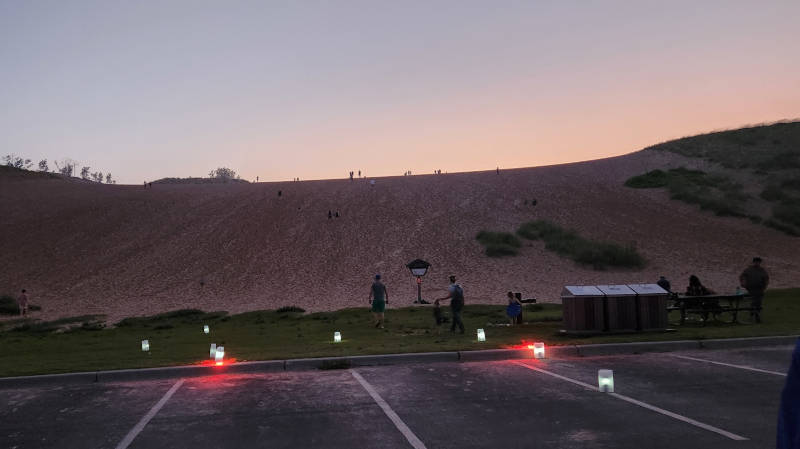
Weather permitting, the Grand Traverse Astronomical Society and the Park Rangers will host a star party at Sleeping Bear Dunes National Lakeshore, at the Dune Climb tomorrow night, starting around 9 PM. The parking lane closest to the dune will be blocked off for telescopes. The start time is after sunset, and the brighter stars will be visible by 9:15. As it gets darker some of the brighter interstellar wonders of our Milky Way galaxy, will appear, with many star clusters and nebulae, including a peek at the Great Andromeda Galaxy next door. The Rangers will leave around 11 PM however if it stays clear and there’s enough interest, society members with their telescopes will stay longer. This is the last Sleeping Bear Dunes star party this year.
The astronomical event times given in this blog are for the Traverse City/Interlochen area of Michigan (Lat 44.7° N, Long 85.7° W; EDT, UT – 4 hours) unless stated otherwise. Times will be different for other locations.
Addendum

Ephemeris: 08/21/2025 – The Milky Way’s Great Rift
This is Ephemeris for Thursday, August 21st. Today the Sun will be up for 13 hours and 45 minutes, setting at 8:38, and it will rise tomorrow at 6:53. The Moon, 2 days before new, will rise at 5:57 tomorrow morning.
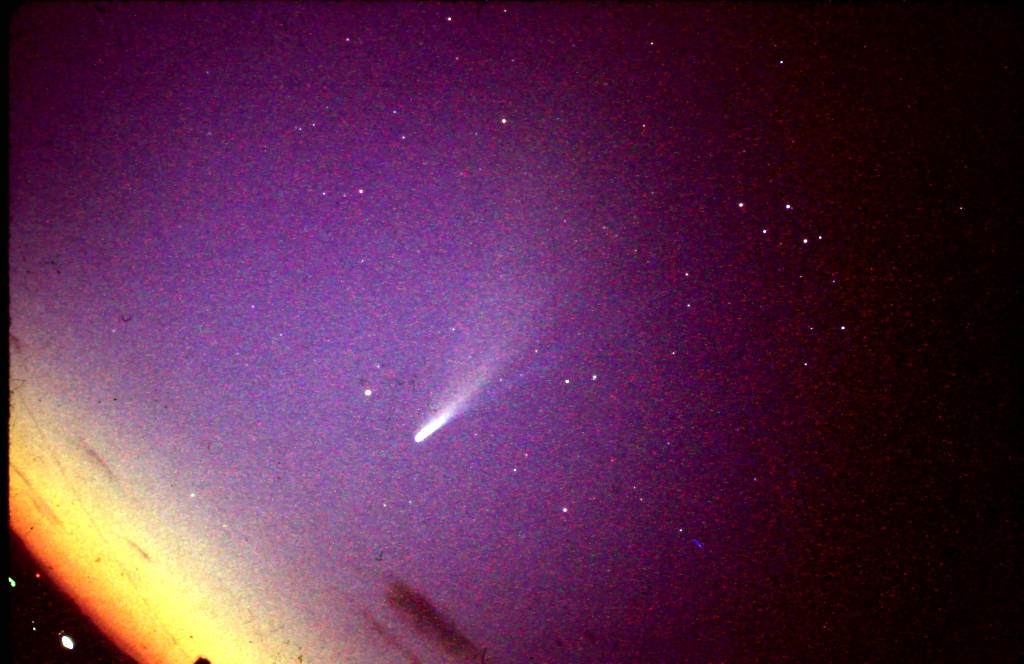
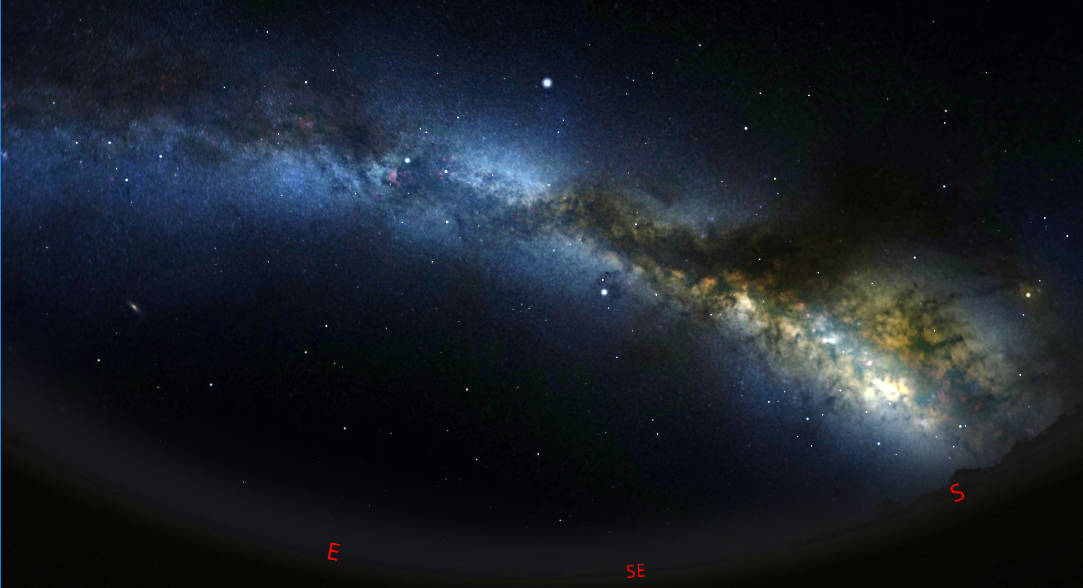
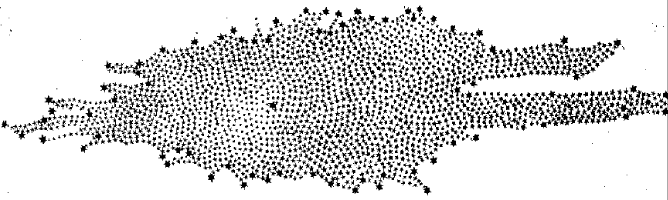
Once one finds the Milky Way which is pretty hard to miss this month, it becomes obvious that the Milky Way is split lengthwise starting near Deneb, the northernmost star of the Summer Triangle, almost all the way to the Teapot of Sagittarius low in the south. That dark split is called the Great Rift. Galileo first discovered that the hazy clouds of the Milky Way were actually made of faint stars, so it was thought the dark areas were due to a lack of stars. The great 18th century astronomer William Herschel did star counts all over the sky with his telescope. A map his sister drew of the flattened shape of his universe shows the lack of distant stars in one direction. It’s not really fewer stars, but interstellar clouds of dust blocking the light of the stars behind them.
The astronomical event times given in this blog are for the Traverse City/Interlochen area of Michigan (Lat 44.7° N, Long 85.7° W; EDT, UT – 4 hours) unless stated otherwise. Times will be different for other locations.
Addendum
Ephemeris: 08/20/2025 – Taking our weekly look at the whereabouts of the naked-eye planets
This is Ephemeris for Wednesday, August 20th. Today the Sun will be up for 13 hours and 48 minutes, setting at 8:39, and it will rise tomorrow at 6:52. The Moon, 3 days before new, will rise at 4:41 tomorrow morning.
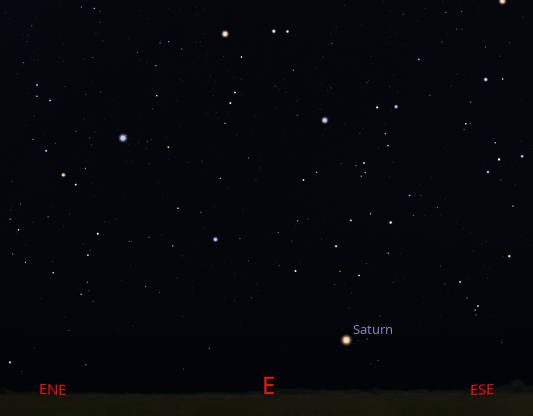
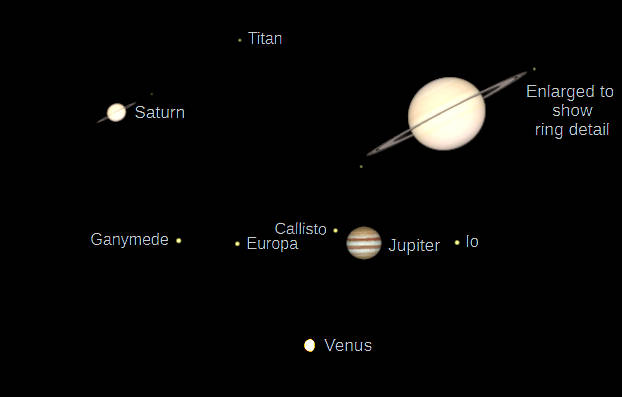
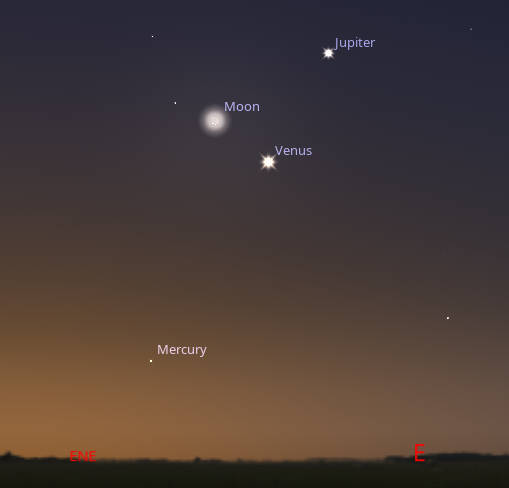
Let’s take our weekly look at the whereabouts of the naked-eye planets. The Red Planet Mars is too close to the direction of the Sun to spot. This is the curse of trying to view evening planets, which are near the direction of the Sun in late summer and early fall, for us at higher latitudes. Saturn now rises at 9:55 PM in the east. In a telescope Saturn sports a very thin ring, a bit less than 3° from being edge on. By 6 AM Saturn will be in the southwest. Jupiter will appear above the brighter Venus in the Eastern sky And among the brighter winter stars. Venus is by far the brighter of the two planets. Mercury will be below the crescent Moon tomorrow morning.
The astronomical event times given in this blog are for the Traverse City/Interlochen area of Michigan (Lat 44.7° N, Long 85.7° W; EDT, UT – 4 hours) unless stated otherwise. Times will be different for other locations.
Addendum
Ephemeris: 08/19/2025 – Mercury makes its morning appearance
This is Ephemeris for Tuesday, August 19th. Today the Sun will be up for 13 hours and 51 minutes, setting at 8:41, and it will rise tomorrow at 6:51. The Moon, 3 days past last quarter, will rise at 3:25 tomorrow morning.
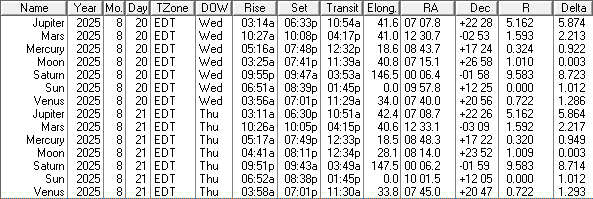
The tiny planet Mercury is making an appearance in the morning sky now. For the next week or so it will be visible around 6 AM. At least it’s time to start looking for it. Once found, it might be followed for another 20 minutes or so. This morning Mercury was at its greatest angular separation or elongation from the Sun of 18.6°. We have two periods where Mercury is easier to spot: on late winter and early spring evenings, and in the morning sky in late summer and early autumn. Of course Mercury must be at the proper elongation point at the time. Mercury is the smallest of the planets, being only 50% larger in diameter than our moon. In closeup, it looks much like our Moon, gray and cratered.
The astronomical event times given in this blog are for the Traverse City/Interlochen area of Michigan (Lat 44.7° N, Long 85.7° W; EDT, UT – 4 hours) unless stated otherwise. Times will be different for other locations.
Addendum
 Bob Moler's Ephemeris Blog