Ephemeris: 7/02/2024 – Antares and the scorpion
This is Bob Moler with Ephemeris for Tuesday, July 2nd. Today the Sun will be up for 15 hours and 29 minutes, setting at 9:31, and it will rise tomorrow at 6:02. The Moon, 3 days before new, will rise at 3:26 tomorrow morning.
The constellation of Scorpius the scorpion is low in the south at 11 PM these nights. It’s bright star Antares will pass due south at 11:30 this evening. Antares is an interesting star in that it is a red giant star, and its name Antares* means “Rival of Mars” alluding to the fact that it and Mars appears to be the same color. And about every two years Mars passes near Antares, so unless you know your stars and planets you could mistake them for each other. Antares lies at the heart of the scorpion. To its upper right is the front part of its body and claws, and the trail of stars running down the other way, nearly to the horizon, in the south and back up in the south-southeast to the two stars of its stinger make its characteristic tail.
The astronomical event times given are for the Traverse City/Interlochen area of Michigan (EDT, UT–4 hours). They may be different for your location.
*Breaking down Antares: Ant (Anti, against) – Ares (The Greek god of war the Romans called Mars).
Addendum
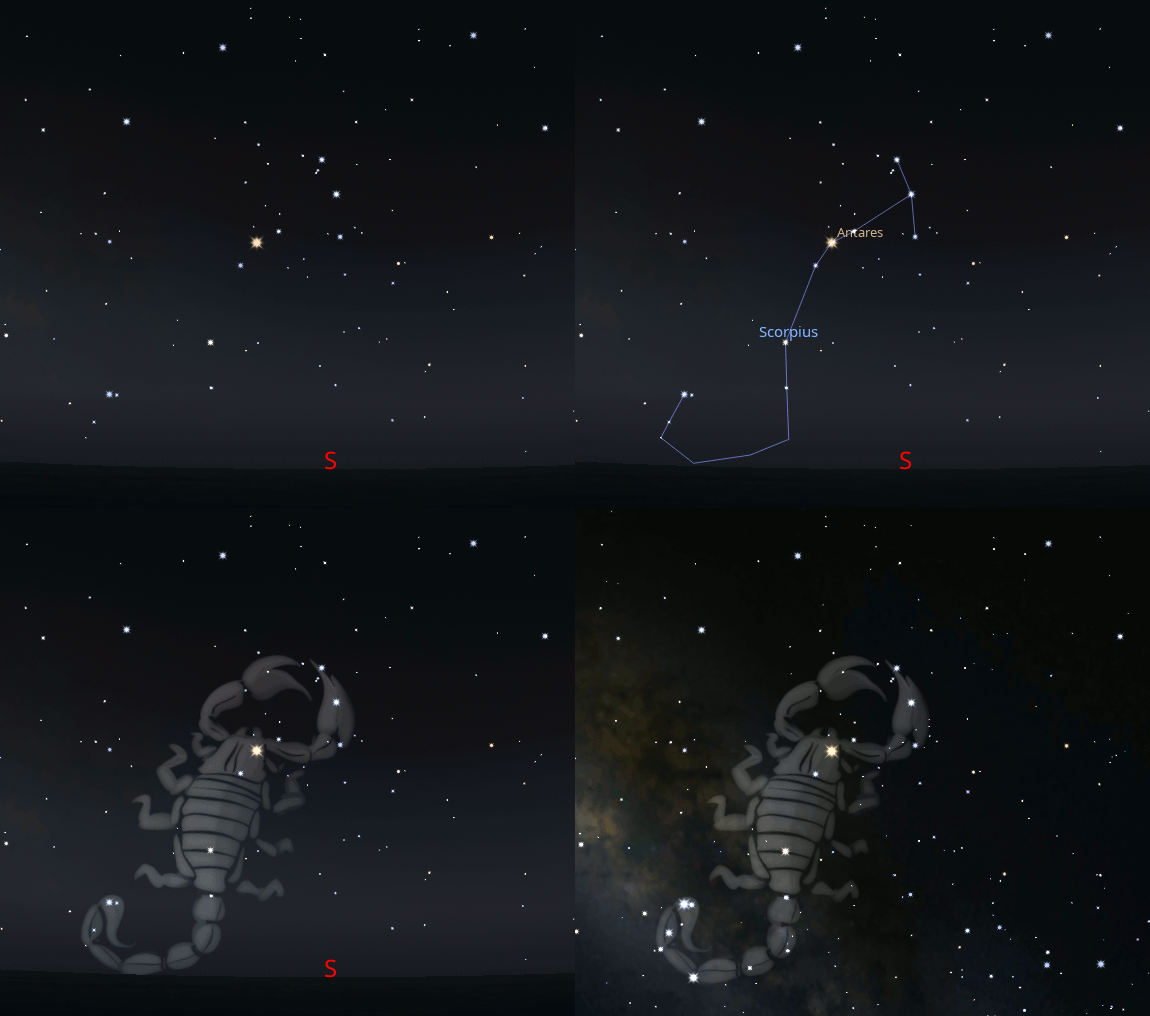
Note for trivia fans: Zubeneschamali is the longest star name at 14 letters.
Ephemeris: 07/01/2024 – Previewing July’s skies
This is Bob Moler with Ephemeris for Monday, July 1st. Today the Sun will be up for 15 hours and 30 minutes, setting at 9:31, and it will rise tomorrow at 6:02. The Moon, 3 days past last quarter, will rise at 2:50 tomorrow morning.
Let’s preview July’s skies. The Sun, having reached its northern solstice, is beginning to slide southward again, at first imperceptibly, then with greater speed. The daylight hours will decrease from 15 hours and 30 minutes today to 14 hours 40 minutes at month’s end. The daylight hours will be slightly shorter south of Interlochen, and slightly longer to the north. The altitude of the Sun at local noon, when it is due south will decrease from 68 degrees tomorrow to 63 degrees at month’s end. Despite the warmth, the Earth will reach its greatest distance from the Sun on Friday the 5th. Finally, a planet in the evening sky. Saturn will rise before midnight by mid-month, and Venus may be visible shortly after sunset by month’s end.
The astronomical event times given are for the Traverse City/Interlochen area of Michigan (EDT, UT–4 hours). They may be different for your location.
Addendum
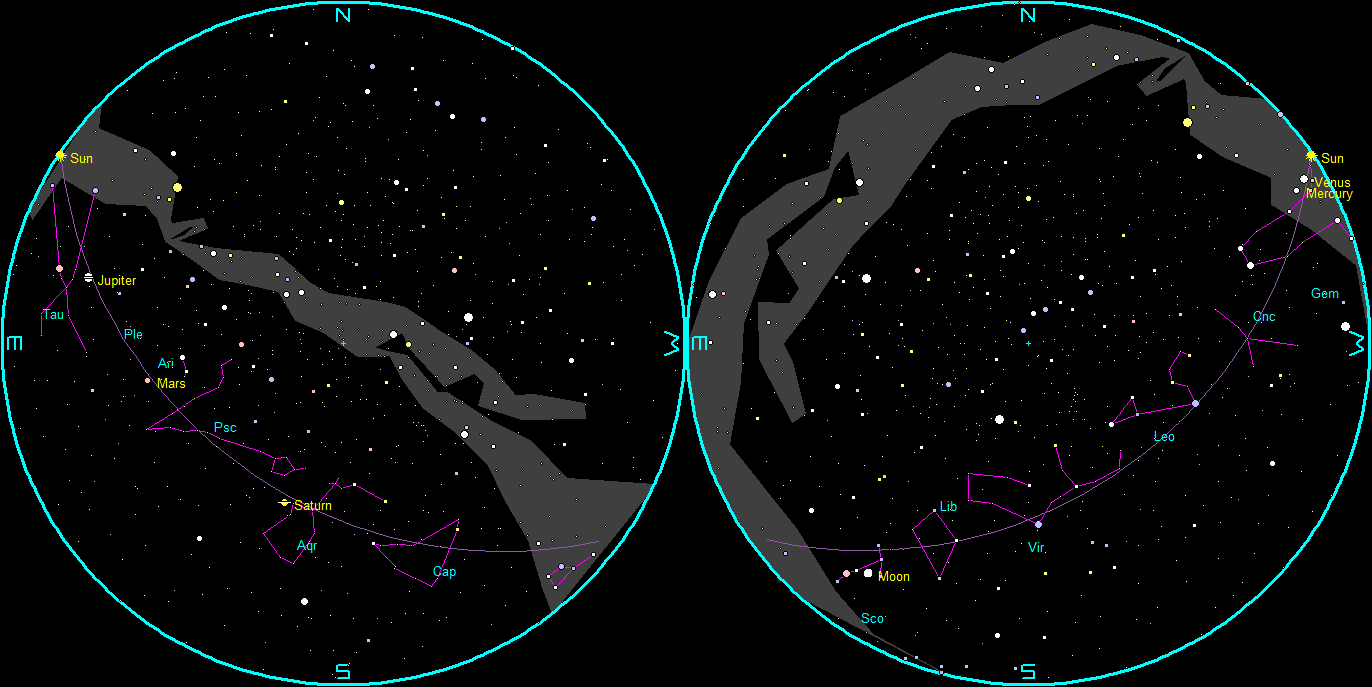
July Evening Star Chart
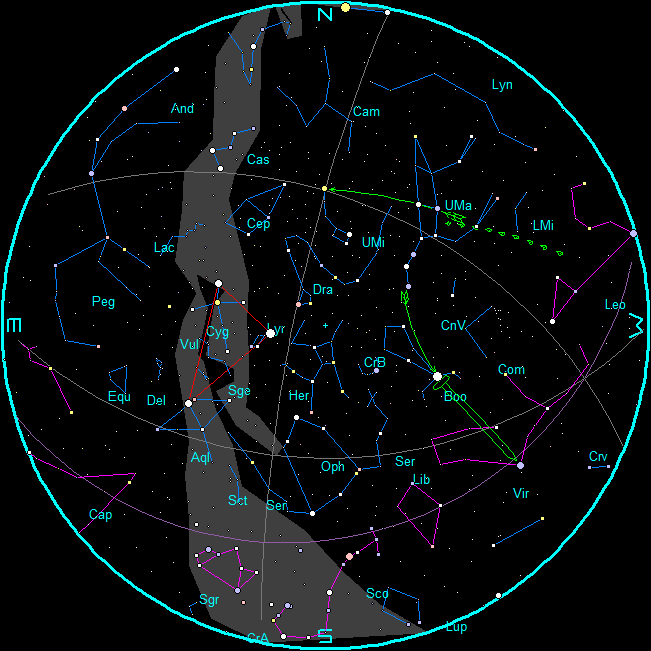
The planets and stars are plotted for the 15th at 11 p.m. EDT in the evening and 4 a.m. for the morning chart. These are the chart times. Note that Interlochen/Traverse City is located approximately 45 minutes behind our time meridian, West 75° longitude. (An hour 45 minutes behind our daylight saving time meridian during EDT). To duplicate the star positions on a planisphere you may have to set it to 1 hour 45 minutes earlier than the current time.
Note, the chart times of 11 p.m. and 4 a.m. are for the 15th. For each week before the 15th, add ½ hour (28 minutes if you’re picky). For each week after the 15th, subtract ½ hour, or 28 minutes. The planet positions are updated each Wednesday on this blog. For planet positions on dates other than the 15th, check the Wednesday planet posts on this blog for weekly positions.
July Morning Star Chart
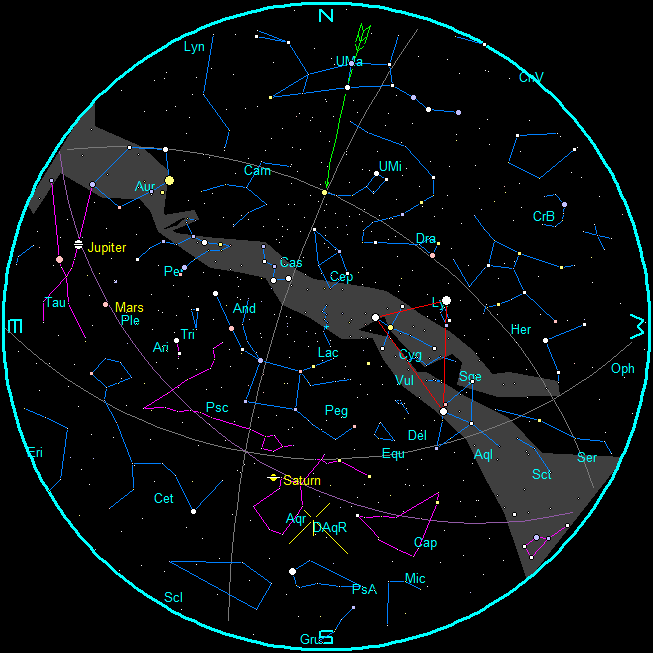
For a list of constellation names to go with the abbreviations, click here.
- Pointer stars at the front of the bowl of the Big Dipper point to Polaris, the North Star.
- Leaky dipper drips on Leo.
- Follow the arc of the handle of the Big Dipper to the star Arcturus, and
- Extend like a spike to Spica.
- The Summer Triangle is in red.
- DAqR is the radiant of the South Delta Aquariid meteor shower (Peaks on the afternoon of the 27th)
Twilight Limits, Nautical and Astronomical
| EDT | |||||||
| Morning | Twilight | Evening | Twilight | Dark | Night | Moon | |
| Date | Astro. | Nautical | Nautical | Astro. | Start | End | Illum. |
| 2024-07-01 | 3h35m | 4h38m | 23h00m | 0h02m | 0h02m | 2h22m | 0.16 |
| 2024-07-02 | 3h36m | 4h38m | 22h59m | 0h01m | 0h01m | 2h51m | 0.09 |
| 2024-07-03 | 3h37m | 4h39m | 22h59m | 0h01m | 0h01m | 3h27m | 0.04 |
| 2024-07-04 | 3h39m | 4h40m | 22h58m | 0h00m | 0h00m | 3h39m | 0.01 |
| 2024-07-05 | 3h40m | 4h41m | 22h58m | 23h59m | 23h59m | 3h40m | 0.00 |
| 2024-07-06 | 3h41m | 4h42m | 22h57m | 23h58m | 23h58m | 3h41m | 0.02 |
| 2024-07-07 | 3h43m | 4h43m | 22h56m | 23h57m | 23h57m | 3h43m | 0.05 |
| 2024-07-08 | 3h44m | 4h44m | 22h56m | 23h55m | 23h55m | 3h44m | 0.11 |
| 2024-07-09 | 3h46m | 4h45m | 22h55m | 23h54m | 23h54m | 3h46m | 0.17 |
| 2024-07-10 | 3h47m | 4h46m | 22h54m | 23h53m | – | 3h47m | 0.25 |
| 2024-07-11 | 3h49m | 4h47m | 22h53m | 23h52m | 0h11m | 3h49m | 0.34 |
| 2024-07-12 | 3h51m | 4h48m | 22h52m | 23h50m | 0h27m | 3h51m | 0.43 |
| 2024-07-13 | 3h52m | 4h50m | 22h51m | 23h49m | 0h42m | 3h52m | 0.53 |
| 2024-07-14 | 3h54m | 4h51m | 22h50m | 23h47m | 0h59m | 3h54m | 0.62 |
| 2024-07-15 | 3h56m | 4h52m | 22h49m | 23h46m | 1h18m | 3h56m | 0.71 |
| 2024-07-16 | 3h58m | 4h53m | 22h48m | 23h44m | 1h41m | 3h58m | 0.80 |
| 2024-07-17 | 3h59m | 4h55m | 22h47m | 23h42m | 2h10m | 3h59m | 0.88 |
| 2024-07-18 | 4h01m | 4h56m | 22h46m | 23h41m | 2h49m | 4h01m | 0.94 |
| 2024-07-19 | 4h03m | 4h57m | 22h45m | 23h39m | 3h41m | 4h03m | 0.98 |
| 2024-07-20 | 4h05m | 4h59m | 22h44m | 23h37m | – | – | 1.00 |
| 2024-07-21 | 4h07m | 5h00m | 22h42m | 23h36m | – | – | 0.99 |
| 2024-07-22 | 4h09m | 5h01m | 22h41m | 23h34m | – | – | 0.96 |
| 2024-07-23 | 4h10m | 5h03m | 22h40m | 23h32m | – | – | 0.90 |
| 2024-07-24 | 4h12m | 5h04m | 22h38m | 23h30m | – | – | 0.81 |
| 2024-07-25 | 4h14m | 5h06m | 22h37m | 23h28m | 23h28m | 23h43m | 0.71 |
| 2024-07-26 | 4h16m | 5h07m | 22h35m | 23h26m | 23h26m | – | 0.60 |
| 2024-07-27 | 4h18m | 5h08m | 22h34m | 23h24m | 23h24m | 0h03m | 0.49 |
| 2024-07-28 | 4h20m | 5h10m | 22h32m | 23h22m | 23h22m | 0h26m | 0.38 |
| 2024-07-29 | 4h22m | 5h11m | 22h31m | 23h20m | 23h20m | 0h53m | 0.28 |
| 2024-07-30 | 4h24m | 5h13m | 22h29m | 23h18m | 23h18m | 1h26m | 0.18 |
| 2024-07-31 | 4h26m | 5h14m | 22h28m | 23h16m | 23h16m | 2h08m | 0.11 |
Twilight calendar was generated using Cartes du Ciel (Sky Charts).
See my blog post: Twilight Zone for the definitions of the different periods of twilight here: https://bobmoler.wordpress.com/2018/09/27/.
NASA Calendar of Planetary Events
Jul  1  Mo            Venus: 7.4° E
     1  Mo   2:27 pm  Moon-Mars: 4.2° S
     2  Tu  11:31 am  Moon-Pleiades:  .3° N
     4  Th   8:08 pm  Moon North Dec.: 28.4° N
     5  Fr   1:59 am  Aphelion: 1.0167 AU
     5  Fr   6:57 pm  New Moon
     6  Sa   5:12 pm  Mercury-Beehive:  .1° S
     7  Su  12:04 pm  Moon-Beehive: 3.3° S
     7  Su   2:33 pm  Moon-Mercury: 3.5° S
     8  Mo   4:14 am  Jupiter-Aldebaran: 4.8° N
    12  Fr   4:12 am  Moon Apogee: 404400 km
    12  Fr   6:27 pm  Moon Descending Node
    13  Sa   6:49 pm  First Quarter
    13  Sa   9:48 pm  Moon-Spica: 1° S
    17  We   3:37 pm  Moon-Antares:  .2° S
    19  Fr   6:59 am  Moon South Dec.: 28.4° S
    20  Sa   3:35 pm  Mars-Pleiades: 4.8° S
    21  Su   6:17 am  Full Moon
    22  Mo   2:59 am  Mercury Elongation: 26.9° E
    24  We   1:43 am  Moon Perigee: 364900 km
    24  We   4:38 pm  Moon-Saturn:  .4° S
    24  We   9:40 pm  Mercury-Regulus: 2° S
    26  Fr   1:33 am  Moon Ascending Node
    27  Sa   5:44 pm  Delta Aquarid Shower: ZHR = 20
    27  Sa  10:52 pm  Last Quarter
    29  Mo   5:13 pm  Moon-Pleiades:  .1° N
Aug  1  Th            Venus: 15.9° E
All event times are given for UTC-4:00 Eastern Daylight Saving Time thereafter.
Sky Events Calendar by Fred Espenak and Sumit Dutta (NASA’s GSFC),
http://eclipse.gsfc.nasa.gov/SKYCAL/SKYCAL.html
If you go to the above site you can print out a list like the above for the entire year or calendar pages for your time zone.
Note that the site is now kept up for archival purposes. Fred Espenak retired from NASA several years ago and has his own site, AstroPixels, which contain the same information: http://astropixels.com/almanac/almanac.html. However it uses standard time all year.
Sun and Moon Rising and Setting Events
LU             Ephemeris of Sky Events for Interlochen/TC
July, 2024    Local time zone: EDT
+-----------------------------------------------------------------------+
| DATE |  SUN     SUN  DAYLIGHT|   TWILIGHT*    |MOON  RISE OR    ILLUM |
|      |  RISE    SET    HOURS |  END    START  |PHASE SET** TIME FRACTN|
+=======================================================================+
|Mon  1| 06:01a  09:31p  15:30 | 10:57p  04:36a |      Rise 02:50a   18%|
|Tue  2| 06:02a  09:31p  15:29 | 10:56p  04:36a |      Rise 03:26a   10%|
|Wed  3| 06:02a  09:31p  15:28 | 10:56p  04:37a |      Rise 04:13a    5%|
|Thu  4| 06:03a  09:31p  15:27 | 10:55p  04:38a |      Rise 05:10a    1%|
|Fri  5| 06:03a  09:30p  15:26 | 10:55p  04:39a |New   Set  09:59p    0%|
|Sat  6| 06:04a  09:30p  15:25 | 10:54p  04:40a |      Set  10:39p    1%|
+------+-----------------------+----------------+-----------------------+
|Sun  7| 06:05a  09:29p  15:24 | 10:53p  04:41a |      Set  11:10p    5%|
|Mon  8| 06:06a  09:29p  15:23 | 10:53p  04:42a |      Set  11:34p    9%|
|Tue  9| 06:06a  09:29p  15:22 | 10:52p  04:43a |      Set  11:53p   16%|
|Wed 10| 06:07a  09:28p  15:20 | 10:51p  04:44a |      Set  12:10a   23%|
|Thu 11| 06:08a  09:27p  15:19 | 10:50p  04:45a |      Set  12:26a   32%|
|Fri 12| 06:09a  09:27p  15:17 | 10:49p  04:46a |      Set  12:42a   41%|
|Sat 13| 06:10a  09:26p  15:16 | 10:48p  04:47a |F Qtr Set  12:58a   50%|
+------+-----------------------+----------------+-----------------------+
|Sun 14| 06:11a  09:25p  15:14 | 10:47p  04:49a |      Set  01:17a   60%|
|Mon 15| 06:12a  09:25p  15:13 | 10:46p  04:50a |      Set  01:40a   69%|
|Tue 16| 06:12a  09:24p  15:11 | 10:45p  04:51a |      Set  02:10a   78%|
|Wed 17| 06:13a  09:23p  15:09 | 10:44p  04:52a |      Set  02:49a   86%|
|Thu 18| 06:14a  09:22p  15:07 | 10:43p  04:54a |      Set  03:40a   92%|
|Fri 19| 06:15a  09:21p  15:06 | 10:41p  04:55a |      Set  04:45a   97%|
|Sat 20| 06:16a  09:21p  15:04 | 10:40p  04:56a |      Set  06:01a  100%|
+------+-----------------------+----------------+-----------------------+
|Sun 21| 06:17a  09:20p  15:02 | 10:39p  04:58a |Full  Rise 10:07p   99%|
|Mon 22| 06:18a  09:19p  15:00 | 10:38p  04:59a |      Rise 10:37p   97%|
|Tue 23| 06:19a  09:18p  14:58 | 10:36p  05:00a |      Rise 11:01p   91%|
|Wed 24| 06:20a  09:17p  14:56 | 10:35p  05:02a |      Rise 11:23p   83%|
|Thu 25| 06:21a  09:16p  14:54 | 10:33p  05:03a |      Rise 11:43p   74%|
|Fri 26| 06:23a  09:14p  14:51 | 10:32p  05:05a |      Rise 12:03a   63%|
|Sat 27| 06:24a  09:13p  14:49 | 10:30p  05:06a |L Qtr Rise 12:26a   51%|
+------+-----------------------+----------------+-----------------------+
|Sun 28| 06:25a  09:12p  14:47 | 10:29p  05:08a |      Rise 12:52a   40%|
|Mon 29| 06:26a  09:11p  14:45 | 10:27p  05:09a |      Rise 01:26a   30%|
|Tue 30| 06:27a  09:10p  14:42 | 10:26p  05:11a |      Rise 02:08a   20%|
|Wed 31| 06:28a  09:09p  14:40 | 10:24p  05:12a |      Rise 03:01a   12%|
+-----------------------------------------------------------------------+
* Nautical Twilight
** Moonrise or moonset, whichever occurs between sunset and sunrise
Generated using my LookingUp for DOS app.
Ephemeris: 06/28/2024 – Solar viewing at Sleeping Bear Dunes tomorrow
This is Ephemeris for Friday, June 28th. Today the Sun will be up for 15 hours and 32 minutes, setting at 9:32, and it will rise tomorrow at 6:00. The Moon, at last quarter today, will rise at 1:37 tomorrow morning.
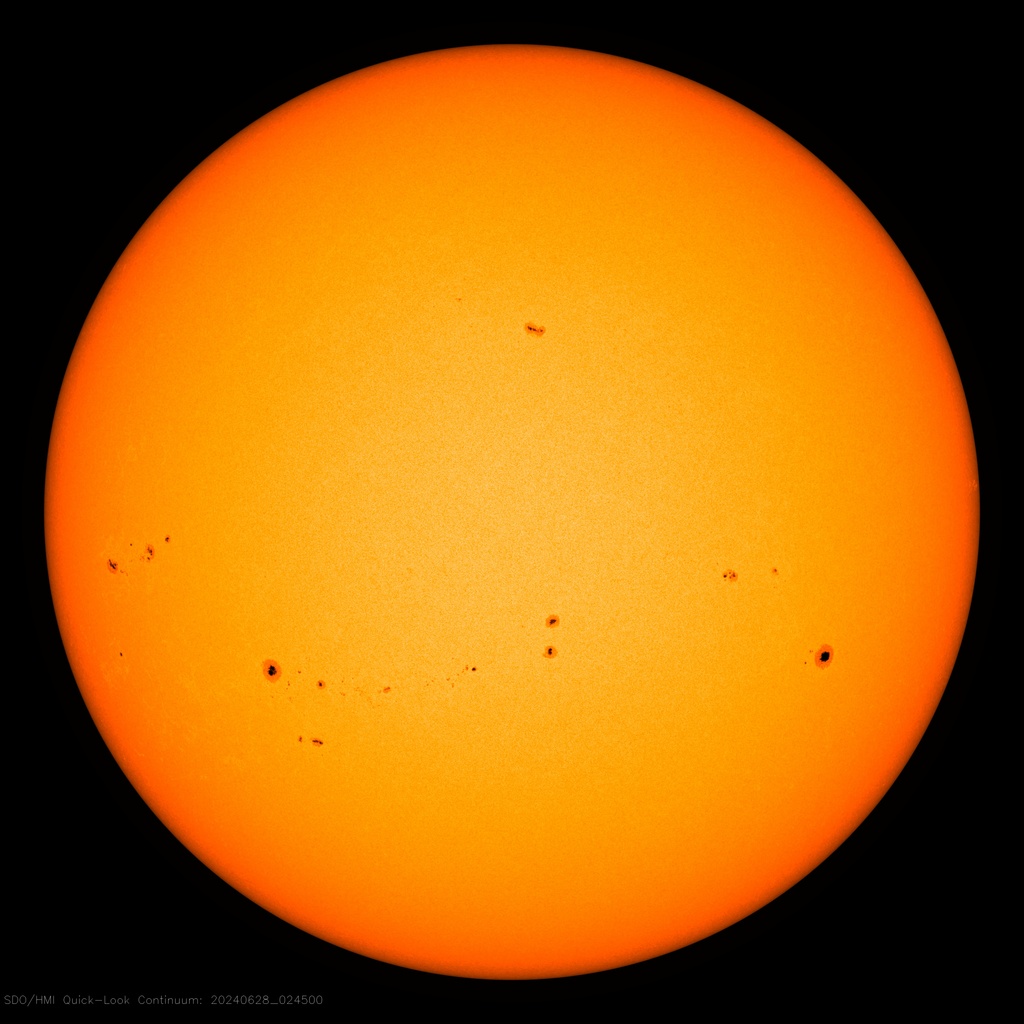
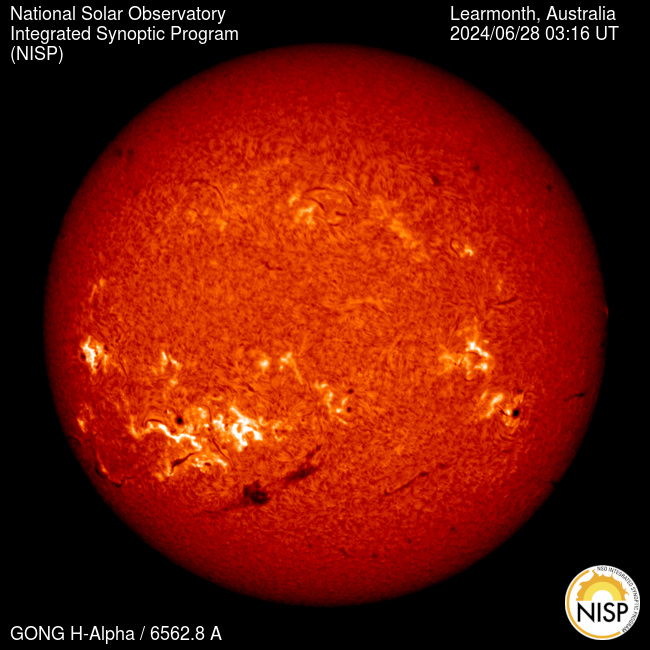
Tomorrow, Saturday, June 29th there will be solar viewing at the Sleeping Bear Dunes National Lakeshore, at the Dune Climb from 3 to 6 PM. Park Rangers will be joined by members of the Grand Traverse Astronomical Society with their specially filtered telescopes to view the Sun safely. This is a period of great solar activity. Remember the Aurora Borealis of a few weeks ago. Solar filtered telescopes will safely view the surface of the sun, called the photosphere and sunspots, while the society also has two special solar telescopes with which to view the layer of gas above the surface called the chromosphere and prominences which look like flames coming off the chromosphere. This is one of two solar observing opportunities this summer.
The astronomical event times given are for the Traverse City/Interlochen area of Michigan (EDT, UT–4 hours). They may be different for your location.
Addendum
Ephemeris: 06/27/2024 – Why do astronomers think a nova will appear this year?
This is Ephemeris for Thursday, June 27th. Today the Sun will be up for 15 hours and 33 minutes, setting at 9:32, and it will rise tomorrow at 5:59. The Moon, 1 day before last quarter, will rise at 1:18 tomorrow morning.
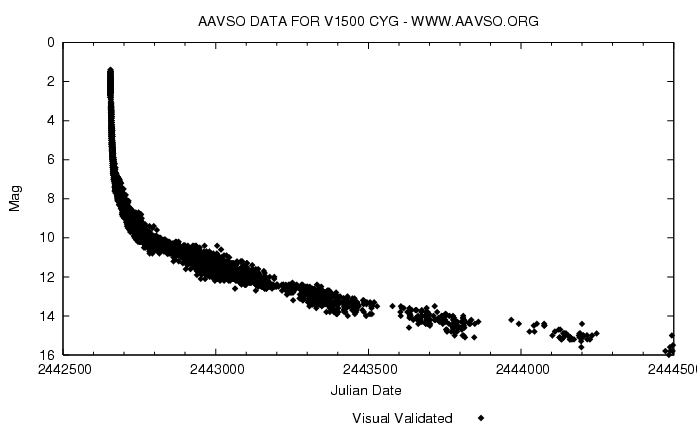
Our expected nova this year, T Coronae Borealis, is expected by some astronomers to erupt sometime in September give or take, but nobody knows for sure. The last eruption was seen in 1946. And if the average time between outbursts is 80 years, it seems to be two years early this time. In 1946 there were observations showing that there were some precursor effects going on before the eruption, and those have been noticed this time too, which is which why we assume that the nova will occur this year. Stars that vary in brightness are denoted in a constellation by a letter starting with R through Z, then RR, RS, etcetera through ZZ. After that it’s V and a number plus the constellation name or abbreviation.
The astronomical event times given are for the Traverse City/Interlochen area of Michigan (EDT, UT–4 hours). They may be different for your location.
Addendum
Ephemeris: 06/26/2024 – Where are the naked-eye planets this week?
This is Bob Moler with Ephemeris for Wednesday, June 26th. Today the Sun will be up for 15 hours and 33 minutes, setting at 9:32, and it will rise tomorrow at 5:59. The Moon, 2 days before last quarter, will rise at 12:58 tomorrow morning.
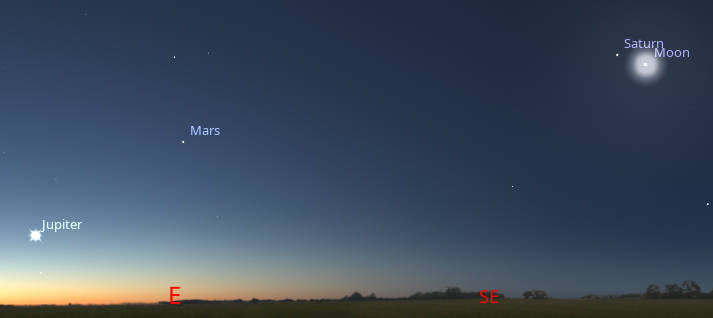
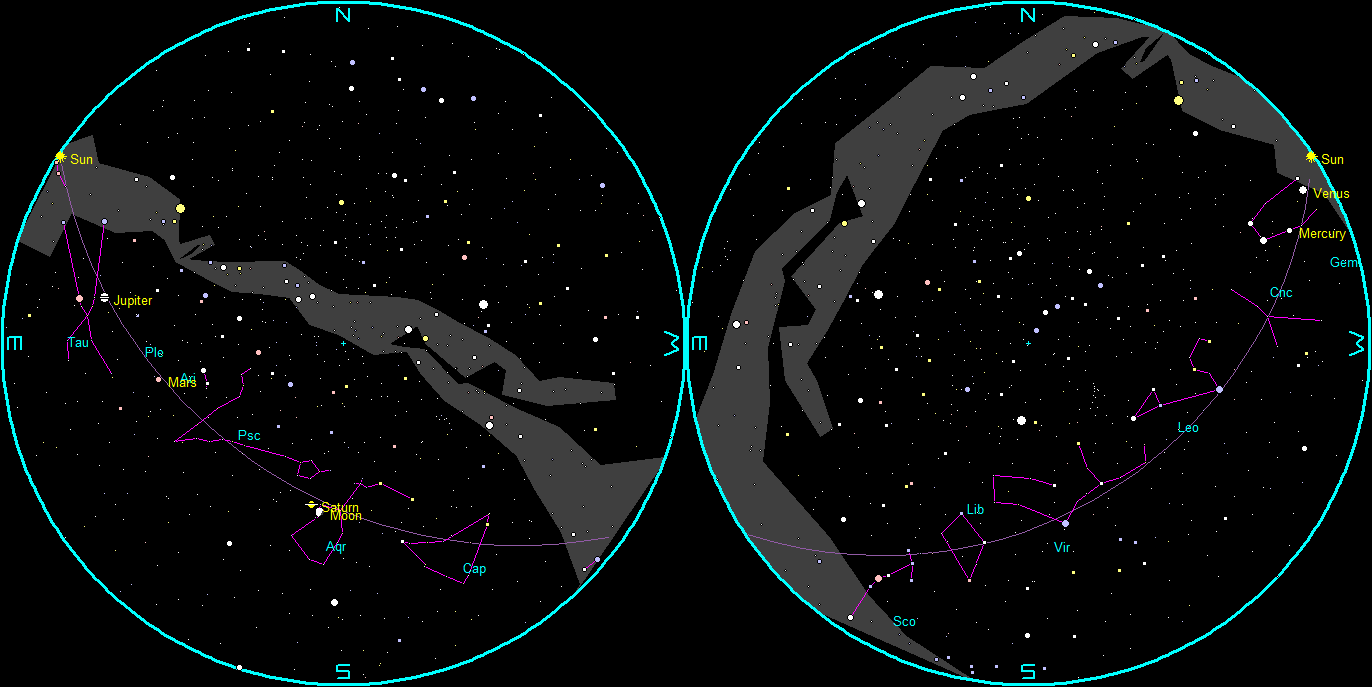
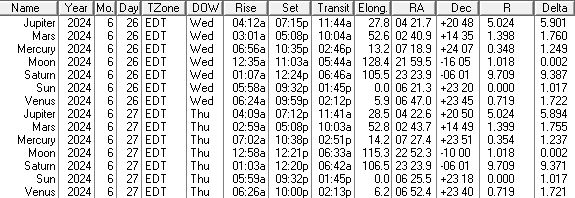
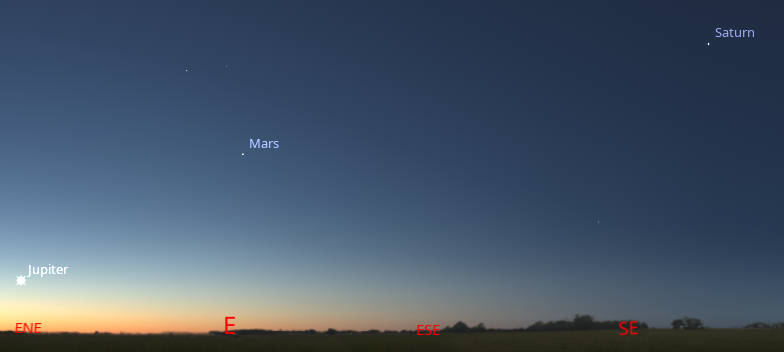
Let’s find out where the naked-eye planets have wandered off to this week. Venus and Mercury are too close to the direction of the Sun to be seen. Both are on the evening side of the Sun, but lost in its glare. Venus will appear in the evening sky next month. By 5:15 tomorrow morning, or about 45 minutes before sunrise, Saturn will be in the southeast just above and left of the Moon, and Mars will be lower in the east, and Jupiter will be very low in the east-northeast. Saturn will be a bit dimmer this year and next due to its rings being nearly edge on to us and not reflecting as much light. Saturn will rise at 1:15 am, Mars at 3:07 am, and Jupiter at 4:19 am.
The astronomical event times given are for the Traverse City/Interlochen area of Michigan (EDT, UT–4 hours). They may be different for your location.
Addendum
Ephemeris: 06/25/2024 – Three kinds of novas
This is Ephemeris for Tuesday, June 25th. Today the Sun will be up for 15 hours and 33 minutes, setting at 9:32, and it will rise tomorrow at 5:58. The Moon, 3 days before last quarter, will rise at 12:35 tomorrow morning.
As I mentioned yesterday we’re expecting a nova or bright star that we expect to appear sometime this year, maybe in September according to some astronomers. A nova is a rapid brightening of a star due to some cataclysmic event happening to it. There are three kinds that we actually know of. A nova, which is what we’re expecting; a supernova, an explosion maybe a million times greater; and the recently discovered kilonova when two neutron stars collide, which is a thousand or so times brighter than an ordinary nova. A nova and one kind of supernova (Type 1) involve a binary star system which contains a white dwarf star near the end of its life close enough to a larger star to siphon off material. At some point enough has built up and an explosion occurs.
The astronomical event times given are for the Traverse City/Interlochen area of Michigan (EDT, UT–4 hours). They may be different for your location.
Addendum
The second type of Supernova is caused when a supermassive star’s core collapses when it’s made of iron and tries to fuse it into heaver elements. That process takes energy rather than producing it. Oops! The star collapses on itself, and… Kablooey!
Nova in a binary system
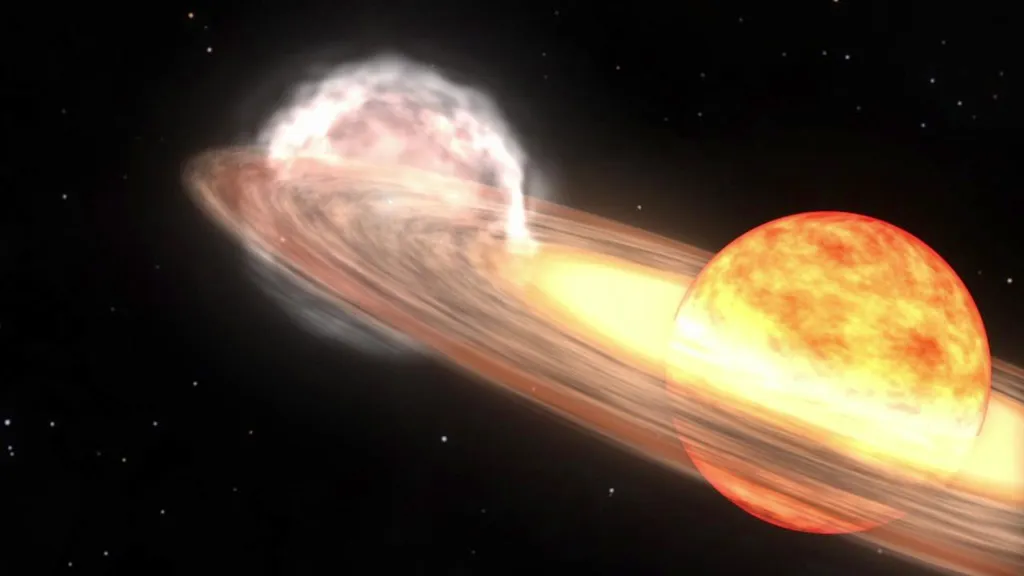
A red giant star and white dwarf orbit each other in this animation of a nova similar to T Coronae Borealis. The red giant is a large sphere in shades of red, orange, and white, with the side facing the white dwarf the lightest shades. The white dwarf is hidden in a bright glow of white and yellows, which represent an accretion disk around the star. A stream of material, shown as a diffuse cloud of red, flows from the red giant to the white dwarf. When the red giant moves behind the white dwarf, a nova explosion on the white dwarf ignites, creating a ball of ejected nova material shown in pale orange. After the fog of material clears, a small white spot remains, indicating that the white dwarf has survived the explosion. NASA/Goddard Space Flight Center.
Ephemeris: 06/24/2024 – Waiting for a bright nova*
This is Ephemeris for Monday, June 24th. Today the Sun will be up for 15 hours and 34 minutes, setting at 9:32, and it will rise tomorrow at 5:58. The Moon, 3 days past full, will rise at 12:09 tomorrow morning.
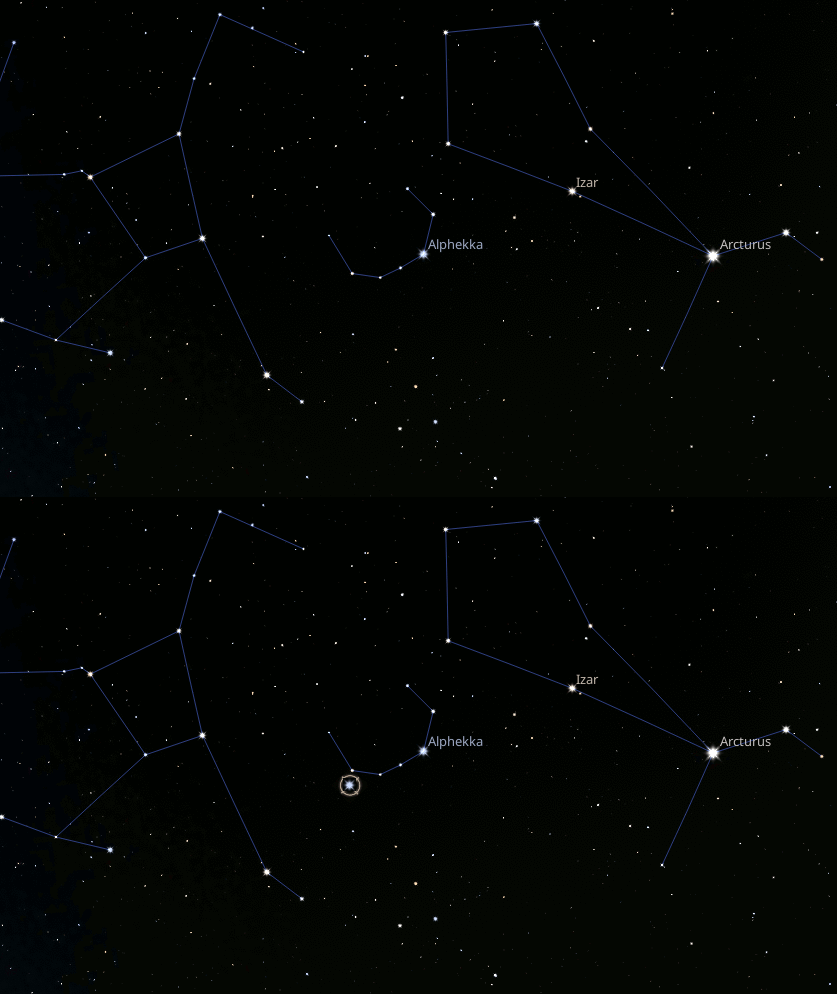
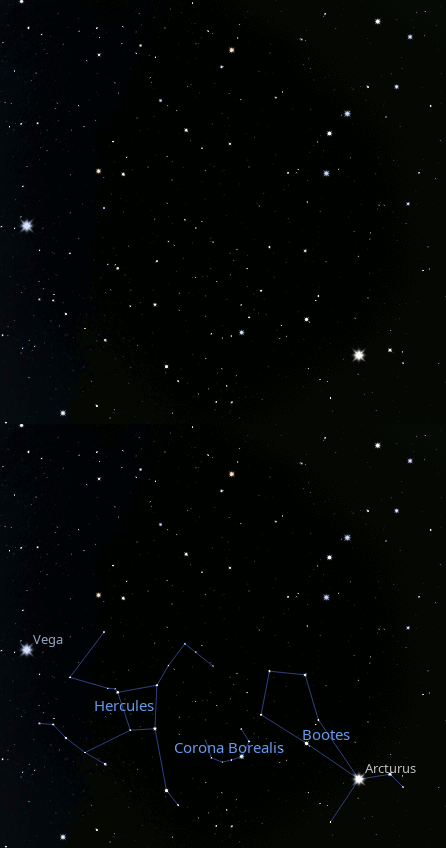
The small constellation of Corona Borealis, or Northern Crown appears about a third of the way between the bright star Arcturus, high in the south and the star Vega in the east. It is a small semicircle of stars with the brighter star called Alphecca near the center of the arc of stars. Sometime this year, we hope, another bright star will appear there. A nova of a dim star brightening about 1,600 times normal near that circle of stars. It has done it before. It has the designation of T Coronae Borealis (T CrB for short), and is a recurrent nova of a white dwarf star that suffers an explosion about once every 80 years. So this year we need to be looking out for that stellar explosion, which will be bright for only a few days, so one must be vigilant to spot it.
The astronomical event times given are for the Traverse City/Interlochen area of Michigan (EDT, UT–4 hours). They may be different for your location.
* The word ‘nova’ comes from the Latin Nova Stella, meaning New Star.
Addendum
NASA has post about T CrB here: https://www.nasa.gov/centers-and-facilities/marshall/nasa-global-astronomers-await-rare-nova-explosion/
Ephemeris: 06/21/2024 – Saturn’s rings are almost edge-on this year
This is Ephemeris for Friday, June 21st. Today the Sun will be up for 15 hours and 34 minutes, setting at 9:32, and it will rise tomorrow at 5:57. The Moon, at full today, will rise at 9:57 this evening.
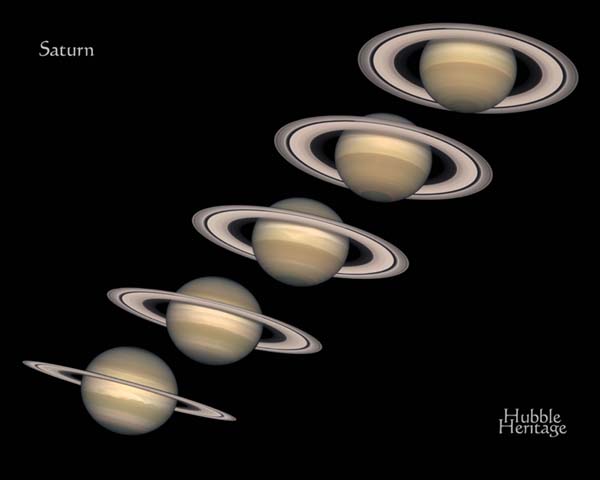
Saturn’s rings change their aspect or their tilt to us over a period of nearly 30 years, the time it takes Saturn to orbit the Sun. Saturn has an axial tilt like the Earth does in its case it is 27° compared to the Earth’s 23 1/2 degrees. So as Saturn moves around the Sun and us we see those rings at different tilts to us. Currently, the angle of the rings to us is nearing zero degrees, meaning that they are going edge on to us. And being perhaps less than 100 meters thick, they will disappear entirely in telescopes from the Earth. That will happen on March 23rd next year. However, they will not go edge on to the Sun until May 6th. So between March 23rd and May 6th we will be we will be looking at the unlit or dark side of the rings. Since we’re not at in line with the Sun and Saturn, the Sun will still be illuminating the rings slightly, but we will be looking at the dark side of the rings.
The astronomical event times given are for the Traverse City/Interlochen area of Michigan (EDT, UT–4 hours). They may be different for your location.
Addendum
Ephemeris: 06/20/2024 – Summer starts this afternoon
This is Ephemeris for Thursday, June 20th. Today the Sun will be up for 15 hours and 34 minutes, setting at 9:31, and it will rise tomorrow at 5:57. The Moon, 1 day before full, will set at 4:59 tomorrow morning.
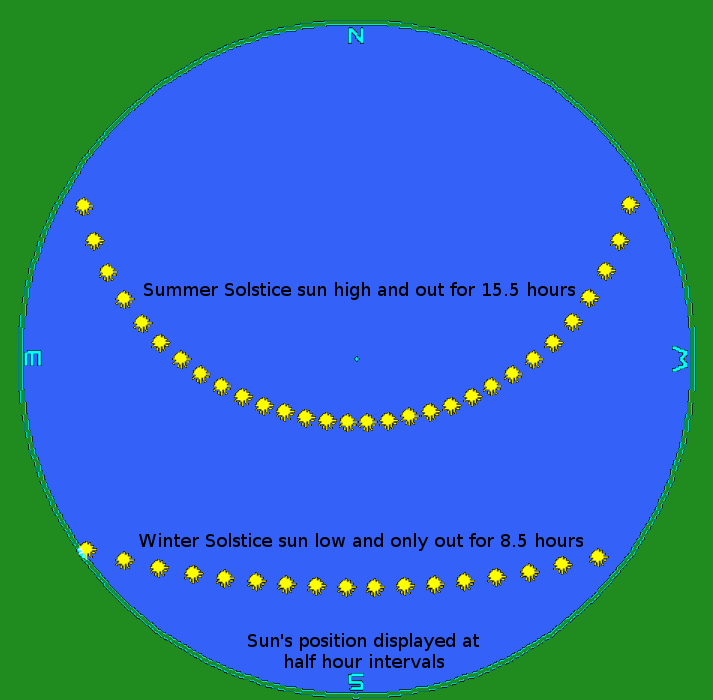
Well, this is it, the summer solstice! Summer will begin at 4:51 this afternoon. In the Southern Hemisphere the season of winter will begin, and the South Pole of the Earth in the middle of its six months of darkness. Maybe we should call it the June solstice, because winter also begins in the Southern Hemisphere. The north above 66 ½ degrees north latitude is the land of the midnight Sun. Over summer that line will creep northward as the Sun heads southward. The seasons are caused by the tilt of the Earth’s axis, not by the Earth’s change in distance from the Sun. In fact, we are approaching our farthest distance from the Sun, of about 94.5 million miles (152 million kilometers) on July 5th, called aphelion. The greater than normal distance makes summer the longest season at 93.7 days, winter being the shortest at 89 days. The Sun will be at its highest, of just under 69 degrees altitude at 1:44 pm for the Interlochen/Traverse City area, and about a degree lower than that in the Straits area, though their daylight hours will be 12 minutes longer.
The astronomical event times given are for the Traverse City/Interlochen area of Michigan (EDT, UT–4 hours). They may be different for your location.
Addendum
Ephemeris: 06/19/2024 – Where have the naked-eye planets wandered off to this week?
This is Ephemeris for Juneteenth, Wednesday, June 19th. Today the Sun will be up for 15 hours and 34 minutes, setting at 9:31, and it will rise tomorrow at 5:57. The Moon, 2 days before full, will set at 4:15 tomorrow morning.
Let’s find out where the naked-eye planets have wandered off to this week, and see what planets are left. Venus and Mercury are too close to the direction of the Sun to be seen. Both are on the evening side of the Sun, but lost in its glare. It will appear in the evening sky next month. By 5:15 tomorrow morning, or about 45 minutes before sunrise, Saturn will be in the southeast and Mars will be lower in the east, and Jupiter will be very low in the east-northeast. In telescopes, Saturn will look fairly different this year and next with its rings nearly edge on to us. Saturn will rise at 1:35 am, Mars at 3:19 am, and Jupiter, making its first morning appearance, will rise at 4:38 am.
The astronomical event times given are for the Traverse City/Interlochen area of Michigan (EDT, UT–4 hours). They may be different for your location.
Addendum
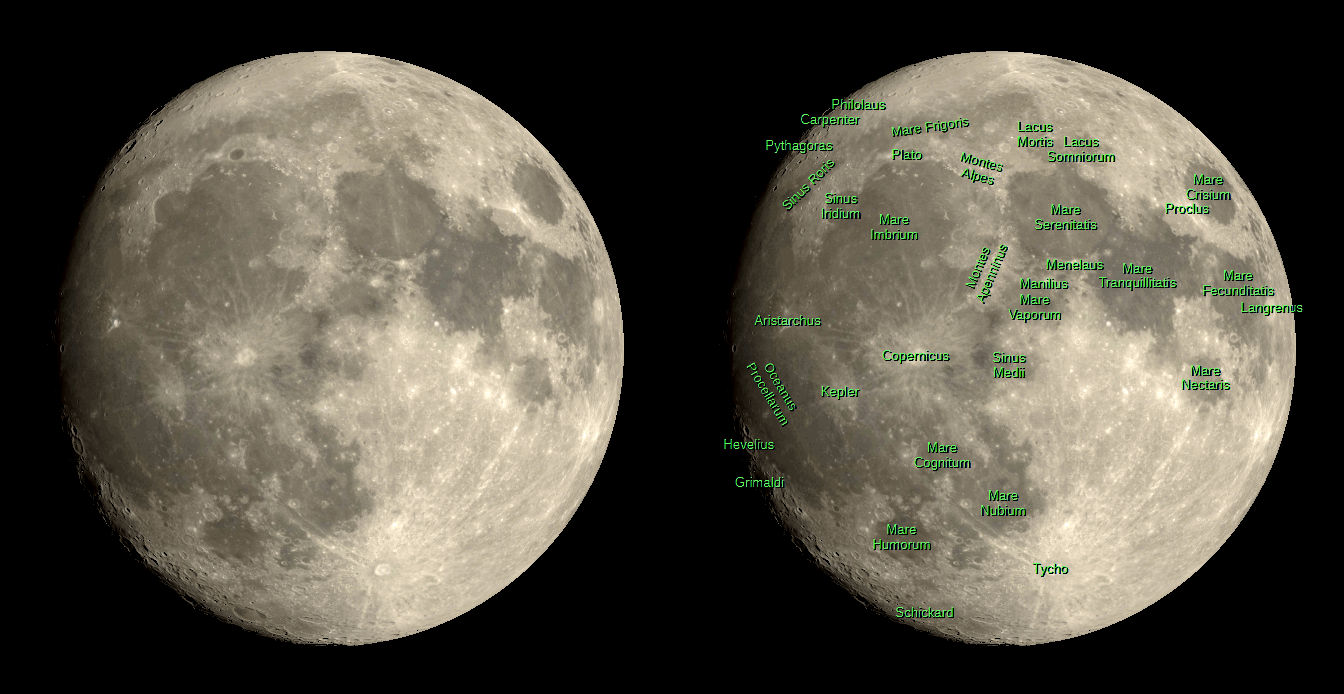
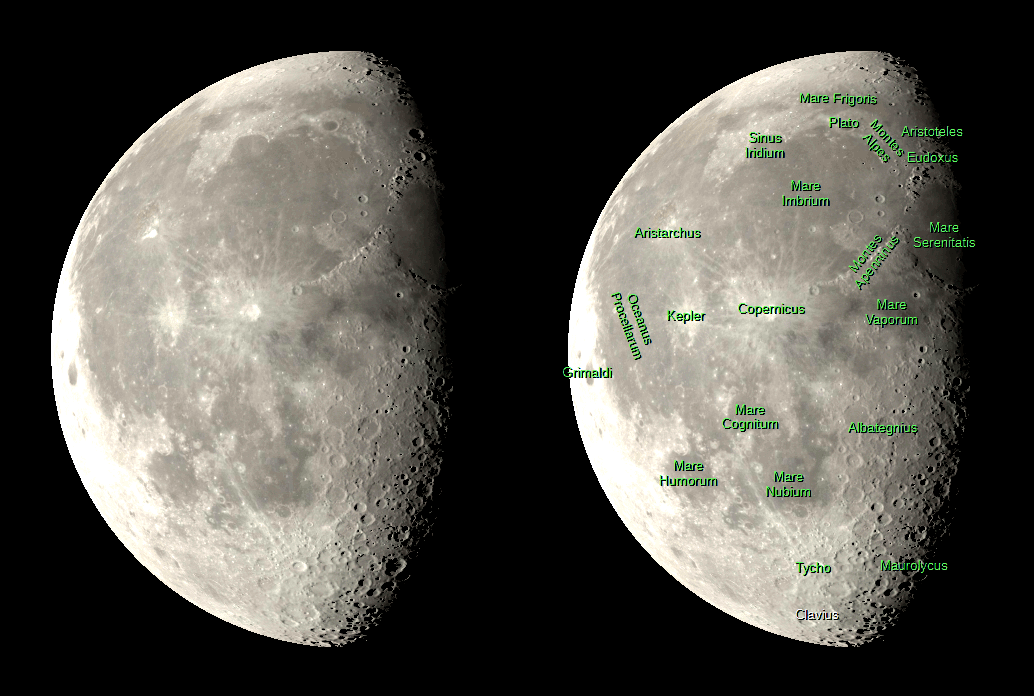
Translations of some lunar feature names according to Virtual Moon Atlas
Lacus Mortis – Lake of Death
Lacus Somniorum – Lake of Dreams
Mare Cognitum – Sea of Knowledge
Mare Crisium – Sea of Crises
Mare Fecunditatis – Sea of Fruitfulness
Mare Frigoris – Sea of Cold
Mare Humorum – Sea of Moisture
Mare Imbrium – Sea of Showers
Mare Nectaris – Sea of Nectar
Mare Nubium – Sea of Clouds
Mare Serenitatis – Sea of Serenity
Mare Tranquillitatis – Sea of Tranquility
Mare Vaporum – Sea of Vapors
Montes Alpes – Alps Mountains
Montes Apenninus – Apennines Mountains
Oceanus Procellarum – Ocean of Storms
Sinus Iridium – Bay of Rainbows
Sinus Medii – Central Bay
Sinus Roris – Bay of Moisture
Craters are named for persons, real or otherwise.
 Bob Moler's Ephemeris Blog