Ephemeris: 02/28/2024 – Where have the naked-eye planets wandered off to this week?
This is Ephemeris for Wednesday, February 28th. Today the Sun will be up for 11 hours and 5 minutes, setting at 6:28, and it will rise tomorrow at 7:21. The Moon, halfway from full to last quarter, will rise at 10:52 this evening.
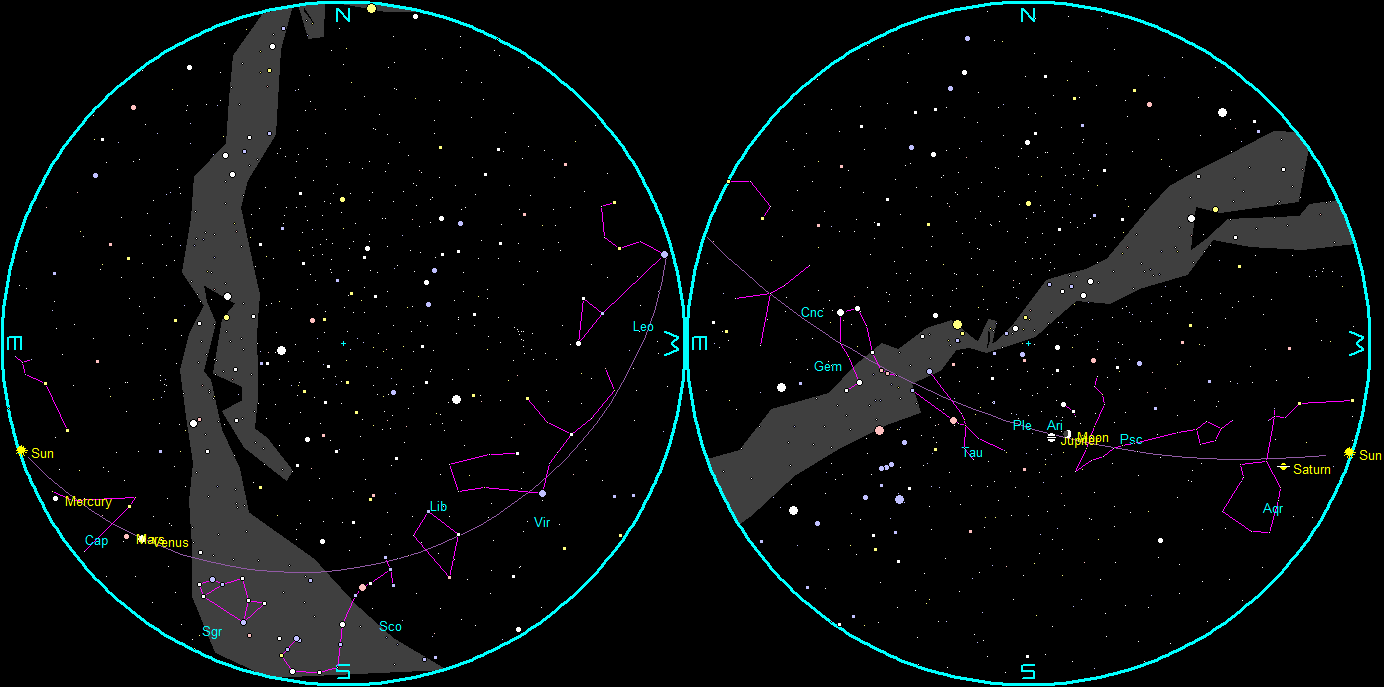
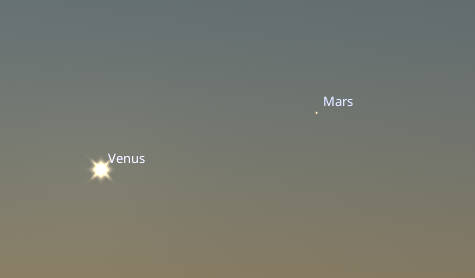
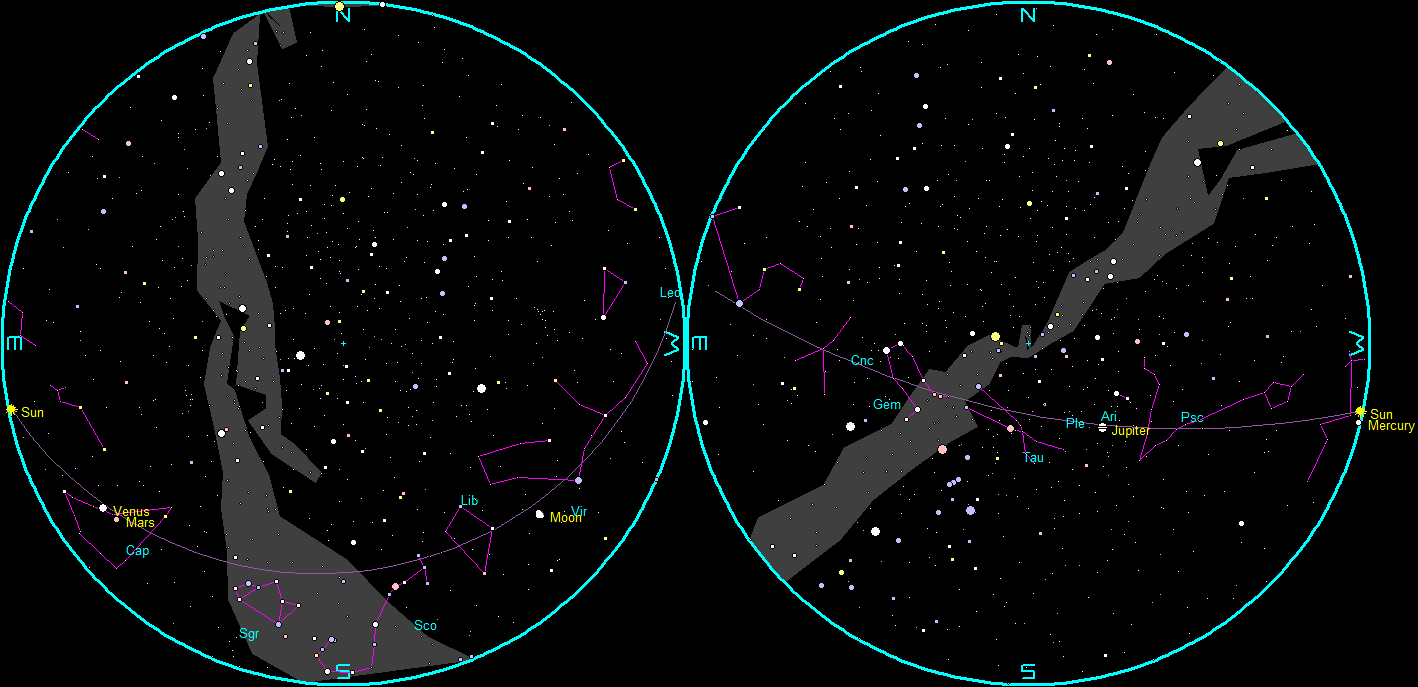
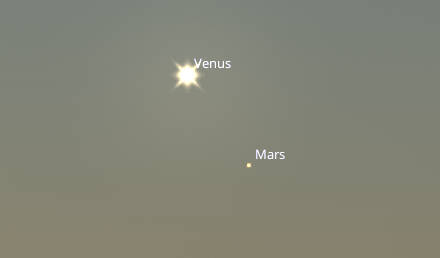
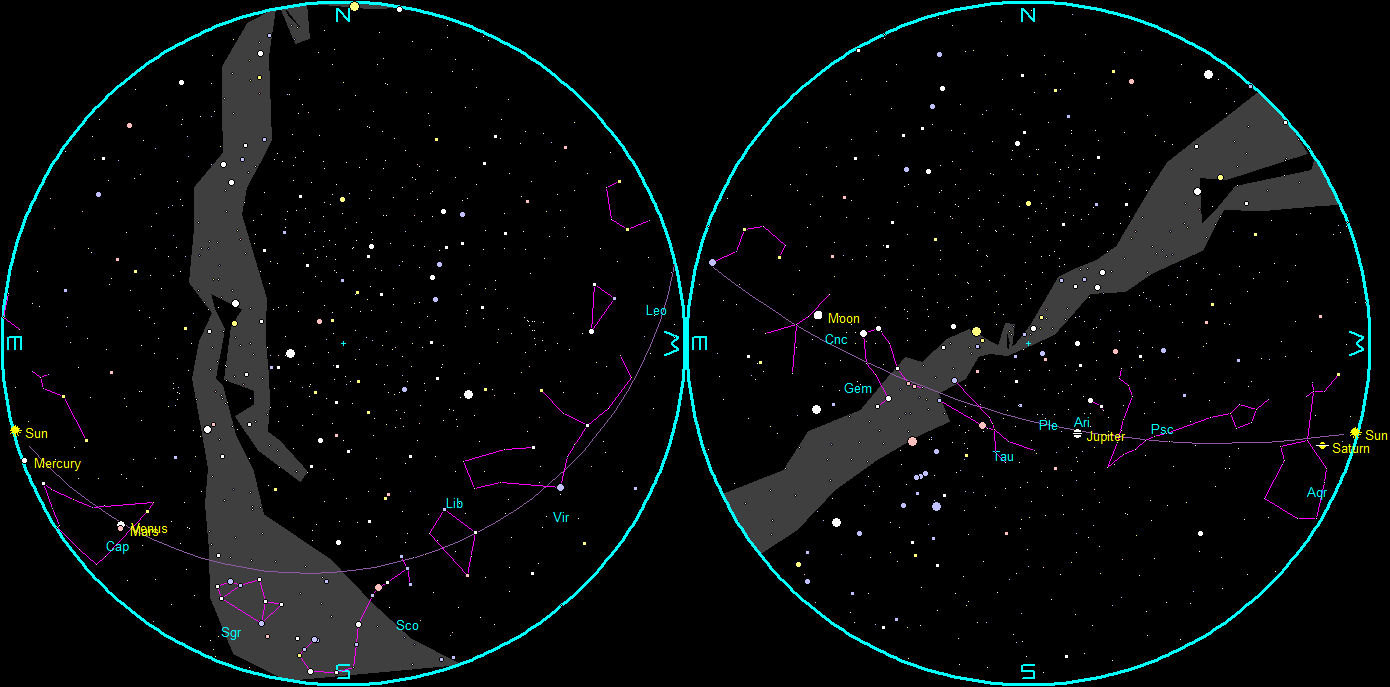
Let’s find out where the naked-eye planets have wandered off to this week, and see what planets are left to see. Saturn, and Mercury are gone, both actually in conjunction with the Sun today. Jupiter will be in the west-southwest at 8 this evening. It will set at 11:47 pm in the west. Jupiter will be visible in the evening for only about two more months. Venus, the morning star, will rise in the east-southeast at 6:27 am, but its brilliance is diminished by the bright twilight and its low position in the sky. It will be very low in the east-southeast at 7 am. Mars might be impossible to spot, being a bit to the right and above Venus. A pair of binoculars, at least, will be needed to spot it in the morning twilight.
The astronomical event times given are for the Traverse City/Interlochen area of Michigan (EST, UT –5 hours). They may be different for your location.
Addendum
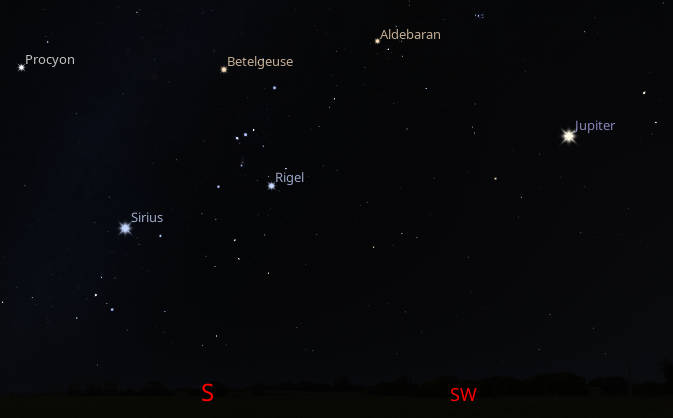
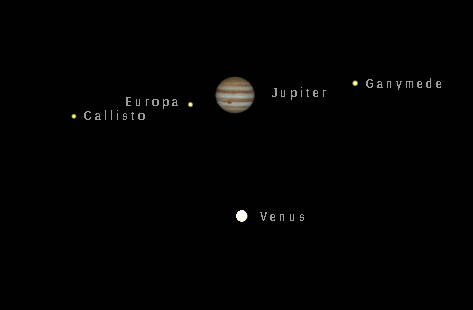
Jupiter’s moon Io will pass behind (be occulted by) the planet at 8:17 pm EST. It will reappear at 11:39 pm away from the planet because until then it’ll still be in Jupiter’s shadow.
The ” symbol means seconds of arc (1/3600th of a degree). Created using Cartes du Ciel (Sky Charts) and GIMP.
Ephemeris: 02/27/2024 – Thursday is the Intercalary Day
This is Bob Moler with Ephemeris for Tuesday, February 27th. Today the Sun will be up for 11 hours and 2 minutes, setting at 6:27, and it will rise tomorrow at 7:22. The Moon, 3 days past full, will rise at 9:47 this evening.
Thursday we’re going to have one of those special days that only occur once every 4 years making this a leap year. It’s the intercalary day that compensates for that fact that the Earth takes 365 and a bit short of a quarter day to orbit the sun. That orbit is a year, and those quarter days are accumulated and added as the last day of February in years divisible by 4. The Gregorian reform makes a slight adjustment to most century years, making century years not divisible by 400 ordinary years to keep the calendar in sync with the seasons. The Romans, from who we’ve gotten our calendar considered the month of February as unlucky, and so they shortened it most years to 28 days. Enjoy your extra day Thursday.
The astronomical event times given are for the Traverse City/Interlochen area of Michigan (EST, UT –5 hours). They may be different for your location.
Addendum


No calendar is perfect. The average year of the Julian Calendar is 11 minutes and 14 seconds longer than the actual seasonal year which it is trying to model. By the time of the papacy of Pope Gregory XIII from 1572 to 1585 CE the error in the Julian calendar versus the actual seasons had grown to 10 days since the Julian Calendar was established 16 centuries before. The reason the Church was concerned was that Easter was slowly advancing toward summer, and Easter is a more important feast than Christmas, but is related to the Jewish Feast of Passover. I’ll discuss the formula for determining Easter as we get closer to it. However, the Gregorian calendar reform came in two parts: Ten days were dropped from the calendar between October 4th and 15th in the year 1582 and after that the every four year leap day rule, that is years evenly divided by 4, was modified so that on century years, that is years ending in 00, but not divisible by 400, became ordinary years, that is no leap days, this will keep the calendar in sync with the seasons for several millennia. This calendar reform occurring after the Reformation meant that only the Catholic countries adopted it. It took almost until the present day for everyone to adopt it. For ecclesiastical purposes the Orthodox Churches still used the Julian Calendar.
Ephemeris: 02/26/2024 – The angle of the rising and setting planets from the Sun vary with the seasons
This is Bob Moler with Ephemeris for Monday, February 26th. Today the Sun will be up for 10 hours and 59 minutes, setting at 6:25, and it will rise tomorrow at 7:24. The Moon, 2 days past full, will rise at 8:44 this evening.
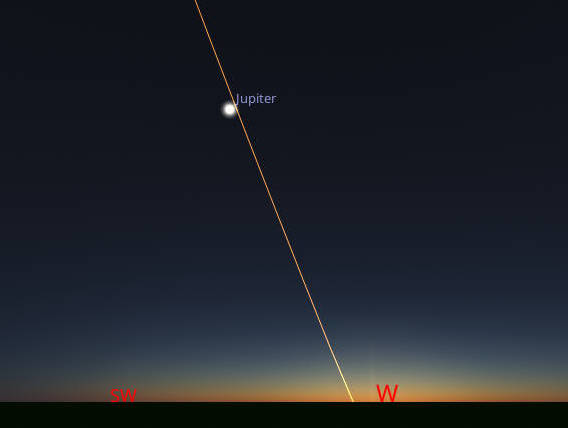
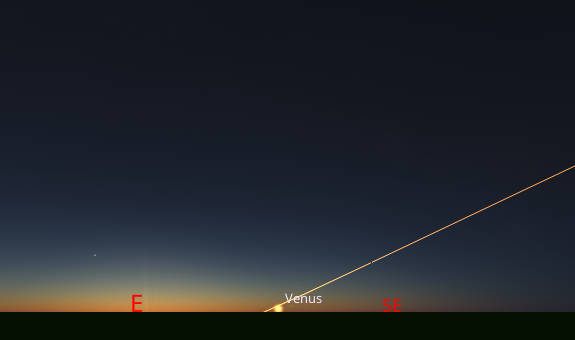
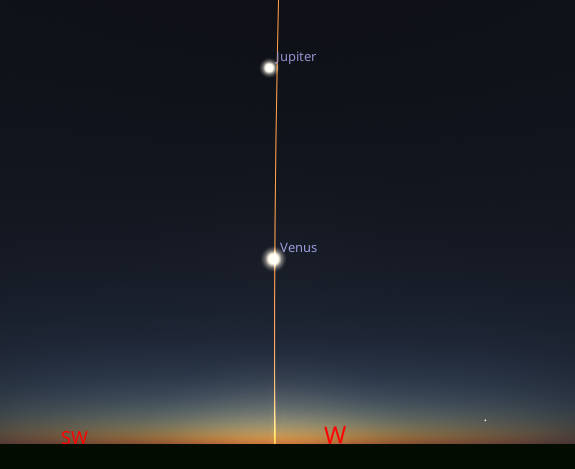
In late winter and early spring dark skies return within a few days after the full Moon. Indeed, this is the first day after the full moon, which was on Saturday morning, that we have dark skies. Well for 40 minutes before the Moon rises. This is because the ecliptic which is the Sun’s path in the sky is as close to vertical as it can get for us. It shows planets near the Sun and the area of the full moon as steeply inclined to the horizon as possible. Twelve years ago this month when my wife and I were on a Hawaiian cruise, I was aboard ship looking at the sky after sunset and was amazed to see Jupiter and Venus* vertically aligned in the west. It was because we were located around the Tropic of Cancer and near the equinox, so the ecliptic was actually vertical after sunset. It was quite a jolt to see that. So this time of year we can see planets close to the sun at sunset and the moon to go away after full rapidly.
The astronomical event times given are for the Traverse City/Interlochen area of Michigan (EST, UT –5 hours). They may be different for your location.
* On the broadcast I said Jupiter and Saturn, relying on my memory. As can be seen below, it was Jupiter and Venus.
Addendum
Ephemeris: 02/23/2024 – The rabbit in the Moon
This is Bob Moler with Ephemeris for Friday, February 23rd. Today the Sun will be up for 10 hours and 50 minutes, setting at 6:21, and it will rise tomorrow at 7:29. The Moon, 1 day before full, will set at 7:52 tomorrow morning.
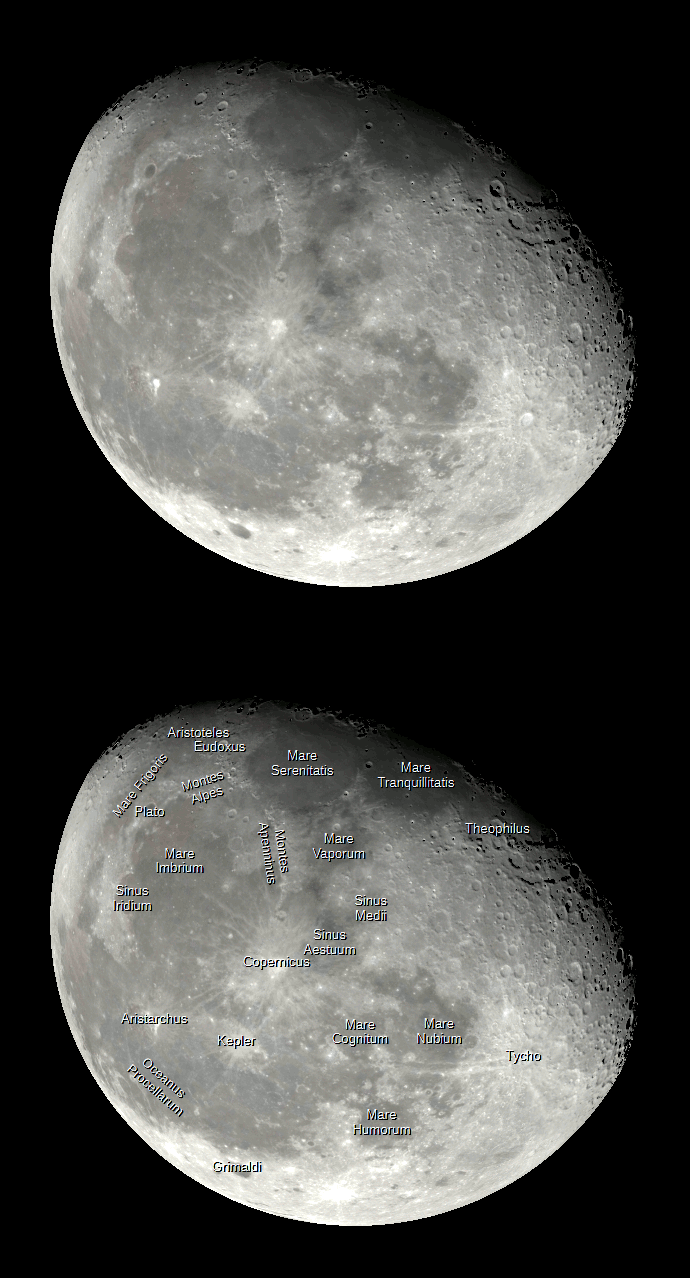
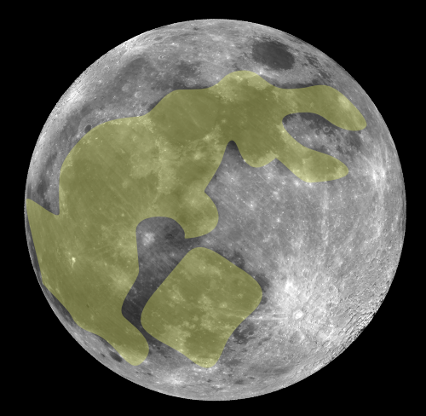
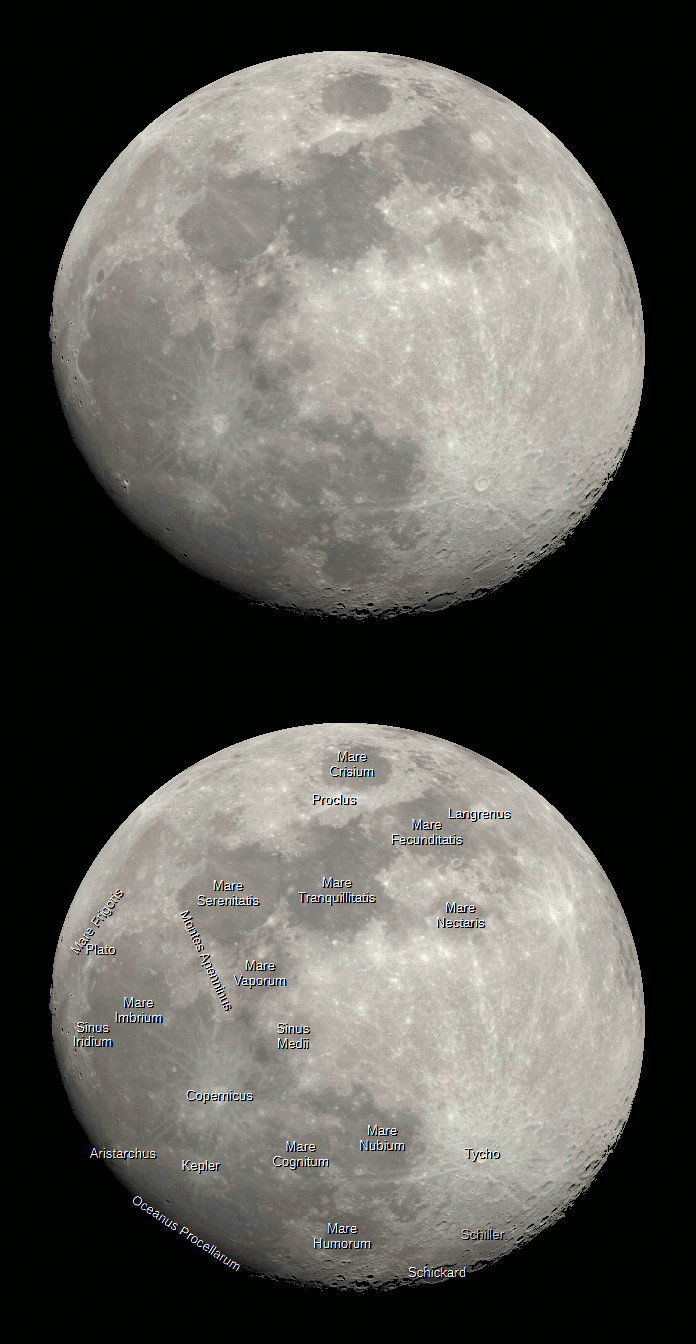
Even though it is a day before full the moon, will be full at 7:30 tomorrow morning. So tonight will be the closest that we’ll see the full moon this lunation. If one looks at the Moon most of us can see the face of the Man in the Moon. A rabbit, can also be seen. To the Chinese the rabbit here was named Yutu also known as the Jade Rabbit, the pet of the moon goddess Chang’e. To them, it was a rabbit pounding medicine with a mortar and pestle. At 8 o’clock tonight it resides along the left side of the Moon. Its head and body are seen in the dark areas of the Moon we call seas. Its ears are near the top of the moon at 8:00 with his head and body bent down on the left. Near the bottom of The moon is the mortar and pestle with which he’s pounding medicine.
The astronomical event times given are for the Traverse City/Interlochen area of Michigan (EST, UT –5 hours). They may be different for your location.
Addendum:
Ephemeris: 02/22/2024 – IM-1, the Odysseus spacecraft lunar landing is today
This is Bob Moler with Ephemeris for Thursday, February 22nd. Today the Sun will be up for 10 hours and 47 minutes, setting at 6:20, and it will rise tomorrow at 7:31. The Moon, 2 days before full, will set at 7:32 tomorrow morning.
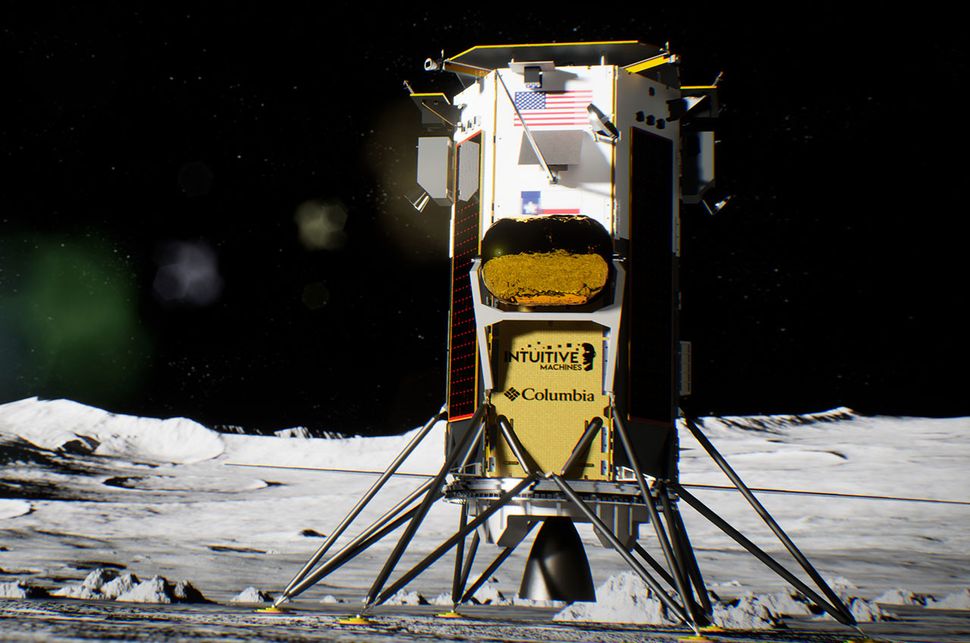
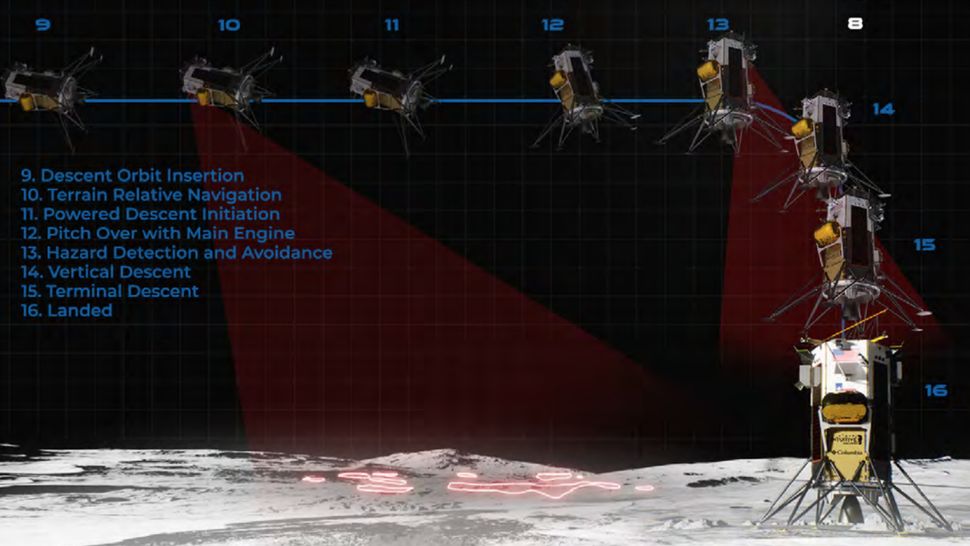
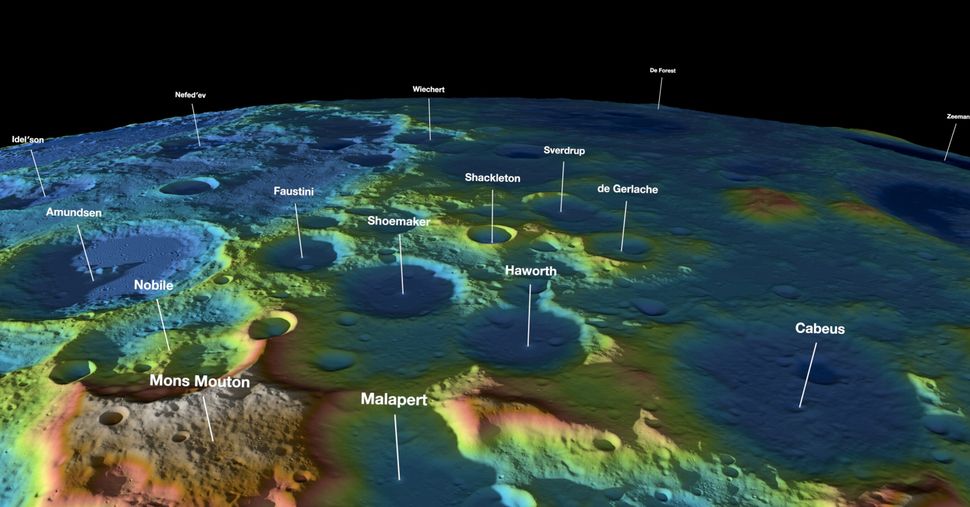
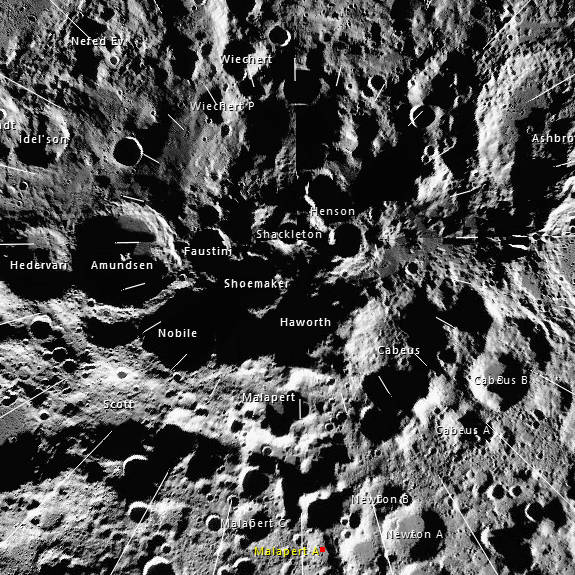
Today is the day the Intuitive Machines’ moon lander called Odysseus is slated to land on the Moon. It was launched a week ago on a SpaceX Falcon 9 rocket. And if successful it will be the first soft landing on the Moon by the United States since Apollo 17 back in 1972. I’m recording this last Sunday, so I don’t know the condition of the spacecraft and a lot can happen between launch and landing on the moon. The last spacecraft sent from the United States, last month, by the inaugural flight of United Launch Alliance’s Vulcan Centaur rocket crashed back on Earth. The spacecraft is supposed to land about 190 miles from the Moon’s South Pole, which is considerably closer to the South Pole than the Indian spacecraft landed last year.
The astronomical event times given are for the Traverse City/Interlochen area of Michigan (EST, UT –5 hours). They may be different for your location.
Addendum
Ephemeris: 02/21/2024 – Where have the naked-eye planets wandered off to this week?
This is Ephemeris for Wednesday, February 21st. Today the Sun will be up for 10 hours and 44 minutes, setting at 6:19, and it will rise tomorrow at 7:32. The Moon, 3 days before full, will set at 7:09 tomorrow morning.
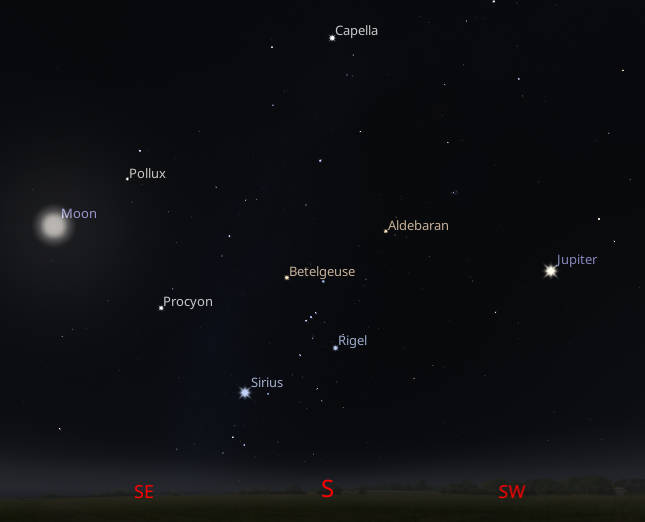
Let’s find out where the naked-eye planets have wandered off to this week, and see what planets are left. Saturn, and Mercury are gone, being too close to the Sun to be visible. Jupiter will be in the west-southwest at 8 this evening. It will set at 12:11 am in the west. Jupiter will be visible in the evening for only about two more months. Venus, the morning star, will rise in the east-southeast at 6:33 am, but its brilliance is diminished by the bright twilight and its low position in the sky. It will be very low in the southeast at 7 am. This might be our first chance to spot Mars in the morning sky because tomorrow morning it will be just below Venus by about 1 1/2 moon diameters. A pair of binoculars may be needed to spot it.
The astronomical event times given are for the Traverse City/Interlochen area of Michigan (EST, UT –5 hours). They may be different for your location.
Addendum
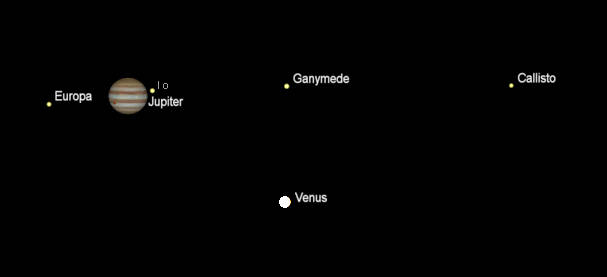
Jupiter’s missing moon is Io, which is behind the planet. It will reappear at 9:43 pm away from the planet because until then it’ll still be in Jupiter’s shadow. At 10:02 pm Europa will begin to transit across the face of the planet.
The ” symbol means seconds of arc (1/3600th of a degree). Created using Cartes du Ciel (Sky Charts) and GIMP.
Ephemeris: 02/20/2024 – Schiller, an odd lunar crater
This is Ephemeris for Tuesday, February 20th. Today the Sun will be up for 10 hours and 41 minutes, setting at 6:17, and it will rise tomorrow at 7:34. The Moon, halfway from first quarter to full, will set at 6:39 tomorrow morning.
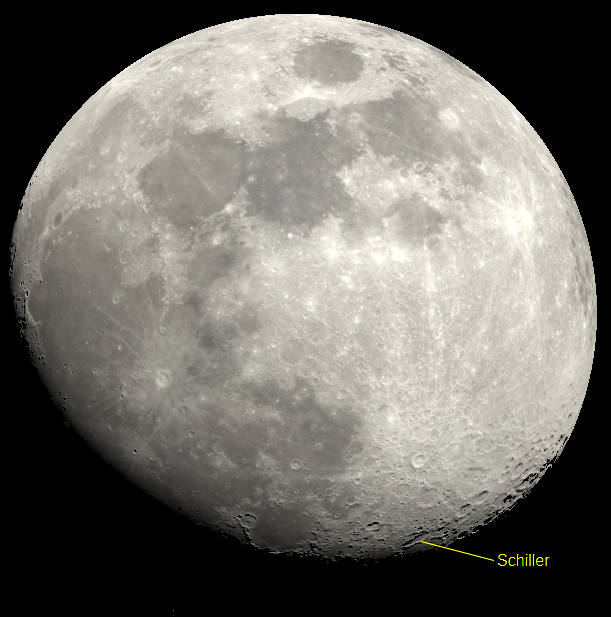
The moon tonight is in its gibbous phase, with more than half of it being illuminated by the Sun. In binoculars or a small telescope, looking at the bottom part of the moon, near the South Pole. All the craters appear to be elongated, foreshortened actually, because the moon is spherical. But one crater stands out as being more elliptical than the rest it’s called Schiller. It’s about 111 miles long, and much less in the other direction. It still appears elongated when seen from overhead by a spacecraft. It looks like the footprint of a long narrow shoe. It is either the result of a low angle hit from the asteroid or two overlapping low angle asteroid craters. I suspect the latter, though I have no expertise in the matter.
The astronomical event times given are for the Traverse City/Interlochen area of Michigan (EST, UT –5 hours). They may be different for your location.
Addendum

Ephemeris: 02/19/2024 – A Kilonova may have exploded close to the Earth 3.5 million years ago
This is Ephemeris for President’s Day, Monday, February 19th. Today the Sun will be up for 10 hours and 38 minutes, setting at 6:16, and it will rise tomorrow at 7:36. The Moon, 3 days past first quarter, will set at 6:00 tomorrow morning.
One wouldn’t think that astronomy can be studied by taking samples of sediments from the ocean floor, but it can. One of the rare isotopes of iron is found there, iron 60, it is radioactive and has a half-life of about 2.5 million years. That means in 2.5 million years half of it would decay, and in another 2.5 million years half of the remaining half would decay, and so on. So its presence means it would have arrived relatively recently, compared to the four and a half billion year age of the Earth. One of the thoughts about its origin is that it came from a nearby kilonova, which is a collision of two neutron stars that occurred about 3.5 million years ago. A kilonova is brighter than a nova by about a thousand times, hence its name, but not as bright as a supernova.
The astronomical event times given are for the Traverse City/Interlochen area of Michigan (EST, UT –5 hours). They may be different for your location.
Addendum

And https://phys.org/news/2023-12-scientists-evidence-nearby-kilonova-million.html
Ephemeris: 02/16/2024 – The Moon will appear near the Pleiades tonight
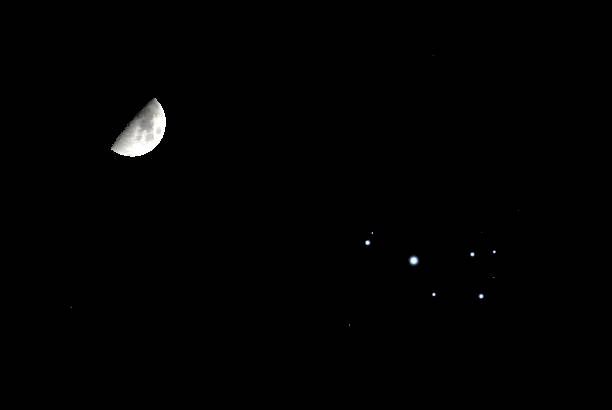
This is Ephemeris for Friday, February 16th. Today the Sun will be up for 10 hours and 29 minutes, setting at 6:12, and it will rise tomorrow at 7:40. The Moon, at first quarter today, will set at 3:03 tomorrow morning.
The moon will pass south, or below, the star cluster called the Pleiades, or Seven Sisters, this afternoon. By this evening the Pleiades will be seen to the lower right of the Moon. However, you will need a pair of binoculars to see them, because the first quarter Moon is quite a bit brighter than the stars of the Pleiades. The moon will again pass the Pleiades in March on the 14th, where the Pleiades will appear above and left of the Moon. And again, on April 11th, where the Moon will pass south of the Pleiades during the day, and the cluster will be to the lower right of the Moon by evening. They will appear closest together in our evening sky on May 8th. Unfortunately, they will be low in the sky in the west at sunset.
The astronomical event times given are for the Traverse City/Interlochen area of Michigan (EST, UT –5 hours). They may be different for your location.
Addendum
Ephemeris: 02/15/2024 – Viewing the Moon tonight
This is Ephemeris for Thursday, February 15th. Today the Sun will be up for 10 hours and 26 minutes, setting at 6:10, and it will rise tomorrow at 7:42. The Moon, 1 day before first quarter, will set at 1:48 tomorrow morning.
Let’s look at the Moon again this evening. The moving terminator or sunrise line on the Moon has moved westward, though it looks like eastward to us. It shows Mare Crisium, or Sea of Crises, near the Moon’s edge, which is surrounded by the bright highlands, and to the left and below is the Sea of Fertility. Above that is Mare Tranquillitatis, where the Apollo 11 spacecraft Eagle landed, and below Tranquility are two small dark areas that look like seas, but only the bottom one is, it’s the Sea of Nectar, Mare Nectaris. Between it and Tranquility is the Bay of Roughness or Sinus Asperitatis, which sounds better in the original Latin.
The astronomical event times given are for the Traverse City/Interlochen area of Michigan (EST, UT –5 hours). They may be different for your location.
Addendum
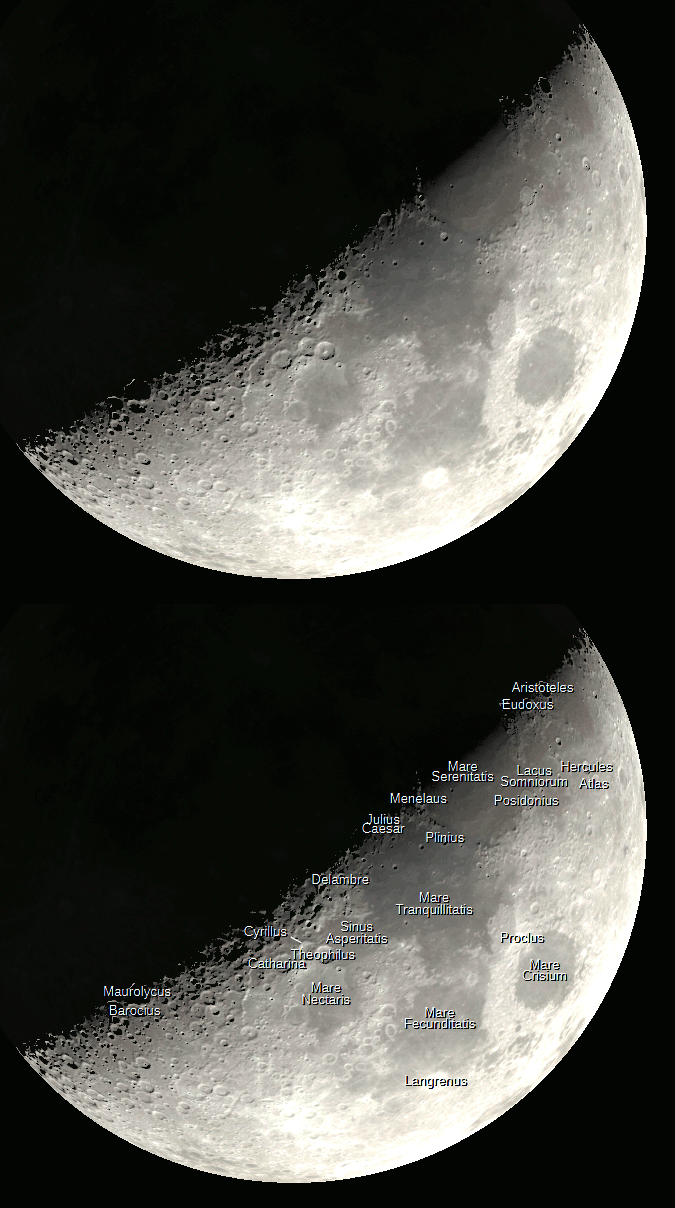
Translations of some lunar feature names according to Virtual Moon Atlas
Lacus Somniorum – Lake of Dreams
Mare Crisium – Sea of Crises
Mare Fecunditatis – Sea of Fertility
Mare Nectaris – Sea of Nectar
Mare Serenitatis – Sea of Serenity
Mare Tranquillitatis – Sea of Tranquility
Sinus Asperitatis – Bay of Roughness
 Bob Moler's Ephemeris Blog