06/28/2023 – Ephemeris – Let’s find out where the naked-eye planets have wandered off to this week
This is Ephemeris for Wednesday, June 28th. Today the Sun will be up for 15 hours and 32 minutes, setting at 9:32, and it will rise tomorrow at 5:59. The Moon, 2 days past first quarter, will set at 2:43 tomorrow morning.
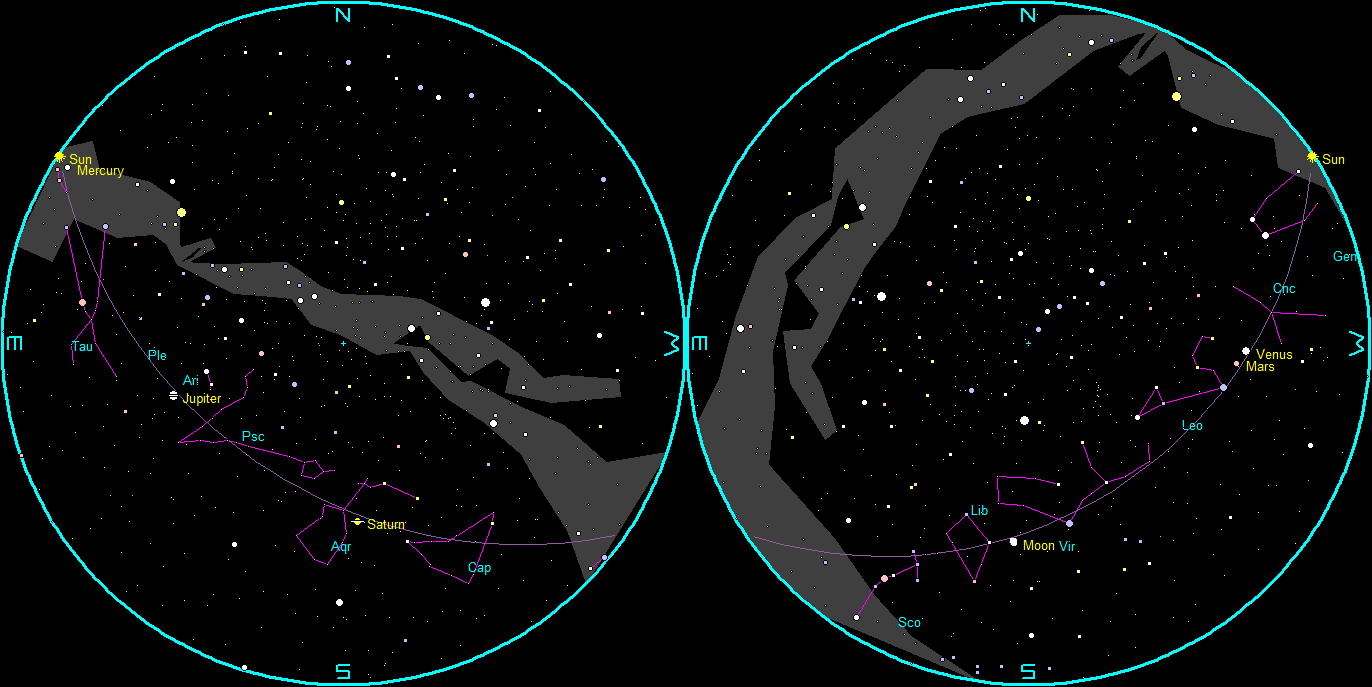
Let’s find out where the naked-eye planets have wandered off to this week. Venus is our blazing Evening Star, seen in the west all evening. It sets tonight at 11:51 pm, and three minutes earlier each night. The red planet Mars is seen left of and above Venus by around a third the width of one’s fist held at arm’s length. Venus is closing the gap between them, They will be closest this Saturday, before Venus pulls away. Their paths will not cross while they are in the evening sky. Mars is much fainter than Venus and difficult to spot in twilight. In the morning, Saturn will be visible in the south-southeast at 5 am, the brightest “star” in that direction. Jupiter will be low in the east at that hour. Jupiter is the brightest star-like object in the morning sky now.
The astronomical event times given are for the Traverse City/Interlochen area of Michigan (EDT, UT –4 hours). They may be different for your location.
Addendum
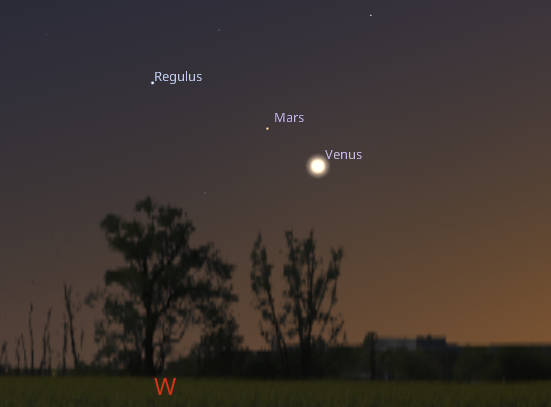
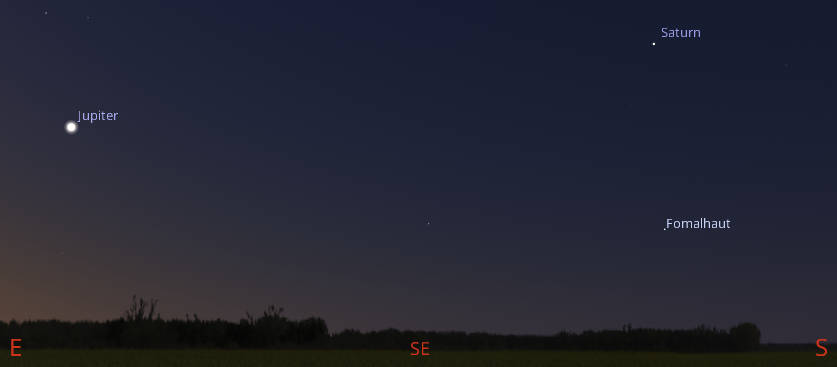
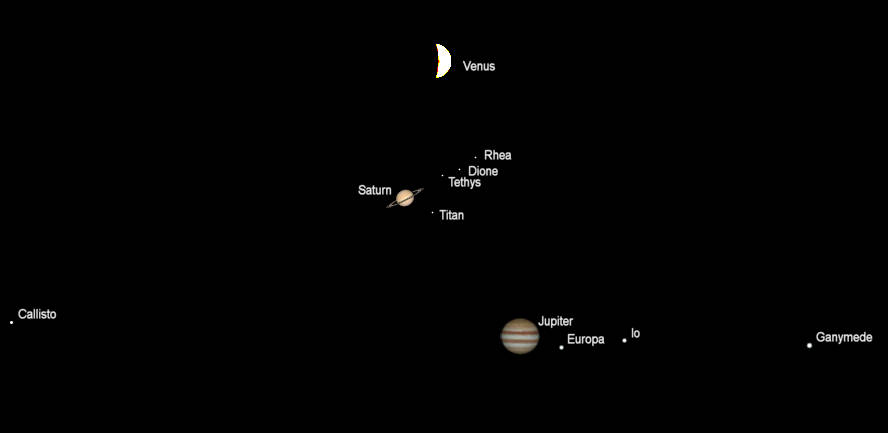
Apparent diameters: Venus 32.52″ and is 33.6% illuminated; Saturn 17.99″, its rings 41.91″; Jupiter 36.41″. Mars, too small to be represented here, is 4.26″ in diameter. Venus, Saturn and Jupiter are approaching us, so their apparent diameters are growing. The ” symbol means seconds of arc (1/3600th of a degree.) Click or tap on the image to enlarge it. Created using Cartes du Ciel (Sky Charts).
06/27/2023 – Ephemeris – Preparing to view the upcoming solar eclipses safely
This is Ephemeris for Tuesday, June 27th. Today the Sun will be up for 15 hours and 33 minutes, setting at 9:32, and it will rise tomorrow at 5:59. The Moon, 1 day past first quarter, will set at 2:21 tomorrow morning.
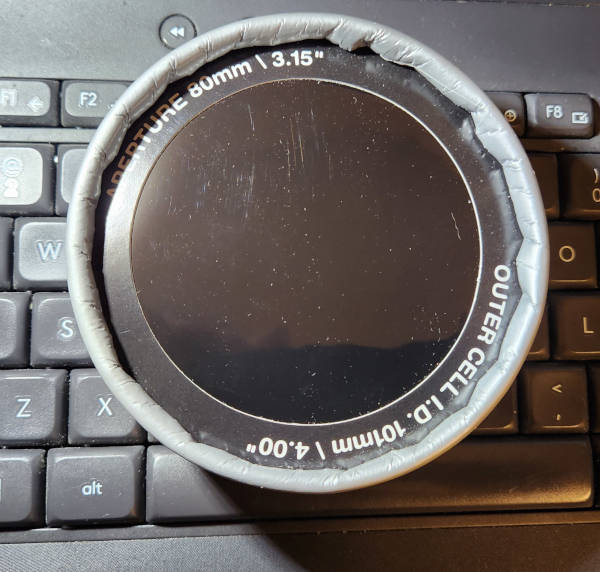
In preparation for the two solar eclipses that will be visible in North America in the next 10 months, I’m going to spend some time describing what the Sun is, and how it appears to us. First point: Never look at the Sun without proper and approved filters. Inexpensive eclipse glasses work fine for the partial phase of a solar eclipse. However, most features, like sunspots, are generally too small to be seen with them. Do not use these glasses with binoculars or a telescope. The plastic filters will melt through in a fraction of a second. Glass filters can shatter from the heat. The only safe solar filter for telescopes is one placed in front of the telescope tube, so it’s only exposed to ambient light and heat. If confused, just ask your local amateur astronomer.
The astronomical event times given are for the Traverse City/Interlochen area of Michigan (EDT, UT –4 hours). They may be different for your location.
Addendum

06/26/2023 – Ephemeris – After the latest sunset, a look at the Moon
This is Ephemeris for Monday, June 26th. Today the Sun will be up for 15 hours and 33 minutes, setting at 9:32, and it will rise tomorrow at 5:59. The Moon, at first quarter today, will set at 2:02 tomorrow morning.
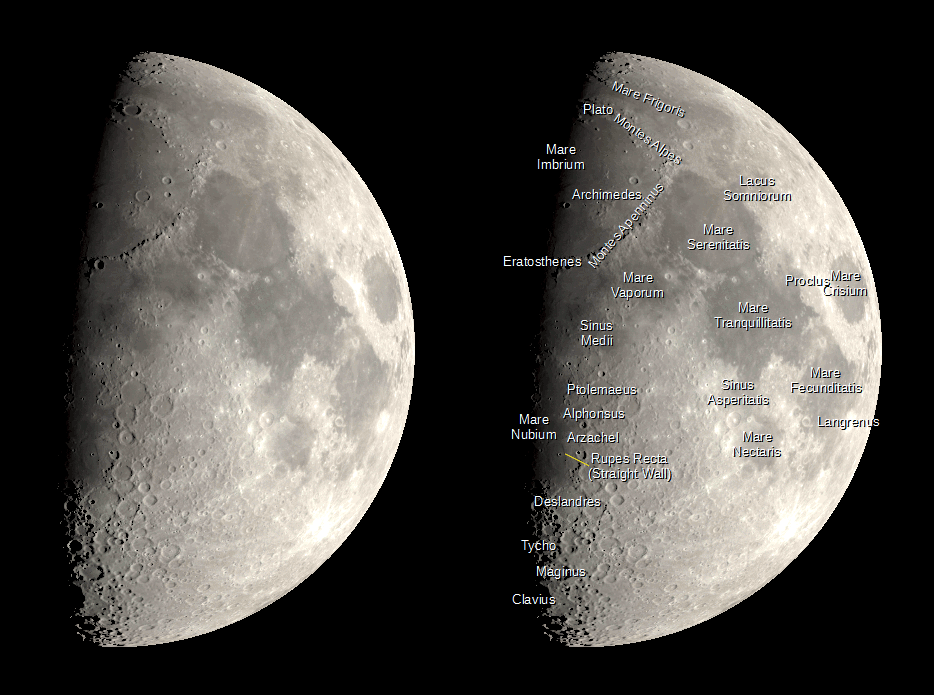
Tonight is the night of the latest sunset. From now to December 10th the Sun will be setting earlier than the night before. It won’t be noticeable at first, but the change will increase throughout the summer. The Moon actually arrived at first quarter phase early this morning, so by tonight it will appear slightly gibbous. The term gibbous actually means hump-backed, and the Moon will appear more so as it advances toward being fully illuminated a week from now. For me personally, I find that the best time to view the Moon with a telescope is within three or four days from its quarter phase, unless I’m looking at a specific feature. That’s when shadows are front and center on the moon. The Moon being gray on gray, shadows keep the Moon from appearing flat.
The astronomical event times given are for the Traverse City/Interlochen area of Michigan (EDT, UT –4 hours). They may be different for your location.
Addendum
06/23/2023 – Ephemeris – Sun and Star Party scheduled for tomorrow at the Sleeping Bear Dunes
This is Ephemeris for Friday, June 23rd. Today the Sun will be up for 15 hours and 34 minutes, setting at 9:32, and it will rise tomorrow at 5:57. The Moon, 3 days before first quarter, will set at 1:11 tomorrow morning.
Tomorrow the Sleeping Bear Dunes National Lakeshore and the Grand Traverse Astronomical Society will host a Sun and Star Party at the Dune Climb area of the park. There will be a solar viewing period from 6 pm to 8 pm. The society has two hydrogen alpha solar telescopes to view the Sun’s chromosphere and prominences. Plus some members also have solar scopes also white light filtered telescopes to view sunspots on the face of the Sun. Night viewing will start at 10 pm with the Moon and Venus featured, along with the brighter telescopic wonders of early summer. The park rangers will leave at midnight, but society members can stay later to view the fainter wonders in the darkened sky. All this will happen only if clouds permit.
The astronomical event times given are for the Traverse City/Interlochen area of Michigan (EDT, UT –4 hours). They may be different for your location.
Addendum
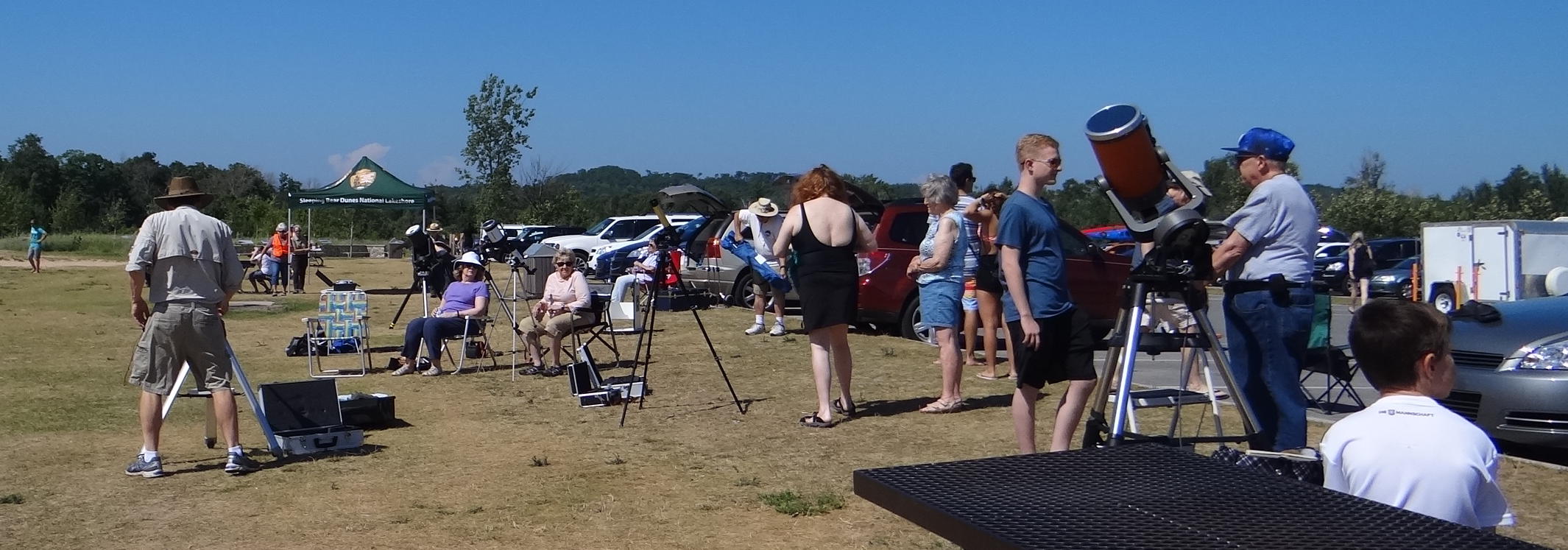
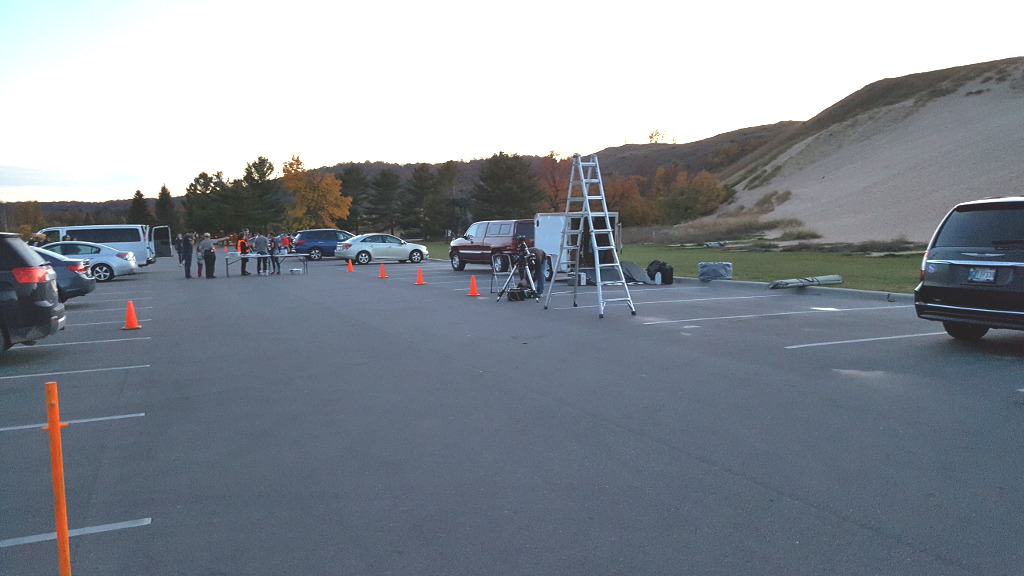
The Dune Climb is not the place to view the spectacular sunset. The best place is from the Lake Michigan Overlook stop on Pierce Stocking Scenic Drive.
06/22/2023 – Ephemeris – The lunar seas on tonight’s Moon
This is Ephemeris for Thursday, June 22nd. Today the Sun will be up for 15 hours and 34 minutes, setting at 9:32, and it will rise tomorrow at 5:57. The Moon, halfway from new to first quarter, will set at 12:51 tomorrow morning.
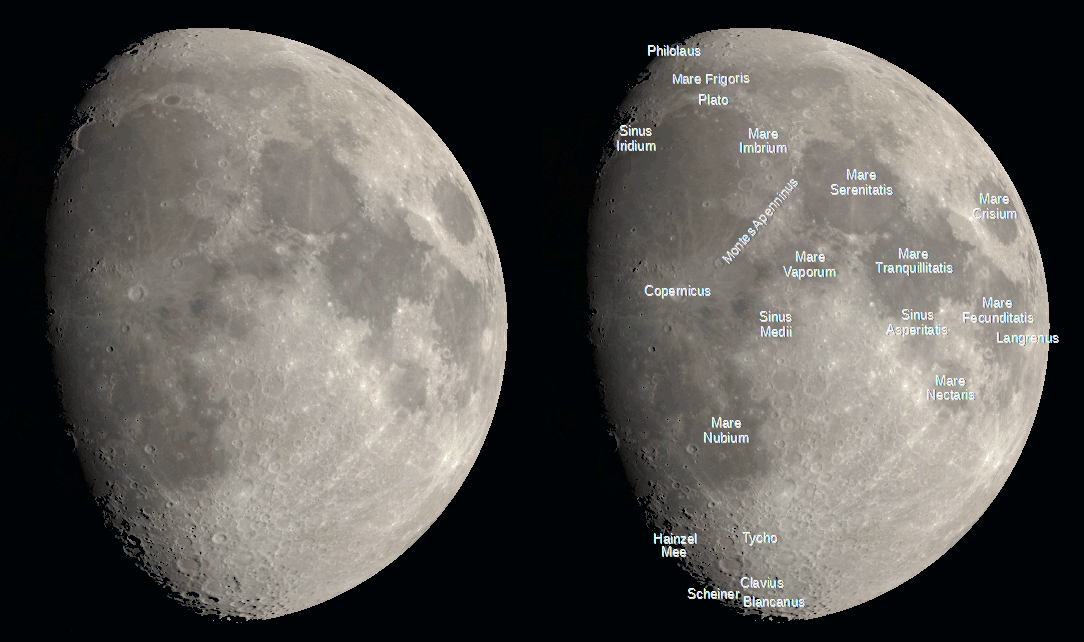
The crescent Moon tonight reveals two large seas. Astronomers using the first telescopes thought the darker flat areas on the moon may actually be filled with water. It turns out that they are flat lava plains, and since most of them are roughly circular, may be gigantic craters from impacts of asteroids. Examination of rocks brought back by the Apollo astronauts over 50 years ago suggest the age of the seas at around 4 billion years. This suggests some kind of disruption in the solar system, called the Late Heavy Bombardment. The reason the Earth does not have these scars is due to plate tectonics and the weathering of wind and water. The Moon has none of these, so it preserves the damage done to it.
The astronomical event times given are for the Traverse City/Interlochen area of Michigan (EDT, UT –4 hours). They may be different for your location.
Addendum
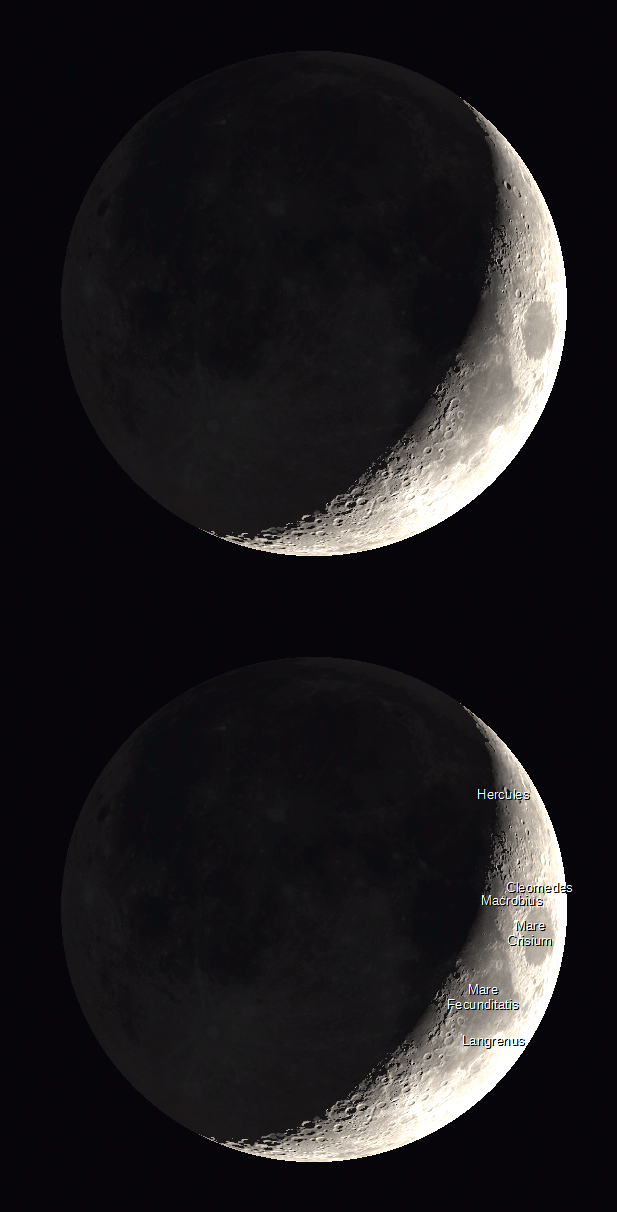
Late Heavy Bombardment (Based on my August 4, 2022 post)
There are even more and larger seas on the east half of the Moon, as we see it. Most were created about 3.9 billion years ago by asteroid strikes. The same thing happened to the Earth, but plate tectonics destroyed the evidence. Not so on the Moon. The result, many planetary scientists think, was the Late Heavy Bombardment, caused by the shifting orbits of mainly Saturn, Uranus and Neptune that disrupted the smaller asteroids, and sending them careening through the solar system.
06/21/2023 – Ephemeris – Let’s find out where the naked-eye planets have wandered off to this week
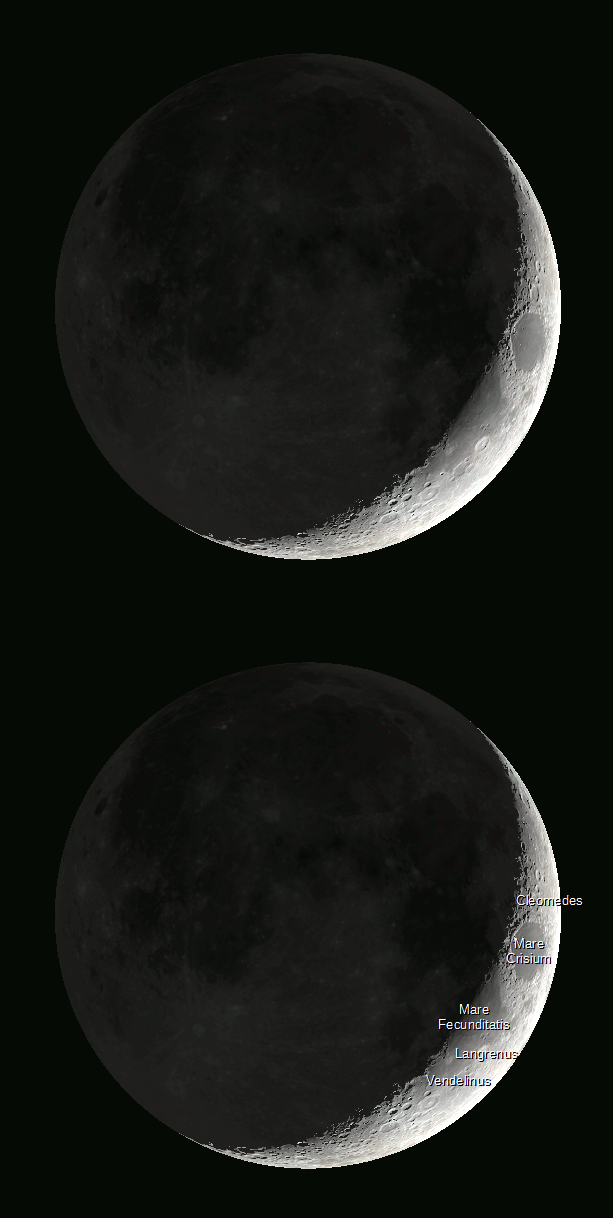
This is Ephemeris for Wednesday, June 21st. Today the Sun will be up for 15 hours and 34 minutes, setting at 9:32, and it will rise tomorrow at 5:57. The Moon, 3 days past new, will set at 12:27 tomorrow morning.
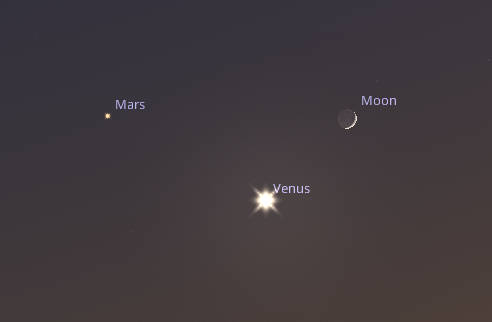
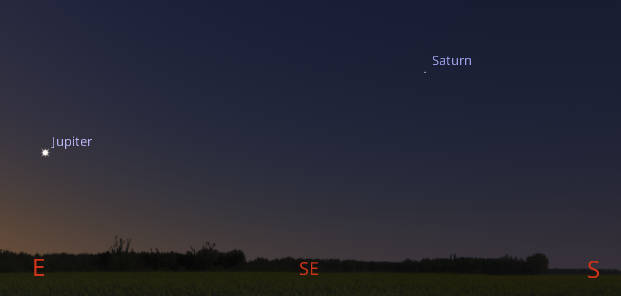
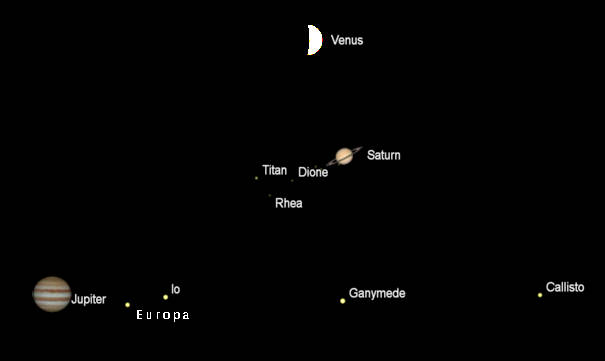
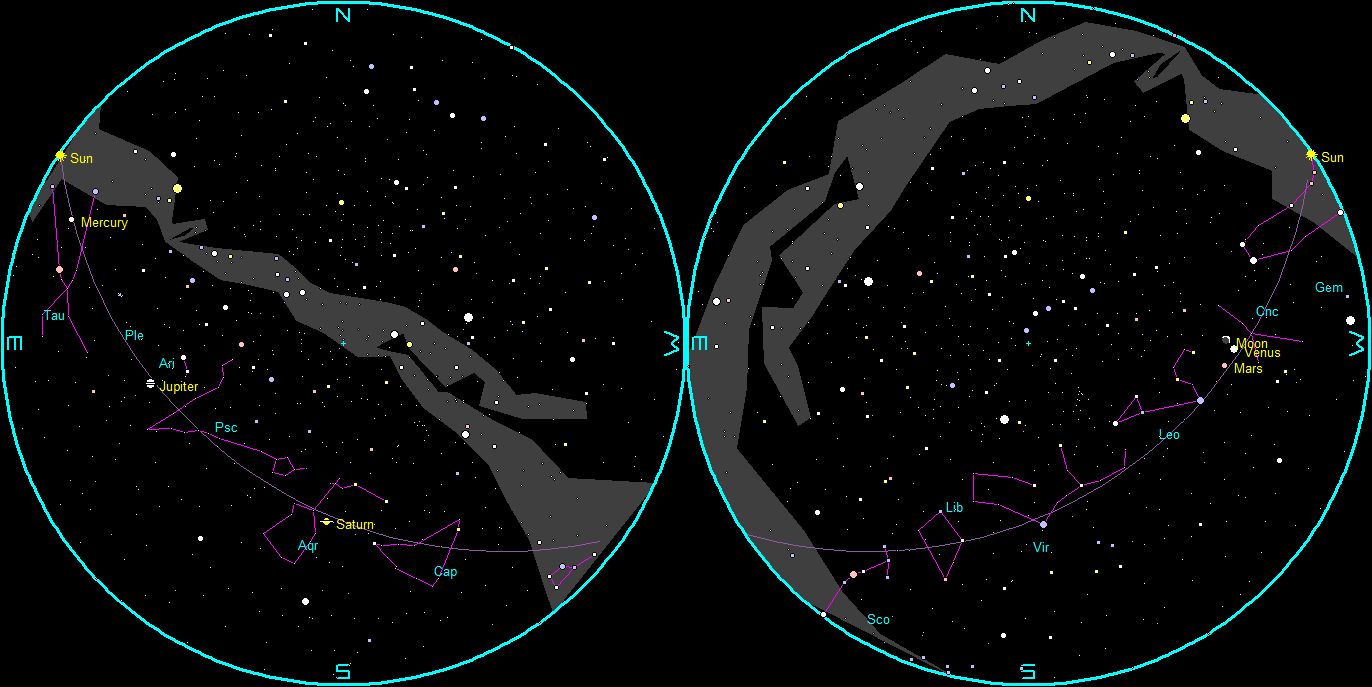
Let’s find out where the naked-eye planets have wandered off to this week. Looking below the horizon we see our planet, which will reach the June solstice and the beginning of summer in the northern hemisphere later this morning (10:58 am EDT, 14:58 UT). Venus is our blazing Evening Star seen in the west all evening. It will still set after midnight, but barely. Tonight it is seen below the Moon. The red planet Mars is seen left of and a bit higher than Venus by four and a half degrees, or a bit less than half the width of one’s fist held at arm’s length. Venus is closing the gap between them, but will never quite reach Mars while they are in the evening sky. The closest they will get is three and a half degrees or 7 moon diameters apart, before Venus pulls back toward the Sun faster than Mars will. Both Mars and Venus are in Cancer. In the morning, Saturn will be visible low in the south-southeast at 5 am. Jupiter will be low in the east at that hour.
The astronomical event times given are for the Traverse City/Interlochen area of Michigan (EDT, UT –4 hours). They may be different for your location.
Addendum
06/20/2023 – Ephemeris – Summer starts tomorrow!
This is Bob Moler with Ephemeris for Tuesday, June 20th. Today the Sun will be up for 15 hours and 34 minutes, setting at 9:31, and it will rise tomorrow at 5:57. The Moon, 2 days past new, will set at 11:58 this evening.
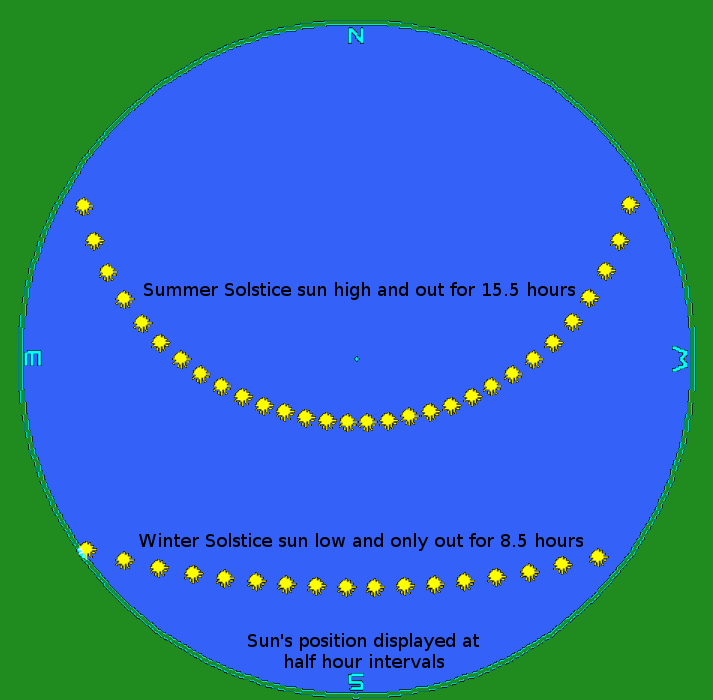
Tomorrow is the day of the longest daylight hours, the summer solstice. The exact time of the summer solstice will occur at 10:58 am. One really can’t tell where the Sun is against the constellations and its eastward motion along the ecliptic because when the Sun’s out the sky is blue and the stars are invisible. However the ancients could notice that the Sun changed its height in the South over the year and the summer solstice was the time that the Sun was highest in the sky. The word solstice means “Sun standstill”. All through winter and spring the Sun has been moving northward in the sky at local noon. This has slowed down and tomorrow it will stop. After that it will begin to descend in the South at local noon until the winter solstice on December 21st.
The astronomical event times given are for the Traverse City/Interlochen area of Michigan (EDT, UT –4 hours). They may be different for your location.
Addendum
06/19/2023 – Ephemeris – Juneteenth and the flight to freedom
This is Bob Moler with Ephemeris for Juneteenth, Monday, June 19th. Today the Sun will be up for 15 hours and 34 minutes, setting at 9:31, and it will rise tomorrow at 5:56. The Moon, 1 day past new, will set at 11:22 this evening.
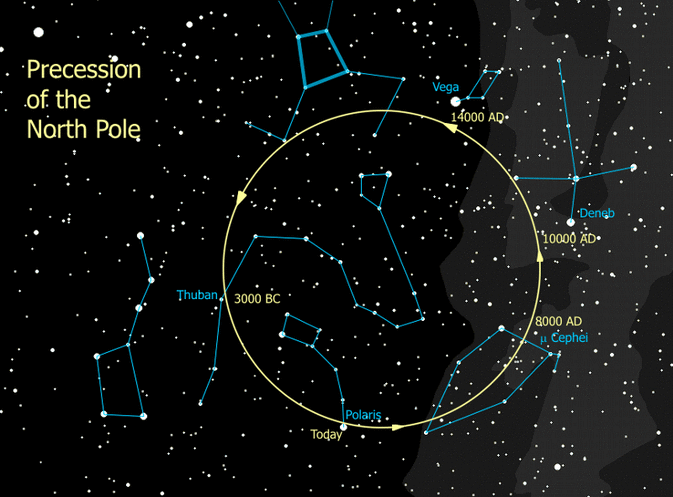
In 1865, it was on June 19th that the Union soldiers, led by Major General Gordon Granger, landed at Galveston, Texas with news that the war had ended and that the slaves were now free. Until then about the only path to freedom for the slaves was “To follow the Drinking Gourd”, or the Big Dipper, northward. The Big Dipper and the Great Bear, Ursa Major, has, for the last few millennia been the constellation of the north, being closer to the North Pole of the sky than it is now. The Earth’s axis has a slow wobble, called precession, caused by the gravitational pull of the Moon and Sun on Earth’s slight equatorial bulge of 30 miles wider than the pole to pole distance. That wobble period is nearly 26 thousand years.
The astronomical event times given are for the Traverse City/Interlochen area of Michigan (EDT, UT –4 hours). They may be different for your location.
Addendum

06/16/2023 – Ephemeris – Twilight is longer near the summer solstice
This is Ephemeris for Friday, June 16th. Today the Sun will be up for 15 hours and 33 minutes, setting at 9:30, and it will rise tomorrow at 5:56. The Moon, 2 days before new, will rise at 5:04 tomorrow morning.
Not only does the Sun set later this time of year, but twilight lasts longer too. As of tonight the end of astronomical twilight, when the last vestiges of twilight are gone is, for the Traverse City/Interlochen area, 12:01 am, That’s two and a half hours of evening twilight. I feel that for most purposes that the end of nautical twilight, when navigators on ships could no longer see the horizon for their sextant readings, is dark enough to view most stars, and brighter objects beyond the solar system, what we call deep sky objects. That happens at 10:56 pm, or about an hour and a half after sunset. Twilight of both kinds are a third shorter around the equinoxes. These times are dependent on our latitude, and the Sun’s declination which is equivalent to latitude.
The astronomical event times given are for the Traverse City/Interlochen area of Michigan (EDT, UT –4 hours). They may be different for your location.
Addendum
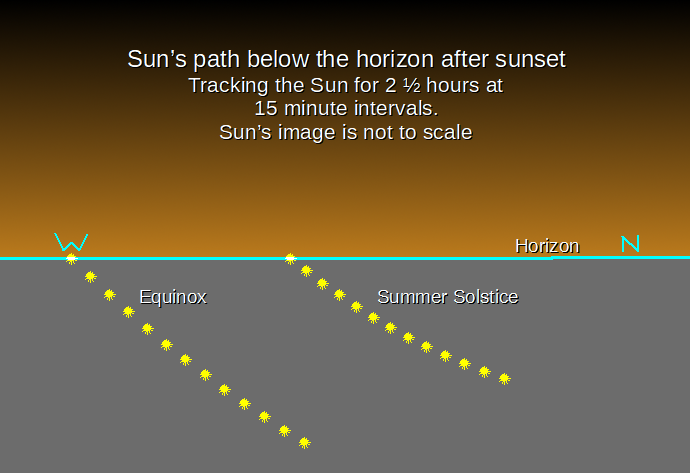
Check out my September 27, 2018 post about the different twilight periods.
06/15/2023 – Ephemeris – Today we have the earliest sunrise of the year
This is Ephemeris for Thursday, June 15th. Today the Sun will be up for 15 hours and 33 minutes, setting at 9:30, and it will rise tomorrow at 5:56. The Moon, 3 days before new, will rise at 4:28 tomorrow morning.
Today is the day of the earliest sunrise, though the time will stay within the same minute for a few days. In six days the Sun will reach it’s farthest north in our sky. And be above the horizon for fifteen hours and thirty four minutes. That’s the summer solstice for those living in the north hemisphere. It’s also known as the longest day. The retired computer programmer in me likes to take things literally, so no, June 21st, the summer solstice is not the longest day. It’s 24 hours long, like any other day, however it has the longest daylight hours. Daylight hours being defined as the time interval from sunrise to sunset, which, in Interlochen and Traverse City, is 15 hours 34 minutes. Five or six days later, we’ll have the latest sunset.
The astronomical event times given are for the Traverse City/Interlochen area of Michigan (EDT, UT –4 hours). They may be different for your location.
Addendum
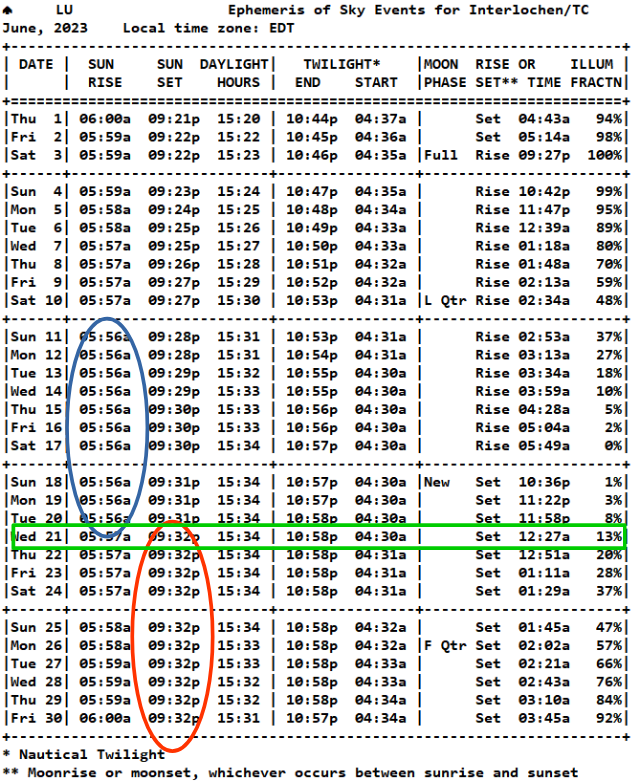
If the Earth had no axial tilt and had a circular orbit of the Sun, The earliest sunrise and latest sunset would occur on the summer solstice. But since that is not the case the Earth’s axial tilt and elliptical orbit cause the the earliest sunrise and latest sunset to differ from each other and the summer solstice.
 Bob Moler's Ephemeris Blog