Archive
Ephemeris: 10/16/2026 – A look at Saturn’s amazing moon Enceladus
This is Ephemeris for Friday, October 16th. Today the Sun will be up for 10 hours and 56 minutes, setting at 6:56, and it will rise tomorrow at 8:00. The Moon, 2 days before first quarter, will set at 10:26 this evening.
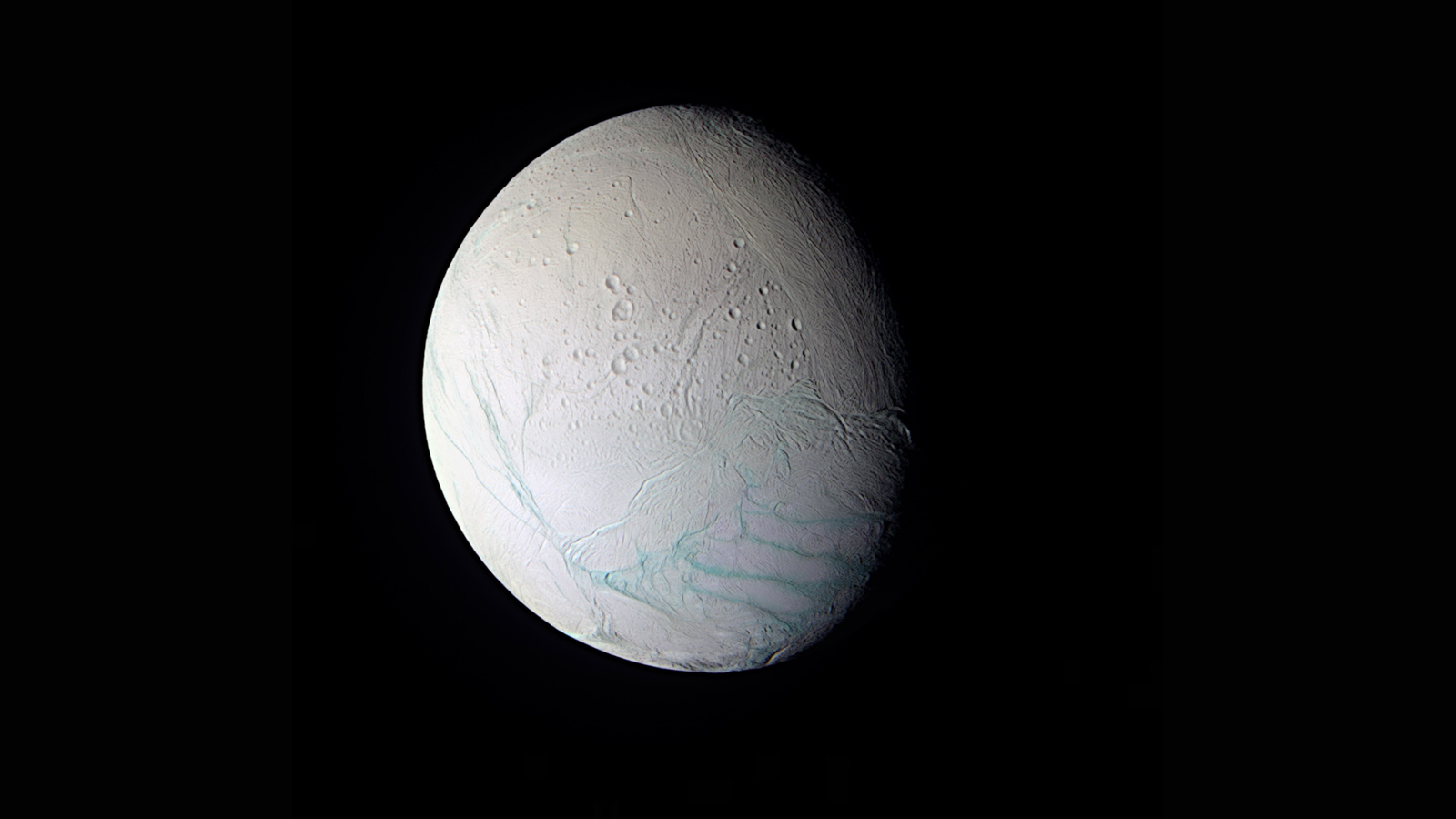
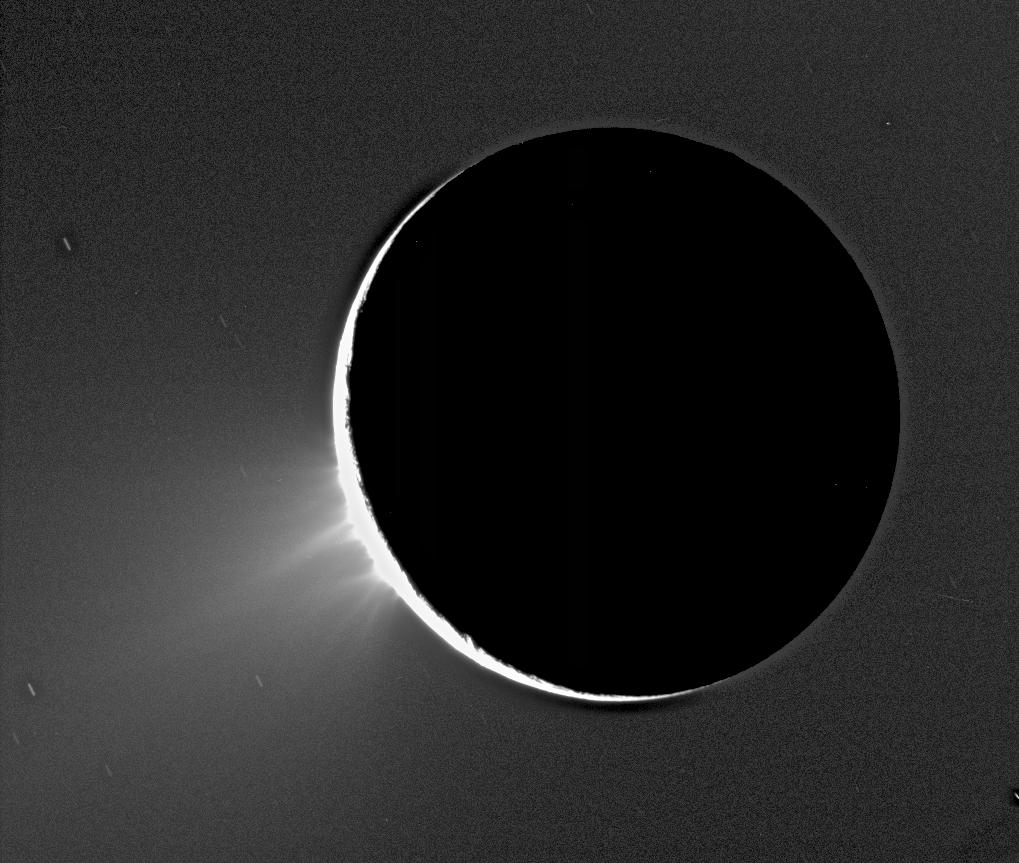
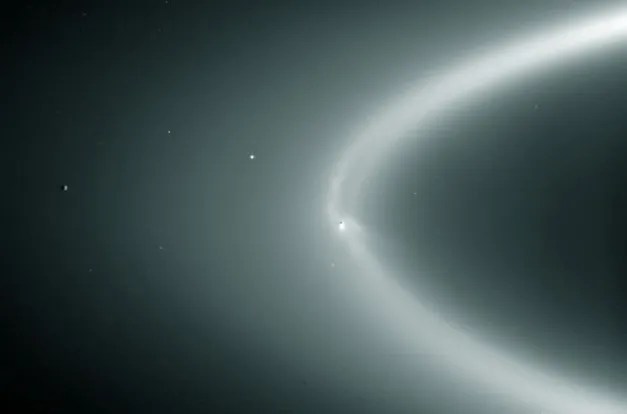
The most surprising of the many surprises of Saturn’s moons found by the Cassini spacecraft, 20 years ago, were the geysers erupting from the south polar region of the small moon Enceladus. A series of geysers emanating from deep fissures that looked like blue tigers stripes spewed forth a fine icy mist into the vacuum of space. It actually creates a ring around Saturn, called the E ring. It’s a very diffuse ring, not at all like the others, amd not visible from Earth. Enceladus has a diameter of about 310 miles, and a density of 1.6 times that of water. It is the most reflective body in the solar system, mainly because it travels within the E ring made of its own water ice that continually snows upon its surface.
The astronomical event times given in this blog are for the Traverse City/Interlochen area of Michigan (Lat 44.7° N, Long 85.7° W; EDT, UT – 4 hours) unless stated otherwise. Times will be different for other locations.
Addendum
Ephemeris: 10/15/2026 – A look at Saturn’s fabulous rings
This is Ephemeris for Thursday, October 15th. Today the Sun will be up for 10 hours and 59 minutes, setting at 6:58, and it will rise tomorrow at 7:59. The Moon, 3 days before first quarter, will set at 9:31 this evening.
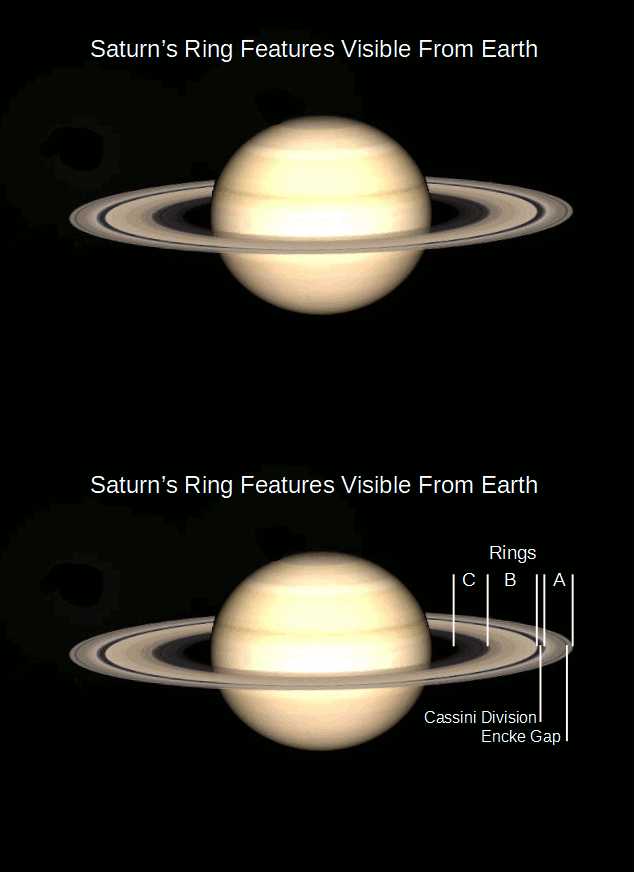
The planet Saturn which is the bright star in the southeastern sky in the evening, has those fabulous rings. They can be seen with a telescope that has at least 20 power magnification. The rings have a diameter of 150 thousand miles, and they are extremely thin and orbit Saturn over its equator. Maybe less than 100 feet thick. When the rings become edge on to the Earth, which they do twice in Saturn’s 29 1/2 year orbit of the Sun, during its equinoxes, they completely disappear from view. They are made up of a myriad of small, icy particles. Water ice is prevalent out at that distance from the sun. And a major constituent of most of its satellites. The Cassini spacecraft found that the rings were much more complex than they appear from the earth.
The astronomical event times given in this blog are for the Traverse City/Interlochen area of Michigan (Lat 44.7° N, Long 85.7° W; EDT, UT – 4 hours) unless stated otherwise. Times will be different for other locations.
Addendum
Ephemeris: 10/14/2026 – Taking our weekly look at the whereabouts of the naked-eye planets
This is Bob Moler with Ephemeris for Wednesday, October 14th. Today the Sun will be up for 11 hours and 2 minutes, setting at 6:59, and it will rise tomorrow at 7:58. The Moon, halfway from new to first quarter, will set at 8:44 this evening.
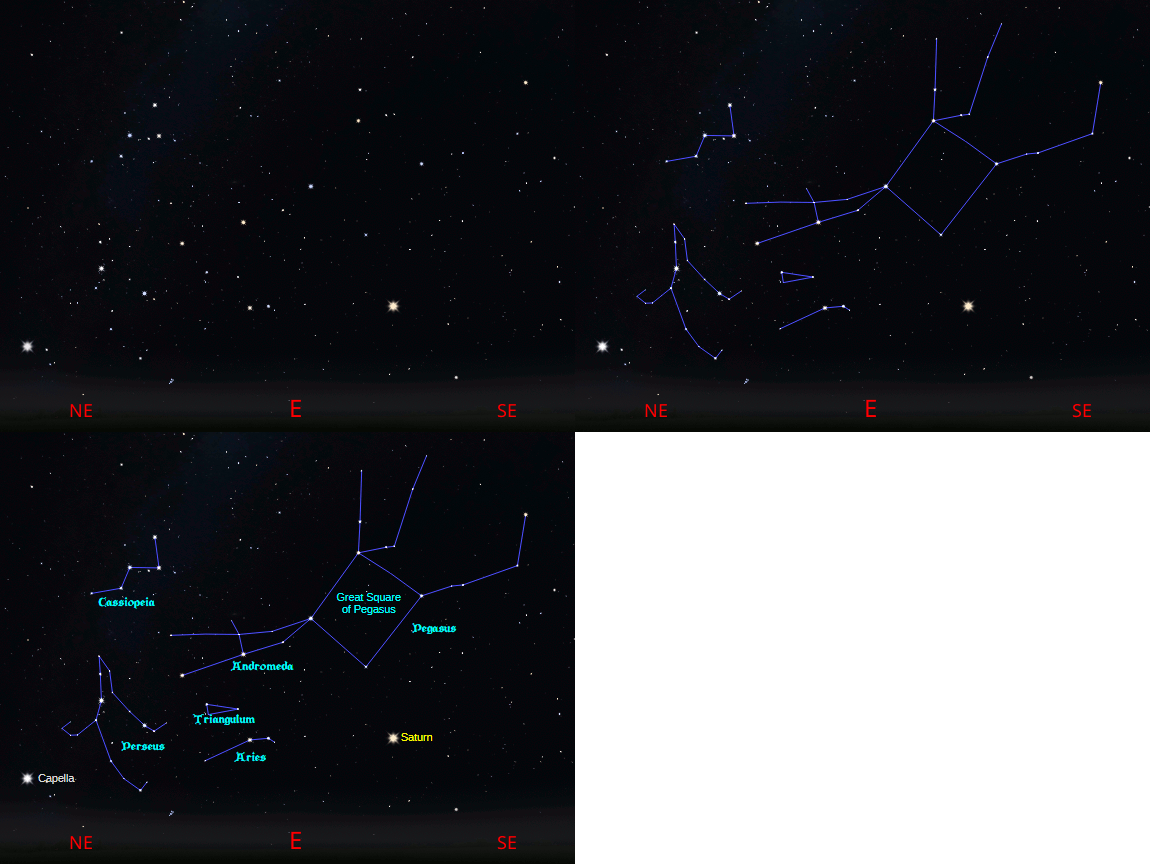
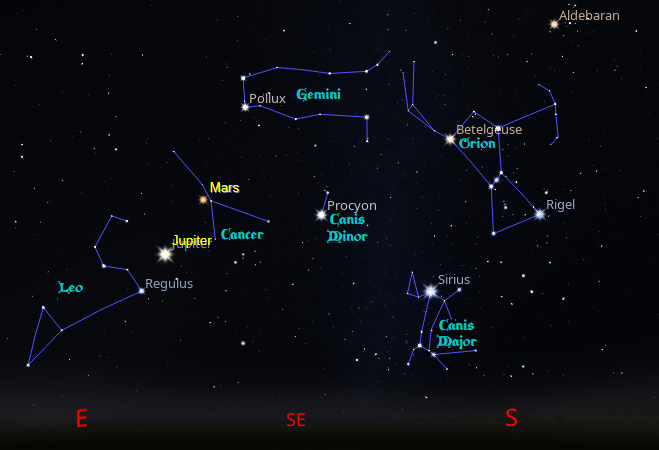
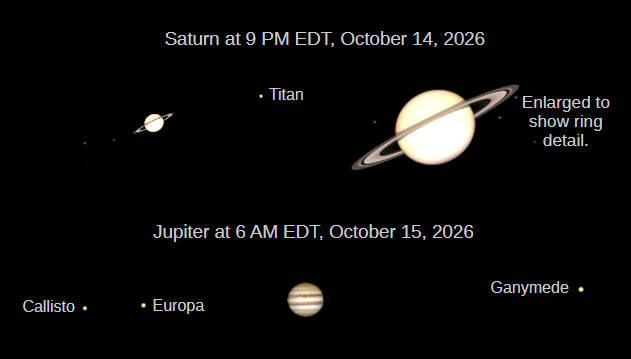
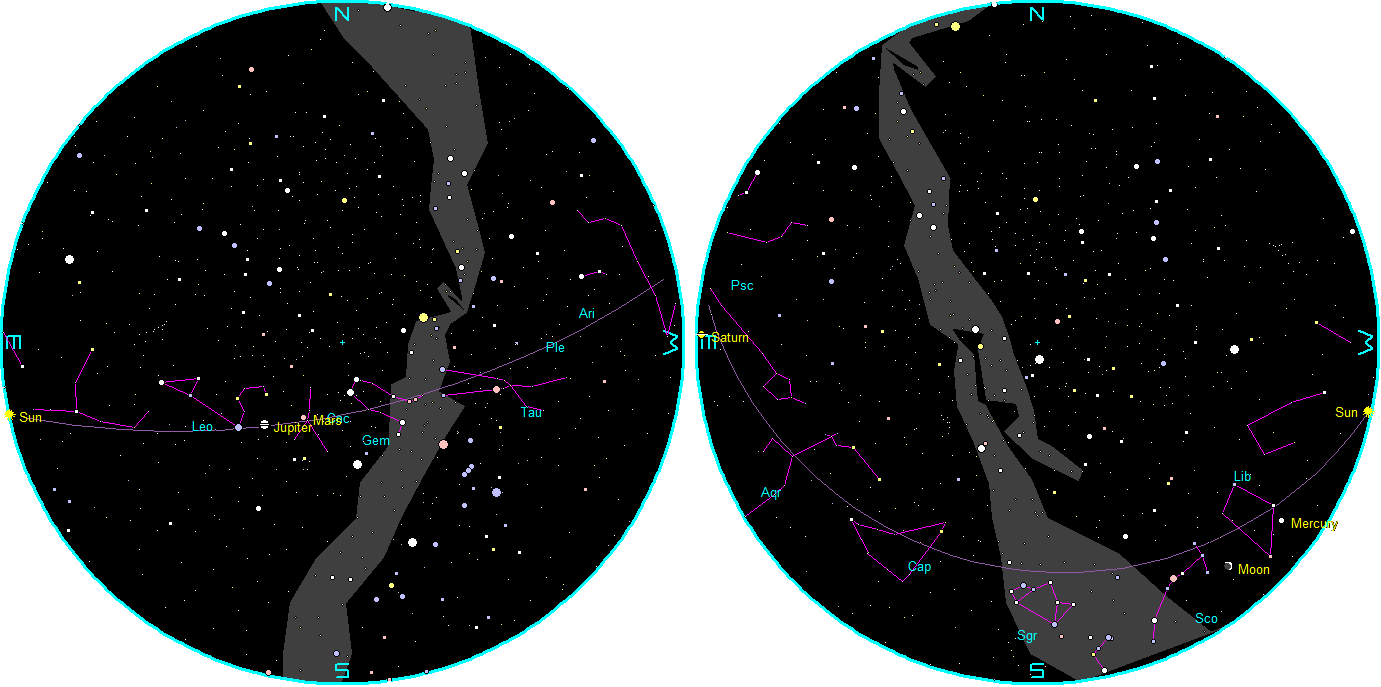
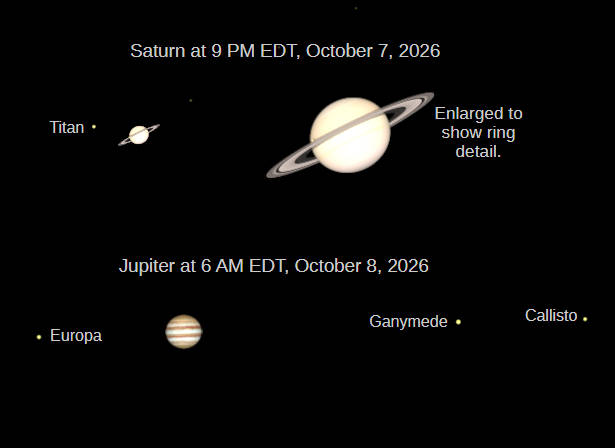
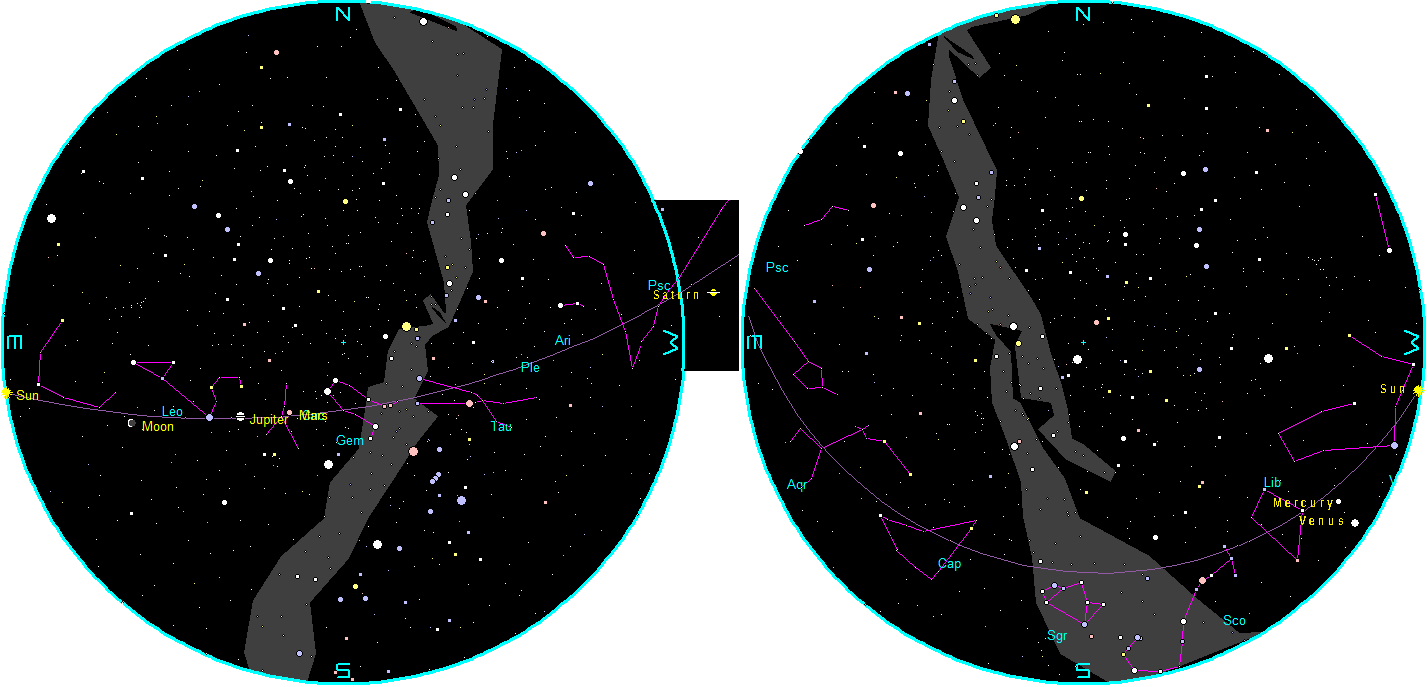
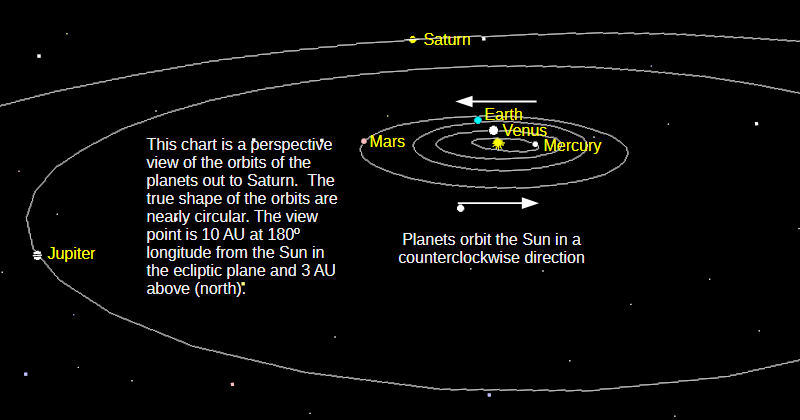
Let’s take our weekly look at the whereabouts of the naked-eye planets. Three of the naked-eye planets are visible in the night sky. Mercury sets too soon after sunset to be seen. Venus is will pass between the earth and the sun on the 23rd, and might be seen in the morning sky as soon as a week later. Tonight, Saturn will be in the eastern sky as it gets dark. It is the brightest starlike object low in that direction. It will be below the four stars that make a large distinctive pattern that marks the body of Pegasus the flying horse, called the Great Square. At 6 AM, Jupiter and Mars will in the east. Jupiter is brightest and while red Mars will be above and to the right of Jupiter and slowly closing. It will pass Jupiter on November 15th.
The astronomical event times given in this blog are for the Traverse City/Interlochen area of Michigan (Lat 44.7° N, Long 85.7° W; EDT, UT – 4 hours) unless stated otherwise. Times will be different for other locations.
Addendum
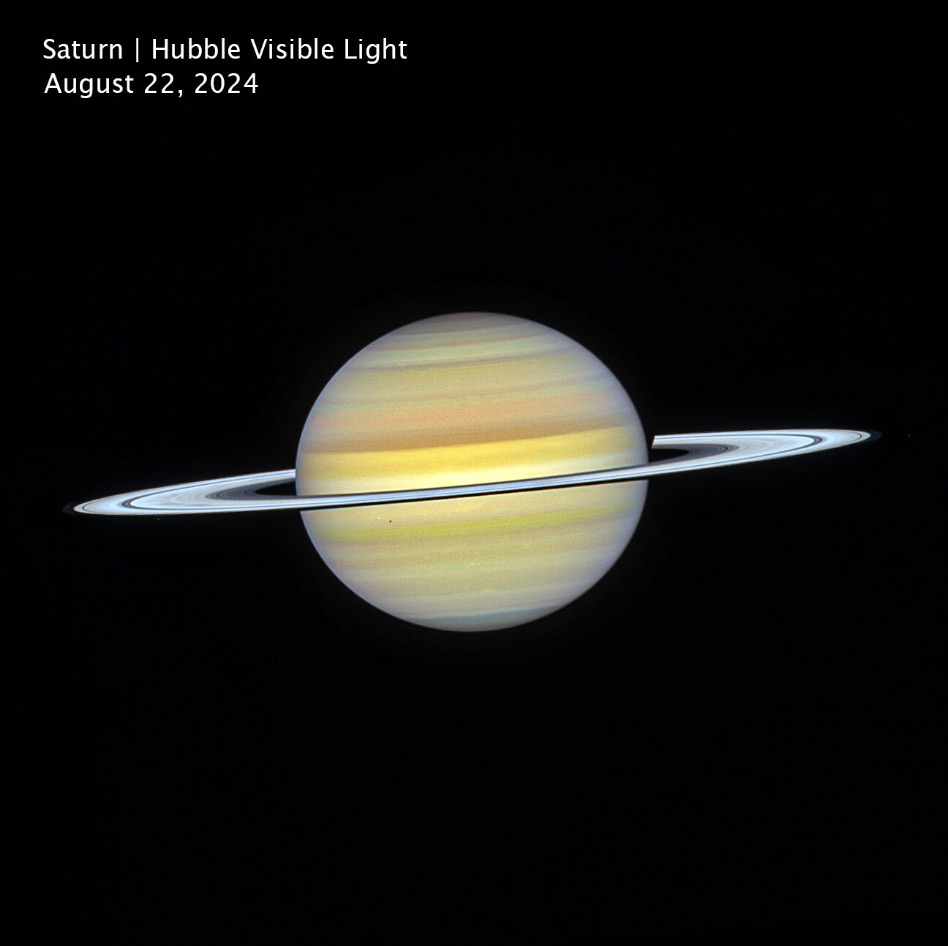
Ephemeris: 10/13/2026 – A closer look at Saturn
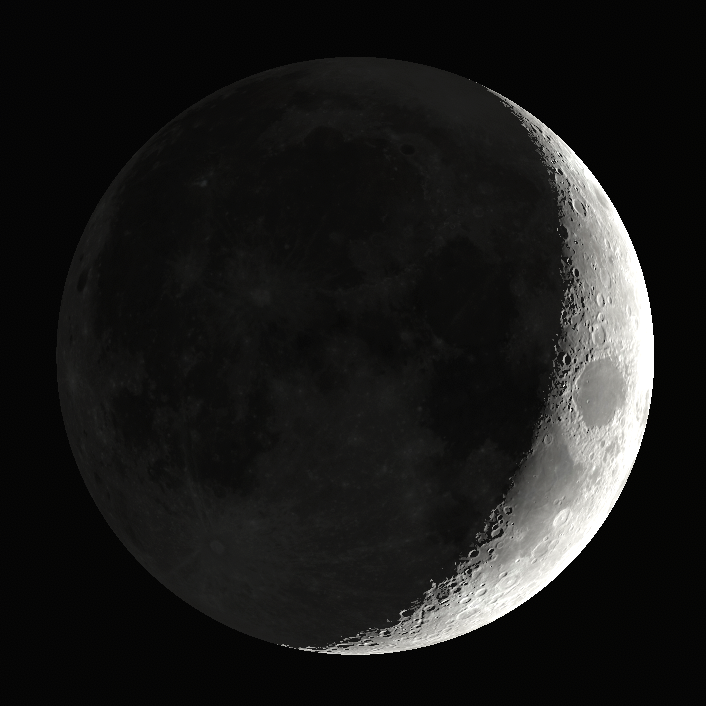
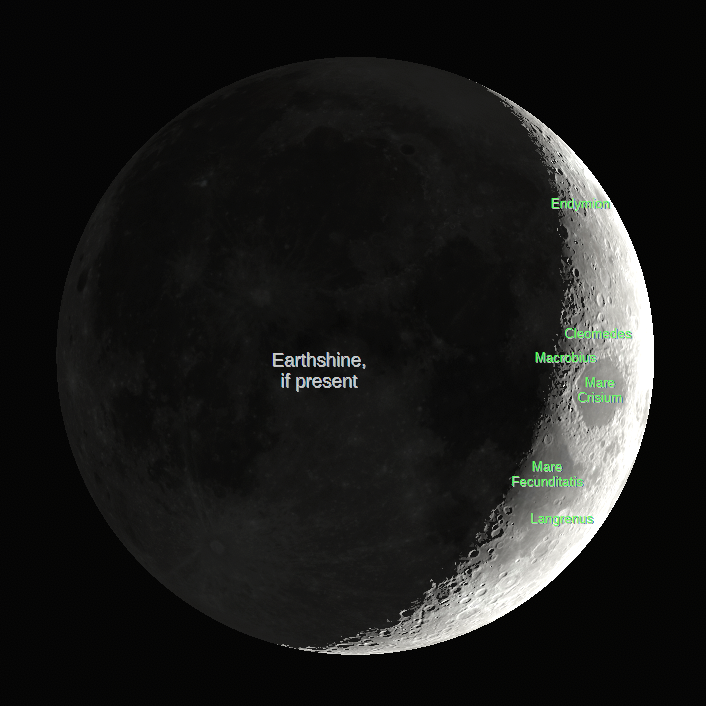
This is Bob Moler with Ephemeris for Tuesday, October 13th. Today the Sun will be up for 11 hours and 5 minutes, setting at 7:01, and it will rise tomorrow at 7:57. The Moon, 3 days past new, will set at 8:06 this evening.
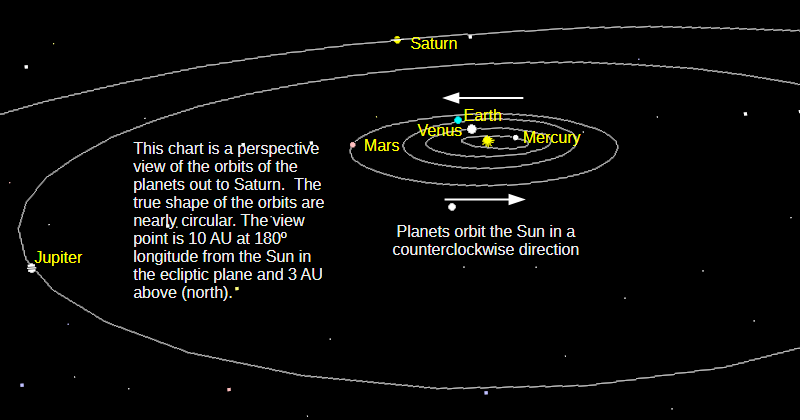
The bright star low in the southeastern sky these evenings is the planet Saturn. It is the second largest planet after Jupiter. And is almost as big, being about 72,000 miles (116,000 kilometers) in diameter. It has those fabulous rings, once thought unique, but are still the grandest. It is also the least dense planet. Density is measured in grams per cubic centimeter. Water is 1 gram per cubic centimeter. Saturn’s density is 0.69 or 69% that of water. So if you could find a lake great enough to hold it, and it was solid, it would float. Saturn averages 890 million miles (1.432 billion kilometers) from the sun and the earth. It is currently 787 million miles (1.267 billion kilometers) from earth, being only 9 days after its opposition from the sun, and its closest to us.
The astronomical event times given in this blog are for the Traverse City/Interlochen area of Michigan (Lat 44.7° N, Long 85.7° W; EDT, UT – 4 hours) unless stated otherwise. Times will be different for other locations.
Addendum
Ephemeris: 10/12/2026 – Indigenous Peoples Day
This is Ephemeris for Indigenous Peoples Day, Monday, October 12th. Today the Sun will be up for 11 hours and 8 minutes, setting at 7:03, and it will rise tomorrow at 7:55. The Moon, 2 days past new, will set at 7:34 this evening.
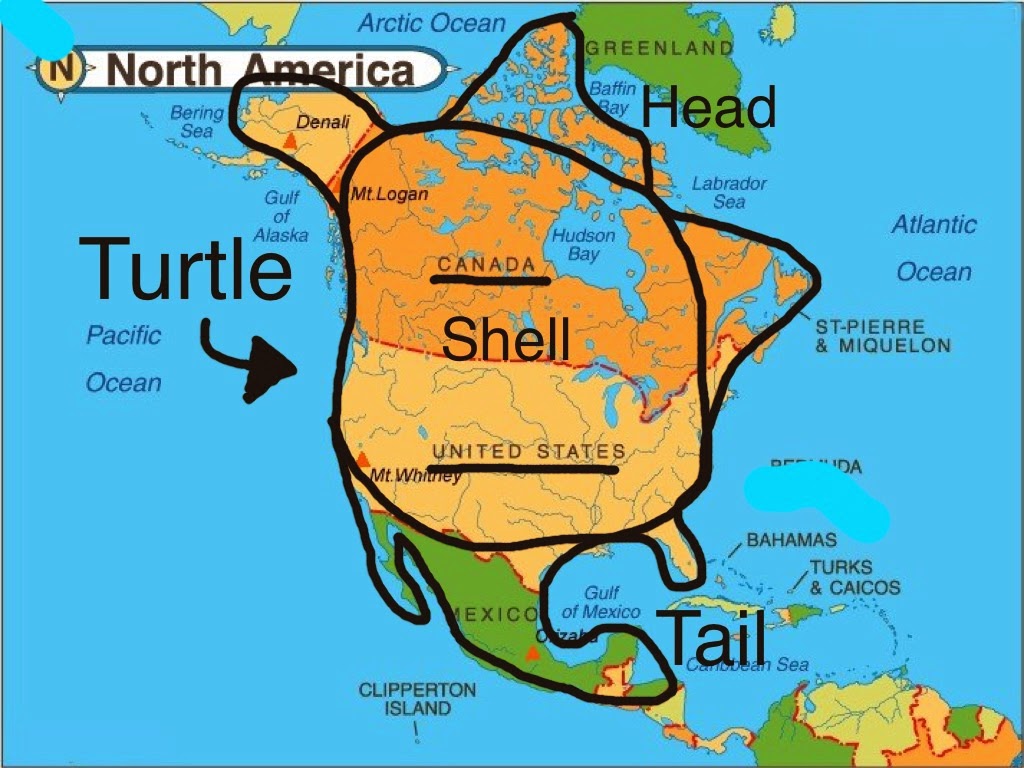
This is, according to the current U.S. administration, Columbus Day and only Columbus Day. Some of us commemorate it as Indigenous Peoples Day because they discovered this place first. Columbus never set foot on the continental United States. However, he did visit Puerto Rico. The indigenous people beat him to it by more than 1000 years. The reason that Columbus is celebrated because he unleashed the giant migration of Europeans and others, what the indigenous people might just think of a flood of illegal aliens into what they called Turtle Island. It being named after one of their creation stories, which we call North America. No, it’s not “Turtles all the way down”. That’s a Hindu thing.
The astronomical event times given in this blog are for the Traverse City/Interlochen area of Michigan (Lat 44.7° N, Long 85.7° W; EDT, UT – 4 hours) unless stated otherwise. Times will be different for other locations.
Addendum
Ephemeris: 10/07/2026 – Collision with Andromeda Galaxy is not certain
This is Ephemeris for Friday, October 9th. Today the Sun will be up for 11 hours and 17 minutes, setting at 7:08, and it will rise tomorrow at 7:52. The Moon, 1 day before new, will rise at 7:55 tomorrow morning.
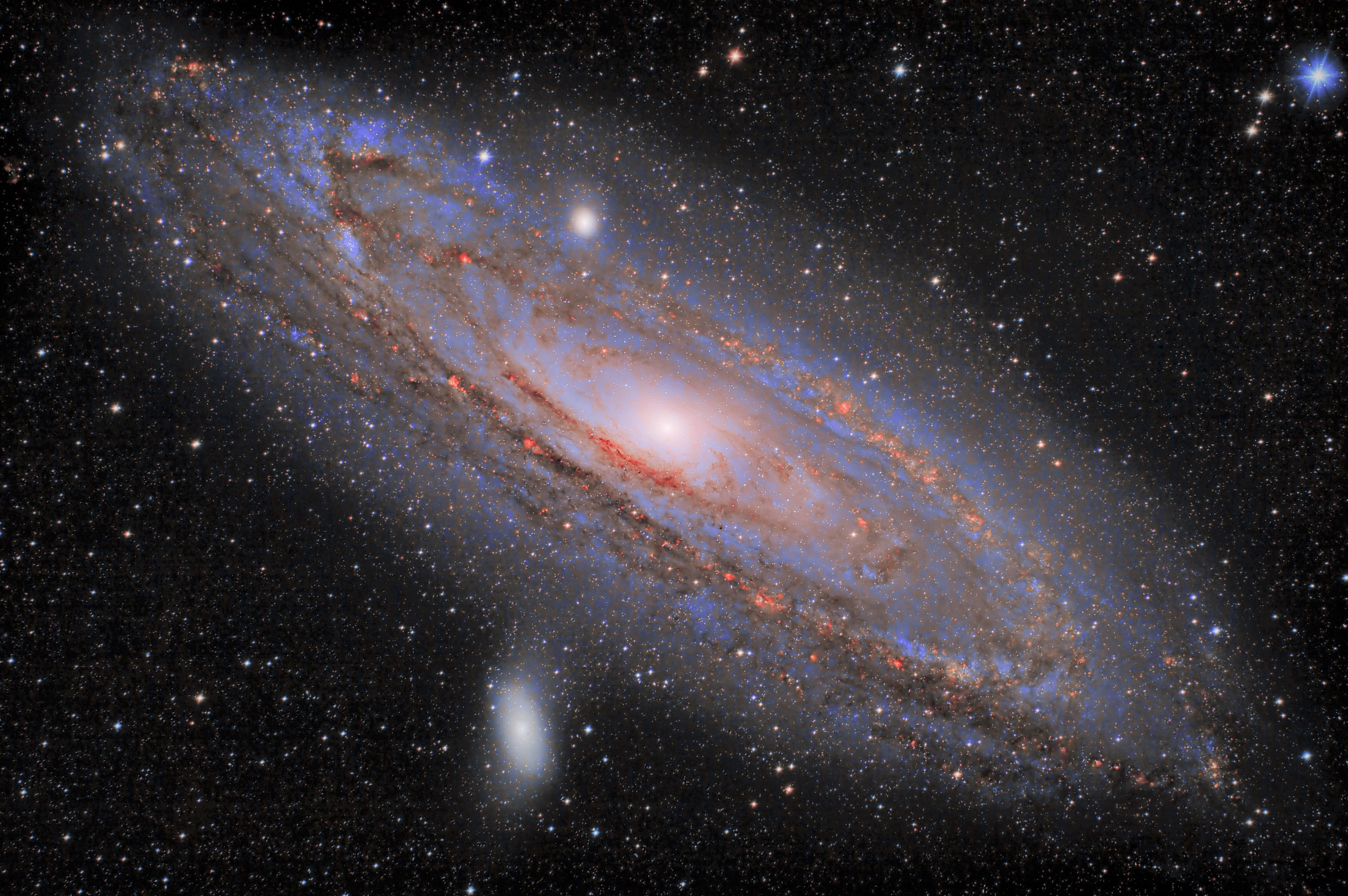
Some astronomers have determined that our Milky Way galaxy has about a 50% chance of colliding with the Great Andromeda galaxy, now two and a half million light years away, within 10 billion years. Earlier estimated gave a more certain and earlier collision date of 4 billion years. A closer look, including the next two most massive galaxies in our Local Group added a greater uncertanty to the collision, or even if it would occur. These two galaxies are the Large Magellanic Cloud and the Triangulum Galaxy, M33. Using the Doppler principle we can measure the approach speed accurately, but have no idea about the lateral velocity. So a hundred simulations were made with varying lateral motions of the four galaxies and their gravitational influences to get the new results.
The astronomical event times given in this blog are for the Traverse City/Interlochen area of Michigan (Lat 44.7° N, Long 85.7° W; EDT, UT – 4 hours) unless stated otherwise. Times will be different for other locations.
Addendum
Reference: 100,000 Computer Simulations Reveal Milky Way’s Fate: https://svs.gsfc.nasa.gov/14847
Ephemeris: 10/08/2026 – Finding the Great Andromeda Galaxy
This is Ephemeris for Thursday, October 8th. Today the Sun will be up for 11 hours and 20 minutes, setting at 7:10, and it will rise tomorrow at 7:50. The Moon, 2 days before new, will rise at 6:44 tomorrow morning.
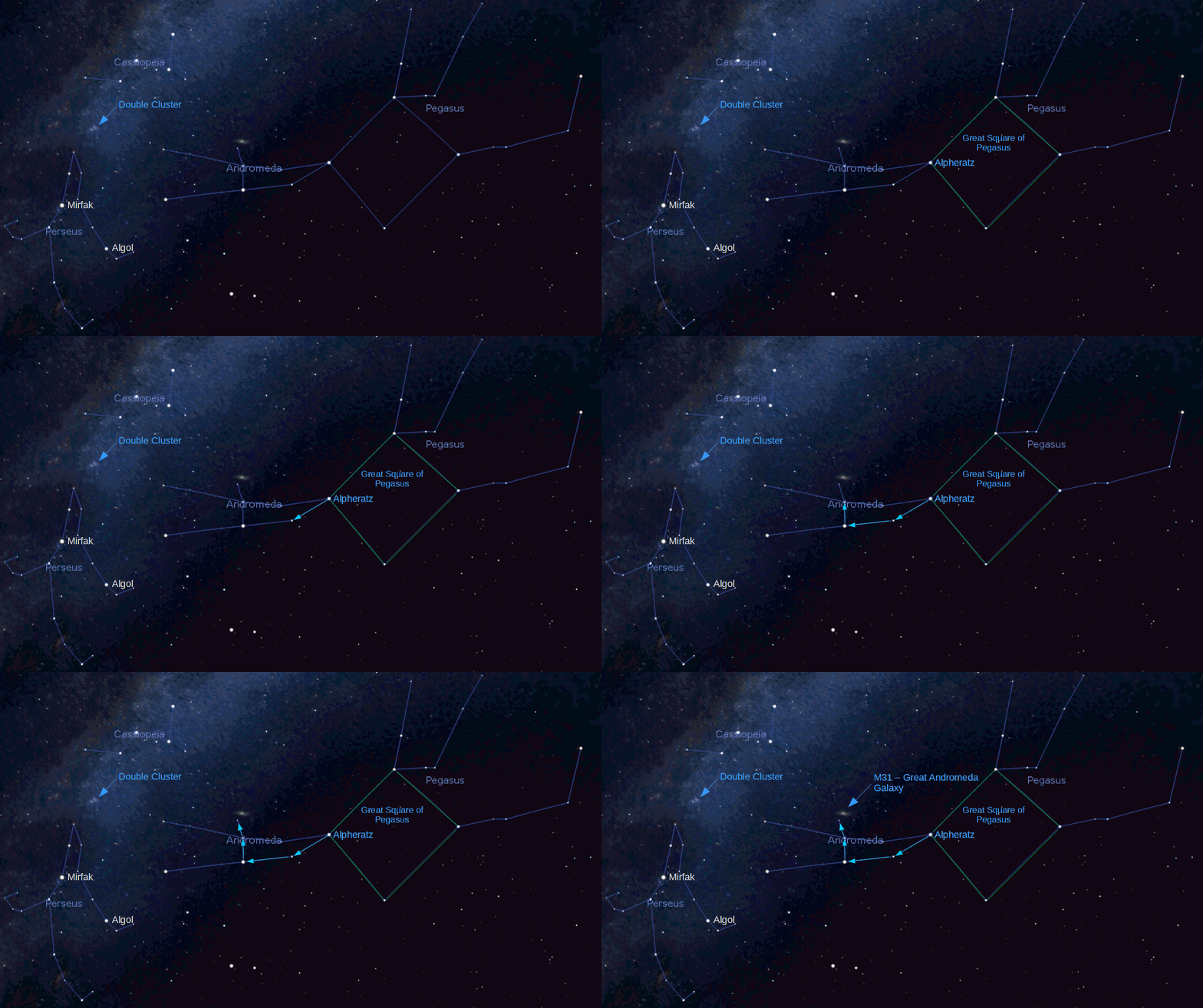
The closest large galaxy to our Milky Way is the Great Andromeda Galaxy, seen high in the eastern sky when it gets dark. It is barely visible to the naked eye. Locate it by star-hopping: First find a large square of stars high in the east-southeast at 9 PM, standing on one corner, the Great Square of Pegasus. The left star of the square is the head of the constellation Andromeda. Follow two stars to the left and a bit downward, then two stars straight up. The galaxy is near that last star as a small smudge of light. Binoculars are the best way to see it as a thin spindle of light, which is the galaxy’s nucleus. Using a telescope, one can see, besides its nucleus, its two satellite galaxies.
The astronomical event times given in this blog are for the Traverse City/Interlochen area of Michigan (Lat 44.7° N, Long 85.7° W; EDT, UT – 4 hours) unless stated otherwise. Times will be different for other locations.
Addendum
Ephemeris: 10/7/2026 – Taking our weekly look at the whereabouts of the naked-eye planets
This is Ephemeris for Wednesday, October 7th. Today the Sun will be up for 11 hours and 23 minutes, setting at 7:12, and it will rise tomorrow at 7:49. The Moon, 3 days before new, will rise at 5:32 tomorrow morning.
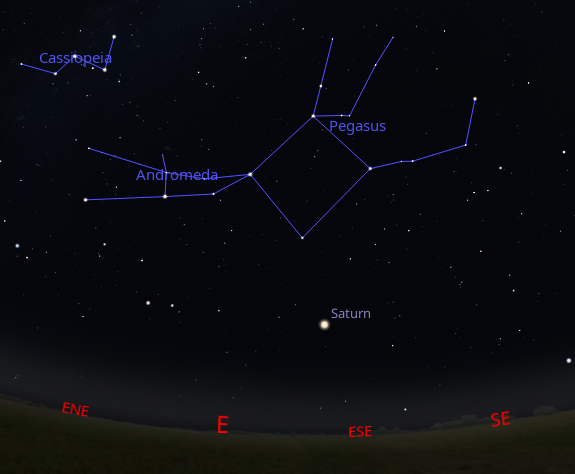
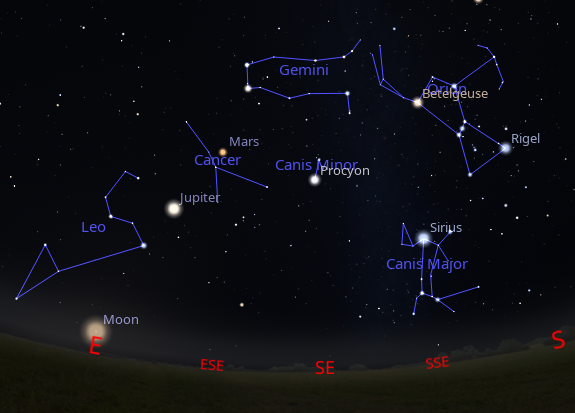
Let’s take our weekly look at the whereabouts of the naked-eye planets. Three of the naked-eye planets are visible in the night sky. Mercury sets too soon after sunset to be seen. Venus is will pass between the earth and the sun on the 23rd, and might be seen in the morning sky a week later. Tonight, Saturn will be in the eastern sky as it gets dark. It is the brightest starlike object low in that direction. It will be below the four stars that make large distinctive pattern, that marks the body of Pegasus the flying horse, called the Great Square. At 6 AM, Jupiter and Mars will in the east. Jupiter is brightest and while red Mars will be above and to the right of Jupiter. It will pass Jupiter on November 15th.
The astronomical event times given in this blog are for the Traverse City/Interlochen area of Michigan (Lat 44.7° N, Long 85.7° W; EDT, UT – 4 hours) unless stated otherwise. Times will be different for other locations.
Addendum
Ephemeris: 10/06/2026 -Finding the constellation of Cepheus the King
This is Ephemeris for Tuesday, October 6th. Today the Sun will be up for 11 hours and 26 minutes, setting at 7:13, and it will rise tomorrow at 7:48. The Moon, 3 days past last quarter, will rise at 4:18 tomorrow morning.
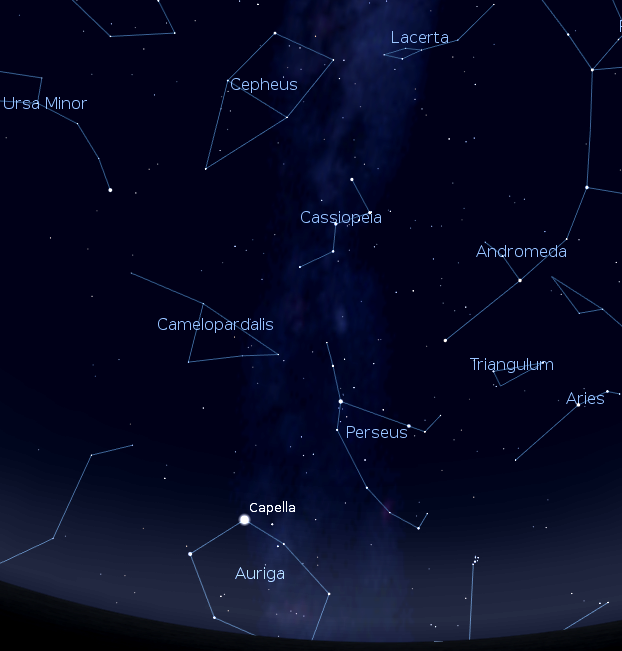
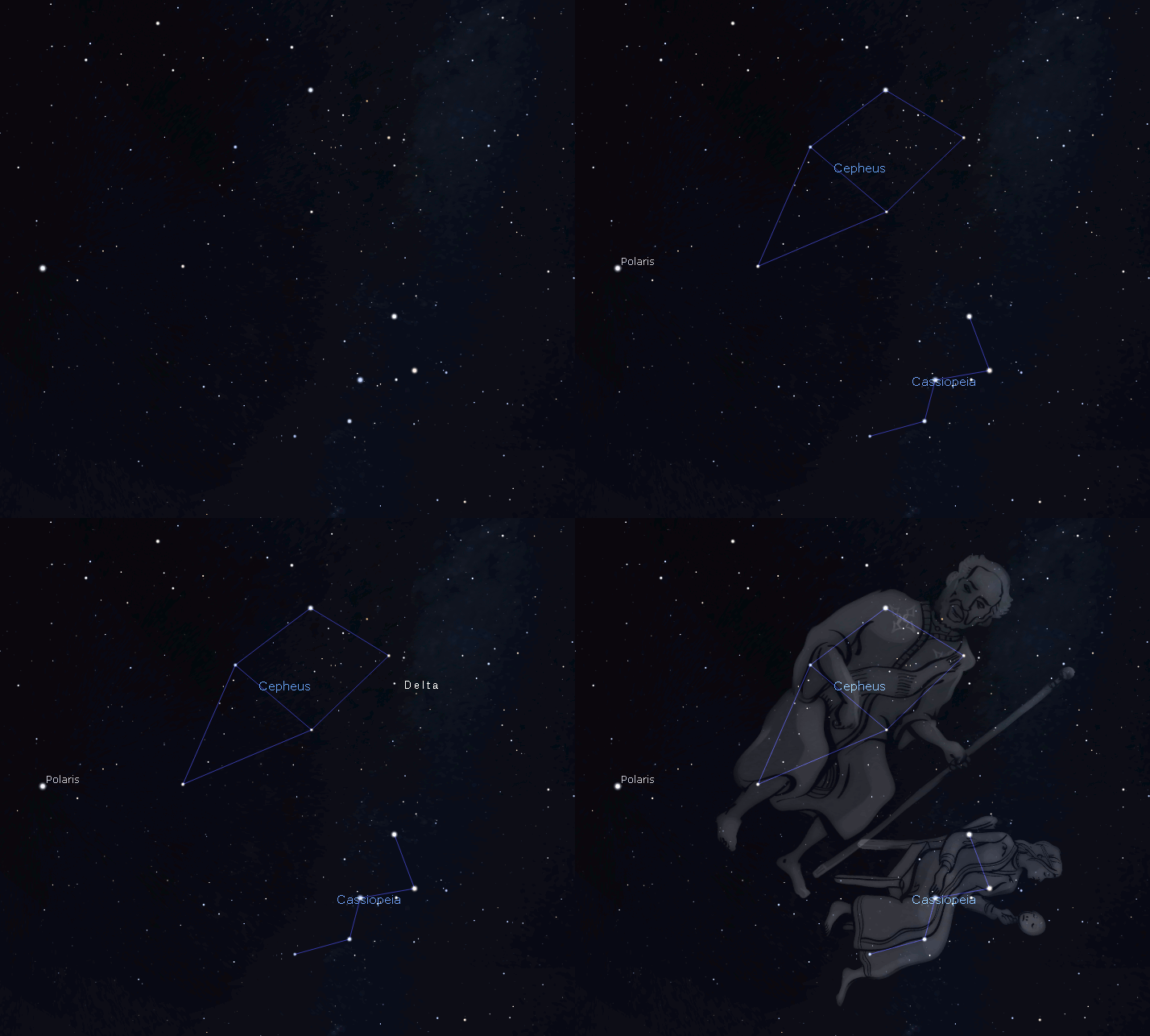
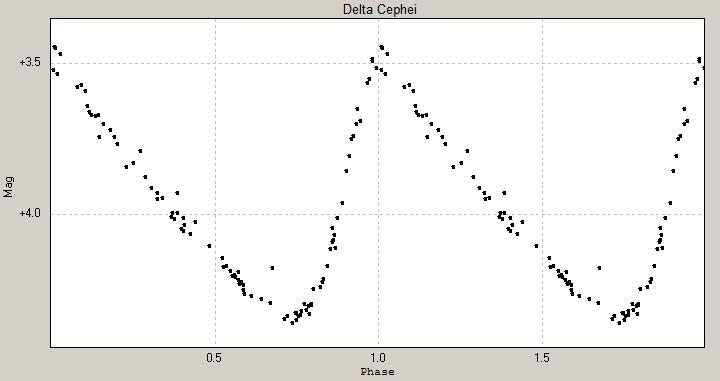
There’s a faint constellation in the northeast above the W shaped constellation of Cassiopeia. It’s a nearly upside down church steeple of a constellation called Cepheus the king, and husband of queen Cassiopeia. Cepheus’ claim to modern astronomical fame is that one of its stars, Delta (δ) Cephei, is the archetype for the important Cepheid variable stars. Delta is the bottom most of a trio of stars at the right corner of the constellation. In the early 20th century, Henrietta Leavitt discovered that Cepheids in the nearby galaxy the Small Magellanic Cloud varied in brightness with a period of days that was related to their brightness. This meant that Cepheids could be used as standard candles to measure the distances to other galaxies.
The astronomical event times given in this blog are for the Traverse City/Interlochen area of Michigan (Lat 44.7° N, Long 85.7° W; EDT, UT – 4 hours) unless stated otherwise. Times will be different for other locations.
Addendum
Ephemeris: 10/05/2026 – Finding and observing Cassiopeia over the year
This is Bob Moler with Ephemeris for Monday, October 5th. Today the Sun will be up for 11 hours and 30 minutes, setting at 7:15, and it will rise tomorrow at 7:47. The Moon, 2 days past last quarter, will rise at 3:02 tomorrow morning.
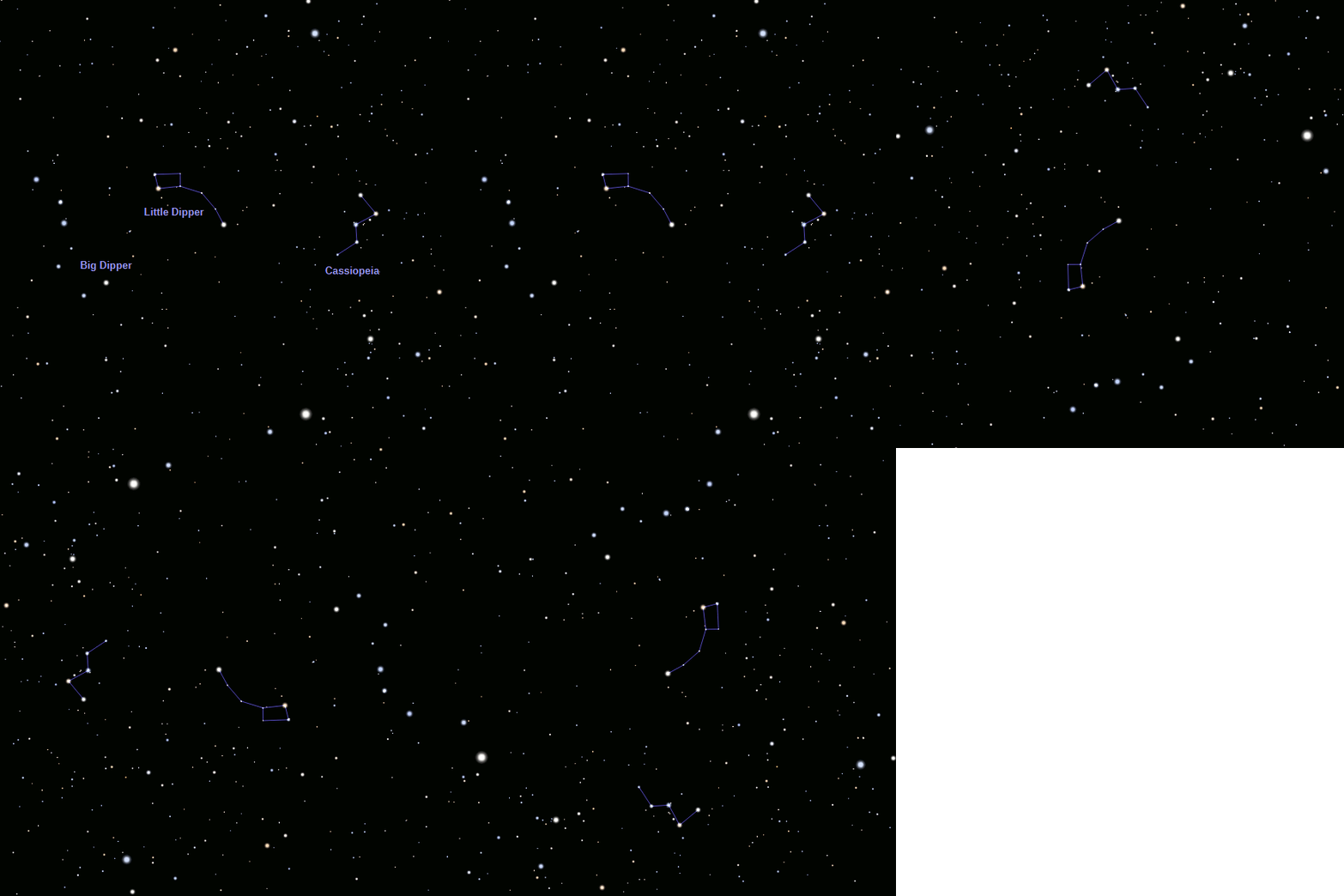
High in the northeastern sky at 9:00 PM the constellation of Cassiopeia the queen can be spotted. Its stars make a letter W in the sky. For anyone located north of 34º north latitude it is circumpolar, meaning that it never sets, as it appears to move around the North Pole of the sky. In the summer it is a W low in the north. It becomes kind of an open and angular number 3 in the autumn. In the winter it is overhead and looks like an M. In springtime it looks like the Greek capital letter Sigma in the northwest. I will visit Cassiopeia later this autumn and relate her story and other autumn constellations including her daughter Andromeda, husband King Cepheus, future son-in-law Perseus, his horse Pegasus, and the sea monster, Cetus.
The astronomical event times given in this blog are for the Traverse City/Interlochen area of Michigan (Lat 44.7° N, Long 85.7° W; EDT, UT – 4 hours) unless stated otherwise. Times will be different for other locations.
Addendum