Archive
Ephemeris: 10/23/2026 – A planet named Saturn
This is Ephemeris for Friday, October 23rd. Today the Sun will be up for 10 hours and 35 minutes, setting at 6:44, and it will rise tomorrow at 8:10. The Moon, 3 days before full, will set at 6:20 tomorrow morning.
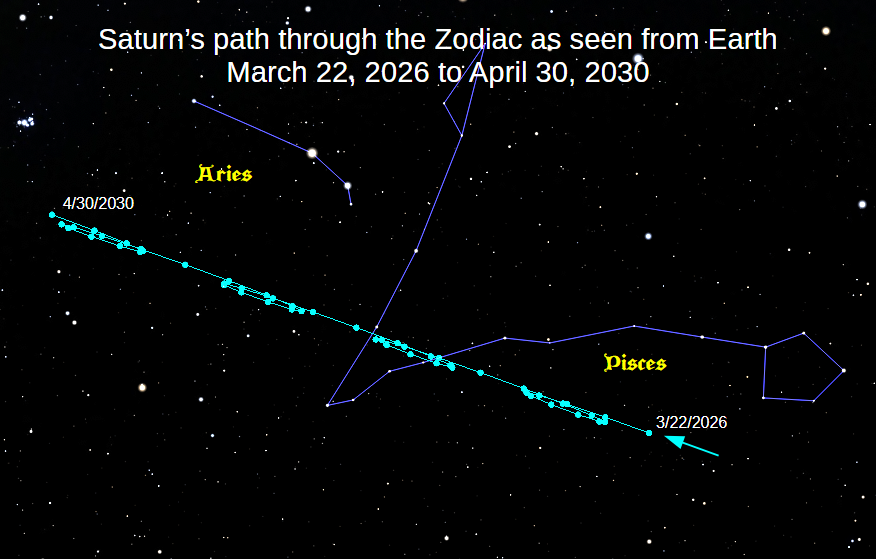
The planet Jupiter, named after the chief Roman god, moves majestically through the zodiacal constellations, visiting one each year. Saturn, however, todders its way around the zodiac, taking nearly 30 years to complete the same circuit. To the Greeks. Saturn was Kronos. An elder god, one of the Titans. And not a very nice one. The Romans converted Kronos to Saturn and made him benovelent. He was the God of old age, for his slow circuit around the sky, and also the god of hospitality. It is said that the Romans always set a separate place at their dinner table, in case he showed up, to demonstrate their hospitality. And of course, there’s a great festival in December, Saturnalia. Which may be responsible for our Christmas placement and the surrounding festivities occurring in December.
The astronomical event times given in this blog are for the Traverse City/Interlochen area of Michigan (Lat 44.7° N, Long 85.7° W; EDT, UT – 4 hours) unless stated otherwise. Times will be different for other locations.
Addendum
Ephemeris: 10/22/2026 – Saturn’s weird moons
This is Ephemeris for Thursday, October 22nd. Today the Sun will be up for 10 hours and 38 minutes, setting at 6:46, and it will rise tomorrow at 8:08. The Moon, half way from first quarter to full, will set at 5:07 tomorrow morning.
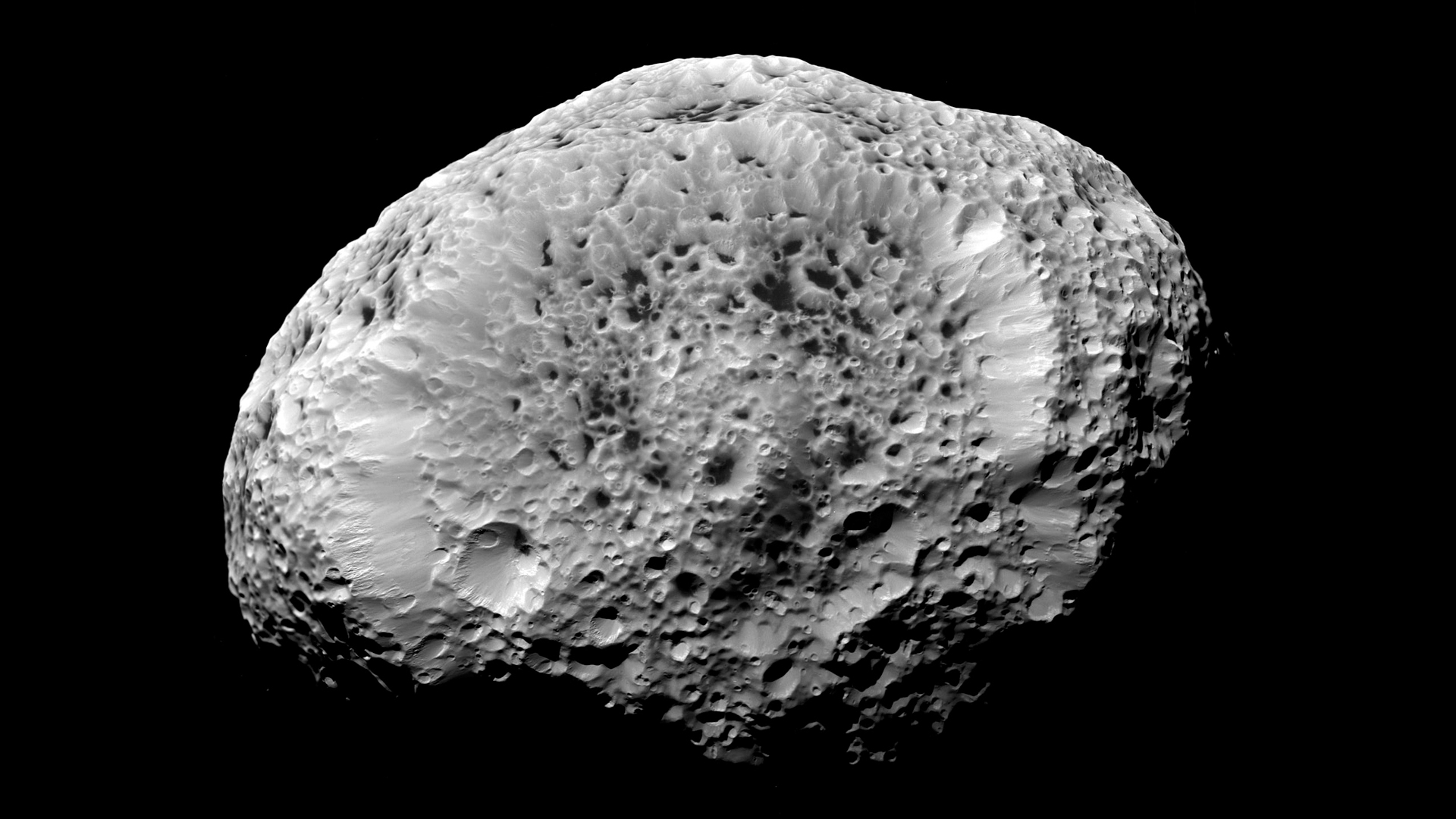
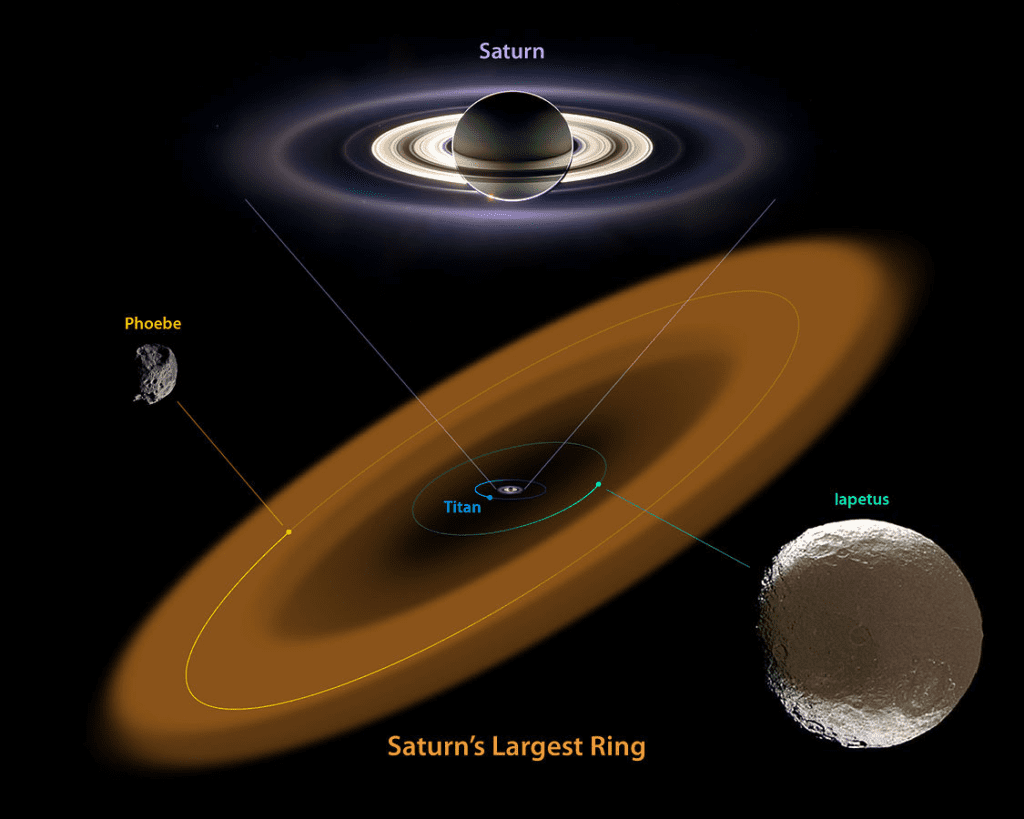
Saturn’s got some pretty weird moons. I’ve talked about Enceladus with its water ice geysers, and Titan with its atmosphere. We also have Iapetus, a moon which has two faces. Its leading face, as it orbits Saturn, is dark, almost black. While his trailing face is white like the other moons. It also has a ridge around its equator, that, reminds me of a walnut.. Another strange moon is Hyperion, a moon that looks like a sponge. Its density, though made of ice, is half the density of ice. It even looks like a sponge. Then there’s Phoebe. A dark moon that takes over a year to orbit Saturn, backwards from all the other satellites. It’s probably a captured Kuiper Belt Object, and has a dark surface. And that isn’t all of them.
The astronomical event times given in this blog are for the Traverse City/Interlochen area of Michigan (Lat 44.7° N, Long 85.7° W; EDT, UT – 4 hours) unless stated otherwise. Times will be different for other locations.
Addendum
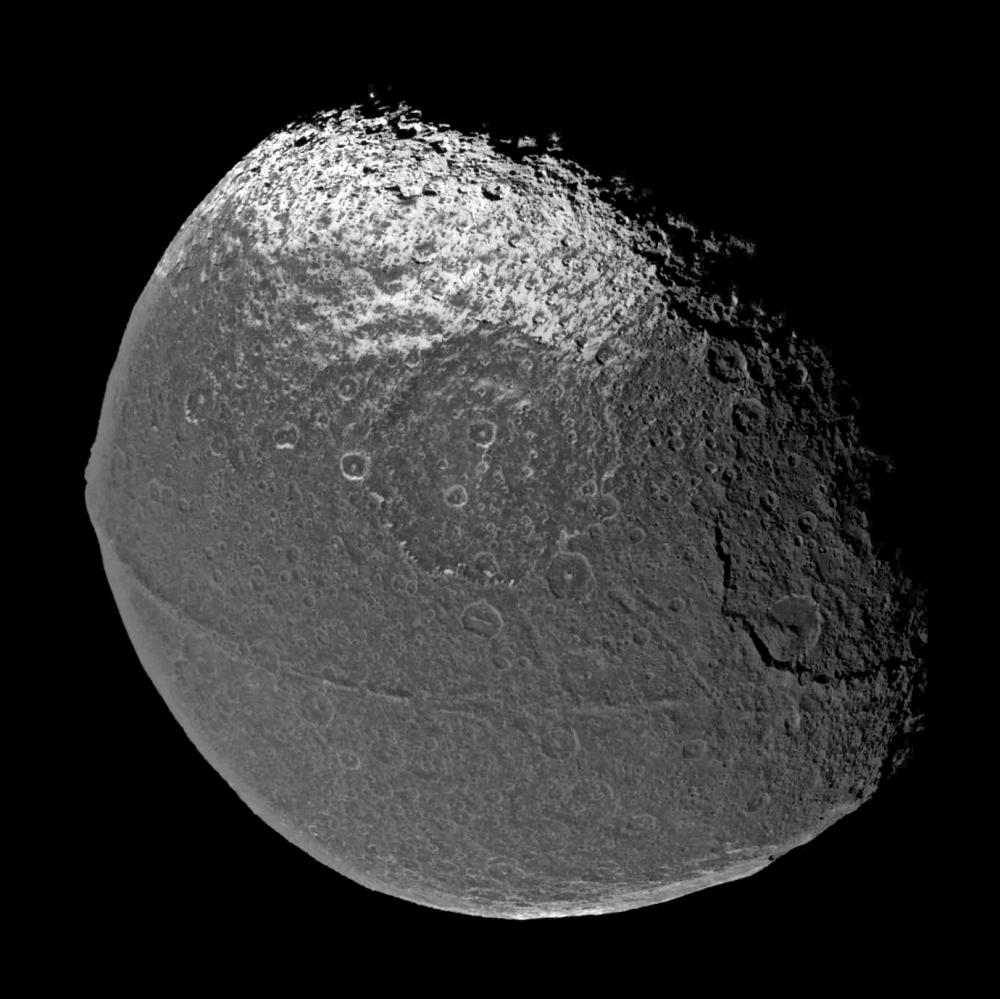
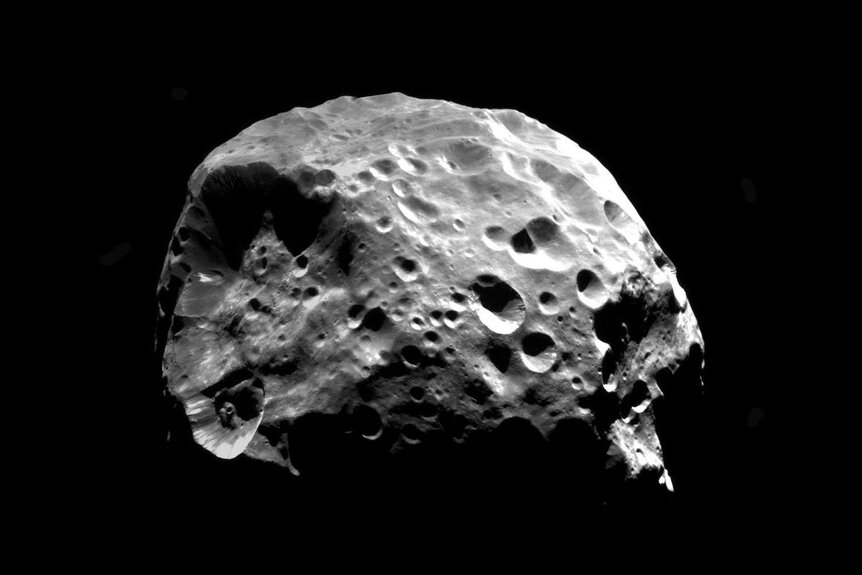
I didn’t have time in the program, but Phoebe and Iapetus have a connection that explains Iapetus’ dark side.
Ephemeris: 10/21/2026 – Taking our weekly look at the whereabouts of the naked-eye planets
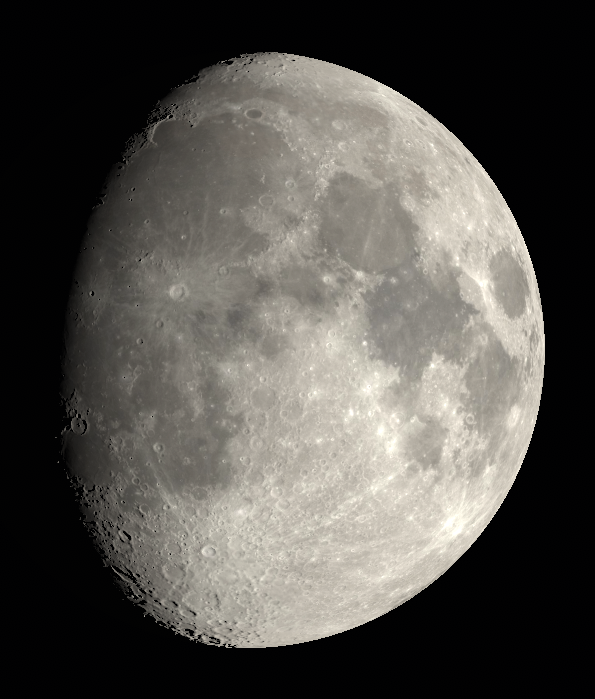
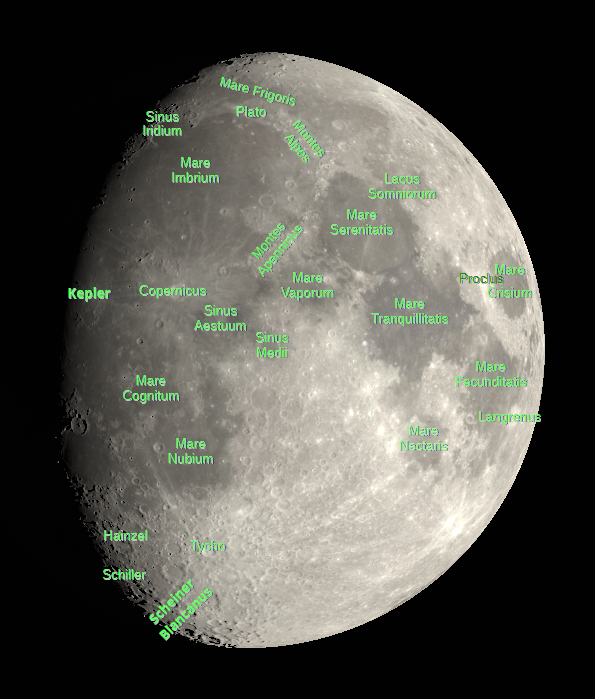
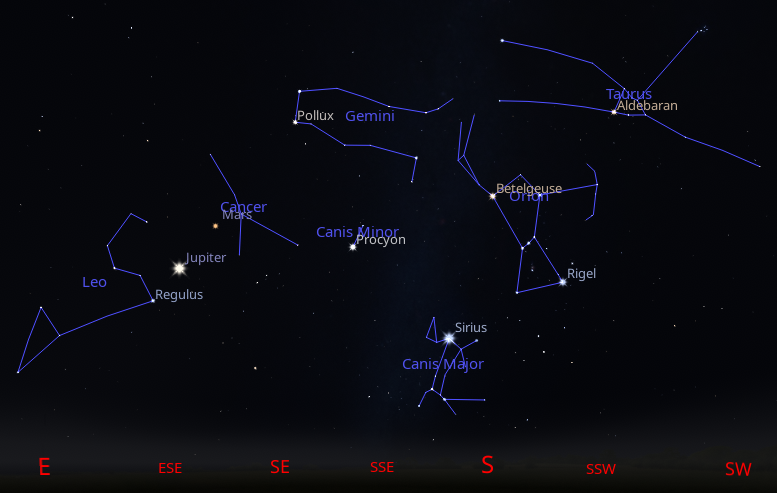
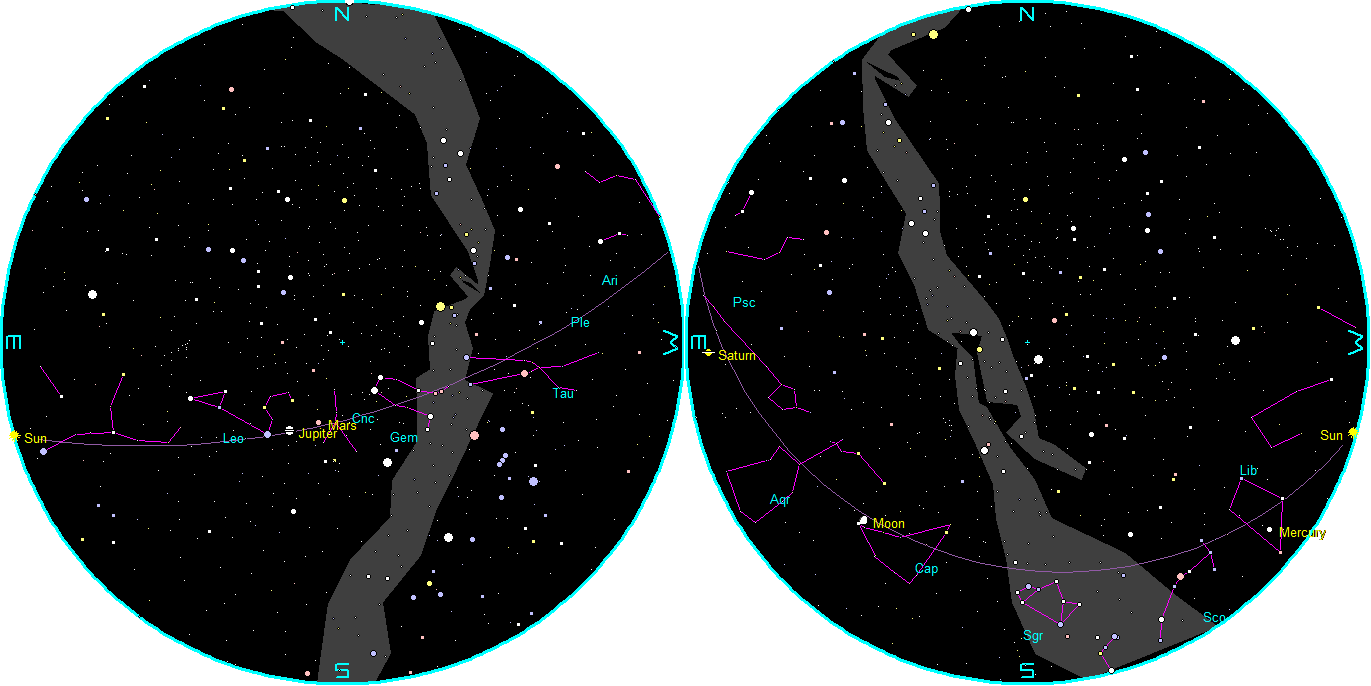
This is Ephemeris for Wednesday, October 21st. Today the Sun will be up for 10 hours and 41 minutes, setting at 6:47, and it will rise tomorrow at 8:07. The Moon, 3 days past first quarter, will set at 3:57 tomorrow morning.
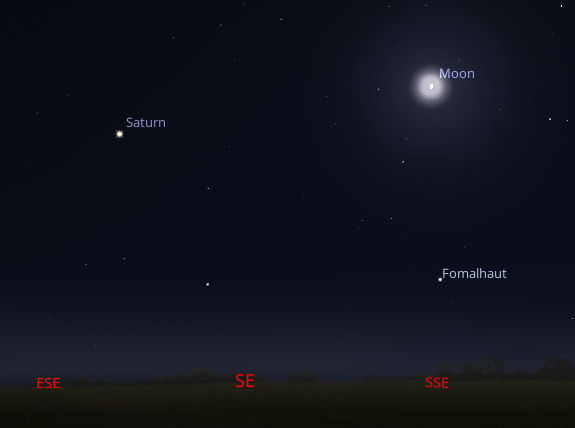
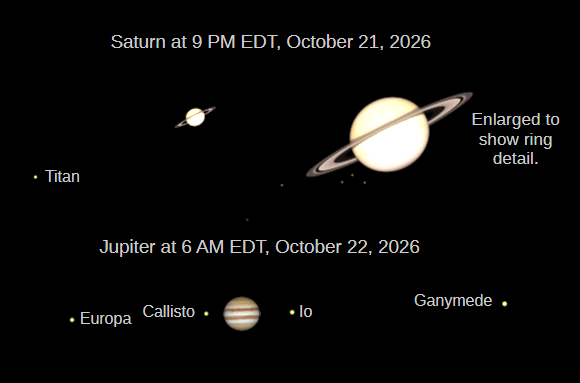
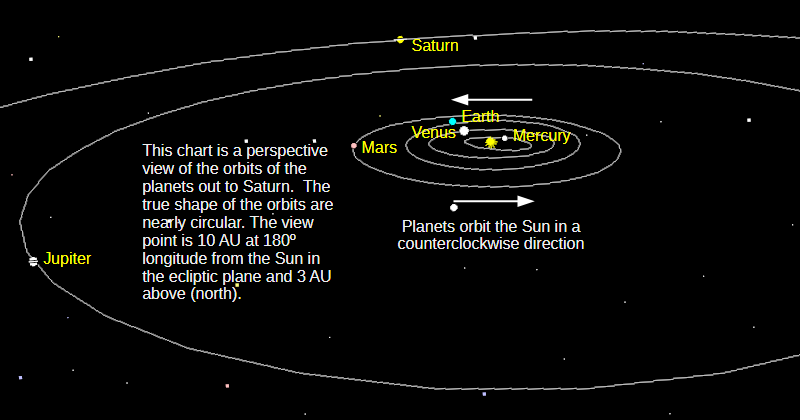
Let’s take our weekly look at the whereabouts of the naked-eye planets. Three of the naked-eye planets are visible in the night sky. Mercury sets too soon after sunset to be seen. Venus will pass between the earth and the sun in inferior conjunction in two days, and might be seen in the morning sky for sharp-eyed observers by the end of the month. Tonight, Saturn will be in the east-southeastern sky as it gets dark. It is the brightest starlike object low in that direction. It is a ways to the left of and slightly below the Moon in the southeast. At 6 AM, Jupiter and Mars will in the east-southeast. Jupiter is brightest and red Mars will be above and to the right of Jupiter and slowly closing. Some Orionid meteors might be visble then.
The astronomical event times given in this blog are for the Traverse City/Interlochen area of Michigan (Lat 44.7° N, Long 85.7° W; EDT, UT – 4 hours) unless stated otherwise. Times will be different for other locations.
Addendum
Ephemeris: 10/20/2026 – Dragonfly to land on Saturn’s moon Titan in 2034
This is Ephemeris for Tuesday, October 20th. Today the Sun will be up for 10 hours and 44 minutes, setting at 6:49, and it will rise tomorrow at 8:06. The Moon, 2 days past first quarter, will set at 2:48 tomorrow morning.
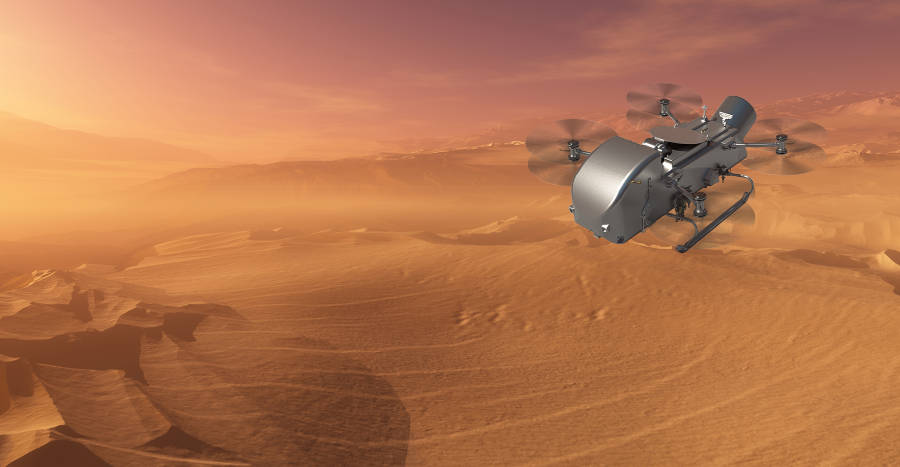
In June 2028, less than two years away NASA is expected to launch a flying spacecraft to Saturn’s moon Titan. It’s called Dragonfly. It is in essence a quadcopter drone to fly in its thick atmosphere. The journey will take about 6 and a half years to get to Saturn in November 2034. It will use one gravity assist from the Earth, about three years after launch, skimming the Earth’s surface at 472½ kilometers, flying briefly at the height of SpaceX’s Starlink satellites. It is designed with two rotors per corner. It is powered by a plutonium radioactive thermal generator which will of charge a lithium-ion battery. This will give it about half an hour of flight time and 10 mile range for each charge, as it flies over and studies the surface of this icy moon.
The astronomical event times given in this blog are for the Traverse City/Interlochen area of Michigan (Lat 44.7° N, Long 85.7° W; EDT, UT – 4 hours) unless stated otherwise. Times will be different for other locations.
Addendum
Ephemeris: 10/19/2026 – Saturn’s moon with an atmosphere and lakes
This is Ephemeris for Monday, October 19th. Today the Sun will be up for 10 hours and 47 minutes, setting at 6:51, and it will rise tomorrow at 8:04. The Moon, 1 day past first quarter, will set at 1:40 tomorrow morning.
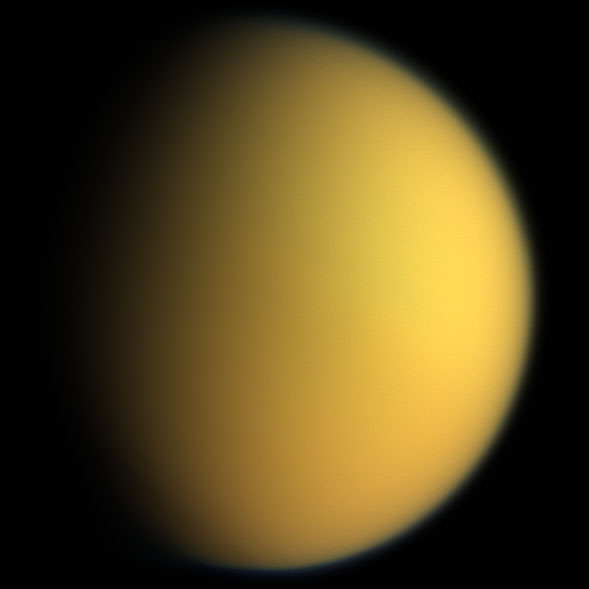
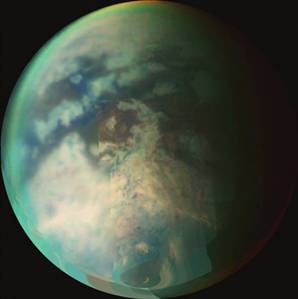
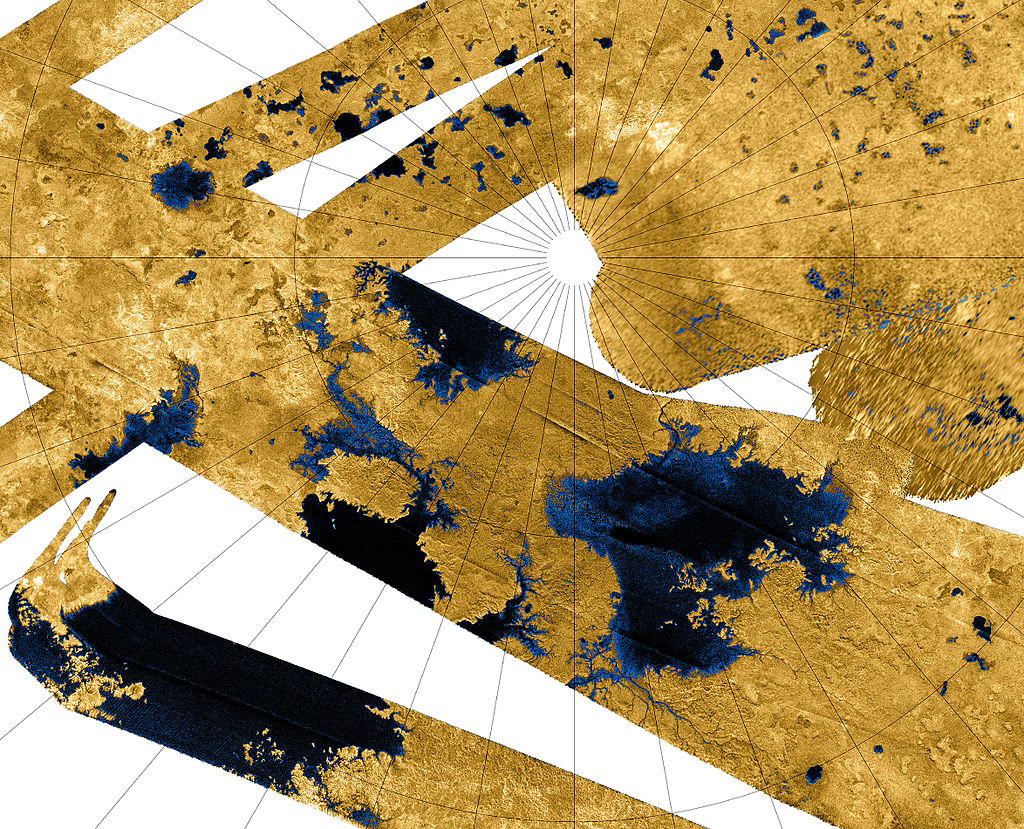
Saturn’s largest moon is Titan, which has a diameter of. 3200 miles, which makes it the second-largest satellite after Jupiter’s Ganymede. Even though it is larger than the planet Mercury, it is only 40% as massive. This is because Titan contains a great percentage water ice, and Mercury is mostly rock and iron, being the second densest planet after the earth. Titan’s atmosphere is mostly nitrogen and methane, and is very dense. The atmospheric pressure at ground level. Is nearly 1½ times the Earth’s atmospheric pressure. In 2004, the Cassini spacecraft. Sent the Huygens. Probe to land on Titan. Which was mostly successful. Dropping through Titans dense, cloudy atmosphere to land in a dry lake bed. Titan’s actual lakes of liquid methane and ethane are at it’s poles.
The astronomical event times given in this blog are for the Traverse City/Interlochen area of Michigan (Lat 44.7° N, Long 85.7° W; EDT, UT – 4 hours) unless stated otherwise. Times will be different for other locations.
Addendum
Ephemeris: 10/16/2026 – A look at Saturn’s amazing moon Enceladus
This is Ephemeris for Friday, October 16th. Today the Sun will be up for 10 hours and 56 minutes, setting at 6:56, and it will rise tomorrow at 8:00. The Moon, 2 days before first quarter, will set at 10:26 this evening.
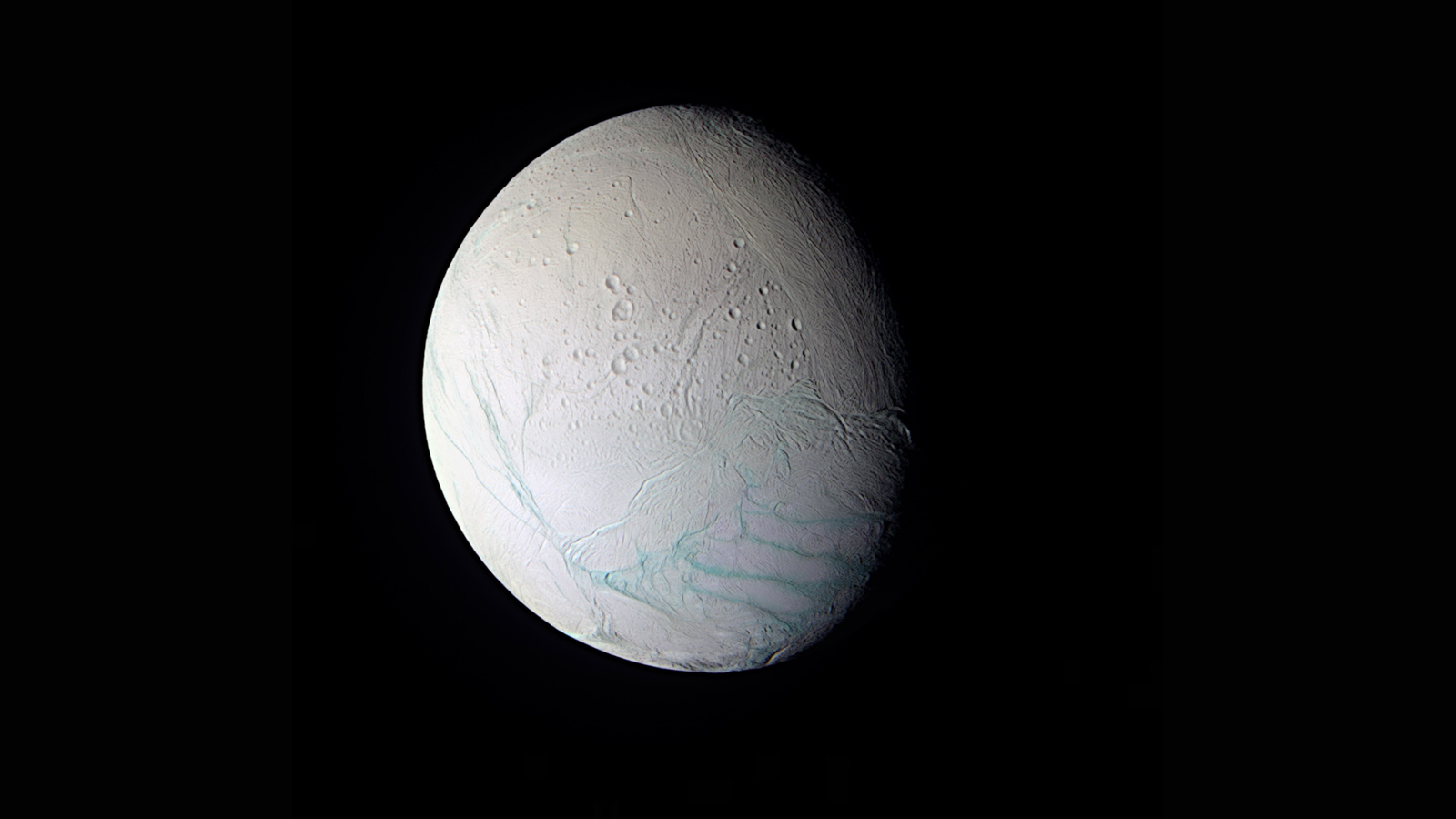
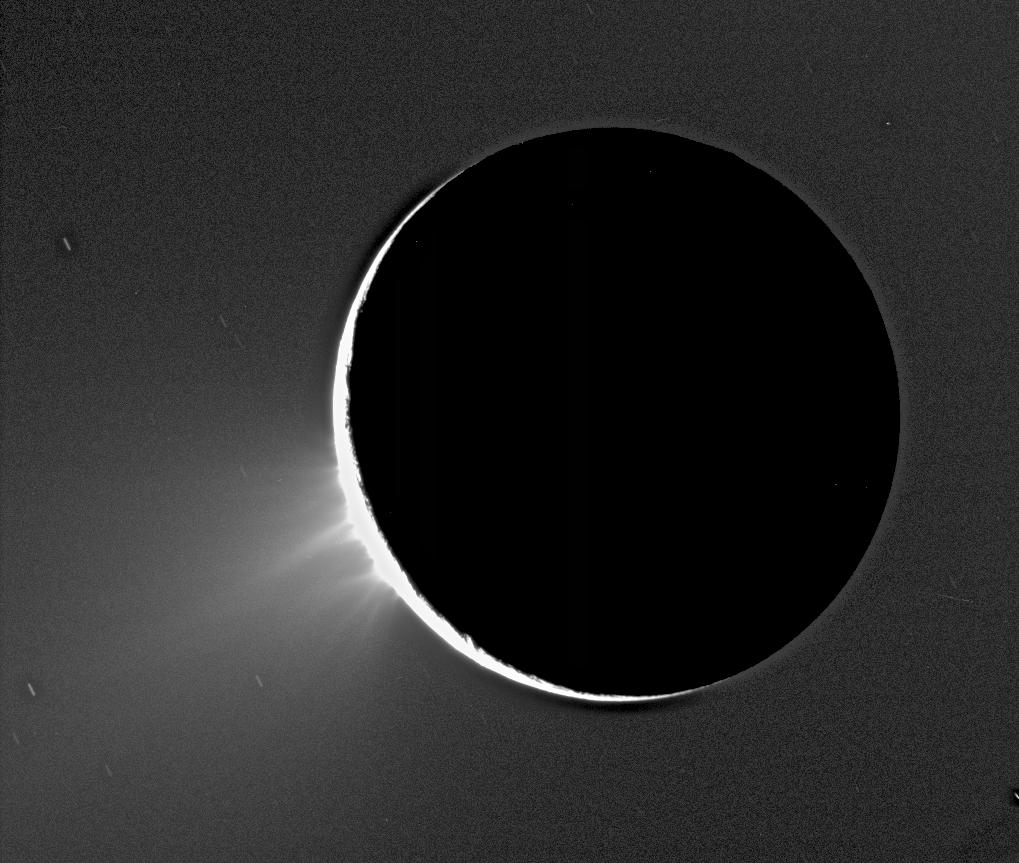
The most surprising of the many surprises of Saturn’s moons found by the Cassini spacecraft, 20 years ago, were the geysers erupting from the south polar region of the small moon Enceladus. A series of geysers emanating from deep fissures that looked like blue tigers stripes spewed forth a fine icy mist into the vacuum of space. It actually creates a ring around Saturn, called the E ring. It’s a very diffuse ring, not at all like the others, amd not visible from Earth. Enceladus has a diameter of about 310 miles, and a density of 1.6 times that of water. It is the most reflective body in the solar system, mainly because it travels within the E ring made of its own water ice that continually snows upon its surface.
The astronomical event times given in this blog are for the Traverse City/Interlochen area of Michigan (Lat 44.7° N, Long 85.7° W; EDT, UT – 4 hours) unless stated otherwise. Times will be different for other locations.
Addendum

Ephemeris: 10/15/2026 – A look at Saturn’s fabulous rings
This is Ephemeris for Thursday, October 15th. Today the Sun will be up for 10 hours and 59 minutes, setting at 6:58, and it will rise tomorrow at 7:59. The Moon, 3 days before first quarter, will set at 9:31 this evening.
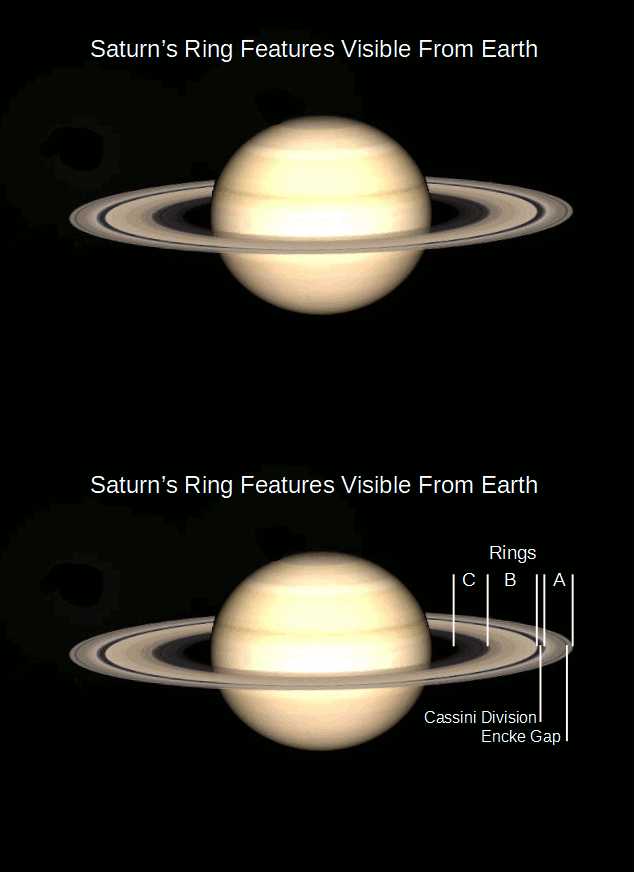
The planet Saturn which is the bright star in the southeastern sky in the evening, has those fabulous rings. They can be seen with a telescope that has at least 20 power magnification. The rings have a diameter of 150 thousand miles, and they are extremely thin and orbit Saturn over its equator. Maybe less than 100 feet thick. When the rings become edge on to the Earth, which they do twice in Saturn’s 29 1/2 year orbit of the Sun, during its equinoxes, they completely disappear from view. They are made up of a myriad of small, icy particles. Water ice is prevalent out at that distance from the sun. And a major constituent of most of its satellites. The Cassini spacecraft found that the rings were much more complex than they appear from the earth.
The astronomical event times given in this blog are for the Traverse City/Interlochen area of Michigan (Lat 44.7° N, Long 85.7° W; EDT, UT – 4 hours) unless stated otherwise. Times will be different for other locations.
Addendum
Ephemeris: 10/14/2026 – Taking our weekly look at the whereabouts of the naked-eye planets
This is Bob Moler with Ephemeris for Wednesday, October 14th. Today the Sun will be up for 11 hours and 2 minutes, setting at 6:59, and it will rise tomorrow at 7:58. The Moon, halfway from new to first quarter, will set at 8:44 this evening.
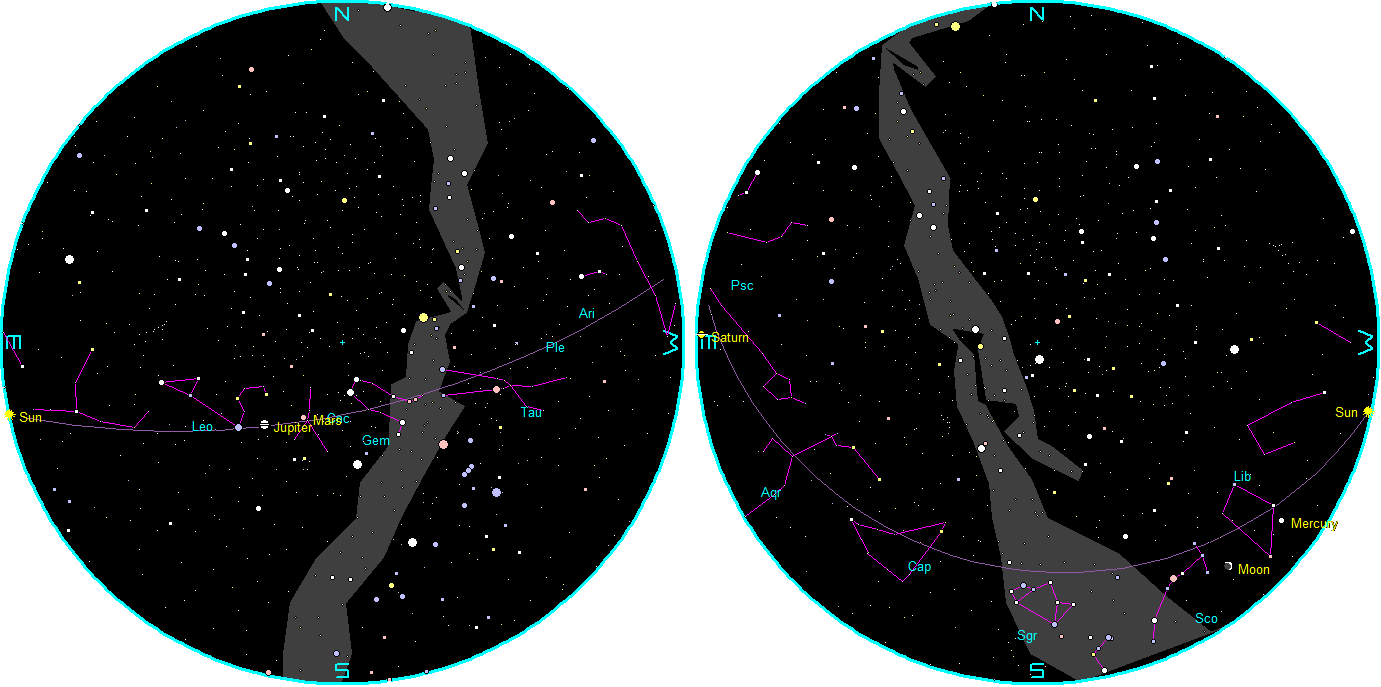
Let’s take our weekly look at the whereabouts of the naked-eye planets. Three of the naked-eye planets are visible in the night sky. Mercury sets too soon after sunset to be seen. Venus is will pass between the earth and the sun on the 23rd, and might be seen in the morning sky as soon as a week later. Tonight, Saturn will be in the eastern sky as it gets dark. It is the brightest starlike object low in that direction. It will be below the four stars that make a large distinctive pattern that marks the body of Pegasus the flying horse, called the Great Square. At 6 AM, Jupiter and Mars will in the east. Jupiter is brightest and while red Mars will be above and to the right of Jupiter and slowly closing. It will pass Jupiter on November 15th.
The astronomical event times given in this blog are for the Traverse City/Interlochen area of Michigan (Lat 44.7° N, Long 85.7° W; EDT, UT – 4 hours) unless stated otherwise. Times will be different for other locations.
Addendum
Ephemeris: 10/13/2026 – A closer look at Saturn
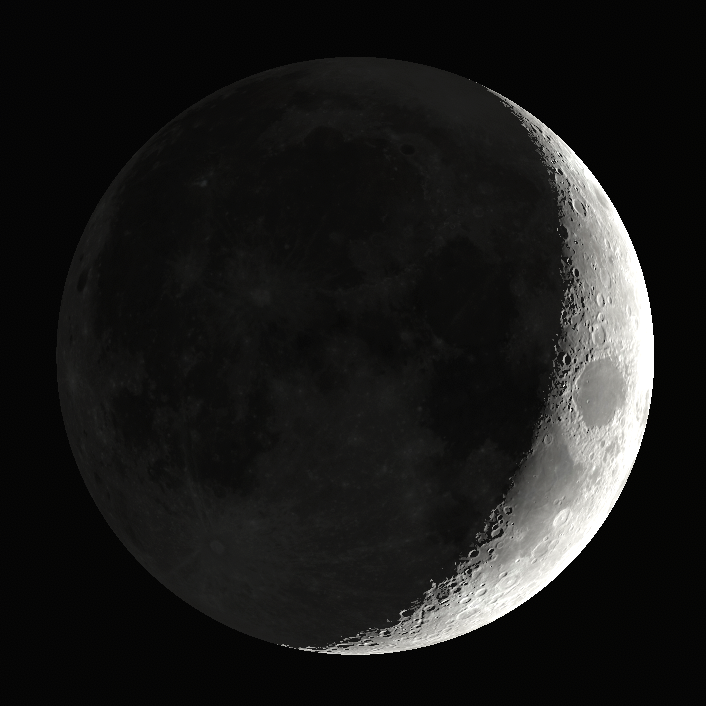
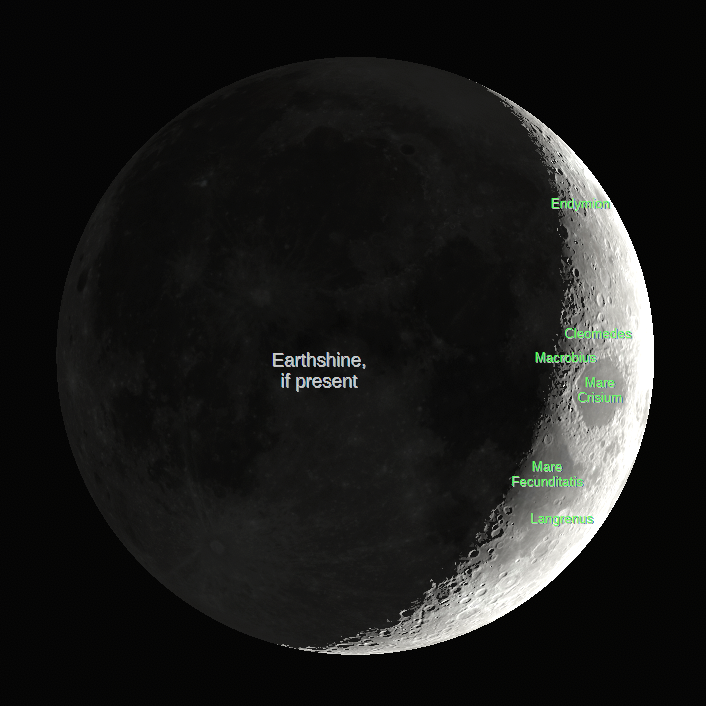
This is Bob Moler with Ephemeris for Tuesday, October 13th. Today the Sun will be up for 11 hours and 5 minutes, setting at 7:01, and it will rise tomorrow at 7:57. The Moon, 3 days past new, will set at 8:06 this evening.
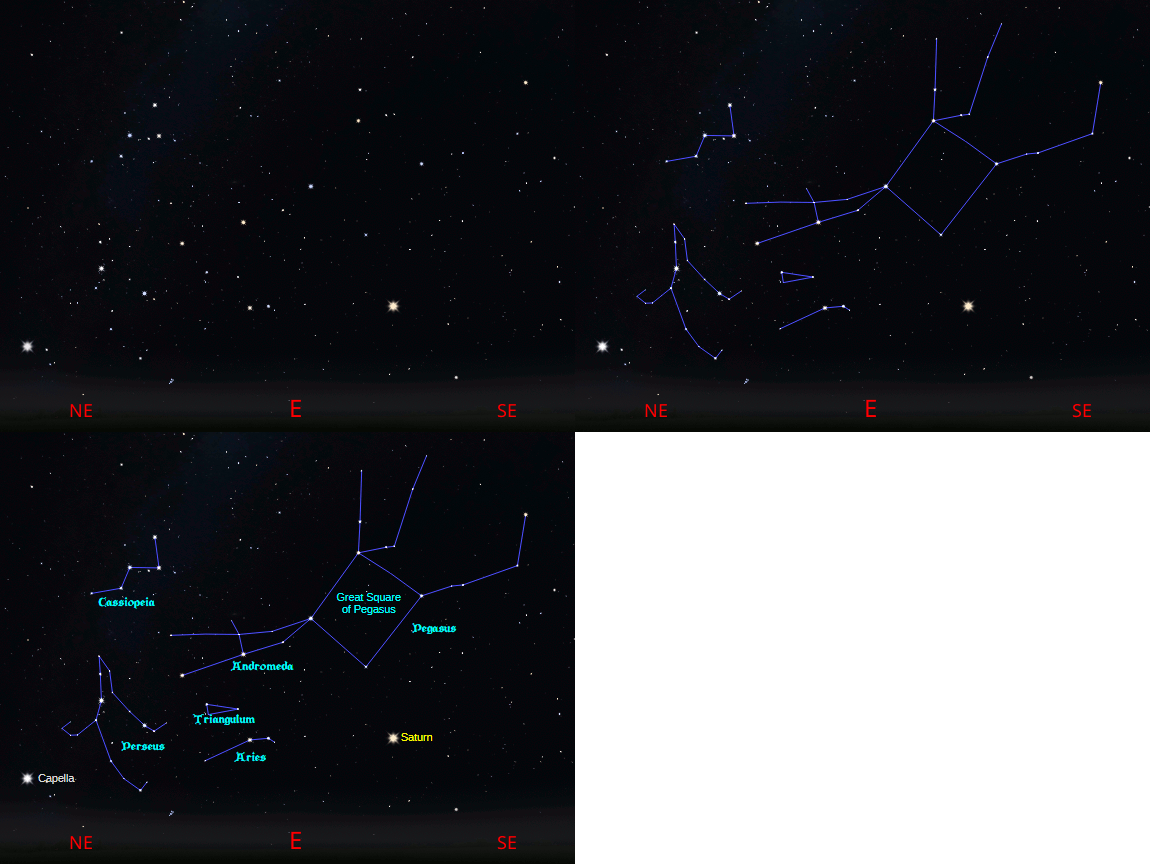
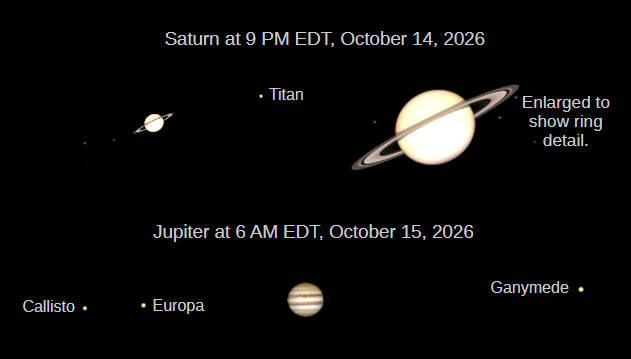
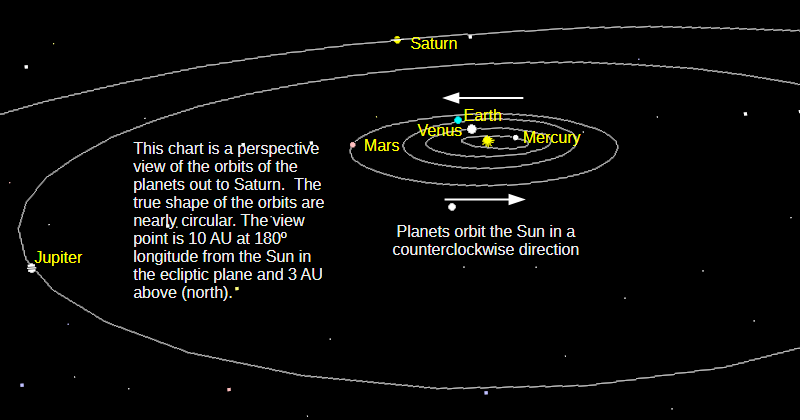
The bright star low in the southeastern sky these evenings is the planet Saturn. It is the second largest planet after Jupiter. And is almost as big, being about 72,000 miles (116,000 kilometers) in diameter. It has those fabulous rings, once thought unique, but are still the grandest. It is also the least dense planet. Density is measured in grams per cubic centimeter. Water is 1 gram per cubic centimeter. Saturn’s density is 0.69 or 69% that of water. So if you could find a lake great enough to hold it, and it was solid, it would float. Saturn averages 890 million miles (1.432 billion kilometers) from the sun and the earth. It is currently 787 million miles (1.267 billion kilometers) from earth, being only 9 days after its opposition from the sun, and its closest to us.
The astronomical event times given in this blog are for the Traverse City/Interlochen area of Michigan (Lat 44.7° N, Long 85.7° W; EDT, UT – 4 hours) unless stated otherwise. Times will be different for other locations.
Addendum
Ephemeris: 10/12/2026 – Indigenous Peoples Day
This is Ephemeris for Indigenous Peoples Day, Monday, October 12th. Today the Sun will be up for 11 hours and 8 minutes, setting at 7:03, and it will rise tomorrow at 7:55. The Moon, 2 days past new, will set at 7:34 this evening.
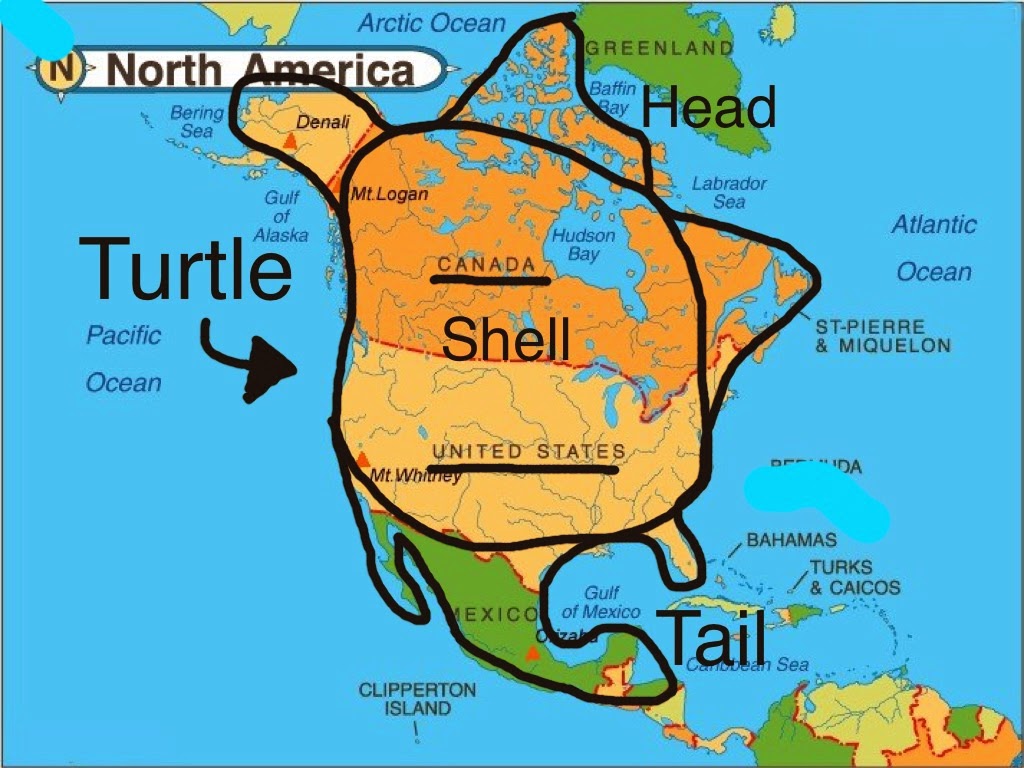
This is, according to the current U.S. administration, Columbus Day and only Columbus Day. Some of us commemorate it as Indigenous Peoples Day because they discovered this place first. Columbus never set foot on the continental United States. However, he did visit Puerto Rico. The indigenous people beat him to it by more than 1000 years. The reason that Columbus is celebrated because he unleashed the giant migration of Europeans and others, what the indigenous people might just think of a flood of illegal aliens into what they called Turtle Island. It being named after one of their creation stories, which we call North America. No, it’s not “Turtles all the way down”. That’s a Hindu thing.
The astronomical event times given in this blog are for the Traverse City/Interlochen area of Michigan (Lat 44.7° N, Long 85.7° W; EDT, UT – 4 hours) unless stated otherwise. Times will be different for other locations.
Addendum