Archive
Ephemeris: 01/01/2025 – A New Year’s Day look at the naked-eye planets
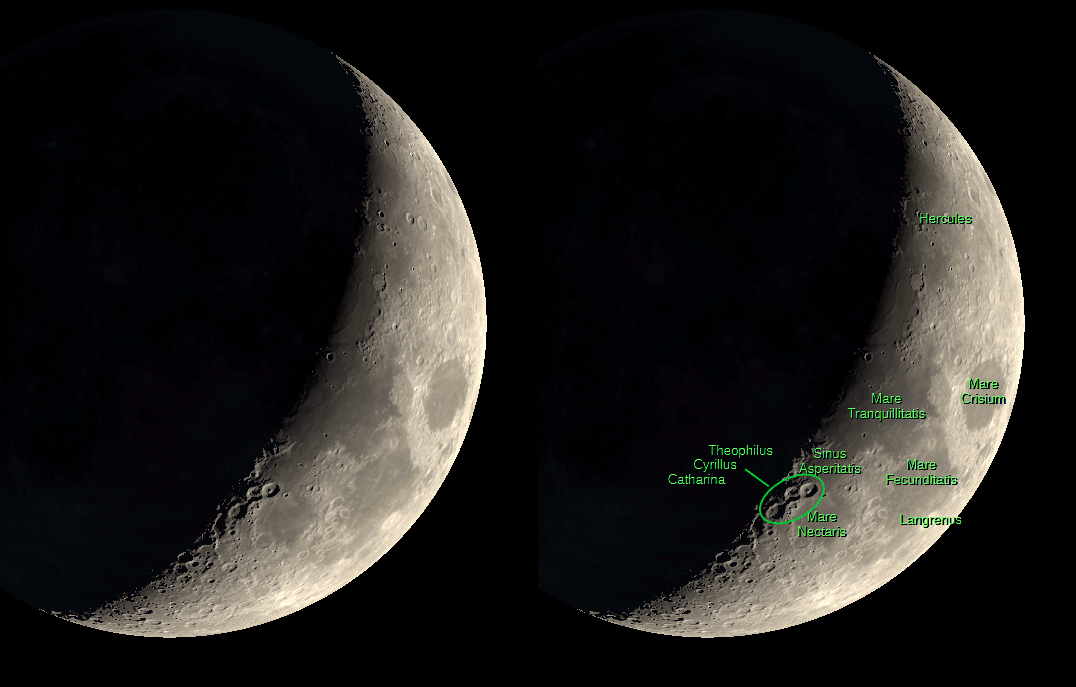
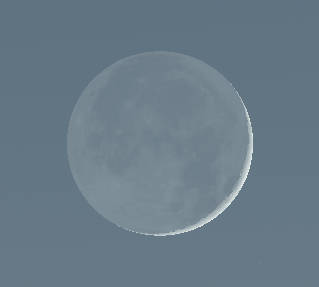
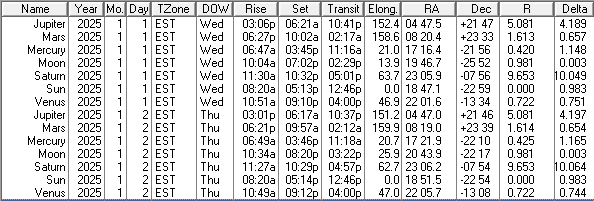
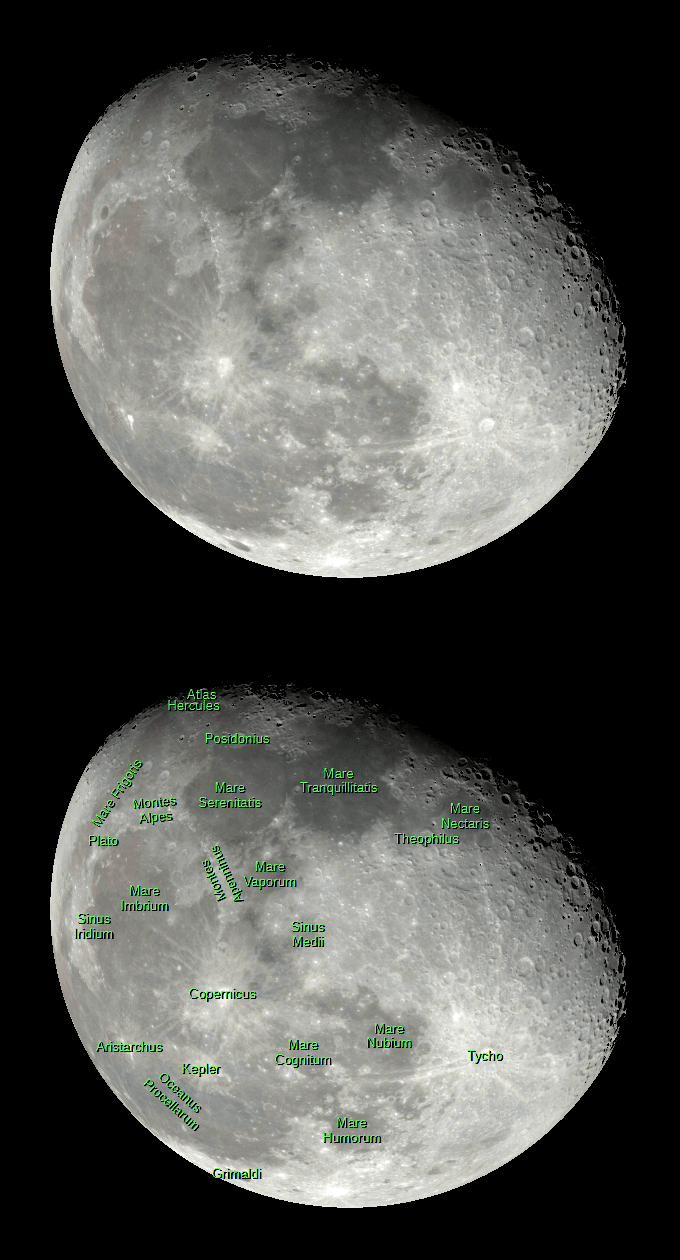
This is Ephemeris for New Year’s Day, Wednesday, January 1st, 2025. The Sun will rise at 8:20. It’ll be up for 8 hours and 53 minutes, setting at 5:13. The Moon, 2 days past new, will set at 7:02 this evening.
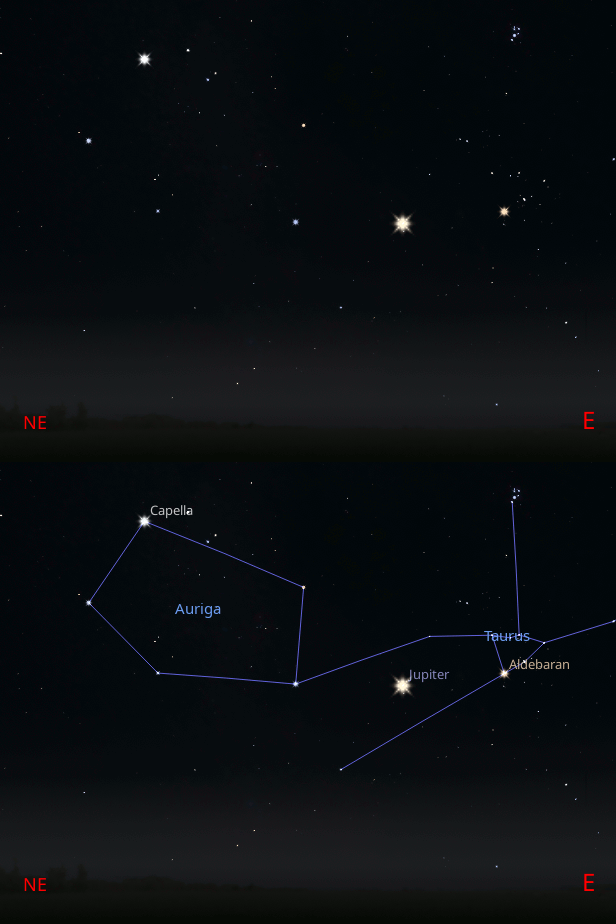
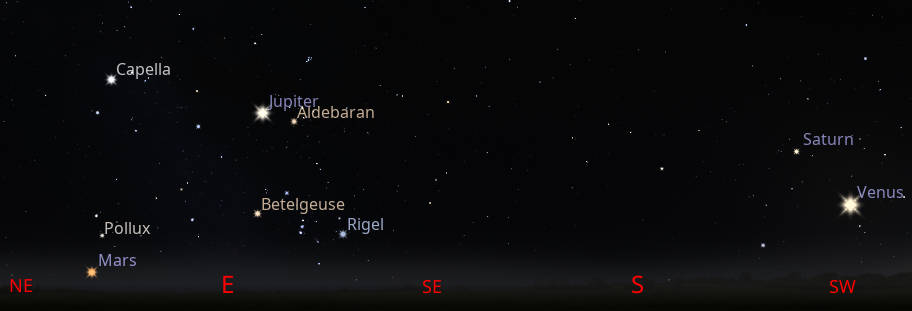
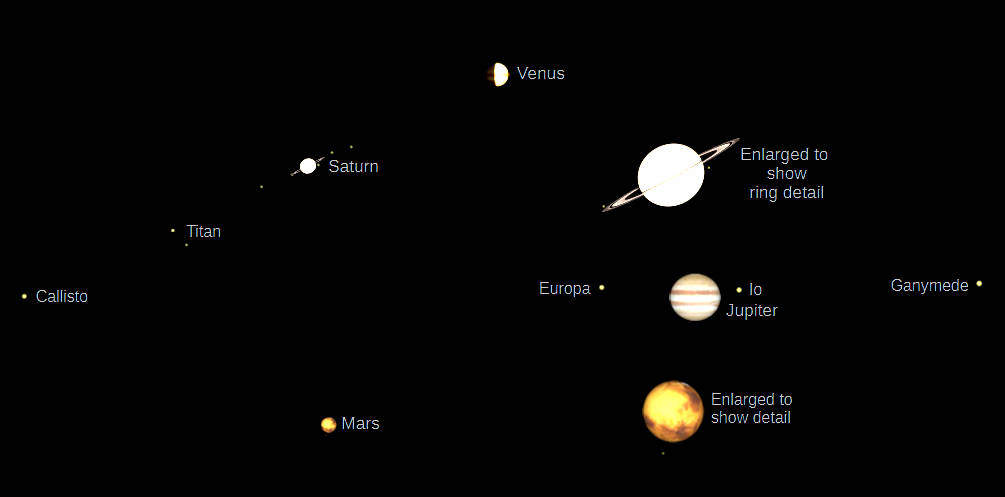
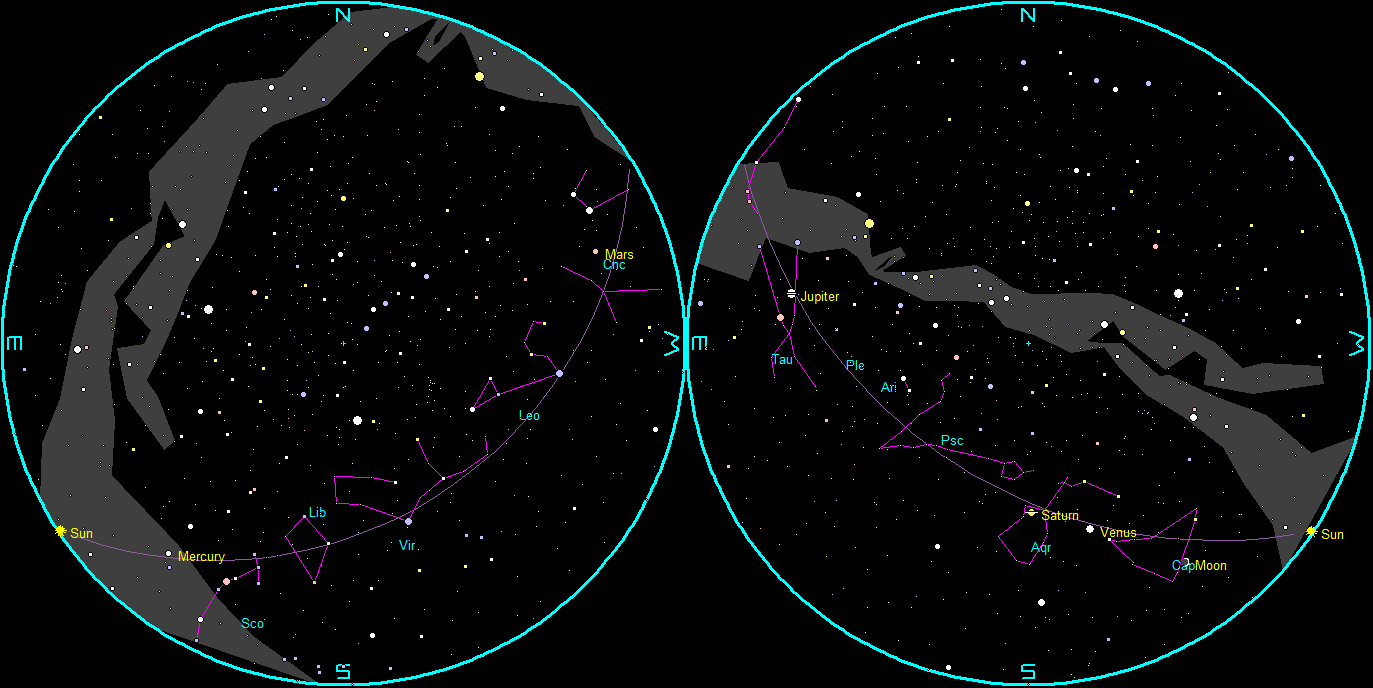
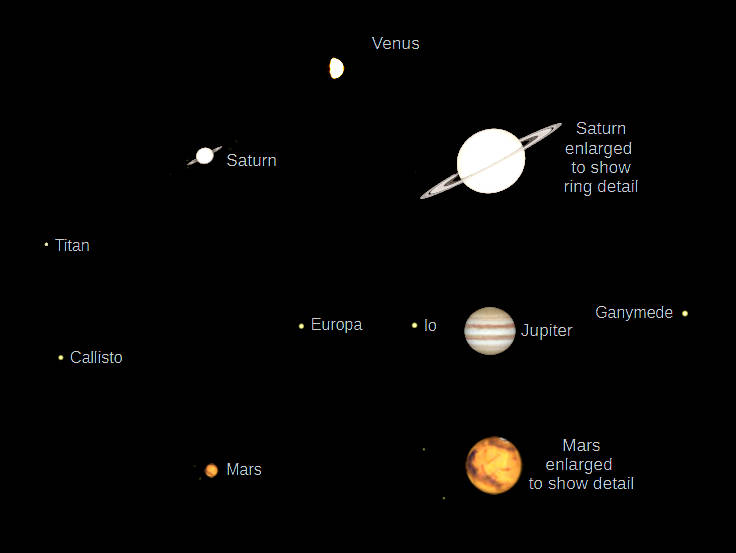
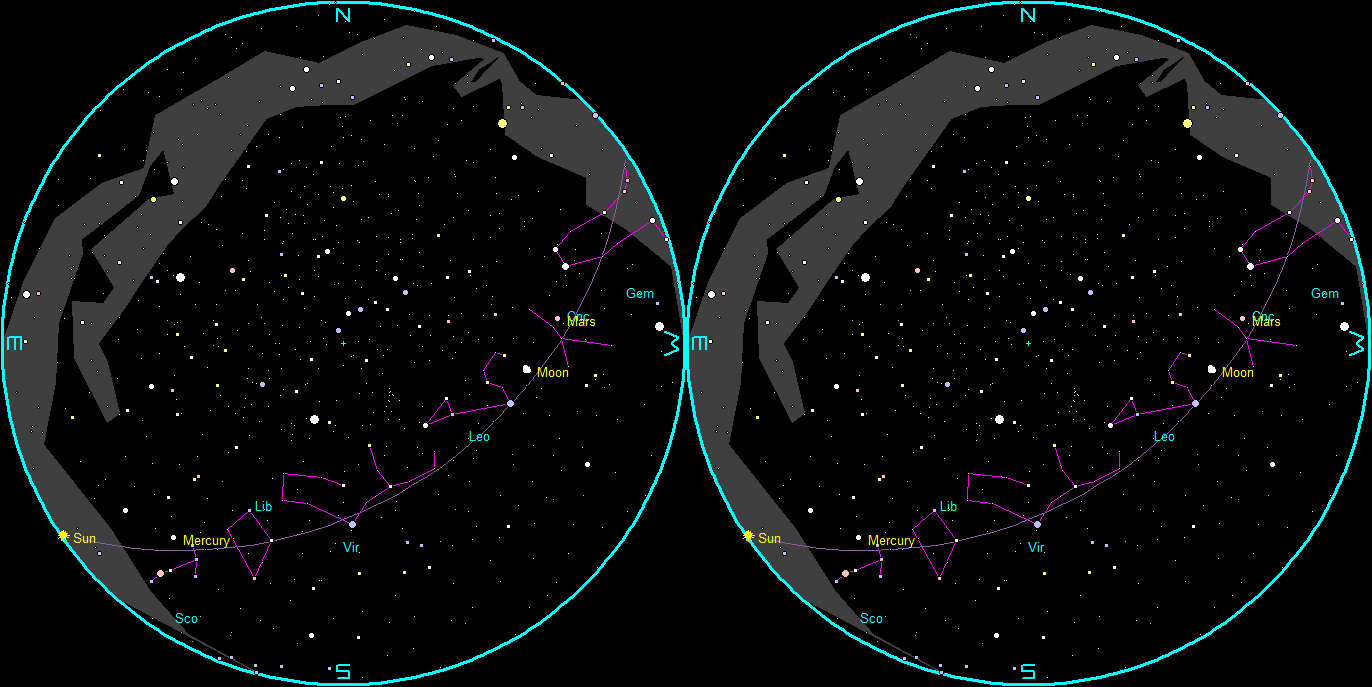
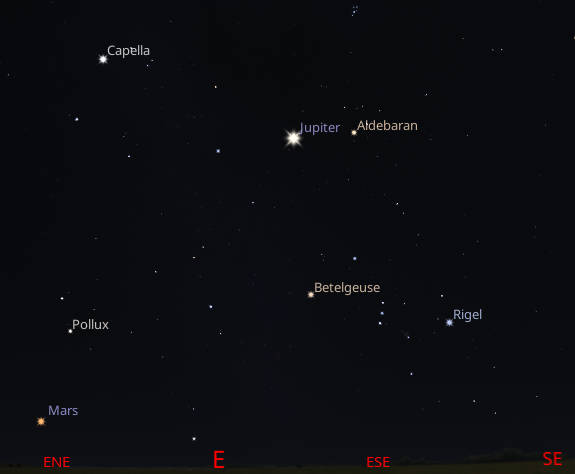
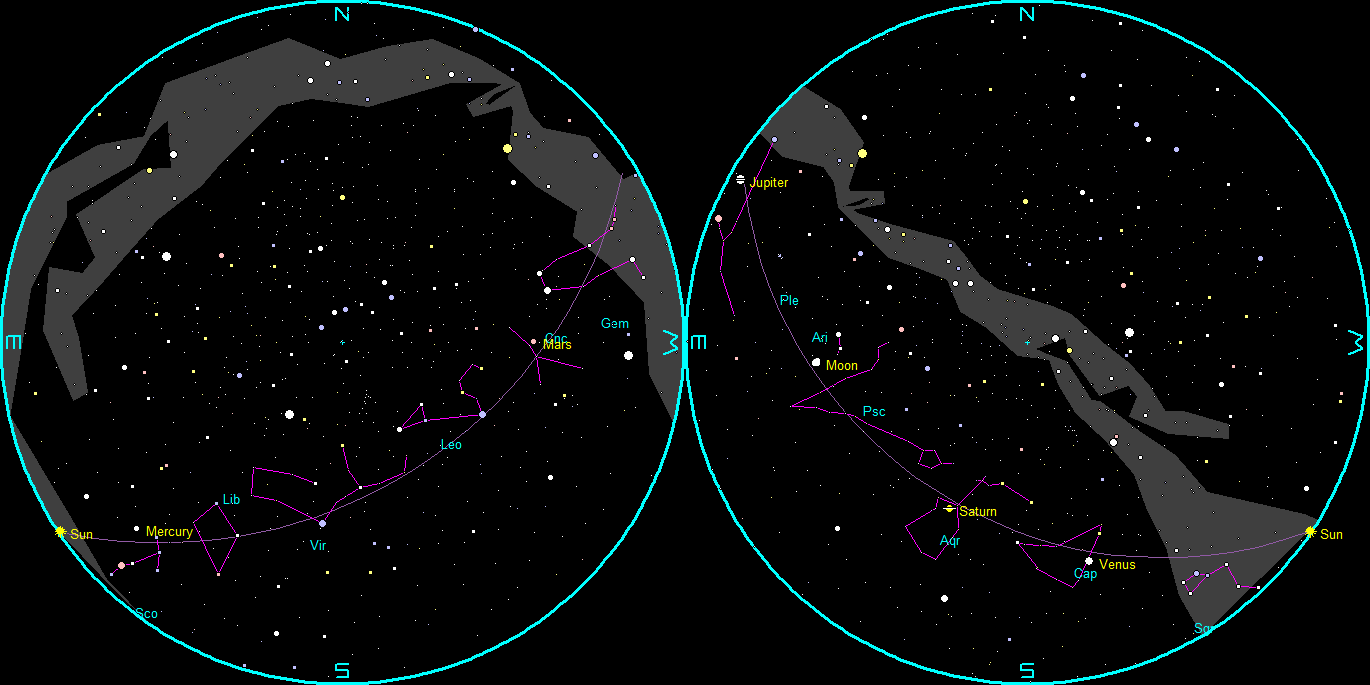
Let’s take our weekly look at the whereabouts of the naked-eye planets. Venus can be spotted in the south-southwestern sky by 5:45 PM, about 30 minutes after sunset, and will also be above and left of the thin crescent Moon. Venus will set at 9:10 PM. Saturn will be in the south-southwestern sky at 6 PM, above and left of Venus, which will be seen to cross paths with it on the 18th of this month. Jupiter is low in the east, about the same time Venus is first spotted. It will be a good object for the small telescope. Mars, rises tonight at 6:31. Mars is still considered a morning planet since it is still up at sunrise. But that will end on the 15th of this month, when Mars reaches opposition from the Sun.
The astronomical event times given are for the Traverse City/Interlochen area of Michigan (EST, UT – 5 hours). Times will be different for other locations.
Happy New Year! I do really hope it will be happy…
Addendum
Ephemeris: 12/26/2024 – Finding Orion the hunter
This is Bob Moler with Ephemeris for Thursday, December 26th. Today the Sun will be up for 8 hours and 49 minutes, setting at 5:08, and it will rise tomorrow at 8:19. The Moon, halfway from last quarter to new, will rise at 5:24 tomorrow morning.
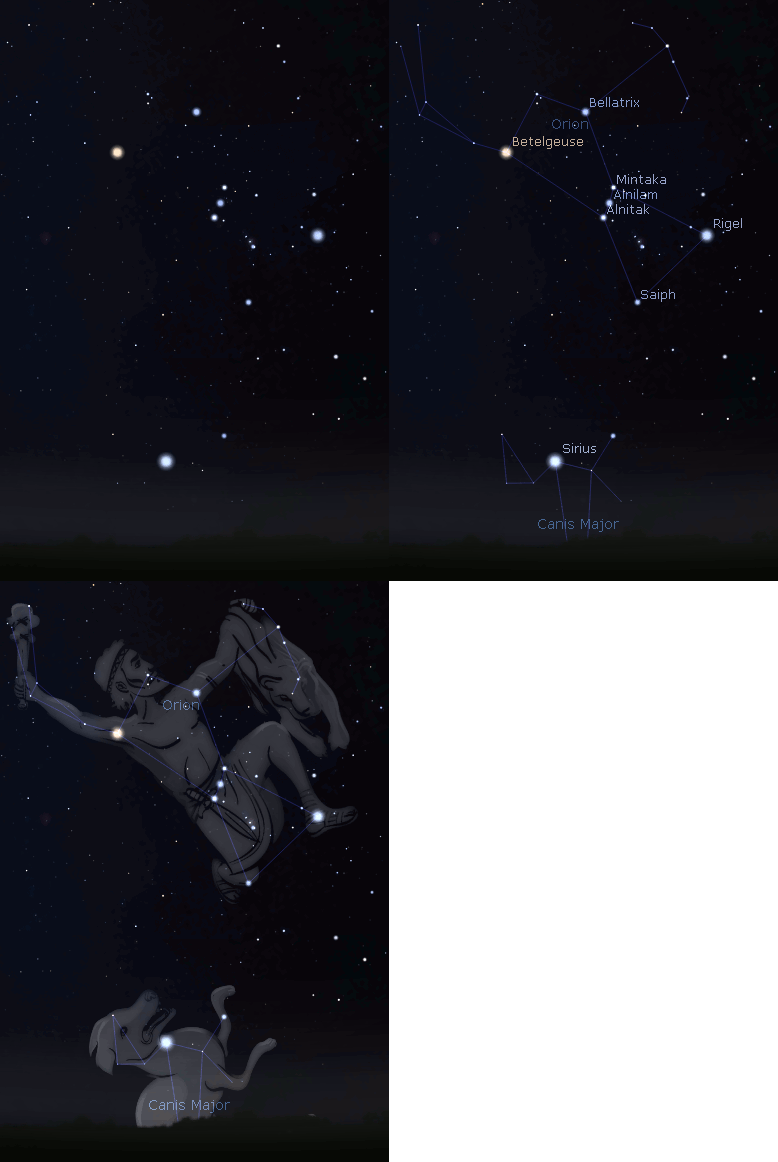
The constellation of Orion the hunter is the most famous constellation in the sky. At 8 o’clock tonight he is seen in the east southeast. Two of its stars are first magnitude, among the brightest in the sky while five are second magnitude, as bright as the brightest Big Dipper stars. His torso is a rectangle of stars, now tilted to the left, framed by Betelgeuse and Bellatrix in his shoulders and Rigel and Saiph and Rigel at his knees. Betelgeuse and Rigel are first magnitude stars at opposite corners of that rectangle. His most easily found feature is his belt of three stars in a straight line in the center of that rectangle, now nearly vertically aligned, which makes them easy to spot even if you don’t know the pattern of the rest of the stars.
The astronomical event times given are for the Traverse City/Interlochen area of Michigan (EST, UT – 5 hours). Times will be different for other locations.
Addendum
Ephemeris: 12/25/2024 – A Christmas week look at the naked-eye planets
This is Ephemeris for Christmas Day, Wednesday, December 25th. Today the Sun will be up for 8 hours and 48 minutes, setting at 5:07, and it will rise tomorrow at 8:19. The Moon, 3 days past last quarter, will rise at 4:16 tomorrow morning.
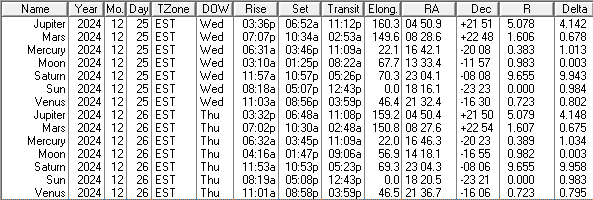
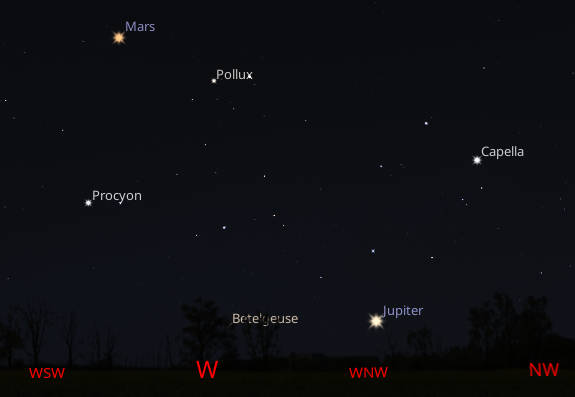
Let’s take our weekly look at the whereabouts of the naked-eye planets. Venus can be spotted in the south-southwestern sky by 5:30 PM, about 30 minutes after sunset. It will set at 8:41 PM. Saturn will be in the south at 6 PM, way above the bright star Fomalhaut. Jupiter is low in the east-northeast, about the same time Venus is first spotted. It will be a good object for the small telescope about an hour later. Mars, rises tonight at 7:44, It will appear above the Moon in the evening. Mars is still considered a morning planet since it is still up at sunrise. By 6:00 AM tomorrow Jupiter will be low in the west-northwest, to the right of the setting Orion, while reddish Mars will be high in the west-southwest.
The astronomical event times given are for the Traverse City/Interlochen area of Michigan (EST, UT – 5 hours). Times will be different for other locations.
Addendum
Ephemeris: 12/18/2024 – Taking our weekly look at the whereabouts of the naked-eye planets
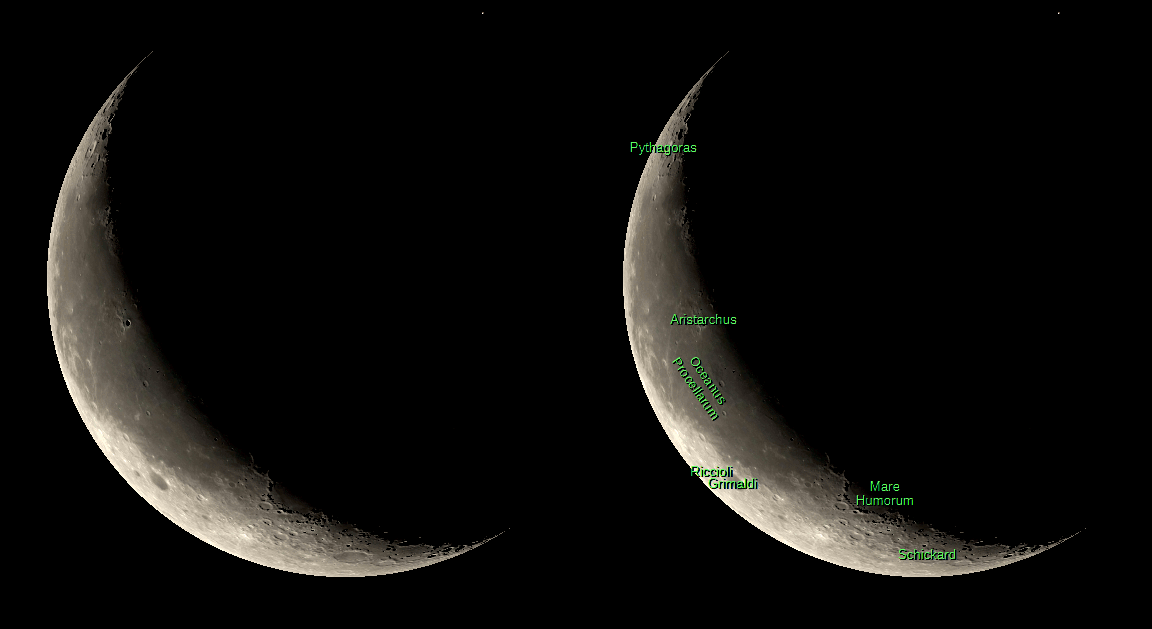
This is Ephemeris for Wednesday, December 18th. Today the Sun will be up for 8 hours and 48 minutes, setting at 5:03, and it will rise tomorrow at 8:16. The Moon, 3 days past full, will rise at 8:36 this evening.
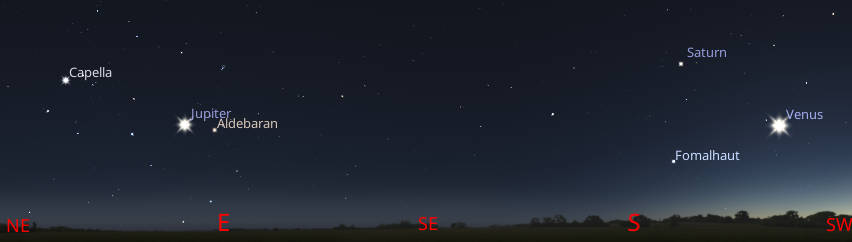
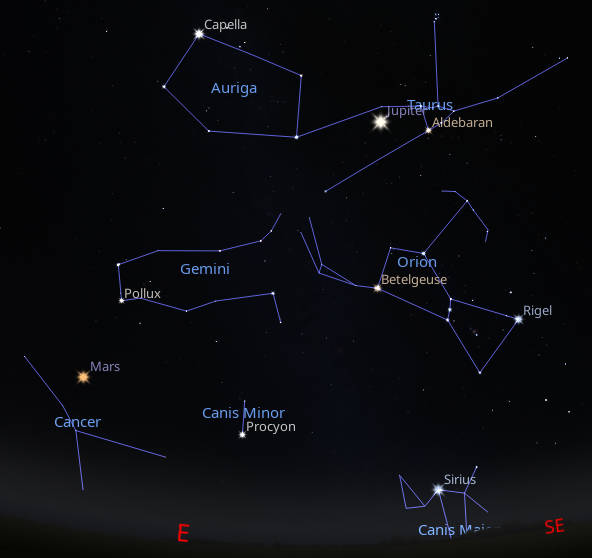
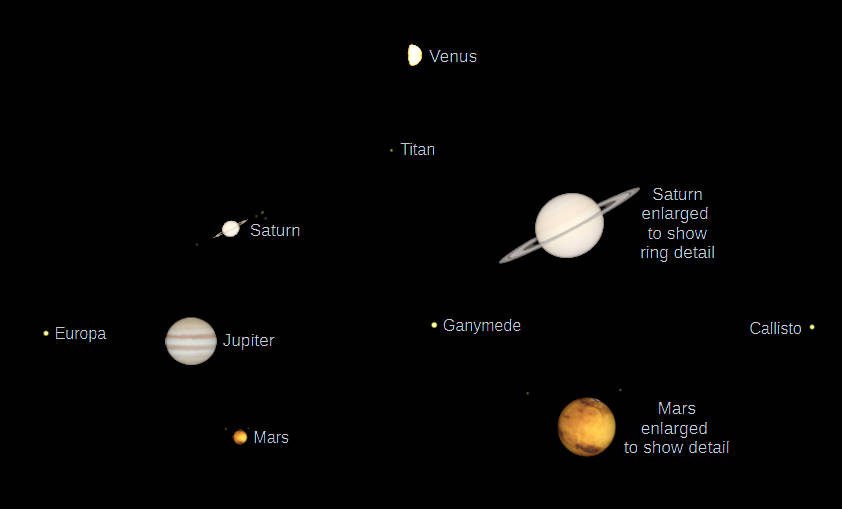
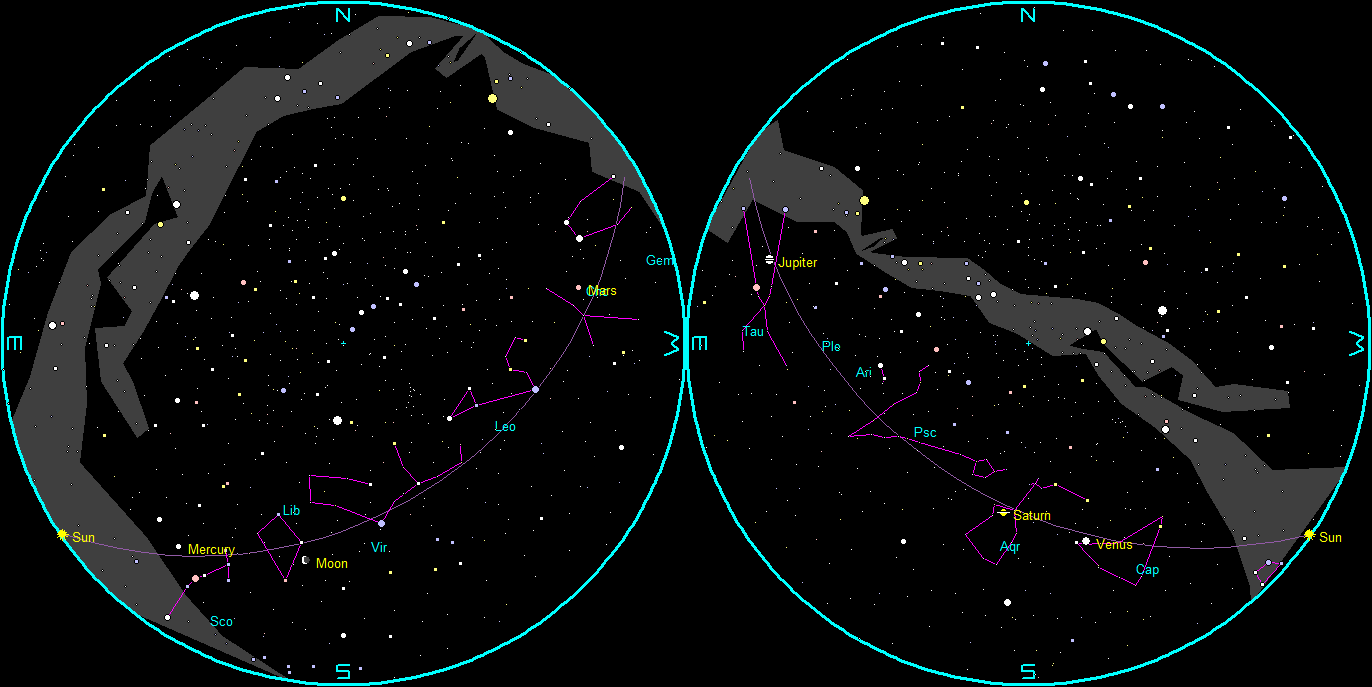
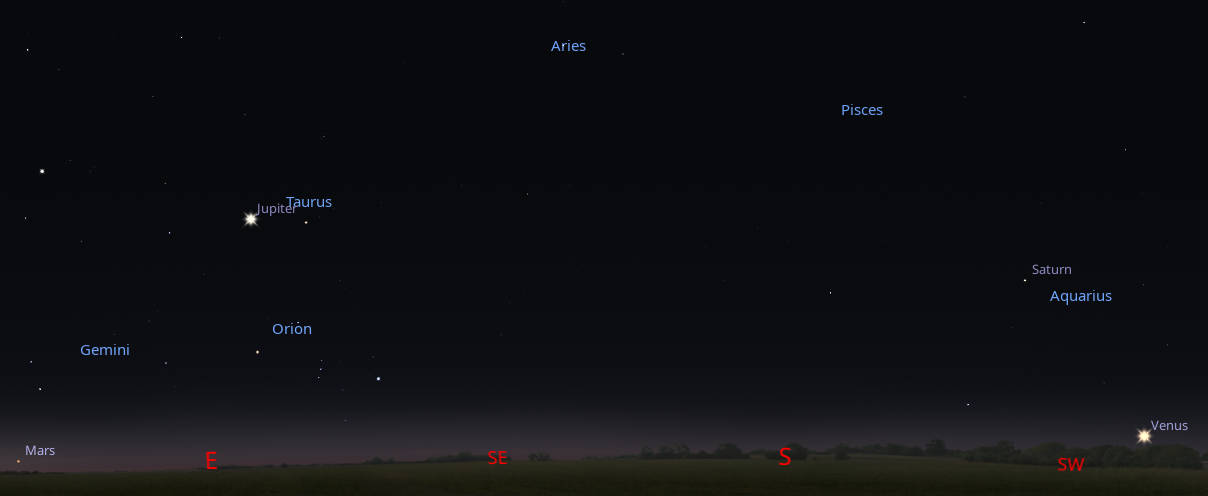
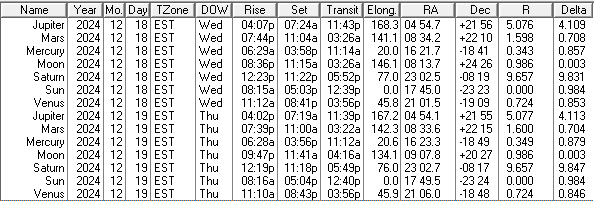
Let’s take our weekly look at the whereabouts of the naked-eye planets. Venus can be spotted in the south-southwestern sky by 5:30 PM, about 30 minutes after sunset. It will set at 8:41 PM. Saturn will be in the south at 6 PM, way above the bright star Fomalhaut. Jupiter is low in the east-northeast, about the same time Venus is first spotted. It will be a good object for the small telescope about an hour later. Mars, rises tonight at 7:44, It will appear above the Moon in the evening. Mars is still considered a morning planet since it is still up at sunrise. By 6:00 AM tomorrow Jupiter will be low in the west-northwest, to the right of the setting Orion, while reddish Mars will be high in the west-southwest.
The astronomical event times given are for the Traverse City/Interlochen area of Michigan (EST, UT – 5 hours). Times will be different for other locations.
Addendum
Ephemeris: 12/13/2024 – The Geminid meteor shower peaks tonight
This is Bob Moler with Ephemeris for Friday, December 13th. Today the Sun will be up for 8 hours and 50 minutes, setting at 5:02, and it will rise tomorrow at 8:12. The Moon, 2 days before full, will set at 7:45 tomorrow morning.
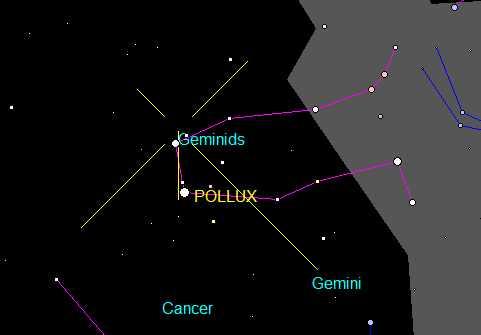
Tonight is the peak of the Geminid meteor shower. Unfortunately this year we’re two days before a full moon so it will cut down their numbers, so only the brightest Geminids will be visible. The radiant for the meteor shower is a point near the star Castor at the head of constellation Gemini, the twins, which is why they’re called the Geminids. This is the most active annual shower of the year right now. The source of the Geminids is the asteroid Phaethon which is probably the core of a dead comet. It is the closest asteroid to the sun at its perihelion in its markedly elliptical orbit like a comet. One of the Stereo Sun observation satellites saw Phaethon shedding material as it moved around at its closest approach to the Sun.
The astronomical event times given are for the Traverse City/Interlochen area of Michigan (EST, UT – 5 hours). Times will be different for other locations.
Addendum
Ephemeris: 12/11/2024 – Where are the naked-eye planets this week?
This is Ephemeris for Wednesday, December 11th. Today the Sun will be up for 8 hours and 51 minutes, setting at 5:02, and it will rise tomorrow at 8:11. The Moon, 3 days past first quarter, will set at 5:00 tomorrow morning.
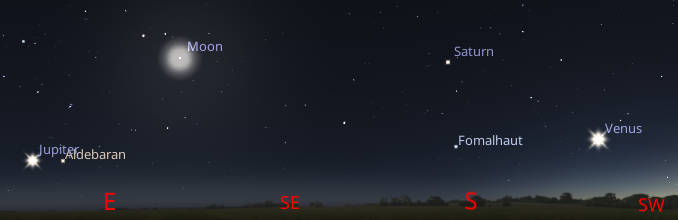
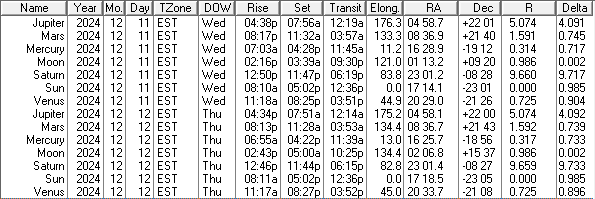
Let’s take our weekly look at the whereabouts of the naked-eye planets. Venus can be spotted in the south-southwestern sky by 5:30 PM, about 30 minutes after sunset. It will set at 8:25 PM. Saturn will be in the south at 6 PM, way above the bright star Fomalhaut. Jupiter is low in the east-northeast, about the same time as when Venus is first spotted. It will be a good object for the small telescope about an hour later. Mars, rises tonight at 8:17, Mars is still considered a morning planet since it is still up at sunrise. By 6:00 AM tomorrow Jupiter will be low in the west-northwest, to the right of the setting Orion, while reddish Mars will be high in the west-southwest.
The astronomical event times given are for the Traverse City/Interlochen area of Michigan (EST, UT – 5 hours). Times will be different for other locations.
Addendum
Ephemeris: 12/10/2024 – Jupiter’s four bright moons
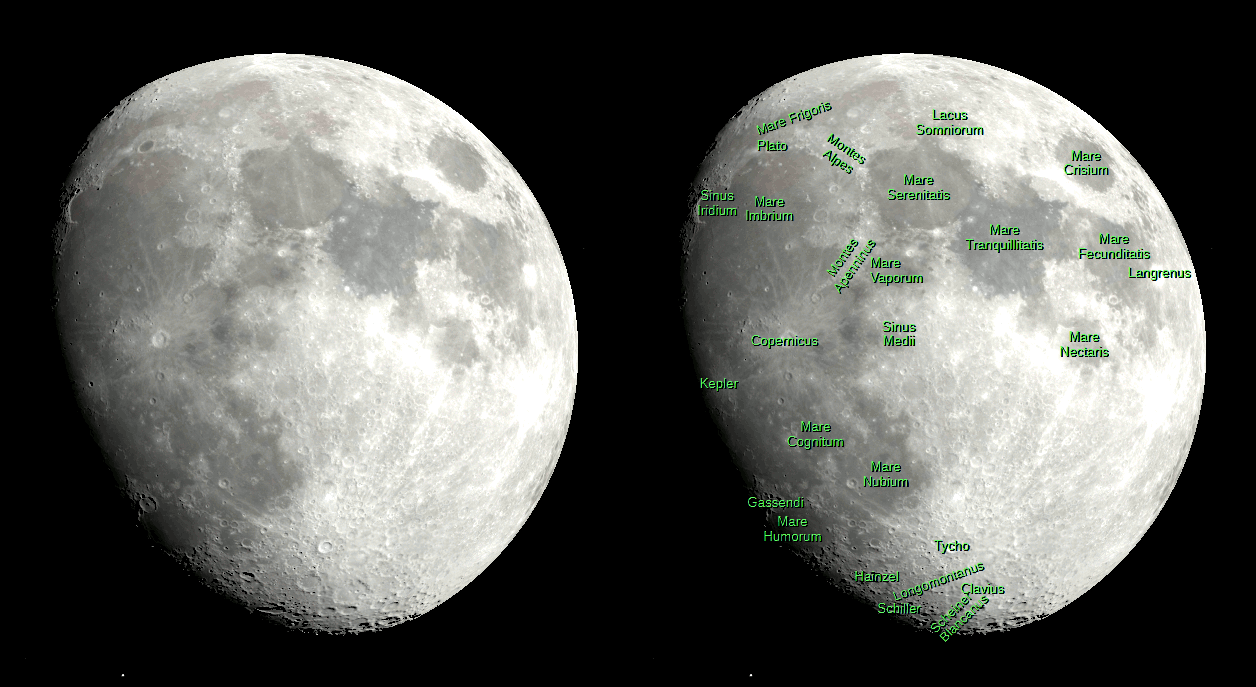
This is Ephemeris for Tuesday, December 10th. Today the Sun will be up for 8 hours and 52 minutes, setting at 5:02, and it will rise tomorrow at 8:10. The Moon, 2 days past first quarter, will set at 3:39 tomorrow morning.
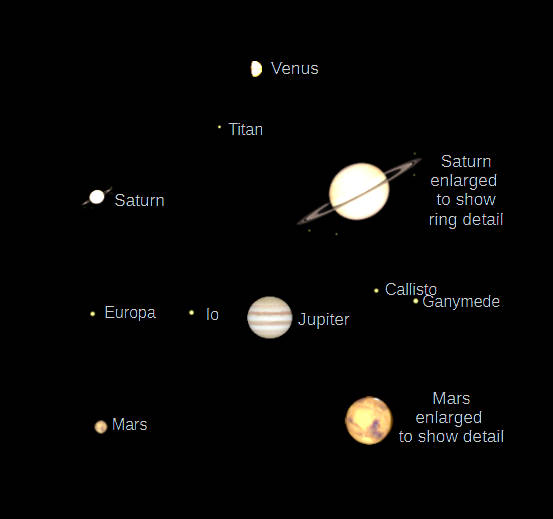
The bright star like object in the east in the evenings is the planet Jupiter. If one were to look at Jupiter through binoculars it would appear somewhat larger than a star would look. It has several dimmer stars from one side to the other of it, and if one looked the next night those little stars would have moved. Those are not stars at all, but the four largest moons of Jupiter. This would be easily apparent in the telescope. These are the four Galilean moons. They were observed by Galileo in either late 1609 or early 1610. Another astronomer, Simon Marius discovered these moons at about the same time, but Galileo was first to publish. So he gets the honor. However, Simon Marius is the one who gave them the names we know them by today. Their names, in order of their distance from Jupiter, are: Io, Europa, Ganymede, and Callisto. Each is a fascinating world in its own right.
The astronomical event times given are for the Traverse City/Interlochen area of Michigan (EST, UT – 5 hours). Times will be different for other locations.
Addendum
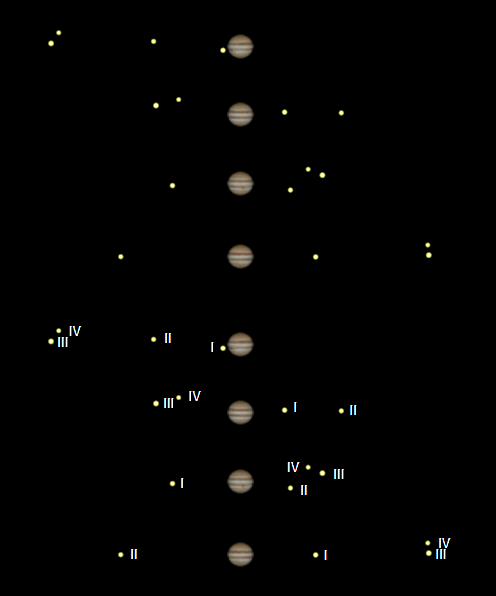
The periods of these satellites is interesting. Io orbits Jupiter in 1.8 days. Europa orbits in 3.6 days twice as long as Io. Ganymede orbits Jupiter in 7.2 days which is twice as long as Europa. Callisto takes 16.7 days to orbit Jupiter, and that is longer than twice Ganymede’s orbital period, and so is not in resonance with Ganymede. So the first three are in a 2:1orbital resonance with each other.
Ephemeris: 12/05/2024 – More about Jupiter: it’s very gassy
This is Bob Moler with Ephemeris for Thursday, December 5th. Today the Sun will be up for 8 hours and 57 minutes, setting at 5:02, and it will rise tomorrow at 8:05. The Moon, 3 days before first quarter, will set at 9:14 this evening.
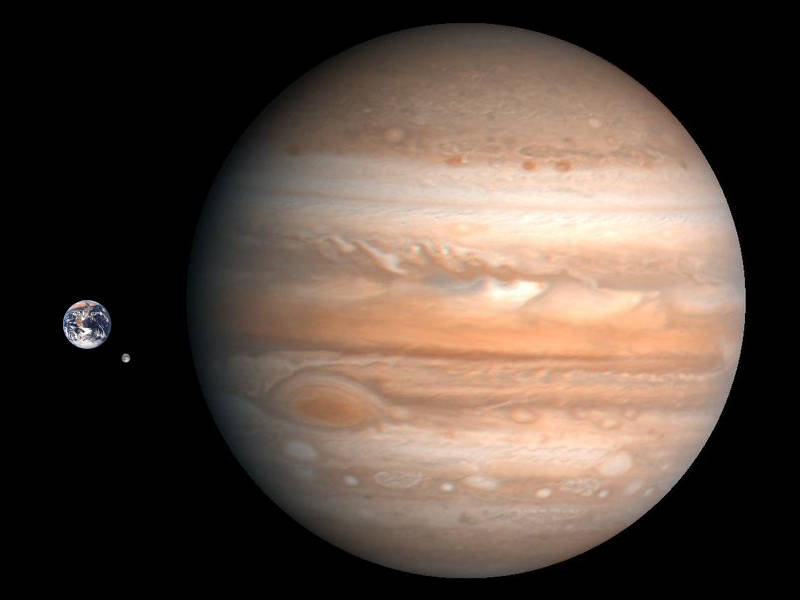
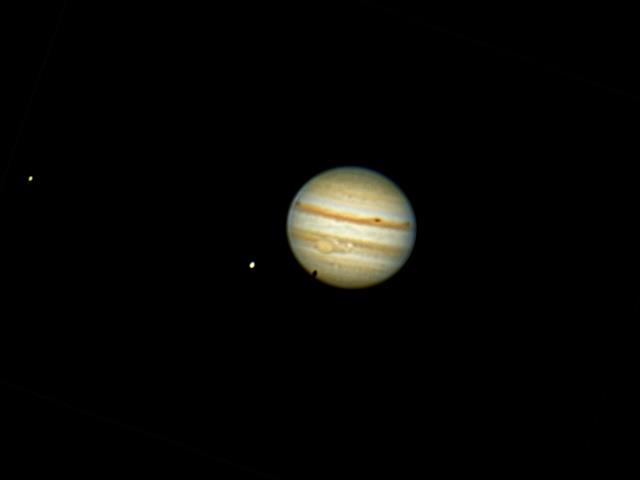
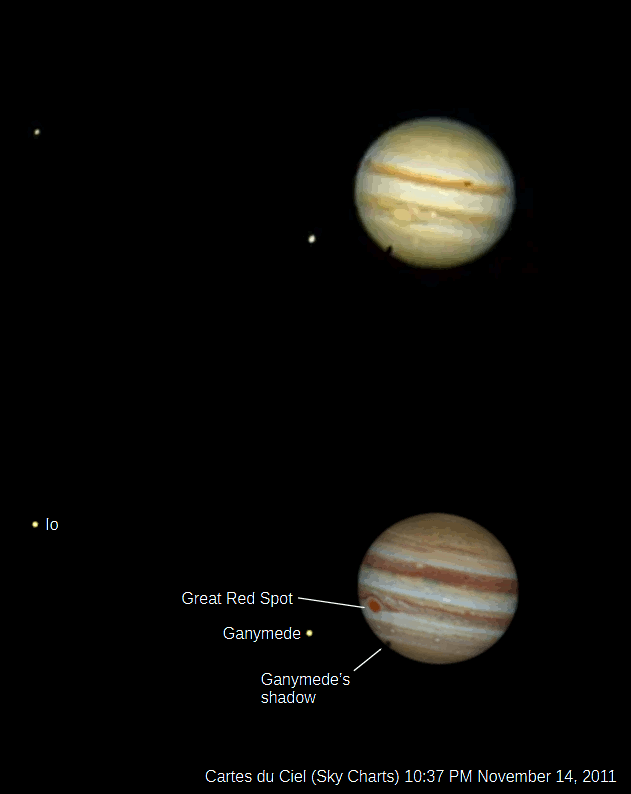
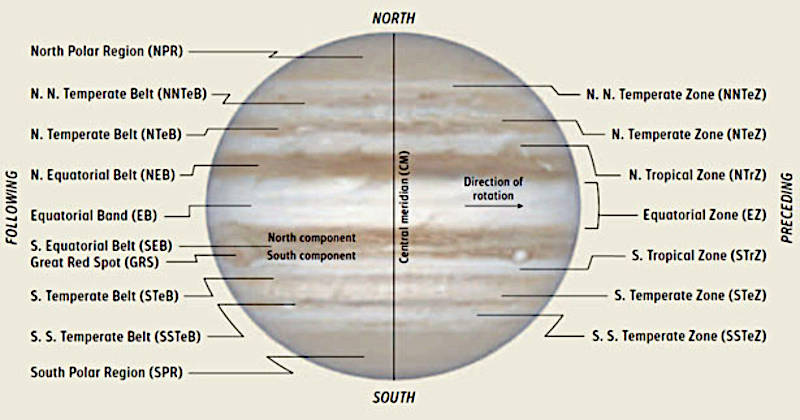
The planet Jupiter rules over the night sky with the Moon after Venus sets. Jupiter, 11 times the diameter of the Earth, has the volume of 1300 earths, however it is only 318 times the mass of the Earth. It is made-up mostly of hydrogen and helium, so it is called a gas giant planet, rather than a terrestrial or rocky planet like the Earth. Jupiter is the best viewable of the planets in a small telescope. It has 2 dark bands across it called belts of darker appearing clouds. The famed Great Red Spot is an anticyclone embedded in the southern of those belts. The spot is not as red anymore. I remember it being brick-red back in the late 1950s and early 60s. Jupiter spins very rapidly, its day lasts only 10 hours.
The astronomical event times given are for the Traverse City/Interlochen area of Michigan (EST, UT – 5 hours). Times will be different for other locations.
Addendum
Ephemeris: 12/04/2024 – Checking where the naked-eye planets are now
This is Ephemeris for Wednesday, December 4th. Today the Sun will be up for 8 hours and 58 minutes, setting at 5:02, and it will rise tomorrow at 8:04. The Moon, 3 days past new, will set at 7:59 this evening.
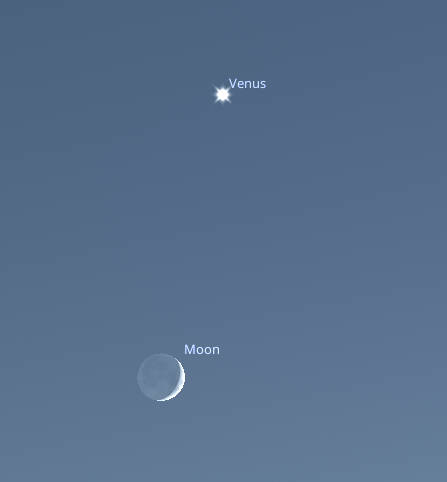
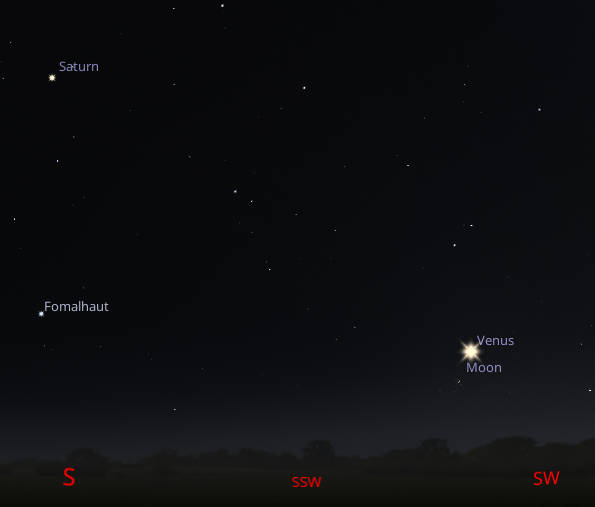
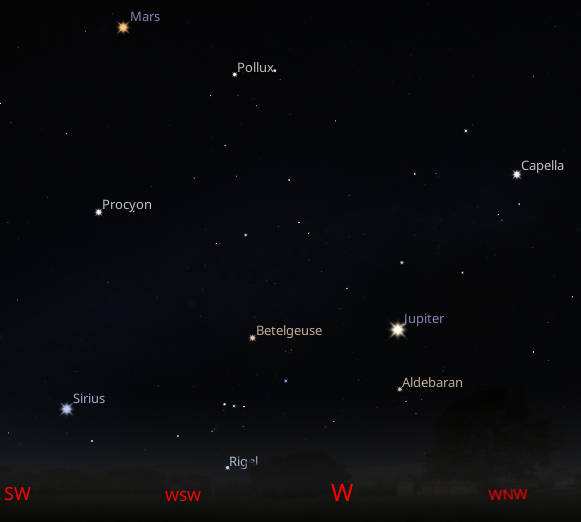
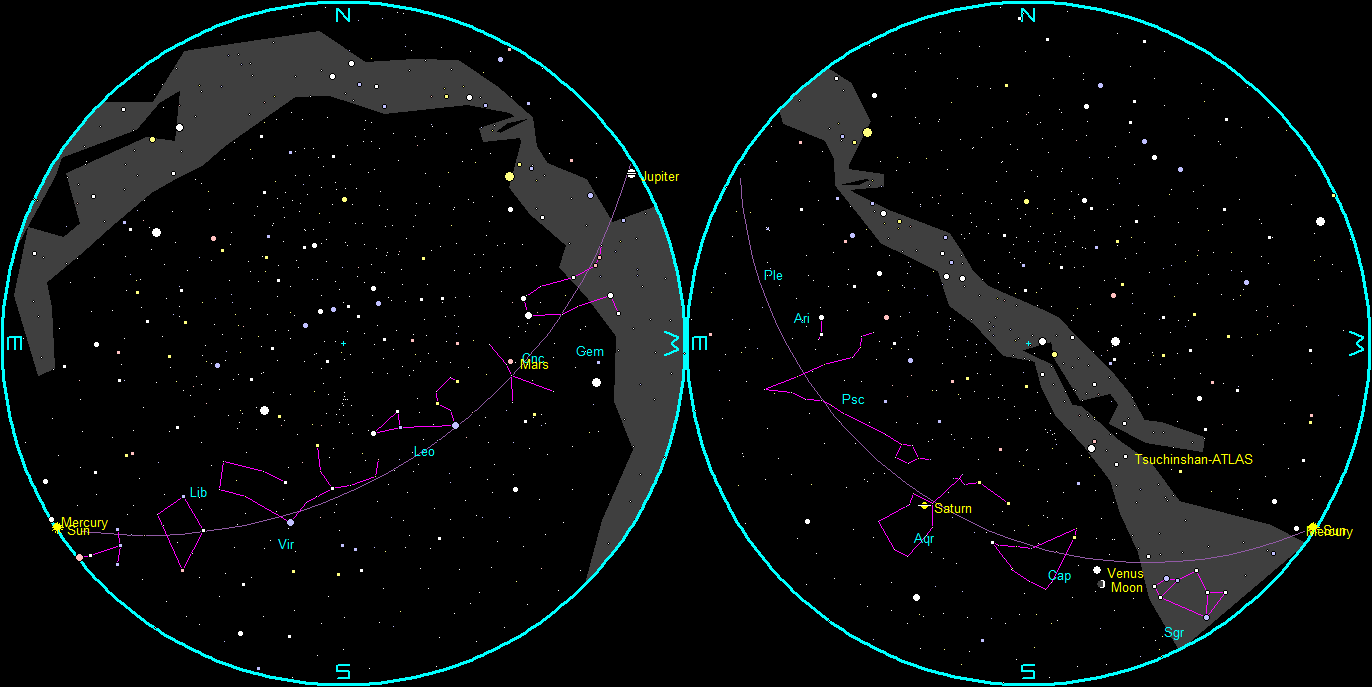
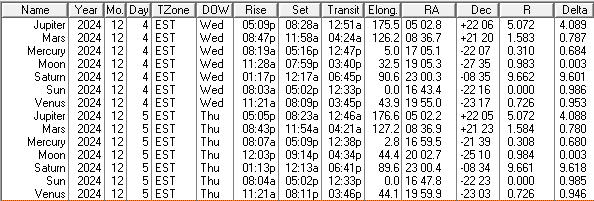
Let’s take our weekly look at the whereabouts of the naked-eye planets. Venus can be spotted low in the south-southwestern sky by 5:30 PM, about 30 minutes after sunset. It appears above the Moon tonight, and will set at 8:09 PM. Saturn will be in the south-southeast at 6 PM. Jupiter will rise at 5:09 PM in the east-northeast, and be a good object for the small telescope about an hour later. Mars, rises tonight at 8:47, Both Mars and Jupiter are considered morning planets, since they are still up at sunrise, though Jupiter will be an evening planet after Saturday. By 6:00 AM tomorrow Jupiter will be in the west, above and right of Orion, while reddish Mars will be high in the southwest. Jupiter and Saturn are great planets to view with a small telescope.
The astronomical event times given are for the Traverse City/Interlochen area of Michigan (EST, UT – 5 hours). Times will be different for other locations.
Addendum
Ephemeris: 12/03/2024 – Jupiter begins to dominate the evening sky
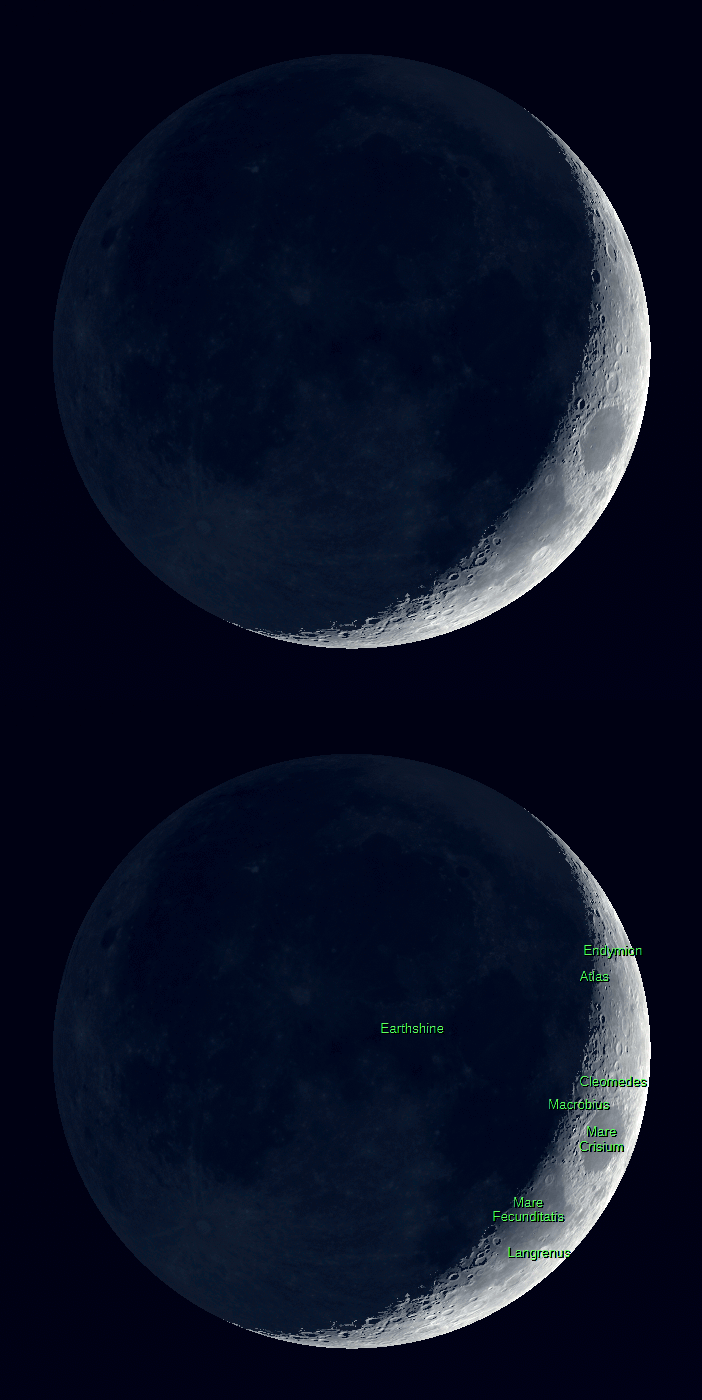
This is Ephemeris for Tuesday, December 3rd. Today the Sun will be up for 9 hours even, setting at 5:02, and it will rise tomorrow at 8:03. The Moon, 2 days past new, will set at 6:48 this evening.
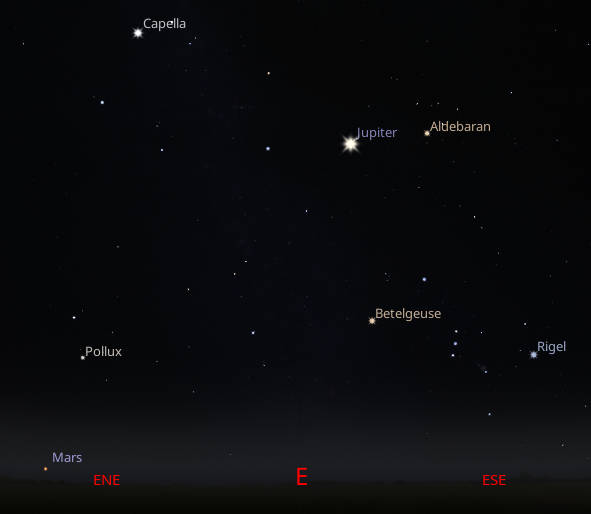
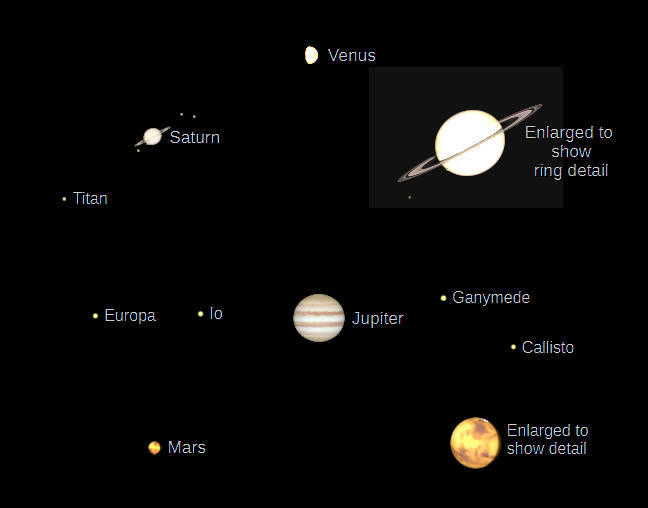
The bright star that’s in the east early in the evenings isn’t a star at all, but the planet Jupiter. This giant planet is moving to be in opposition to the Sun this Saturday, which means that the Earth is directly between Jupiter and the Sun, so it’s the time that it’s closest to us. And so it’s at its largest appearing and brightest. Jupiter is the largest of the planets being about 11 times the Earth’s diameter, its volume would be 11 cubed or about 1,300 times the Earth’s volume. It is the second-brightest planet after Venus. It is also the largest appearing planet in telescopes except for a couple of months around the time when Venus is closest to the Earth. Binoculars will show that Jupiter is not quite star-like, and some of its large satellites can be also seen.
The astronomical event times given are for the Traverse City/Interlochen area of Michigan (EST, UT – 5 hours). Times will be different for other locations.
Addendum