Archive
05/16/2023 – Ephemeris – Regulus, the Little King Star
This is Ephemeris for Tuesday, May 16th. Today the Sun will be up for 14 hours and 51 minutes, setting at 9:05, and it will rise tomorrow at 6:12. The Moon, 3 days before new, will rise at 5:08 tomorrow morning.
Regulus is the brightest star in the constellation of Leo, the lion at the bottom of the backward question mark that is the head and mane of Leo. It’s in the southwest at 10 pm. Alluding to the lion’s status in the animal kingdom, Regulus is the little king star. It is dead last in order of brightness of the 21 brightest first magnitude stars, 1/13th the brightness of Sirius the brightest nighttime star, now lost in the evening twilight glow. To the Babylonians it was the king, the 15th of their constellations, that marked the passage of the Sun. Regulus is about 79 light years away, and 288 times the brightness of the sun. It is a rapidly spinning ellipsoid 3 times the sun’s diameter, rotating in just under 16 hours.
The astronomical event times given are for the Traverse City/Interlochen area of Michigan (EDT, UT –4 hours). They may be different for your location.
Addendum
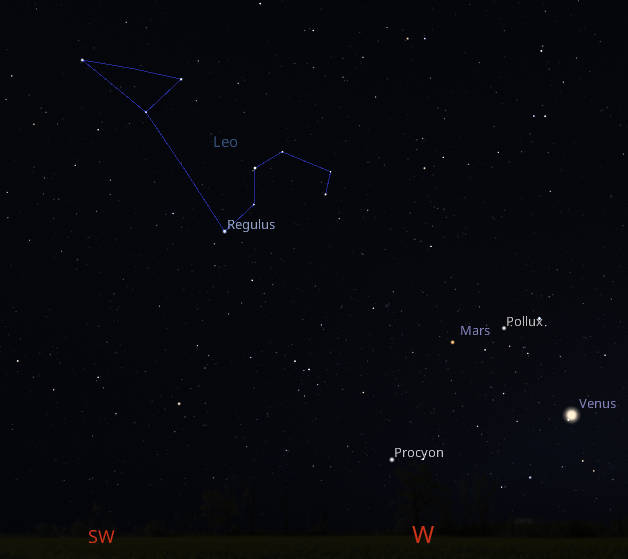
Regulus and Leo and the other stars and planets in the western sky at 11 pm, May 16, 2023. Created using Stellarium.
05/12/2023 – Ephemeris – Finding Virgo the virgin in the evening sky
This is Ephemeris for Friday, May 12th. Today the Sun will be up for 14 hours and 42 minutes, setting at 9:00, and it will rise tomorrow at 6:17. The Moon, at last quarter today, will rise at 3:44 tomorrow morning.
One of the large constellations we see in the south at 11 p.m. can be found using the Big Dipper overhead, follow the arc of the handle to the bright star Arcturus, then straighten the arc to a spike to reach Spica, a bright blue-white star in the south. Spica is the brightest star in the constellation Virgo, the virgin. She represents the goddess of the harvest, Virgo is holding a sheaf of wheat in depictions of her, and Spica is placed at the head of the sheaf. In the space between Spica and Leo the lion to her upper right is, a great cluster of thousands of galaxies just below naked eye visibility. The Virgo Cluster. Inside that cluster is galaxy M87, in whose center lies a black hole with the mass of 6.5 billion suns. The center of the cluster is at about 54 million light years away.
The astronomical event times given are for the Traverse City/Interlochen area of Michigan (EDT, UT –4 hours). They may be different for your location.
Addendum
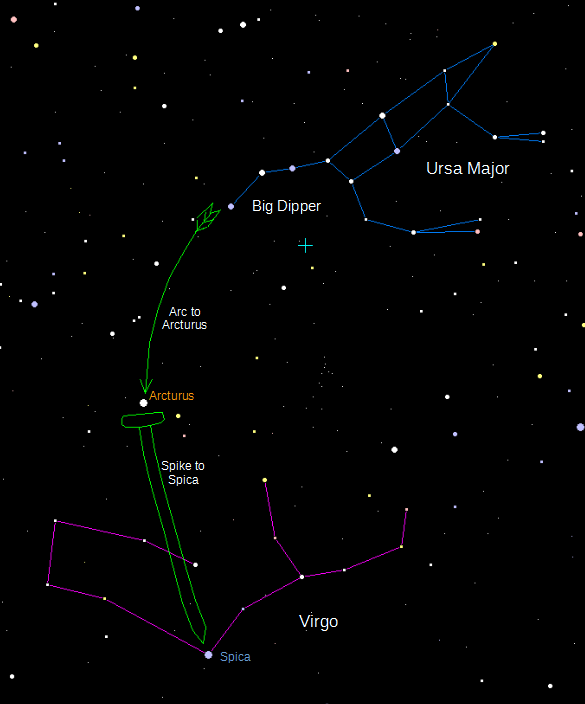
Finding Virgo from the Big Dipper at 11 pm, May 12. There are no planetary interlopers this year. The small + sign marks the zenith, and the image faces south. Created using my LookingUp app, with captions added using LibreOffice Draw.
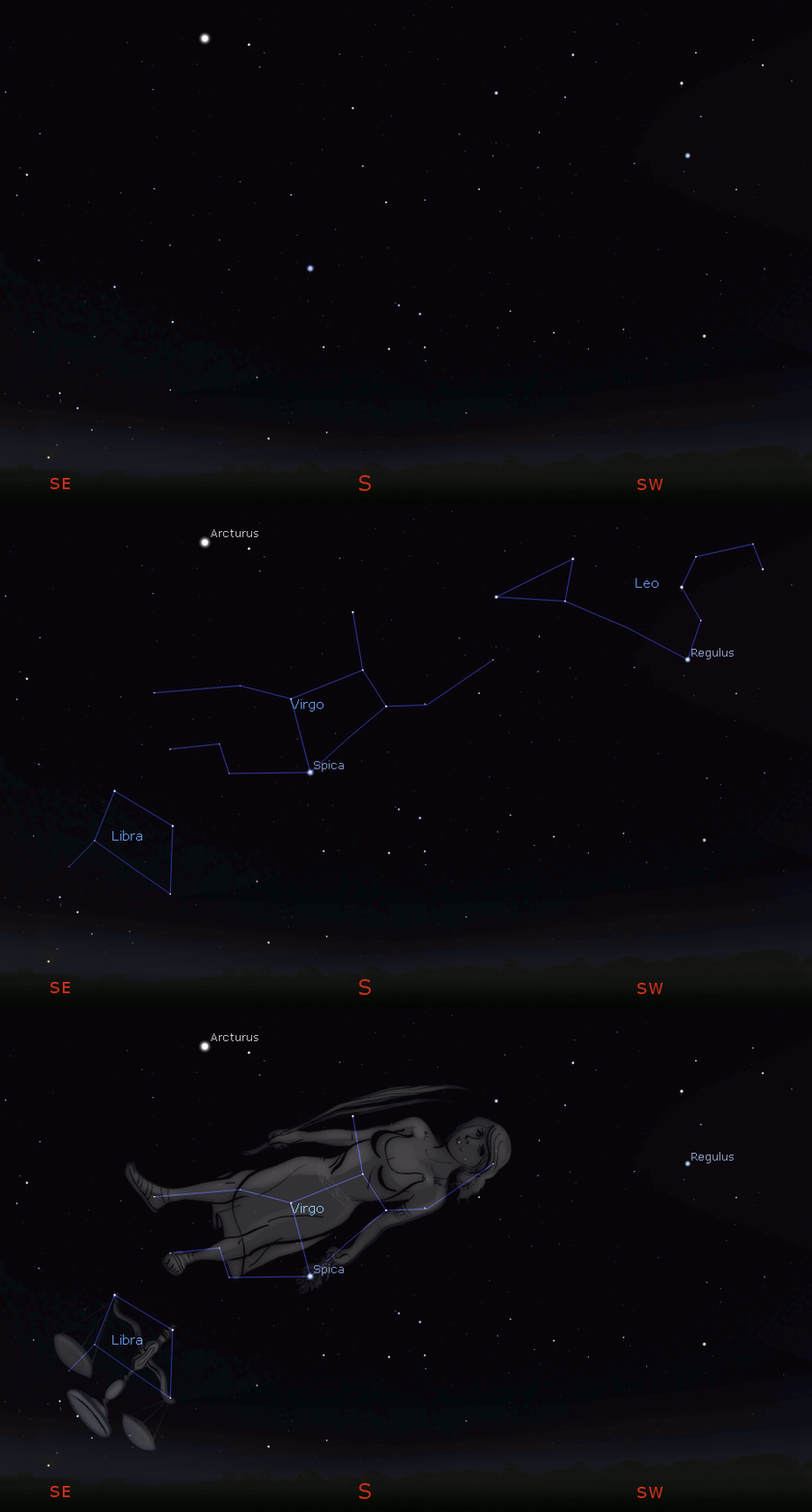
Virgo finder animation with Leo added as an aid for 11 p.m. tonight. Created using Stellarium and GIMP.
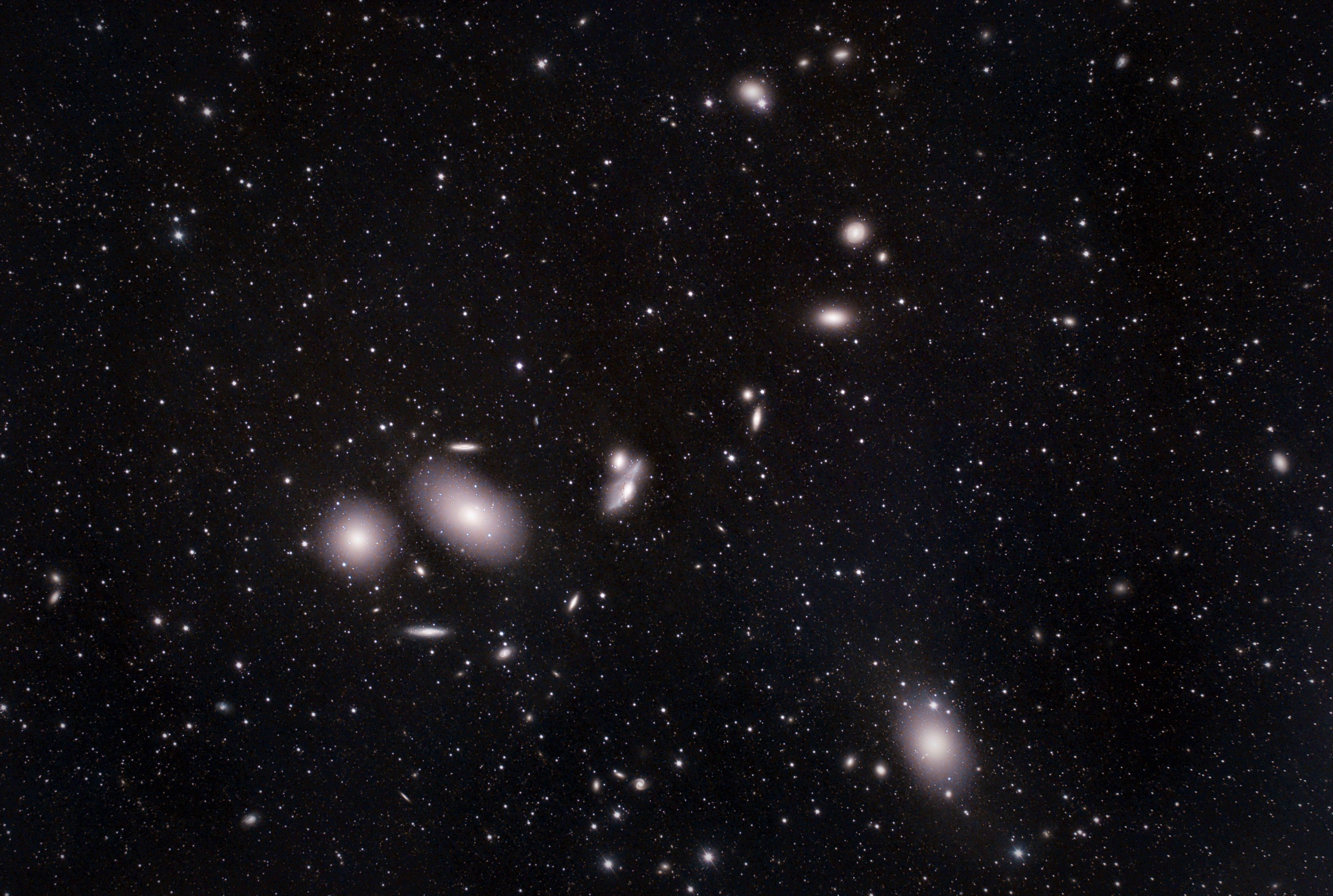
Markarian’s Chain, a small part of the Virgo Cluster of galaxies. Click or tap on the image to enlarge it. Credit: Daniel Dall’Olmo.
05/10/2023 – Ephemeris – Let’s find where the naked-eye planets have wandered off to this week
This is Bob Moler with Ephemeris for Wednesday, May 10th. Today the Sun will be up for 14 hours and 37 minutes, setting at 8:58, and it will rise tomorrow at 6:19. The Moon, 2 days before last quarter, will rise at 2:42 tomorrow morning.
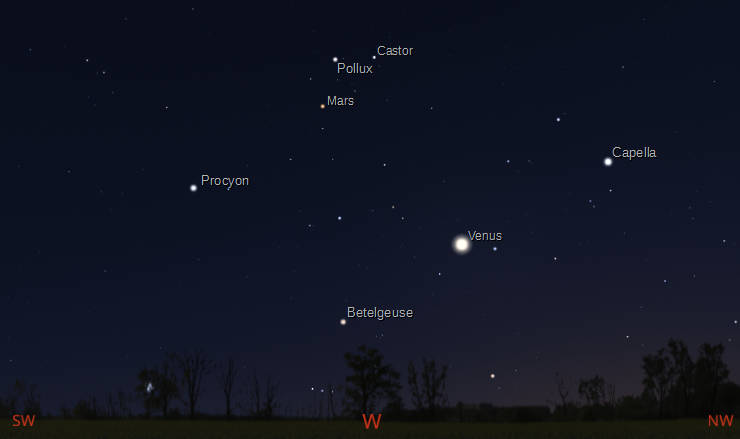
Let’s find where the naked-eye planets have wandered off to this week. Venus is our blazing Evening Star, seen in the west all evening. It will set after midnight. The red planet Mars is in Gemini, left and a bit below Pollux, the leftmost of the namesake stars of the twins, with Castor on the right. Mars is above and left of Venus. By 20 degrees, or two times the width of one’s fist held at arm’s length. Venus is closing the gap between them, but will never quite reach Mars while they are in the evening sky. The closest they will get is three and a half degrees or 7 moon diameters apart, before Venus pulls back toward the Sun faster than Mars will. In the morning, Saturn will be visible and low in the east-southeast by 5 am, rising at 3:37 am. Both Jupiter and Mercury are too close to the direction of the Sun to be seen.
The astronomical event times given are for the Traverse City/Interlochen area of Michigan (EDT, UT –4 hours). They may be different for your location.
Addendum
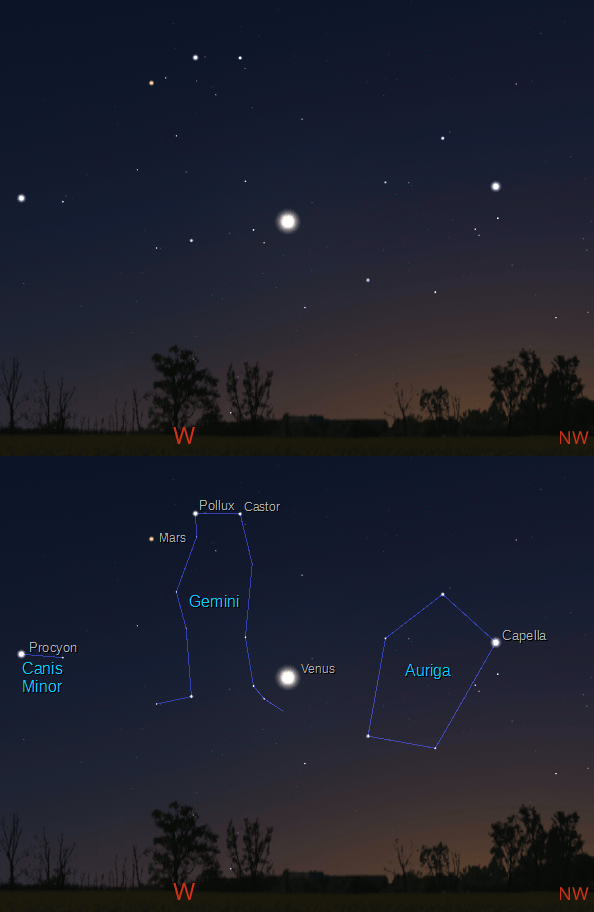
Venus and Mars among the setting winter stars at 10 pm tonight, May 10, 2023. Created using Stellarium, LibreOffice Draw and GIMP.
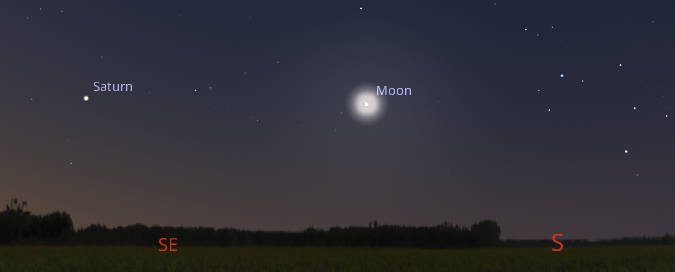
Saturn and the Moon in the morning sky at 5:30 am. Note the Sagittarius’ Teapot asterism on the right. Created using Stellarium.
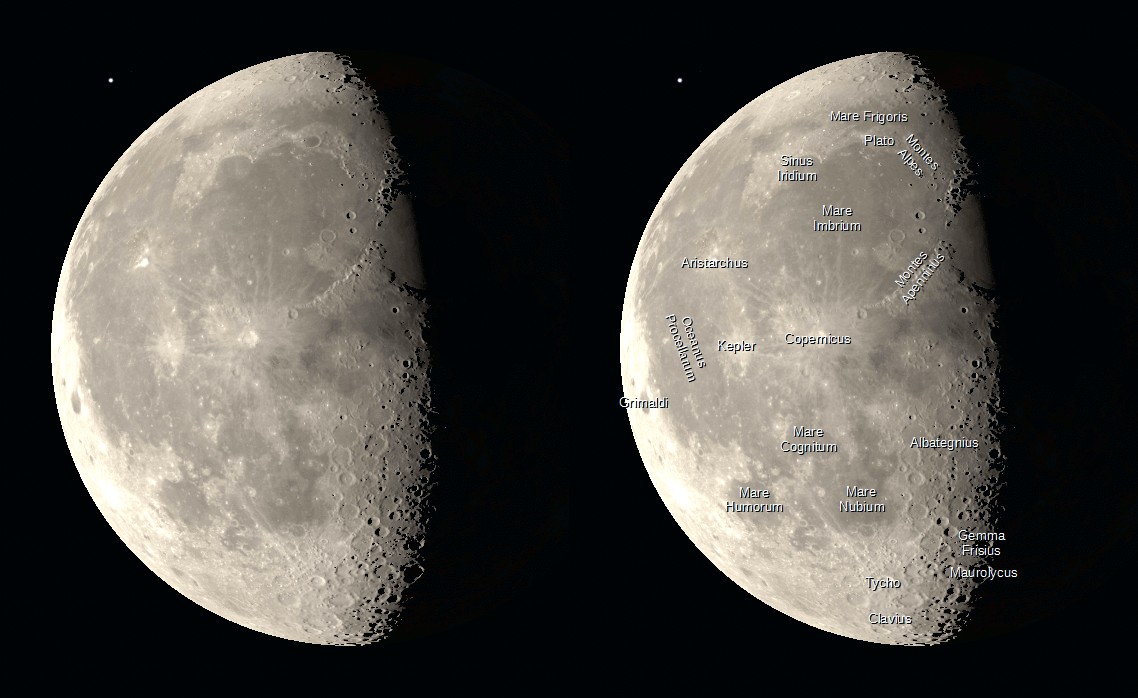
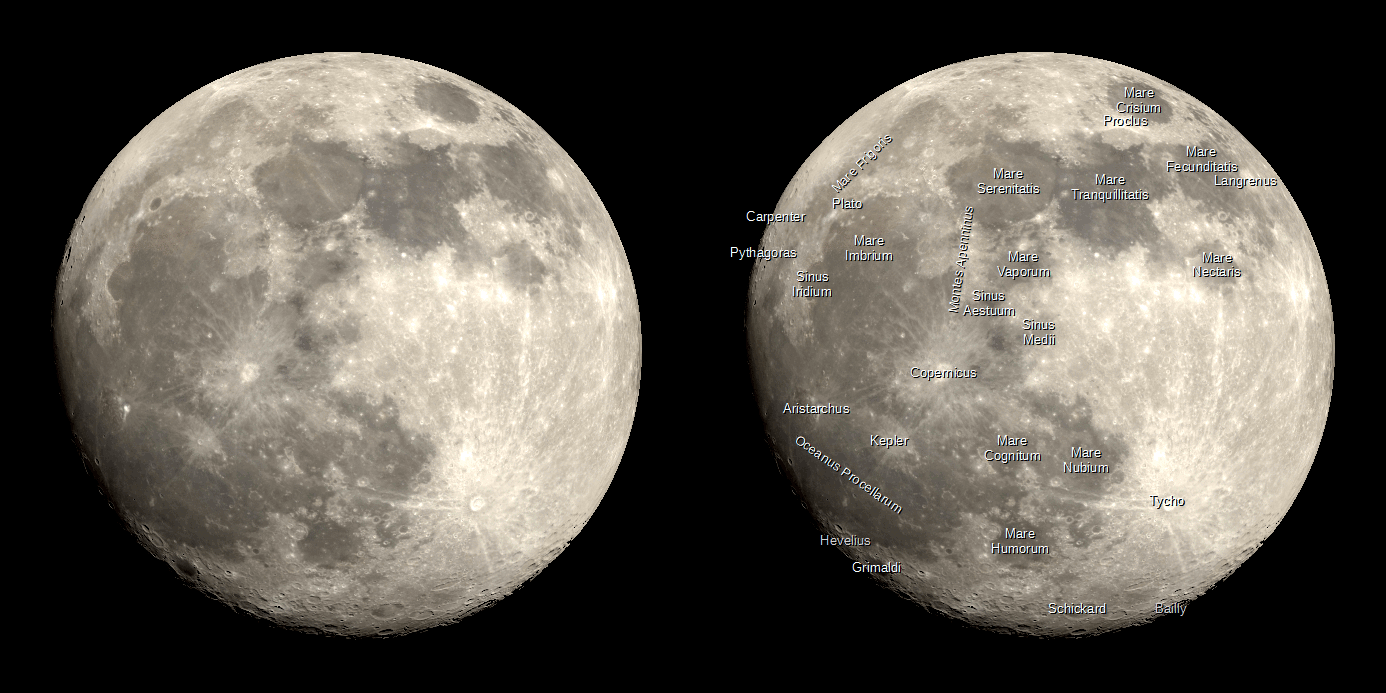
Waning gibbous Moon animation with selected features labeled. Labels are centered on their feature. Created using Stellarium, LibreOffice, and GIMP.
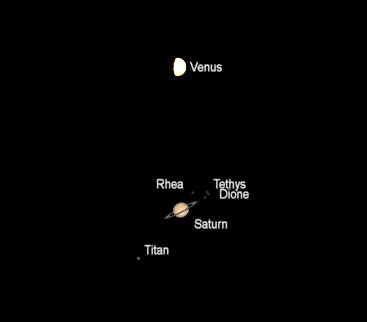
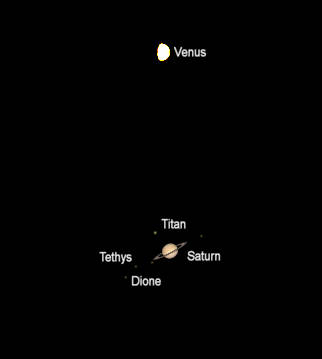
Telescopic Venus and Saturn (north up) as they would be seen in a small telescope, with the same magnification tonight, the night of May 10/11, 2023. Apparent diameters: Venus 18.45″ and is 62.1% illuminated; Saturn 16.58″, its rings 38.61″. Mars, too small to be represented here, is 5.12″ in diameter. Both Venus and Saturn are getting larger as they approach us. Created using Cartes du Ciel (Sky Charts).
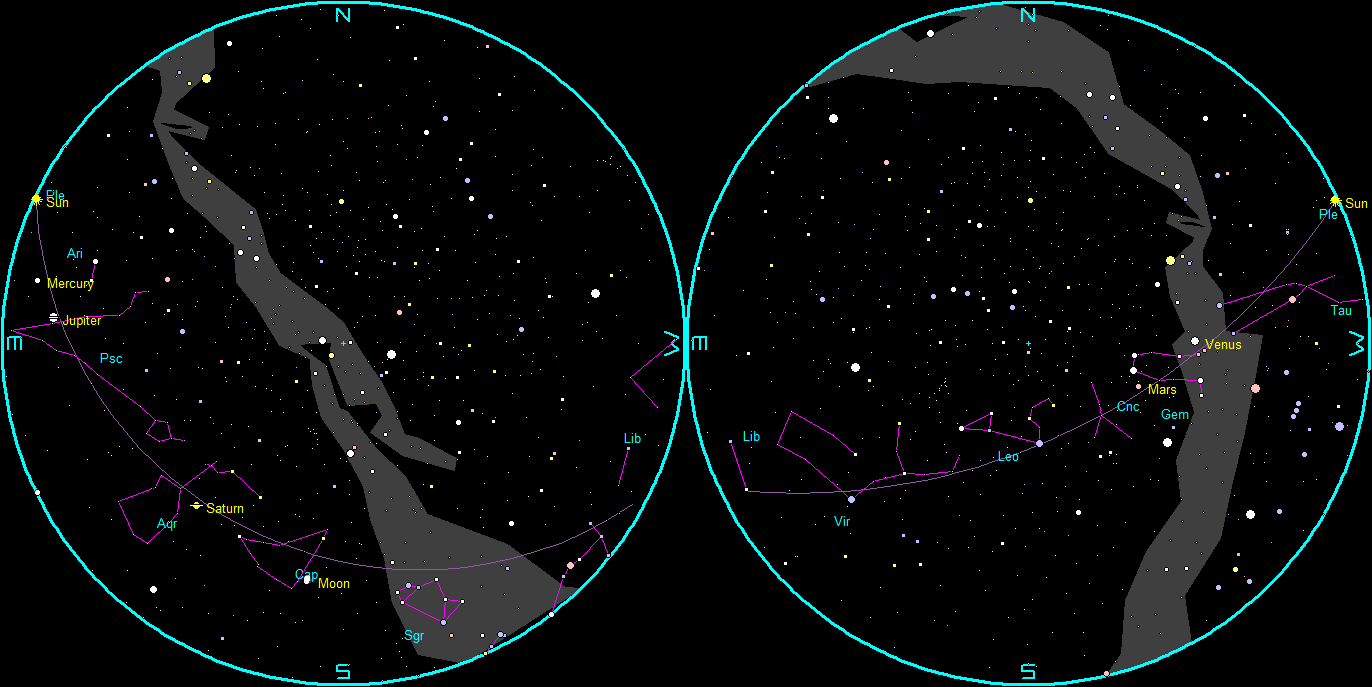
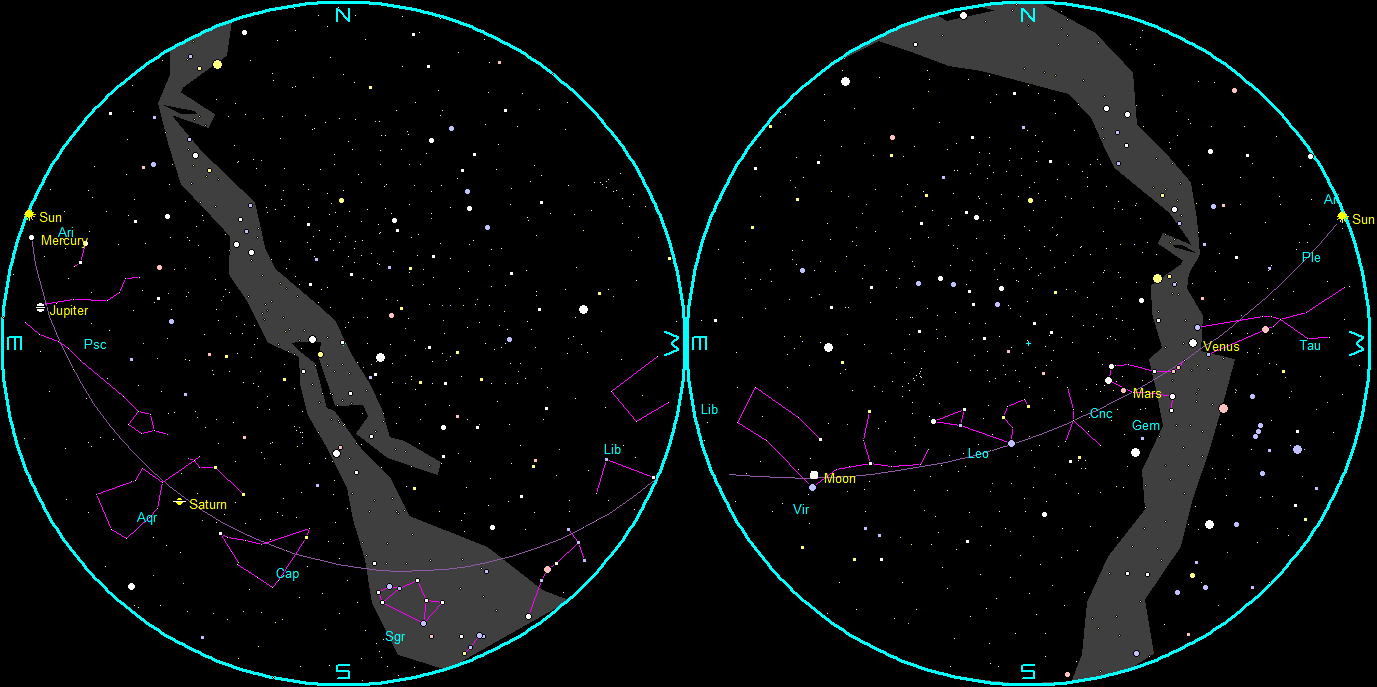
The naked-eye planets and the Moon at sunset and sunrise on a single night, starting with sunset on the right on May 10, 2023. The night ends on the left with sunrise on the 11th. Click or tap on the image to enlarge it. Created using my LookingUp app and GIMP.
05/08/2023 – Ephemeris – How to find Leo the lion in the sky
This is Ephemeris for Monday, May 8th. Today the Sun will be up for 14 hours and 32 minutes, setting at 8:56, and it will rise tomorrow at 6:22. The Moon, 3 days past full, will rise at 12:57 tomorrow morning.
At 10 p.m. the spring constellation of Leo the lion will be high in the south. It can be found by locating the Big Dipper high overhead and imagining that a hole were drilled in the bottom of the bowl to let the water leak out. It would drip on the back of this giant cat. The Lion is standing or lying facing westward. His head and mane are seen in the stars as a backwards question mark. This group of stars is also called the sickle. The bright star Regulus is at the bottom, the dot at the bottom of the question mark. A triangle of stars, to the left of Regulus, is the lion’s haunches. Leo contains some nice galaxies visible in moderate sized telescopes. The stars in Leo’s part of the sky are fewer than those in the winter sky.
The astronomical event times given are for the Traverse City/Interlochen area of Michigan (EDT, UT –4 hours). They may be different for your location.
Addendum
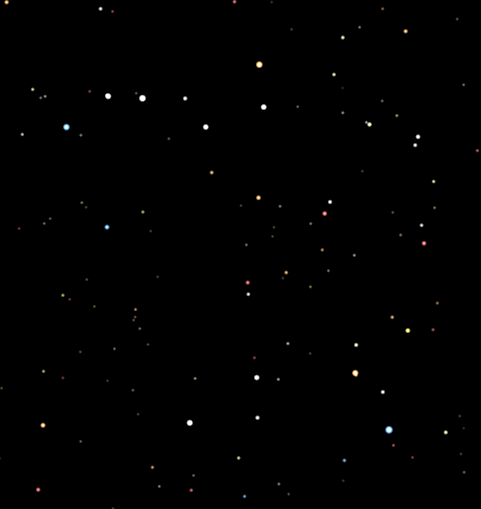
Finding Leo the lion from the Big Dipper with no lines. The orientation is for 10 pm, May 8th. Can you find Leo? The Big Dipper? Created using Cartes du Ciel (Sky Charts).
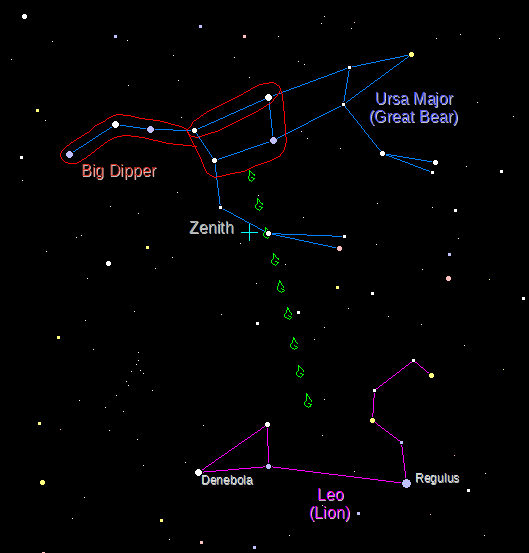
Using the Big Dipper to find Leo. The orientation is for 10 pm on May 8th. For any other time, the orientation would be different, as would the position of the zenith (overhead point). Created using my LookingUp app.
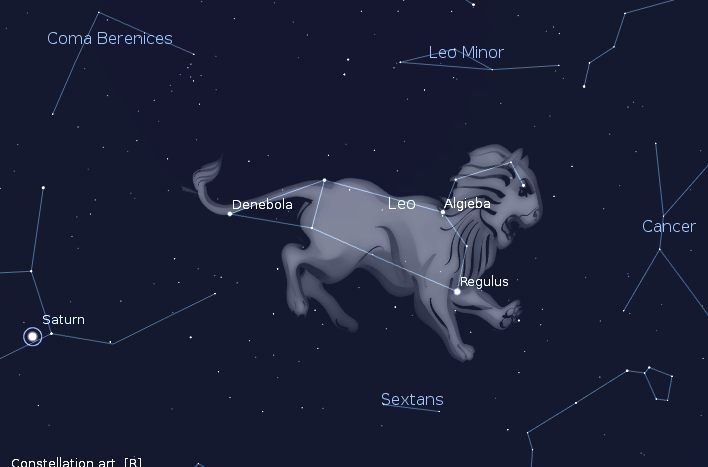
Leo, with drawing of a lion. Created using Stellarium.
Note the star at the left end of Leo is named Denebola. There are several stars that start with “Deneb”. Deneb must mean tail in Arabic because most star names are Arabic in origin. Denebola is the tail of the lion. Deneb Kaitos is the tail of the autumn constellation of Cetus the whale, and Deneb itself is the tail of the summer constellation of Cygnus the swan.
05/03/2023 – Ephemeris – Let’s find where the naked-eye planets have wandered off to this week
This is Ephemeris for Wednesday, May 3rd. Today the Sun will be up for 14 hours and 19 minutes, setting at 8:49, and it will rise tomorrow at 6:28. The Moon, 2 days before full, will set at 5:56 tomorrow morning.
Let’s find where the naked-eye planets have wandered off to this week. Venus is our blazing Evening Star, seen in the west all evening. It will set after midnight. The red planet Mars is in Gemini, below Pollux, left of Castor, the namesake stars of the twins. Mars is above and left of Venus by 24 degrees, or almost two and a half times the width of one’s fist held at arm’s length. Venus is closing the gap between them, but will never quite reach Mars while they are in the evening sky. The closest they will get is three and a half degrees or 7 moon diameters apart, before Venus pulls back toward the Sun faster than Mars will. Saturn, low in the southeast by 6 am, is emerging from morning twilight, rising at 4:07 am. Both Jupiter and Mercury are too close to the direction of the Sun to be seen.
The astronomical event times given are for the Traverse City/Interlochen area of Michigan (EDT, UT –4 hours). They may be different for your location.
Addendum
Venus and Mars among the setting winter stars tonight, at 10 pm, May 3rd, 2023. Click or tap on the image to enlarge it. Created using Stellarium, Libreoffice Draw and GIMP.
Moon 2 days before full, annotated for 10 pm, May 3, 2023. Created using Stellarium, LibreOffice Draw, and GIMP.
Telescopic Venus and Saturn (north up) as they would be seen in a small telescope, with the same magnification. Apparent diameters: Venus 17.43″ and is 65.2% illuminated; Saturn 16.39″, its rings 38.19″. Mars, too small to be represented here, is 5.30″ in diameter. Created using Cartes du Ciel (Sky Charts).
The naked-eye planets and the Moon at sunset and sunrise on a single night, starting with sunset on the right on May 3, 2023. The night ends on the left with sunrise on the 4th. Click or tap on the image to enlarge it. Created using my LookingUp app and GIMP.
04/28/2023 – Ephemeris – International Astronomy Day is tomorrow
This is Bob Moler with Ephemeris for Arbor Day, Friday, April 28th. Today the Sun will be up for 14 hours and 6 minutes, setting at 8:43, and it will rise tomorrow at 6:36. The Moon, 1 day past first quarter, will set at 4:23 tomorrow morning.
Tomorrow is International Astronomy Day. The Grand Traverse Astronomical Society (GTAS) will celebrate the event with a Sun and Star Party at the Dune Climb area of the Sleeping Bear Dunes National Lakeshore. There will be a solar viewing period from 6 pm to about 7:30 pm or so, when the Sun will set over the dune. The society has two hydrogen alpha solar telescopes, and members have another two, to view the Sun’s chromosphere and prominences. Plus, other members have white light filtered telescopes to view sunspots on the face of the Sun. Night viewing will start at 9 pm with the Moon and Venus featured, along with the brighter telescopic wonders of spring. But only if the skies are clear or mostly clear.
The next GTAS event at the Sleeping Bear Dunes will be Saturday, May 27th, with a program like this Saturday’s. What we call a Sun ‘n Star Party.
The astronomical event times given are for the Traverse City/Interlochen area of Michigan (EST, UT –4 hours). They may be different for your location.
Addendum
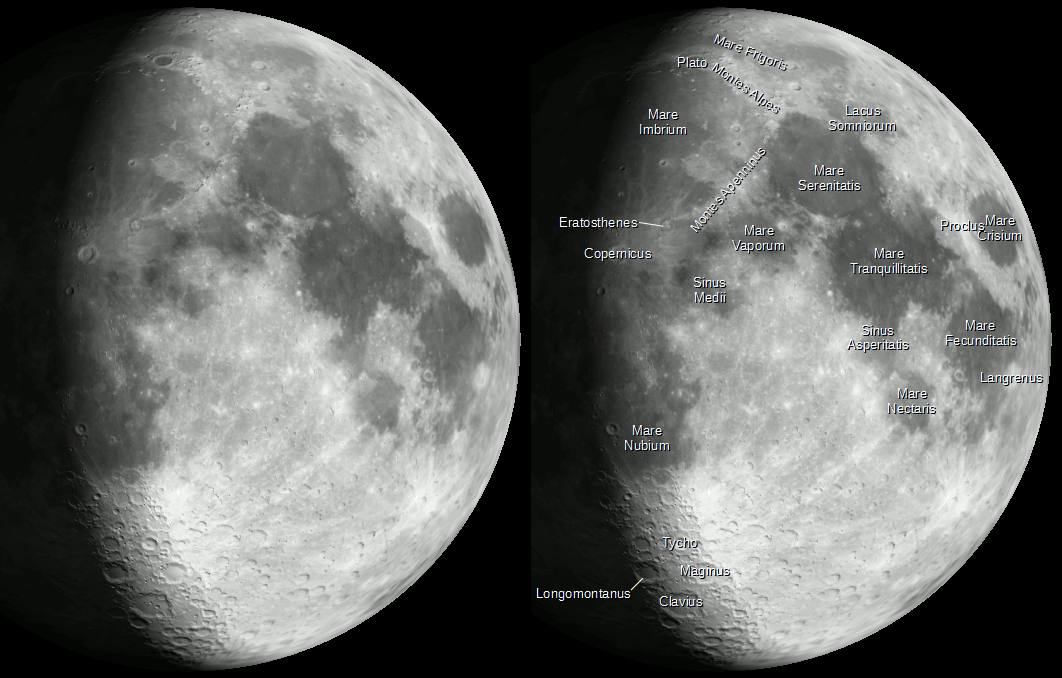
The Moon for Astronomy Day, 2023, two days after first quarter or 9 days old. Some of the more prominent features labeled. Created using Virtual Moon Atlas, GIMP and LibreOffice Draw.
04/26/2023 – Ephemeris – Let’s find where the naked-eye planets have wandered off to this week
This is Ephemeris for Wednesday, April 26th. Today the Sun will be up for 14 hours even, setting at 8:41, and it will rise tomorrow at 6:39. The Moon, 1 day before first quarter, will set at 3:28 tomorrow morning.
Let’s find where the naked-eye planets have wandered off to this week. Venus is our blazing Evening Star, seen in the west all evening. It will set after midnight. It’s in Gemini, below the namesake stars of the twins Castor on the right and Pollux on the left. Pollux is a bit below and to the right of the Moon tonight. Mars is above and left of Venus. Venus is closing the gap between them, but will never quite reach Mars while they are in the evening sky. The closest they will get is three and a half degrees or 7 moon diameters apart, before Venus pulls back toward the Sun faster than Mars. They won’t cross paths until February of next year. Saturn is emerging from morning twilight, rising at 4:33 am in the east-southeast. Both Jupiter and Mercury are too close to the direction of the Sun to be seen.
The astronomical event times given are for the Traverse City/Interlochen area of Michigan (EST, UT –4 hours). They may be different for your location.
Addendum
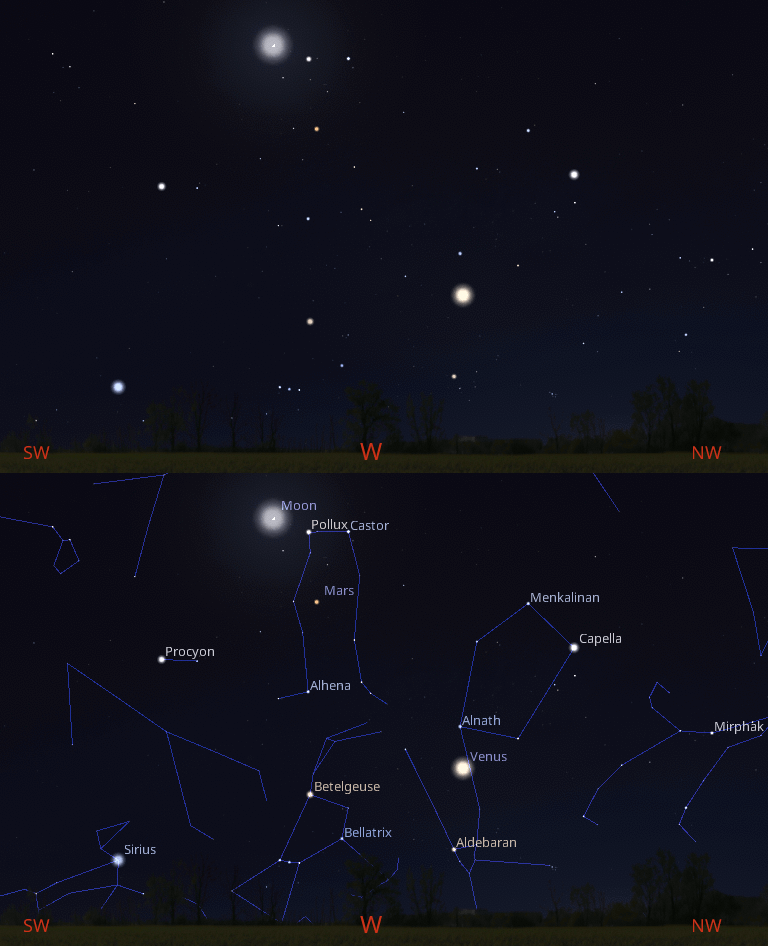
Evening planets and stars looking westward at 10 pm tonight, April 26, 2023. Click or tap on the image to enlarge it. Created using Stellarium and GIMP.
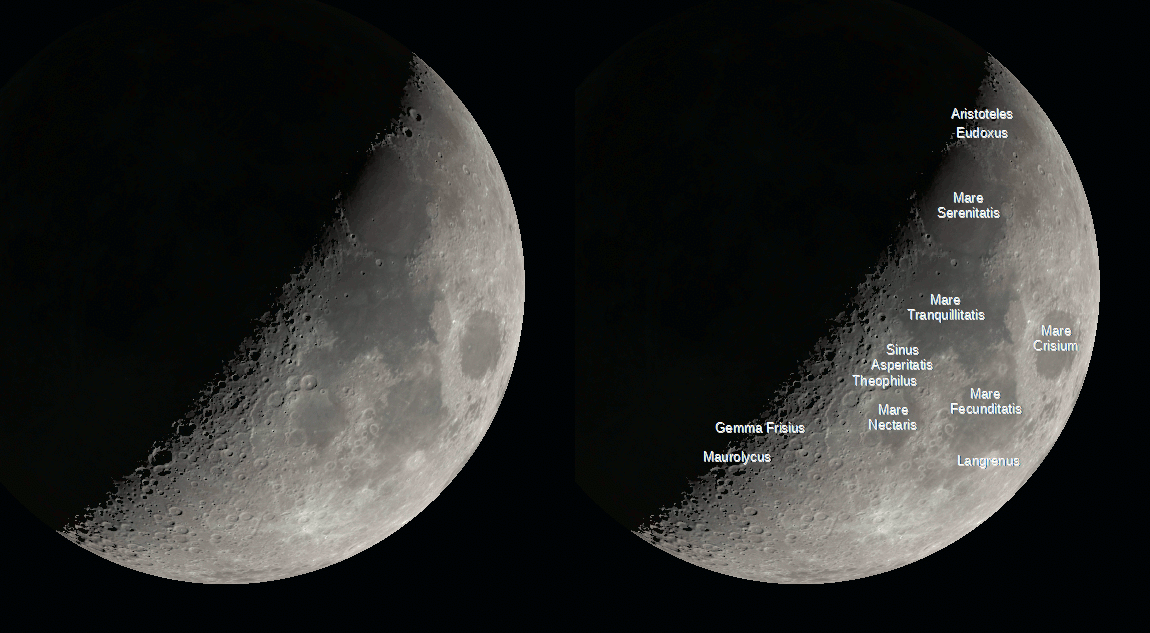
The Moon, one day before first quarter tonight, April 26, 2023, with prominent features labeled. Created using Stellarium, GIMP and LibreOffice Draw.
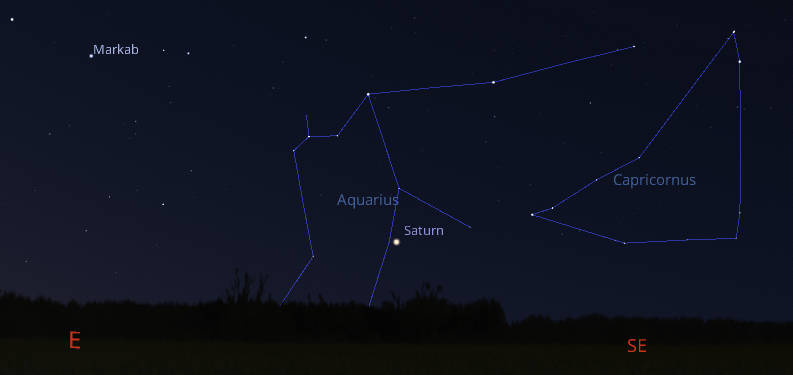
Saturn, low in the east-southeast at 5:30 am, April 27, 2023. Created using Stellarium.
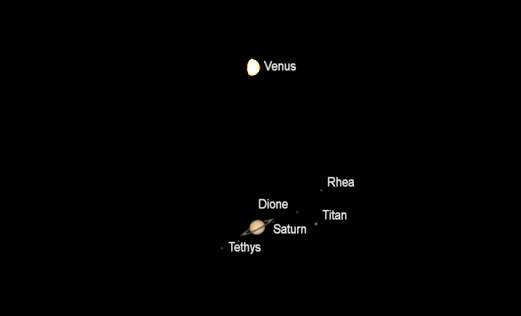
Telescopic Venus and Saturn (north up) as they would be seen in a small telescope, with the same magnification. Apparent diameters: Venus 16.51″ and is 68.1% illuminated; Saturn 16.23″, its rings 37.80″. Mars is too small to be represented here. It is 5.5″ in diameter. Created using Cartes du Ciel (Sky Charts).
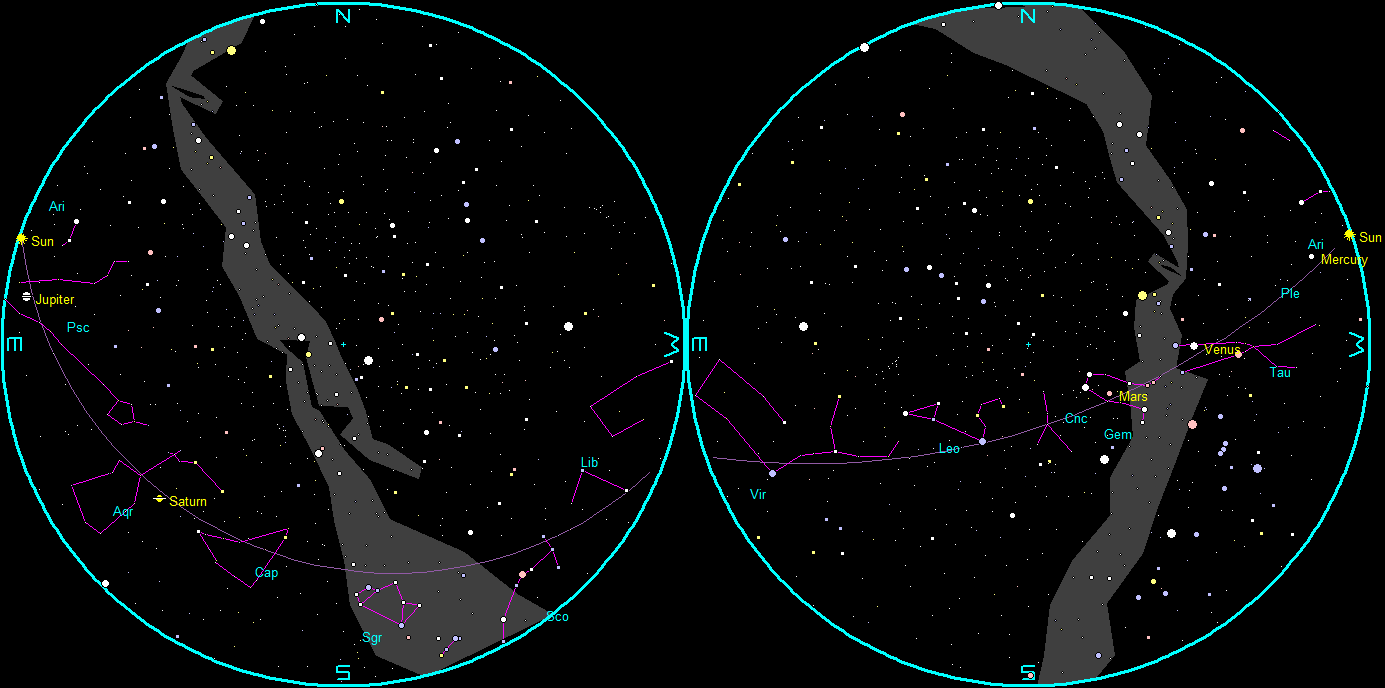
The naked-eye planets and the Moon at sunset and sunrise on a single night, starting with sunset on the right on April 26, 2023. The night ends on the left with sunrise on the 27th. Click or tap on the image to enlarge it. Created using my LookingUp app and GIMP.
04/24/2023 – Ephemeris – The reason for the Moon’s phases
This is Bob Moler with Ephemeris for Monday, April 24th. Today the Sun will be up for 13 hours and 55 minutes, setting at 8:38, and it will rise tomorrow at 6:42. The Moon, 3 days before first quarter, will set at 2:02 tomorrow morning.
The Moon’s changing appearance over the month may seem to be mysterious at first glance. Maybe because one may think that the objects in the sky are somehow different from the familiar objects we see around us on the Earth. In ancient times, especially the Greeks, thought that everything in the heavens was perfect and spotless. They explained the definite markings we see as the man-in-the-moon as a reflection of the Earth by a spotless Moon. The Moon’s phases are simply light and shadow on a ball in the sunlight. Sometime, when the Moon appears in the daytime, take a small ball, like a golf ball and hold it up to the Moon, while the ball is also in sunlight, and the small ball will exhibit the same phase as the Moon.
The astronomical event times given are for the Traverse City/Interlochen area of Michigan (EST, UT –4 hours). They may be different for your location.
Addendum
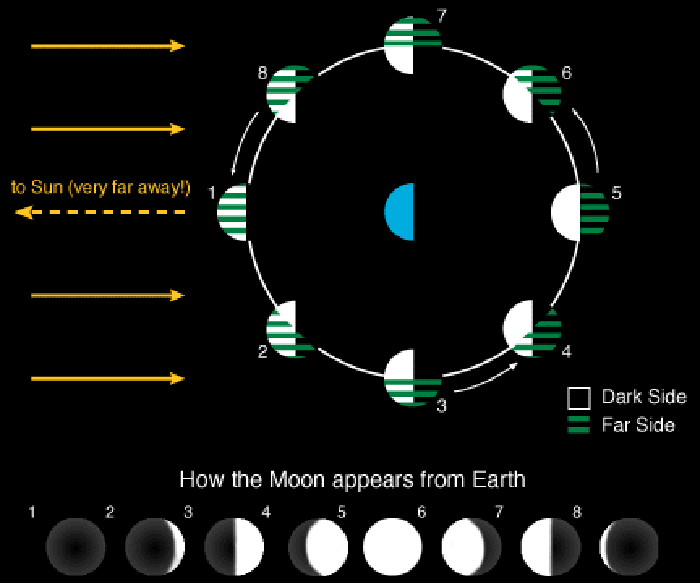
This is the best diagram of the Moon’s phases and how the it appears from the Earth. Credit http://planetfacts.org/phases-of-the-moon/ which I recommend.
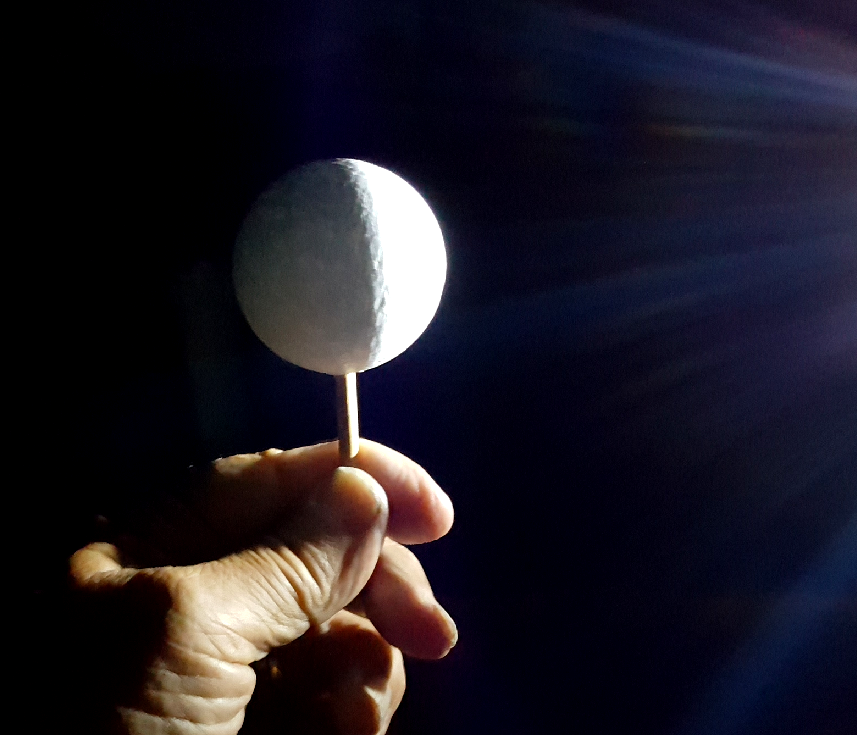
A demonstration of the Moon’s crescent phase with the styrofoam moon ball we use for Project Astro held up to a light off frame to the right. The line between the bright (day) and dark (night) side of the ball, moon or planet is called the terminator. The night side of the ball is illuminated a bit by the translucency of the ball, and the reflection off my hand. Note the roughness of the ball is visible only at the terminator, where the shadows are longest. I photographed this outside at night to minimize the ball’s nighttime illumination.
04/21/2023 – Ephemeris – The first major meteor shower of spring reaches peak this weekend
This is Ephemeris for Friday, April 21st. Today the Sun will be up for 13 hours and 46 minutes, setting at 8:35, and it will rise tomorrow at 6:47. The Moon, 1 day past new, will set at 10:44 this evening.
Saturday night and Sunday morning will see the peak of the Lyrid meteor shower. This is the first of two major meteor showers of spring. The other one in two weeks will have to compete with a full Moon. This meteor shower will be visible all night. At the end of twilight the radiant of the shower, where the meteors will seem to come from, will be low in the northeast, to the right of the bright star Vega in the constellation of Lyra the harp, for which the meteor shower is named. The radiant point is actually between the constellations of Lyra and Hercules. Only 15 to 20 meteors an hour will be expected when the radiant is nearly overhead as morning twilight starts in the 5 am hour. The most famous meteor shower, for us, is the Perseids of August reaching peak on the morning of the 13th of August which will be seen in dark skies for most of the night.
The astronomical event times given are for the Traverse City/Interlochen area of Michigan (EST, UT –4 hours). They may be different for your location.
Addendum
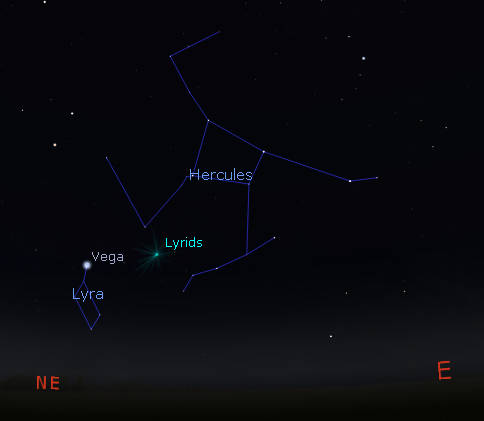
Lyrid radiant at 11 pm, looking to the east-northeast. The meteors will be seen all over the sky, but their tracks can be traced back to the radiant point, like the parallel rails of a train track recede to a point in the distance. Created using Stellarium.
04/19/2023 – Ephemeris – Let’s find where the naked-eye planets have wandered off to this week
This is Ephemeris for Wednesday, April 19th. Today the Sun will be up for 13 hours and 40 minutes, setting at 8:32, and it will rise tomorrow at 6:50. The Moon, 1 day before new, will rise at 7:04 tomorrow morning.
Let’s find where the naked-eye planets have wandered off to this week. Since I left you in February, Jupiter passed behind the Sun 8 days ago and moved to the morning side of the Sun. Though it will be more than a month before it is far enough from the Sun to be spotted before sunrise. Venus is our blazing Evening Star, seen in the west all evening. It will set shortly after midnight. It’s in Taurus, with the bright star Aldebaran below and left of it and the Pleiades below and right of it. Mars is above and left of Venus. Venus is closing the gap, but will never quite reach Mars while they are in the evening sky. The closest they will get is three and a half degrees or 7 moon diameters apart, but won’t cross paths until February of next year. In the morning sky, Saturn is now visible by 6 am in the east-southeast.
Addendum
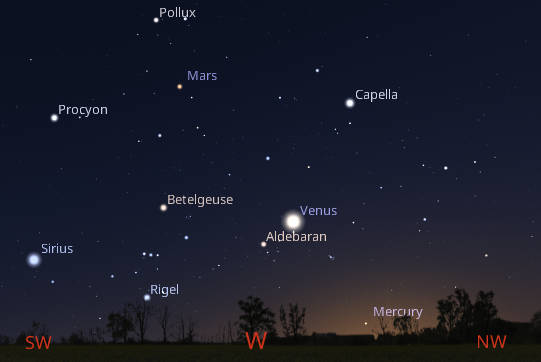
Evening planets Venus and Mars among the bright stars of winter at 9:30 pm with Mercury about to set, April 19, 2023. Created using Stellarium.
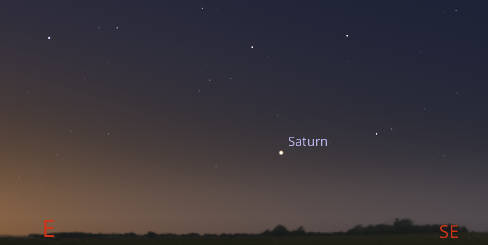
Saturn in morning twilight at 6 am on April 20, 2023. Created using Stellarium.
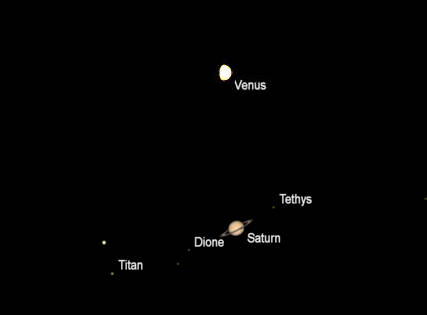
Telescopic Venus and Saturn (north up) as they would be seen in a small telescope, with the same magnification. Apparent diameters: Venus 15.72″, and is 70.8% illuminated; Saturn 16.07″, its rings 37.43″. Created using Cartes du Ciel (Sky Charts).
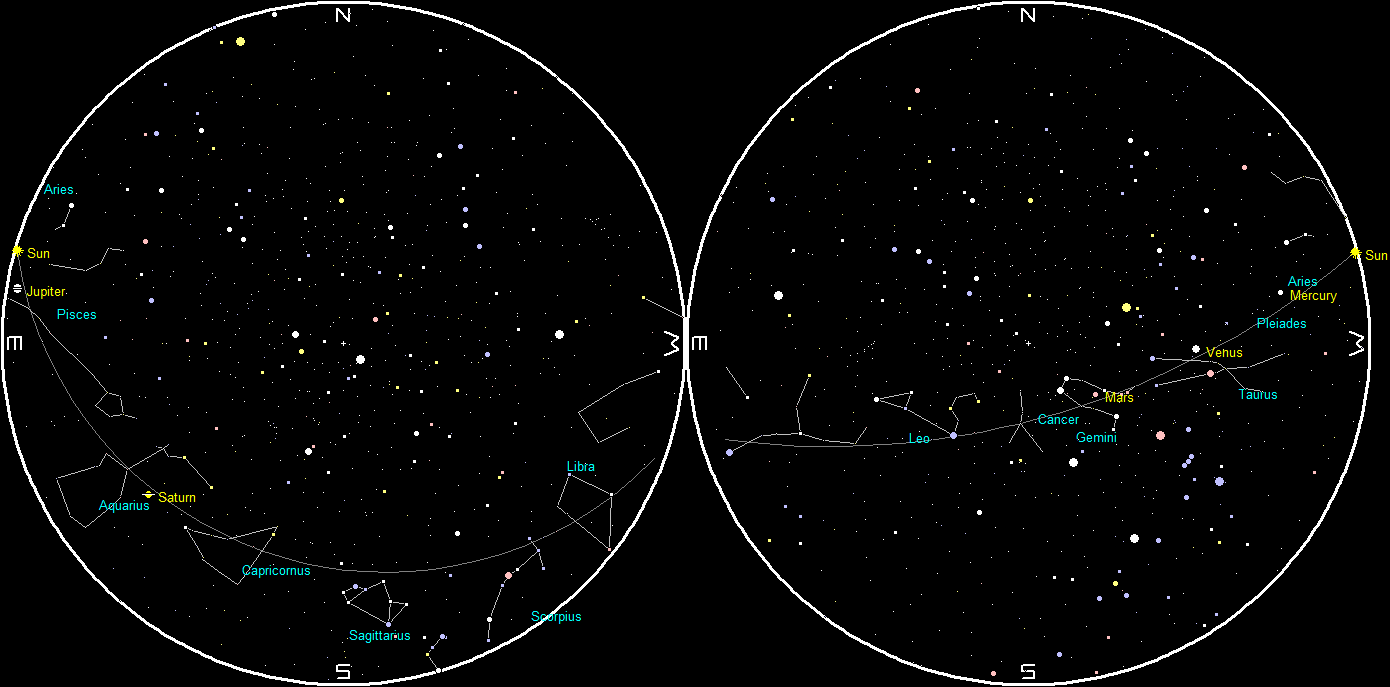
The naked-eye planets and the Moon at sunset and sunrise on a single night, starting with sunset on the right on April 19, 2023. The night ends on the left with sunrise on the 20th. Click on the image to enlarge it. Created using my LookingUp app and GIMP.

