Archive
04/18/2023 – Ephemeris – Orion rotates 90 degrees from rising to setting
This is Bob Moler with Ephemeris for Tuesday, April 18th. Today the Sun will be up for 13 hours and 37 minutes, setting at 8:31, and it will rise tomorrow at 6:52. The Moon, 2 days before new, will rise at 6:43 tomorrow morning.
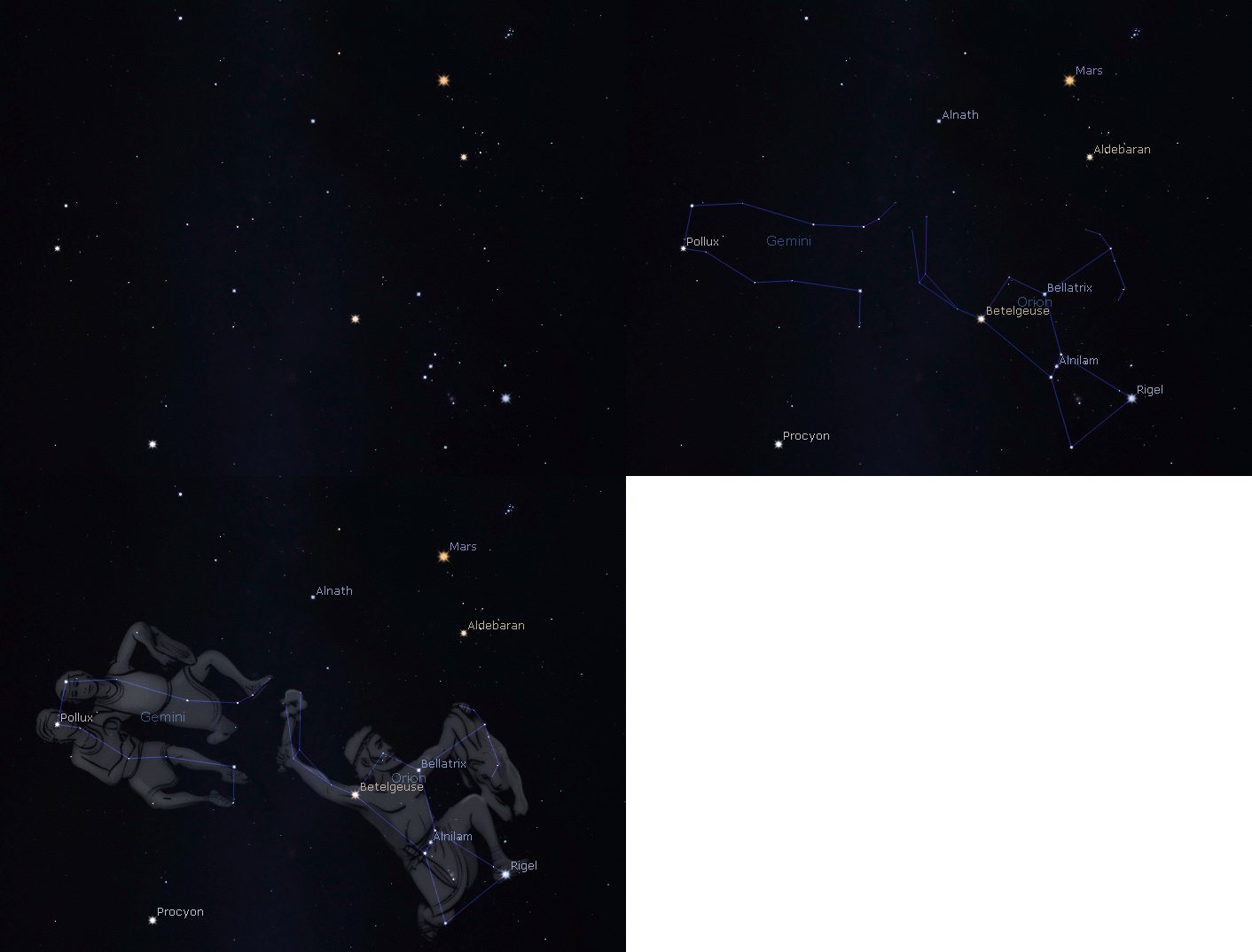
As the constellation of Orion the hunter, that dominated our winter skies, moves into the west in the evening, it will have rotated 90 degrees from its rising orientation. As we saw it rising last November, its three belt stars were nearly vertically aligned. Now, as Orion nears the western horizon, those belt stars have rotated to be almost horizontal. The same is true of Gemini’s two brightest stars, Castor and Pollux. They are the two stars above red Mars, which is now halfway through Gemini on its eastward travels. Orion, a minor Greek hero, is most famous for how he died. I know of three versions, all different. The one that fits Orion’s current setting is that he was killed by the sting of a giant scorpion. So he must flee the sky before Scorpius the scorpion rises, which is around midnight tonight.
This amount of rotation between rising and setting is only true for latitudes near 45 degrees north or south, such as Northern Michigan, and objects near the celestial equator. The rotation for other latitudes would be 2 x (90 – latitude) for equatorial celestial objects. The name given for the term (90 – latitude) is colatitude. 90 degrees is the latitude of the Earth’s poles.
The astronomical event times given are for the Traverse City/Interlochen area of Michigan (EST, UT –4 hours). They may be different for your location.
Addendum
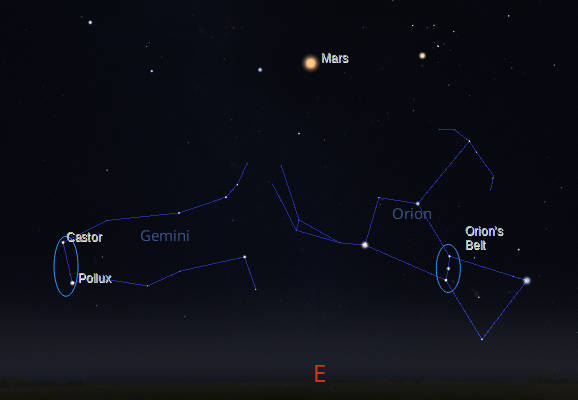
When Orion is rising, its belt stars are nearly vertically aligned. Castor and Pollux, too, appear nearly vertically aligned. This was for November 30, 2022, at 9 pm. Mars was near opposition then and quite close to the Earth, so it had shown quite brightly. Created using Stellarium and LibreOffice Draw.
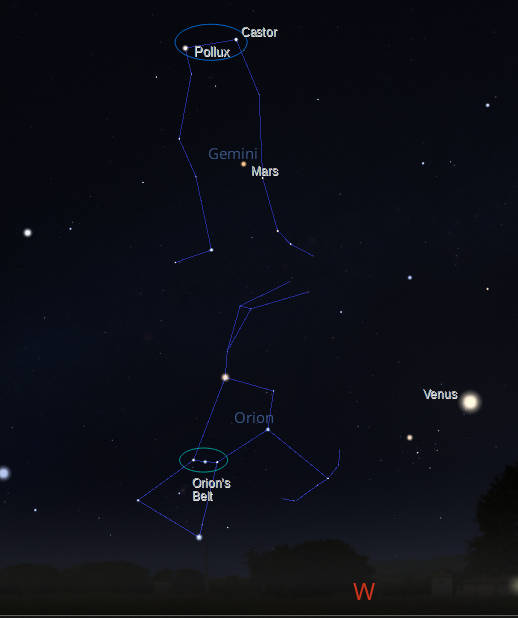
Orion’s belt stars show that the constellation has rotated about 90 degrees from their rising orientation. This is for 10 pm, April 18, 2023. Note that Venus is the Evening Star now, and Mars is much dimmer, as the Earth has moved ahead and away from it. Created using Stellarium and LibreOffice Draw, for the added labels.
04/17/2023 – Ephemeris – I’m back. And a look ahead
This is Ephemeris for Monday, April 17th. Today the Sun will be up for 13 hours and 34 minutes, setting at 8:30, and it will rise tomorrow at 6:53. The Moon, 3 days before new, will rise at 6:23 tomorrow morning.
I’m back, still in physical therapy, but hopefully to stay. The next year and a half will see some spectacular celestial events, plus the Sun is getting unusually active this solar cycle, which means more displays of the northern lights or aurora borealis. For us, the first event will be a partial eclipse of the Sun on Saturday, October 14th. It’s an annular or ring eclipse, where the Moon is too far away to completely block the Sun, leaving a ring of light at its peak for a narrow path in the southwestern US. Then next April, a total solar eclipse will occur. Much more of the Sun will be blocked for us. Then the following October we might get to see a bright comet, if it performs as expected. Comet Tsuchinshan-ATLAS was discovered three months ago.
The astronomical event times given are for the Traverse City/Interlochen area of Michigan (EST, UT –4 hours). They may be different for your location.
Addendum
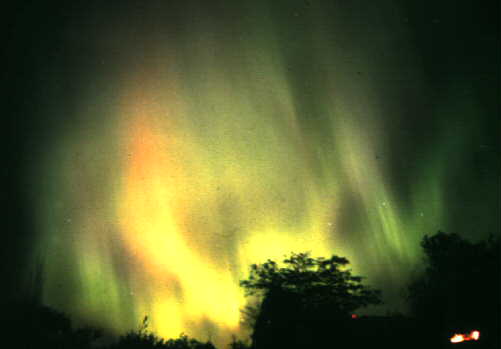
An aurora display from a couple of sunspot cycles ago. Credit: Bob Moler.
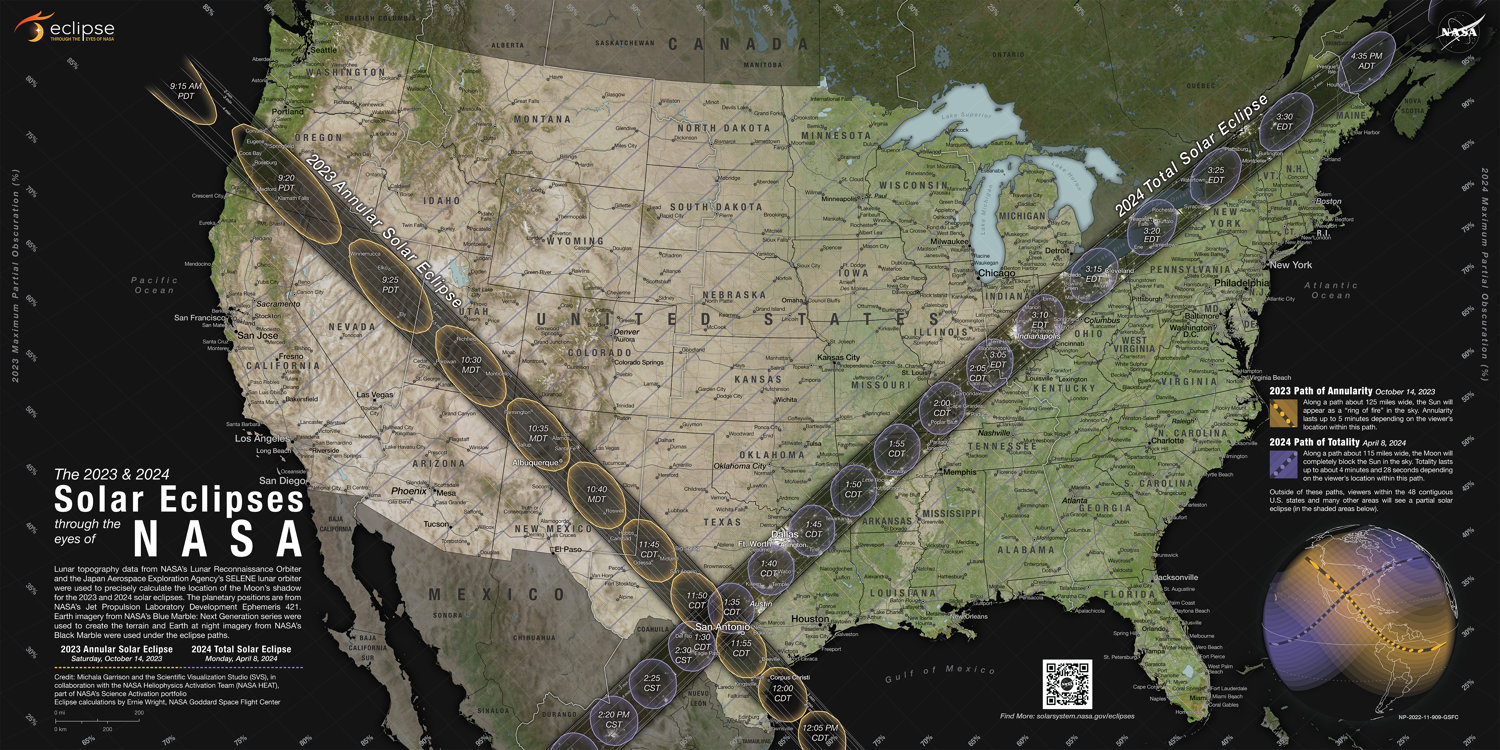
NASA Eclipse Map for the United States for the annular eclipse of October 14, 2023, and total eclipse of April 8, 2024. The tracks are the path of annularity, where the ring of light around the Moon is seen, and the path of totality, where the Sun’s face is completely covered by the Moon. Subtract 4 hours from the times given to convert to Eastern Daylight Saving Time. Click on the image to enlarge it. Credit NASA.
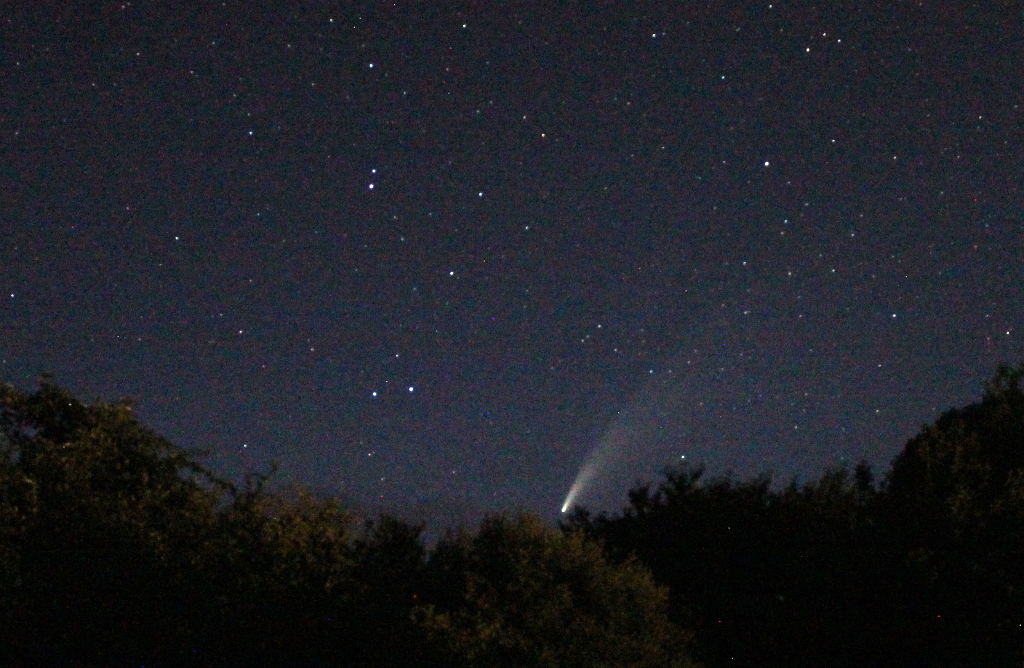
Comet NEOWISE from backyard over tall shrubbery 11:18 pm, July 16, 2020. I didn’t have time to focus properly, which actually accentuates the stars. Comet Tsuchinshan-ATLAS has the potential of being many times brighter. It was seen in the northeast before sunrise and in the northwest after sunset. Our new comet will be best seen low in the southwest in the evening.
03/19/2023 – Ephemeris Extra – Zodiacal light
This is the time of year when the faint glow can be seen in the west at the end of asttronomical twilight in the evening. It’s called zodiacal light. It is difficult to spot the first time. The final twilight glow tends to be horizontal, along the horizon, while źodiacal light has a thin pyramidal shape tilted to the left along the constellations of the zodiac. Right now, Venus appears in the heart of the glow.
Some of my older blog posts also cover zodiacal light with images of it I’ve taken, so search for zodiacal light in the spot provided.
On a personal note: I’m expected to be discharged from rehab by month’s end. I’m hoping that a couple of weeks after that, I can get back to a regular schedule. Here’s hoping.
Bob
01/30/2023 – Ephemeris – Two planetary events are happening today
This is Ephemeris for Monday, January 30th. Today the Sun will be up for 9 hours and 44 minutes, setting at 5:48, and it will rise tomorrow at 8:03. The Moon, 2 days past first quarter, will set at 4:34 tomorrow morning.
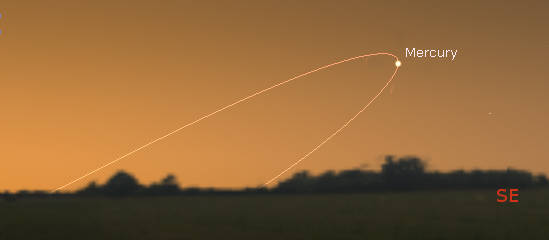
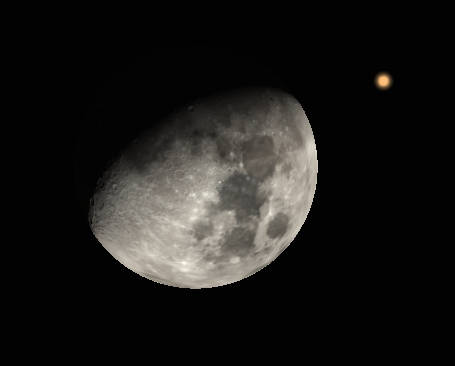
Today, the planet Mercury was seen as far away from the Sun as it can get for this time of year in the morning sky. It’s called “greatest western elongation”, and it’s distance from the sun and angle is 25 degrees. It’s going to stay pretty close to that for about the next week or so, it’ll be visible if it ever clears up. This is about the latest time one can see Mercury morning elongations this for this time of year. We’re running out of the correct angles for it. This evening, if it’s clear, the planet of Mars will appear near the waxing gibbous Moon. Early on in the evening Mars will be to the upper left of the Moon, which will be approaching it by about its own diameter every hour, until about 1 o’clock in the morning when Mars will it’s closest above the Moon it should be a striking sight.
The astronomical event times given are for the Traverse City/Interlochen area of Michigan (EST, UT –5 hours). They may be different for your location.
Addendum
01/27/2023 – Ephemeris – Where is comet ZTF this weekend?
This is Ephemeris for Friday, January 27th. Today the Sun will be up for 9 hours and 36 minutes, setting at 5:44, and it will rise tomorrow at 8:06. The Moon, 1 day before first quarter, will set at 1:08 tomorrow morning. | Comet ZTF is now passing the star Kochab in the Little Dipper and is heading out to the barren wastes of Camelopardalis, the giraffe, which I’m sure not very many people have heard of because there’s no bright stars in it. The big question people have is why this comet was supposedly green. It is not particularly rare, even though the news reports I’ve seen of it and in social and main media seem to have intimated this. And they also say it comes around every 50,000 years or that it’s the only green comet and it comes every 50,000 years which is incorrect. There’s a certain amount of hype that comes with comets. They can be spectacular and they can be duds. I remember back in 1973 a large new comet was supposed to zip around the sun and be super bright called comet Kohoutek people my age might remember that. It was a pretty much dustless comet. I it’s the dust tail it really makes comets bright, not the ion tail of ionized gasses.
The astronomical event times given are for the Traverse City/Interlochen area of Michigan (EST, UT –5 hours). They may be different for your location.
01/26/2023 – Ephemeris – Where’s Comet ZTF tonight?
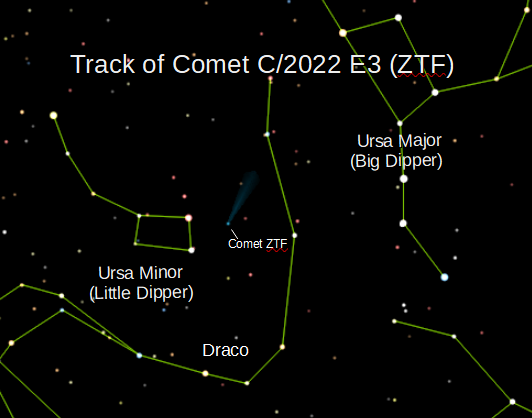
This is Bob Moler with Ephemeris for Friday, January 27th. Today the Sun will be up for 9 hours and 36 minutes, setting at 5:44, and it will rise tomorrow at 8:06. The Moon, 1 day before first quarter, will set at 1:08 tomorrow morning.
Comet ZTF is now passing the star Kochab in the Little Dipper and is heading out to the barren wastes of Camelopardalis, the giraffe, which I’m sure not very many people have heard of because there’s no bright stars in it. The big question people have is why this comet was supposedly green. It is not particularly rare, even though the news reports I’ve seen of it and in social and main media seem to have intimated this. And they also say it comes around every 50,000 years or that it’s the only green comet, which is incorrect. There’s a certain amount of hype that comes with comets. They can be spectacular, or they can be duds.
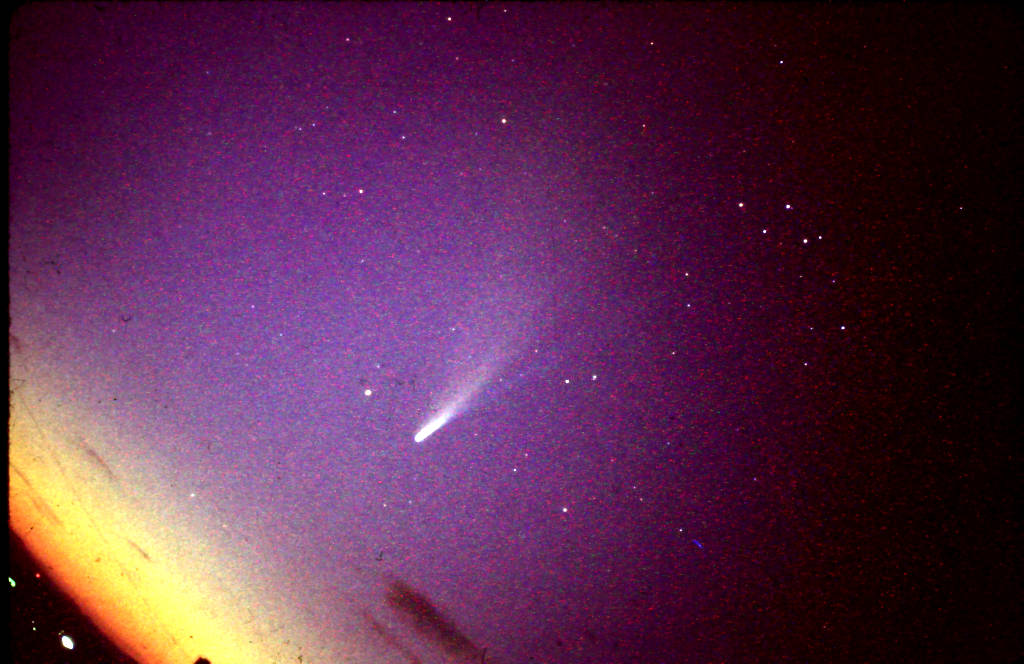
I remember back in 1973 a large new comet was supposed to zip around the sun and be super bright called Comet Kohoutek, people my age might remember that. It was a pretty much dustless comet. It’s the dust tail that really makes comets bright, not the ion tail of gasses. A few years later, Comet West came by for the Bicentennial in early 1976. As the comet came around the sun near perihelion, its solid nucleus started to break apart, liberating a vast dust tail. It was wonderful.
The astronomical event times given are for the Traverse City/Interlochen area of Michigan (EST, UT –5 hours). They may be different for your location.
This post is actually longer than I have time for the Ephemeris program (59 seconds). I created this speech to text, due to my current physical and mental problems, it’s more stream of consciousness than my normal writing. So if it still makes sense, I’ll leave it in.
01/25/2023 – Ephemeris – Let’s see where the naked-eye planets have wandered off to this week
This is Bob Moler with Ephemeris for Wednesday, January 25th. Today the Sun will be up for 9 hours and 32 minutes, setting at 5:41, and it will rise tomorrow at 8:08. The Moon, 3 days before first quarter, will set at 10:42 this evening.
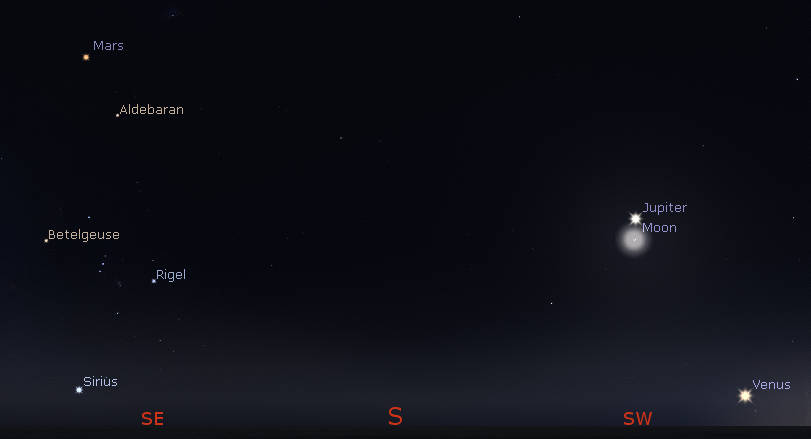
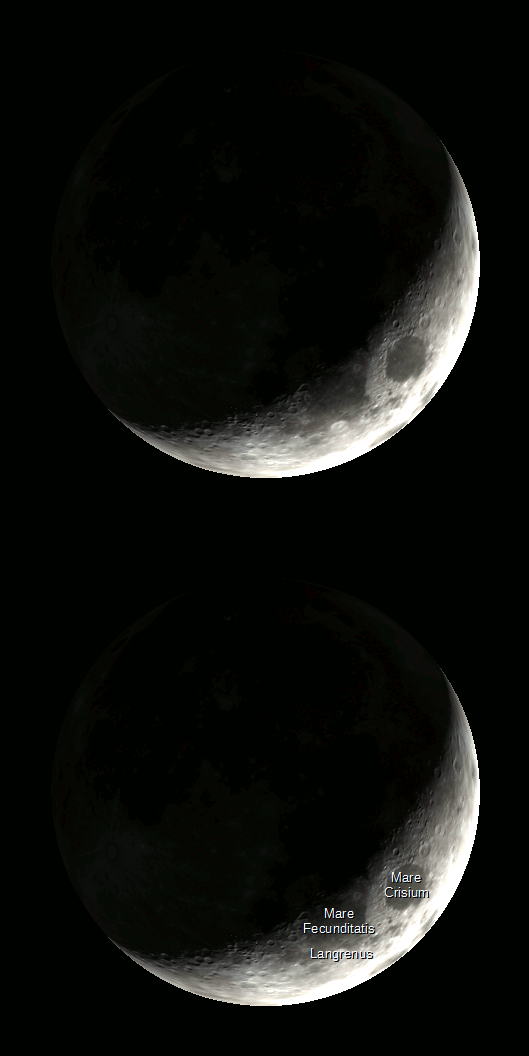
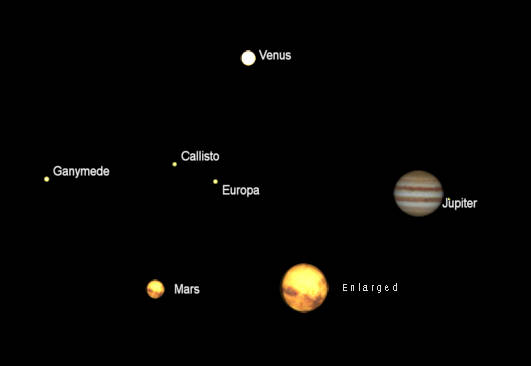
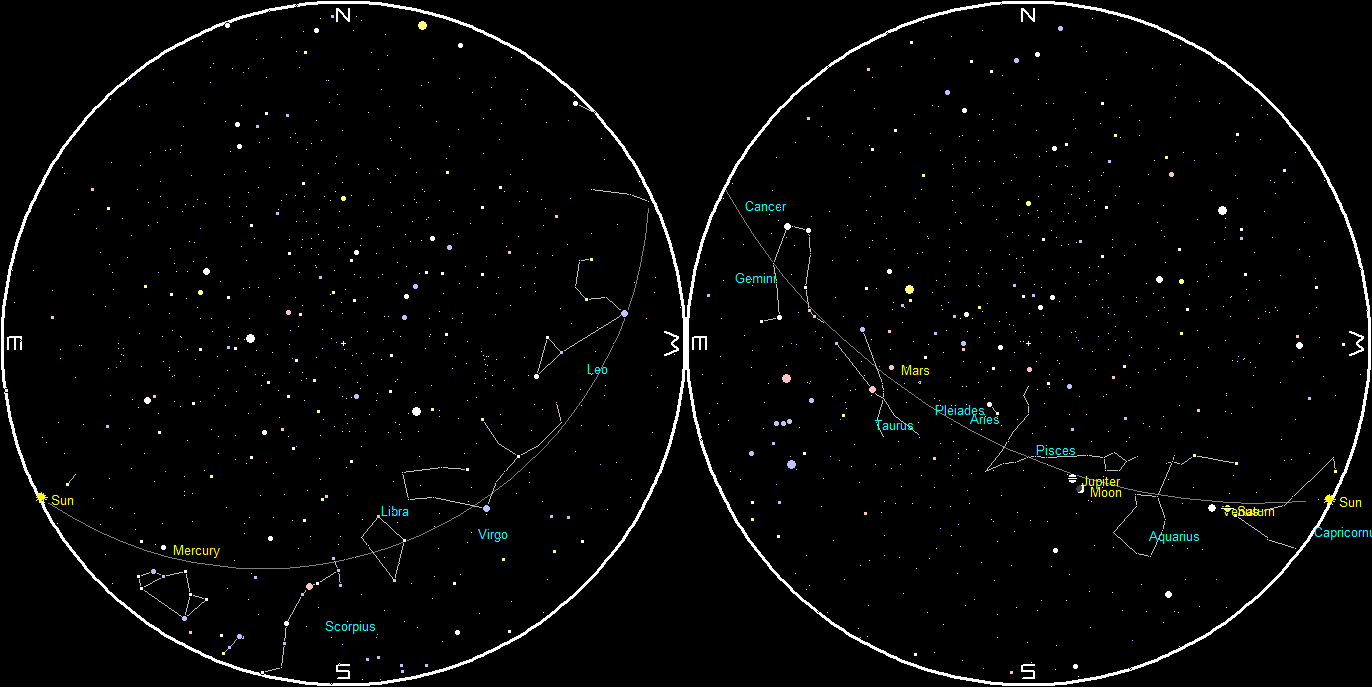
Let’s see where the naked-eye planets have wandered off to this week. Very early after sunset, Venus might be spotted very low in the southwest by a little past 6 pm. Mars, and Jupiter will be visible this evening, in the east to southwestern sky by 6:30 or 7 pm. Mars will be above Orion in the east-southeast and is pulling away from the Pleiades. Jupiter is brighter than Mars, and will be in the south-southwest, and tonight it’s directly above the crescent Moon. Saturn is below Venus now, so it’s pretty much gone until it reappears in the morning sky in a few months. Mercury is now in the morning sky, after it passed inferior conjunction with the Sun on the 7th, that is, it passed between the Earth and the Sun. It should be briefly visible before sunrise by month’s end.
The astronomical event times given are for the Traverse City/Interlochen area of Michigan (EST, UT –5 hours). They may be different for your location.
Addendum
\
01/23/2023 – Ephemeris – New “green” comet C/2022 E3 (ZTF)
This is Bob Moler with Ephemeris for Monday, January 23rd. Today the Sun will be up for 9 hours and 27 minutes, setting at 5:38, and it will rise tomorrow at 8:10. The Moon, 2 days past new, will set at 8:05 this evening.
I’m sure that many of us have now heard of a bright new comet that’s supposed to be visible in our sky that’s green. One, it is a newly discovered comet from 9 months ago. Two, it is green. Three, it won’t look green to the eye. And four, it isn’t really that bright. One of the rules of I have in mentioning objects to observe on this program is that it has to be found with the naked eye. This comet does not meet that criteria. One could find it with binoculars when it’s near a bright star which it’s not tonight, so that’s one thing but in order to see it, it will probably look like a little fuzzy blob in a pair of binoculars. I’m not sure that the tail that would be visible. The observer has to wait until after the moon sets, because moonlight washes out a comet, big time.
The astronomical event times given are for the Traverse City/Interlochen area of Michigan (EST, UT –5 hours). They may be different for your location.
Addendum
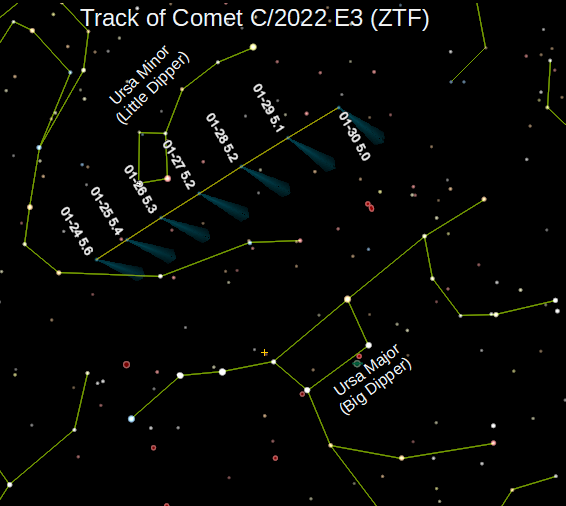
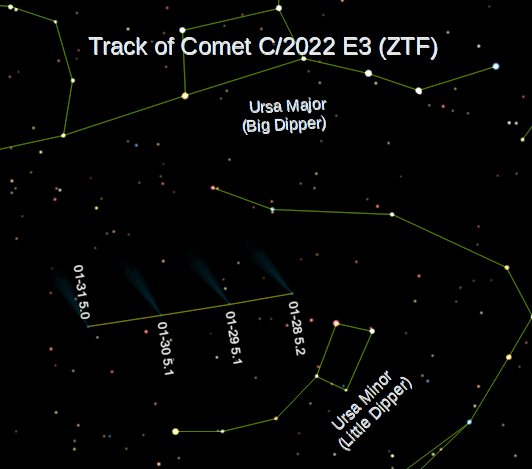
Comet ZTF finder chart for 1/24/23 through 1/29/23 at 9 pm. Plotted daily at 9 pm EST, though the best time to spot the comet will be after moonset which will advance by about an hour a night. The plot of the comet’s tail simply suggests a direction and not the appearance of the tail. Created using Cartes du Ciel. (Sky Charts). The plots are marked with the month-day and expected magnitude or brightness. Magnitudes are like golf scores. The larger the number, the poorer the golfer, and the dimmer the celestial object is.
01/20/2023 – Ephemeris – Gemini’s Castor is six stars orbiting each other
This is Ephemeris for Friday, January 20th. Today the Sun will be up for 9 hours and 21 minutes, setting at 5:34, and it will rise tomorrow at 8:12. The Moon, 1 day before new, will rise at 8:34 tomorrow morning.
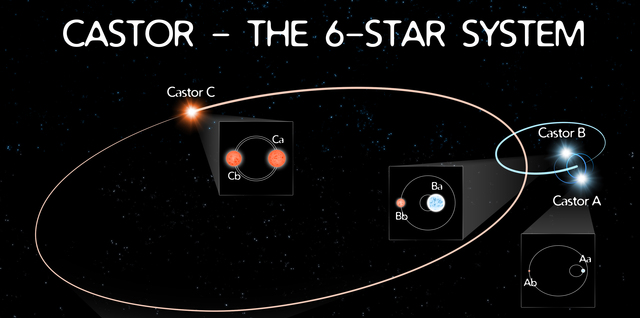
At 9 p.m. the constellation of Gemini the twins will be seen high in the east-southeast. The namesake stars of the two lads are the two bright stars at the left of the constellation. Pollux the pugilist, or boxer, is the lower and slightly brighter of the two, while Castor, the horseman, is the other star, or rather a six-star system. In telescopes two close stars may be seen, each is a spectroscopic binary, meaning the lines of two stars can be seen in the spectrum, shifting as they orbit each other. Another faint spectroscopic binary also belongs. Pollux, though a single star, does have at least one planet with over twice the mass of Jupiter orbiting the star. Pollux and Castor are respectively 34 and 50 light years away. Not too far away as stars go.
The astronomical event times given are for the Traverse City/Interlochen area of Michigan (EST, UT –5 hours). They may be different for your location.
Addendum
01/19/2023 – Ephemeris – Gemini, twins with a secret
This is Ephemeris for Thursday, January 19th. Today the Sun will be up for 9 hours and 19 minutes, setting at 5:33, and it will rise tomorrow at 8:13. The Moon, 2 days before new, will rise at 7:38 tomorrow morning.
Another famous winter constellation is Gemini. The constellation of Gemini the Twins is visible halfway to the zenith in the east, at the top and left of Orion the hunter, at 9 pm. The namesake stars of the two lads, are the two bright stars at the left end of Gemini, and are high and are due east. Castor is on top, while Pollux is below. From them come two lines of stars that outline the two, extending horizontally toward Orion. In Greek mythology the lads were half brothers, Castor was fathered by a mere mortal, while Pollux was fathered by Zeus, but were born together as twins. When Castor was killed during the quest for the Golden Fleece, Pollux pleaded with Zeus to let him die also, so Zeus placed them together in the sky.
The astronomical event times given are for the Traverse City/Interlochen area of Michigan (EST, UT –5 hours). They may be different for your location.
Addendum
Gemini finder animation for the second half of January 2023. It’s dated because Mars is dawdling in Taurus near the Pleiades. Mars is now back to heading eastward once again, after being in retrograde or westward motion as the Earth passed it in early December. Mars will officially enter Gemini in March. Created using Stellarium, and GIMP.

