Archive
Ephemeris: 05/31/2024 – Previewing June’s skies
This is Ephemeris for Friday, May 31st. Today the Sun will be up for 15 hours and 20 minutes, setting at 9:21, and it will rise tomorrow at 6:00. The Moon, 1 day past last quarter, will rise at 3:12 tomorrow morning.
This is the last program of Ephemeris’ 49th orbit of the Sun, so let’s preview June skies, starting the 50th circuit. There will be a lot of sunlight in June. The daylight hours will increase a bit from 15 hours and 21 minutes tomorrow to 15 hours and 34 minutes on the 20th, the summer solstice, retreating back to 15 hours and 31 minutes at month’s end. At this time of the year the sunset times for Ludington, Interlochen, Petoskey and Mackinaw City are very nearly the same. However, the sunrise times are at their most divergent. With Ludington’s sunrise being 14 minutes later than Mackinaw City’s. The altitude of the Sun above the southern horizon at local noon will hover around 68 degrees. Local noon, when the Sun is actually due south in the Interlochen area will occur at about 1:43 p.m.
The astronomical event times given are for the Traverse City/Interlochen area of Michigan (EDT, UT–4 hours). They may be different for your location.
Addendum
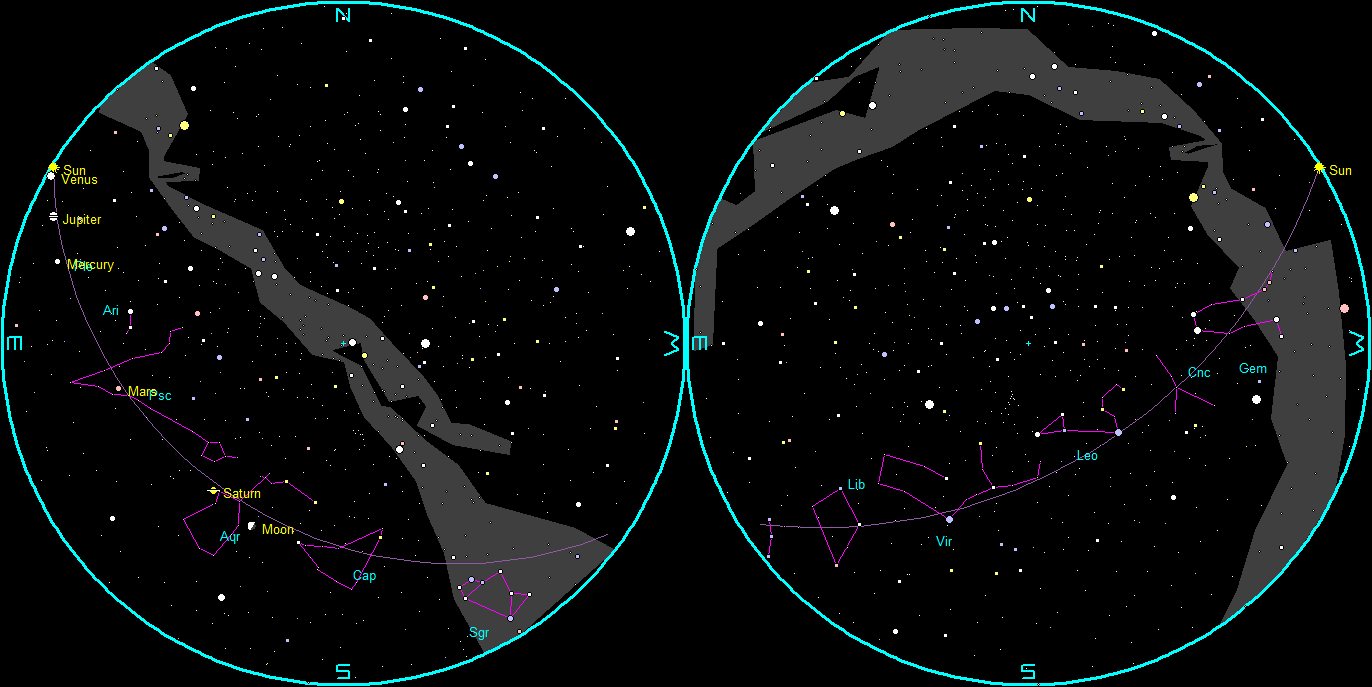
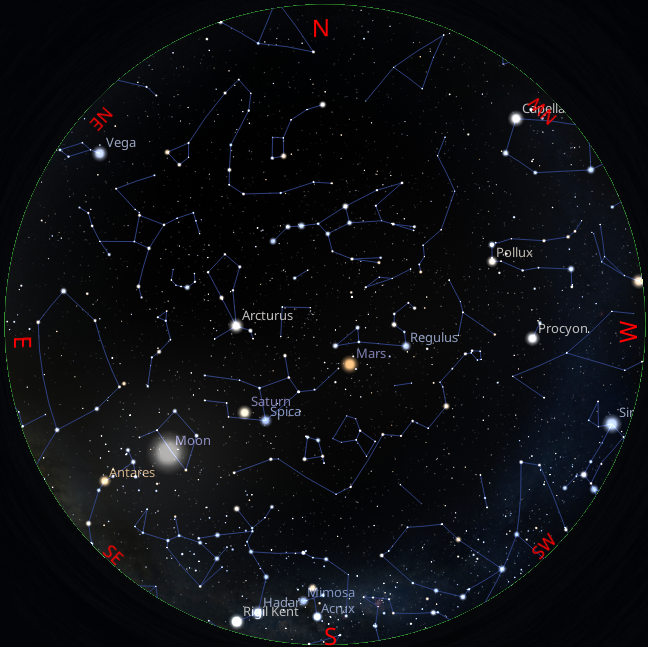
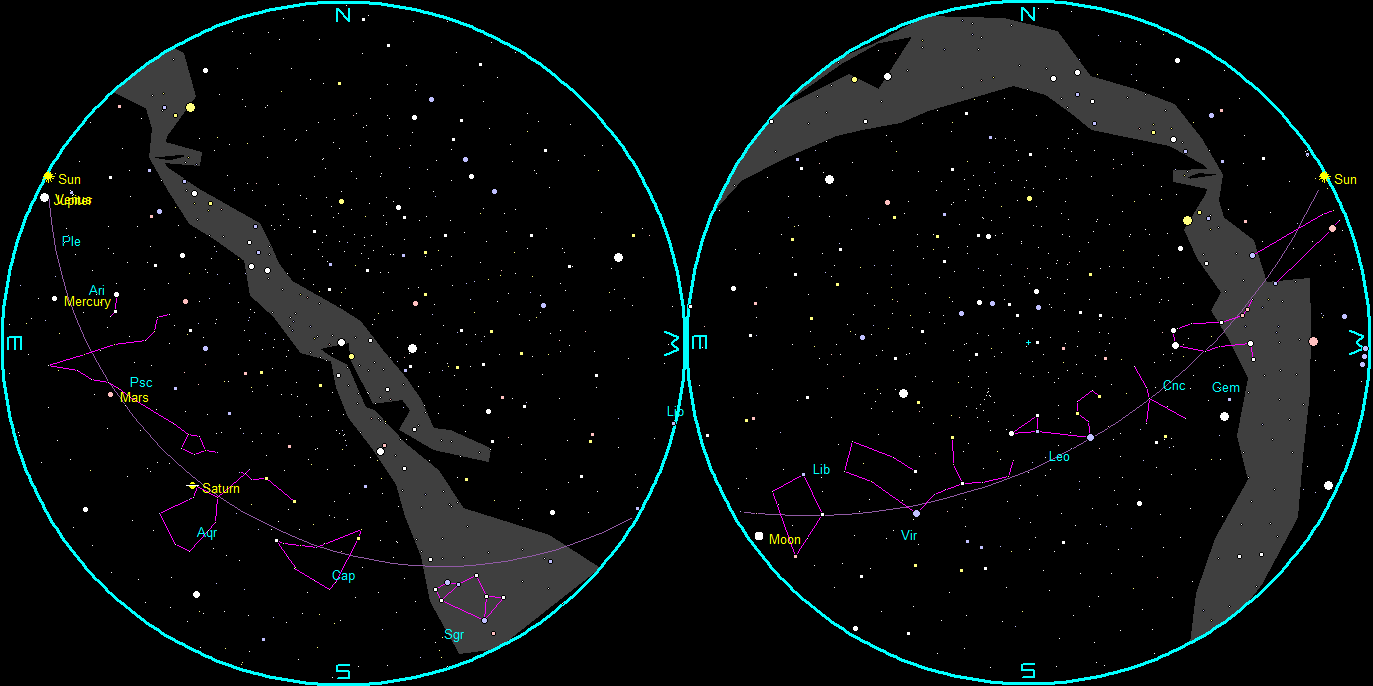
June Evening Star Chart
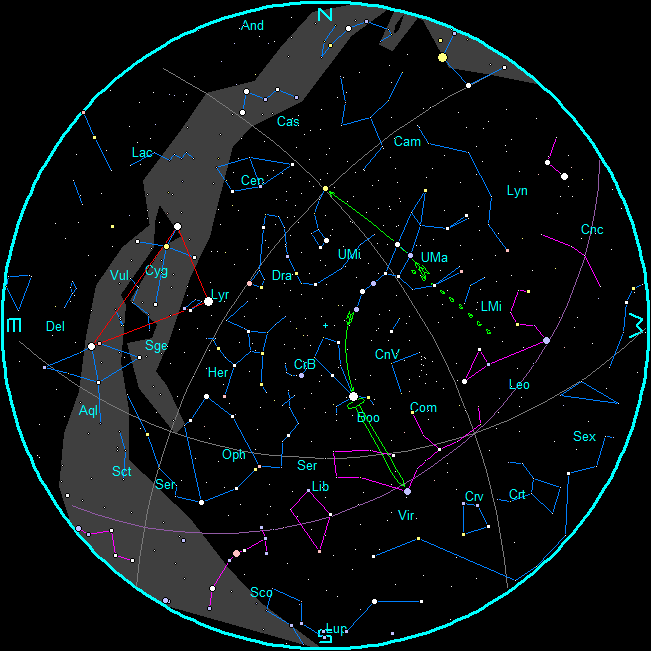
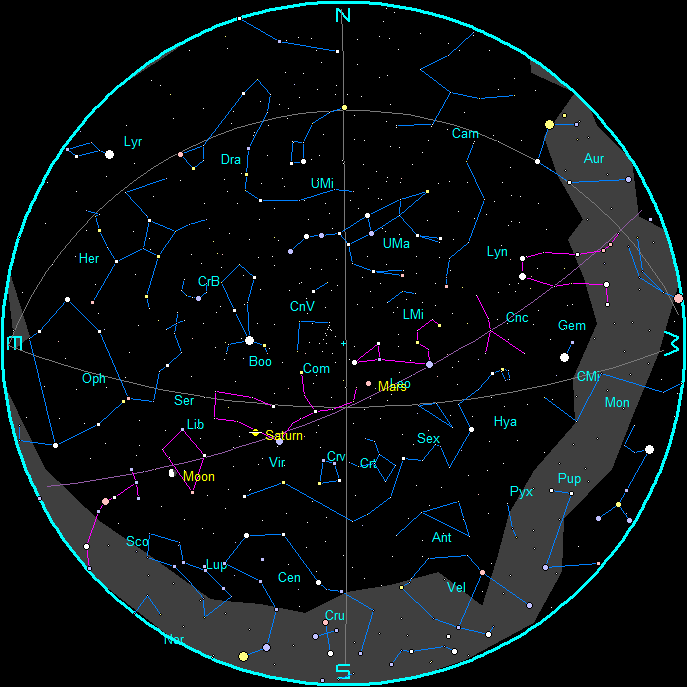
The planets and stars are plotted for the 15th at 11 p.m. EDT in the evening and 4 a.m. for the morning chart. These are the chart times. Note that Interlochen/Traverse City is located approximately 45 minutes behind our time meridian, West 75° longitude. (An hour 45 minutes behind our daylight saving time meridian during EDT). To duplicate the star positions on a planisphere you may have to set it to 1 hour 45 minutes earlier than the current time.
Note, the chart times of 11 p.m. and 4 a.m. are for the 15th. For each week before the 15th, add ½ hour (28 minutes if you’re picky). For each week after the 15th, subtract ½ hour, or 28 minutes. The planet positions are updated each Wednesday on this blog. For planet positions on dates other than the 15th, check the Wednesday planet posts on this blog for weekly positions.
June Morning Star Chart
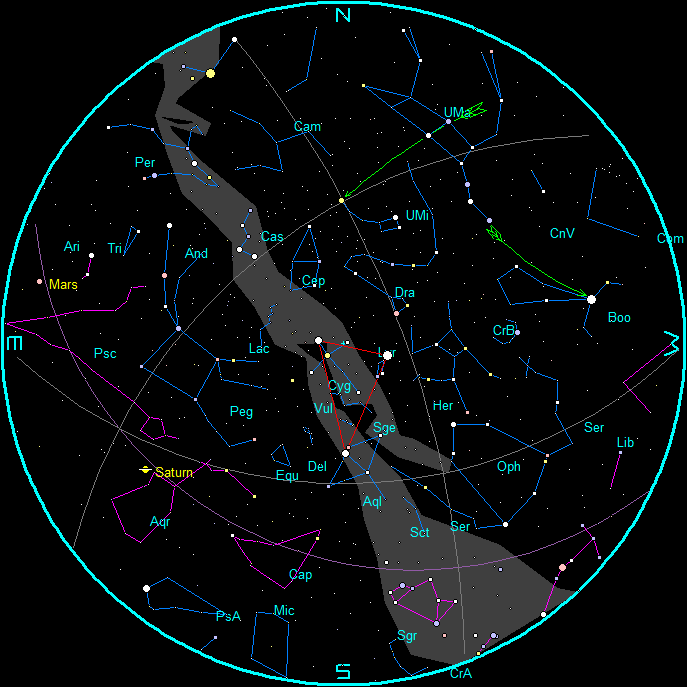
For a list of constellation names to go with the abbreviations, click here.
- Pointer stars at the front of the bowl of the Big Dipper point to Polaris, the North Star.
- Leaky dipper drips on Leo
- Follow the arc of the handle of the Big Dipper to the star Arcturus, and
- Extend like a spike to Spica,
Twilight Limits, Nautical and Astronomical
| EDT | |||||||
| Morning | Twilight | Evening | Twilight | Dark | Night | Moon | |
| Date | Astro. | Nautical | Nautical | Astro. | Start | End | Illum. |
| 2024-06-01 | 3h39m | 4h38m | 22h47m | 23h46m | 23h46m | 3h13m | 0.23 |
| 2024-06-02 | 3h38m | 4h37m | 22h48m | 23h48m | 23h48m | 3h33m | 0.14 |
| 2024-06-03 | 3h36m | 4h37m | 22h49m | 23h49m | 23h49m | 3h36m | 0.07 |
| 2024-06-04 | 3h35m | 4h36m | 22h50m | 23h51m | 23h51m | 3h35m | 0.02 |
| 2024-06-05 | 3h34m | 4h35m | 22h51m | 23h52m | 23h52m | 3h34m | 0.00 |
| 2024-06-06 | 3h33m | 4h35m | 22h52m | 23h54m | 23h54m | 3h33m | 0.01 |
| 2024-06-07 | 3h32m | 4h34m | 22h53m | 23h55m | 23h55m | 3h32m | 0.03 |
| 2024-06-08 | 3h32m | 4h34m | 22h54m | 23h56m | – | 3h32m | 0.08 |
| 2024-06-09 | 3h31m | 4h33m | 22h55m | 23h57m | 0h07m | 3h31m | 0.15 |
| 2024-06-10 | 3h30m | 4h33m | 22h56m | 23h58m | 0h42m | 3h30m | 0.23 |
| 2024-06-11 | 3h30m | 4h33m | 22h56m | 23h59m | 1h10m | 3h30m | 0.31 |
| 2024-06-12 | 3h29m | 4h32m | 22h57m | 0h00m | 1h32m | 3h29m | 0.40 |
| 2024-06-13 | 3h29m | 4h32m | 22h58m | 0h01m | 1h50m | 3h29m | 0.50 |
| 2024-06-14 | 3h28m | 4h32m | 22h58m | 0h02m | 2h06m | 3h28m | 0.59 |
| 2024-06-15 | 3h28m | 4h32m | 22h59m | 0h03m | 2h22m | 3h28m | 0.68 |
| 2024-06-16 | 3h28m | 4h32m | 22h59m | 0h03m | 2h38m | 3h28m | 0.77 |
| 2024-06-17 | 3h28m | 4h32m | 23h00m | 0h04m | 2h56m | 3h28m | 0.85 |
| 2024-06-18 | 3h28m | 4h32m | 23h00m | 0h04m | 3h16m | 3h28m | 0.91 |
| 2024-06-19 | 3h28m | 4h32m | 23h00m | 0h05m | – | – | 0.96 |
| 2024-06-20 | 3h28m | 4h32m | 23h01m | 0h05m | – | – | 0.99 |
| 2024-06-21 | 3h28m | 4h32m | 23h01m | 0h05m | – | – | 1.00 |
| 2024-06-22 | 3h28m | 4h33m | 23h01m | 0h05m | – | – | 0.98 |
| 2024-06-23 | 3h29m | 4h33m | 23h01m | 0h05m | – | – | 0.94 |
| 2024-06-24 | 3h29m | 4h34m | 23h01m | 0h05m | – | – | 0.88 |
| 2024-06-25 | 3h30m | 4h34m | 23h01m | 0h05m | 0h05m | 0h09m | 0.79 |
| 2024-06-26 | 3h31m | 4h34m | 23h01m | 0h05m | 0h05m | 0h36m | 0.69 |
| 2024-06-27 | 3h31m | 4h35m | 23h01m | 0h04m | 0h04m | 0h58m | 0.58 |
| 2024-06-28 | 3h32m | 4h36m | 23h01m | 0h04m | 0h04m | 1h18m | 0.47 |
| 2024-06-29 | 3h33m | 4h36m | 23h00m | 0h03m | 0h03m | 1h38m | 0.35 |
| 2024-06-30 | 3h34m | 4h37m | 23h00m | 0h03m | 0h03m | 1h58m | 0.25 |
The twilight calendar was generated using Cartes du Ciel (Sky Charts), with some corrections.
See my blog post: Twilight Zone for the definitions of the different periods of twilight here: https://bobmoler.wordpress.com/2018/09/27/.
NASA Calendar of Planetary Events
Jun  1  Sa            Venus:  .9° W
     1  Sa  11:08 pm  Moon Ascending Node
     2  Su   3:23 am  Moon Perigee: 368100 km
     2  Su   7:37 pm  Moon-Mars: 2.4° S
     4  Tu  11:12 am  Venus Superior Conj.
     6  Th   8:38 am  New Moon
     7  Fr  12:40 pm  Moon North Dec.: 28.4° N
     9  Su   3:23 am  Moon-Pollux: 1.9° N
    10  Mo   3:34 am  Moon-Beehive: 3.4° S
    14  Fr   1:18 am  First Quarter
    14  Fr   9:36 am  Moon Apogee: 404100 km
    14  Fr  12:15 pm  Mercury Superior Conj.
    15  Sa   4:17 pm  Moon Descending Node
    16  Su   1:28 pm  Moon-Spica: 1.3° S
    20  Th   6:33 am  Moon-Antares:  .4° S
    20  Th   4:51 pm  Summer Solstice
    21  Fr   9:08 pm  Full Moon
    21  Fr  10:41 pm  Moon South Dec.: 28.3° S
    27  Th   7:45 am  Moon Perigee: 369300 km
    27  Th  10:52 am  Moon-Saturn:  .1° S
    28  Fr   1:39 pm  Mercury-Pollux: 4.8° S
    28  Fr   5:53 pm  Last Quarter
    29  Sa  12:26 am  Moon Ascending Node
Jul  1  Mo            Venus: 7.4° E
Sky Events Calendar by Fred Espenak and Sumit Dutta (NASA’s GSFC),
http://eclipse.gsfc.nasa.gov/SKYCAL/SKYCAL.html.
Sun and Moon Rising and Setting Events
LU             Ephemeris of Sky Events for Interlochen/TC
June, 2024    Local time zone: EDT
+-----------------------------------------------------------------------+
| DATE |  SUN     SUN  DAYLIGHT|   TWILIGHT*    |MOON  RISE OR    ILLUM |
|      |  RISE    SET    HOURS |  END    START  |PHASE SET** TIME FRACTN|
+=======================================================================+
|Sat  1| 06:00a  09:21p  15:21 | 10:45p  04:36a |      Rise 03:32a   25%|
+------+-----------------------+----------------+-----------------------+
|Sun  2| 05:59a  09:22p  15:23 | 10:46p  04:36a |      Rise 03:54a   16%|
|Mon  3| 05:59a  09:23p  15:24 | 10:47p  04:35a |      Rise 04:20a    8%|
|Tue  4| 05:58a  09:24p  15:25 | 10:48p  04:34a |      Rise 04:51a    3%|
|Wed  5| 05:58a  09:24p  15:26 | 10:49p  04:34a |      Rise 05:32a    0%|
|Thu  6| 05:57a  09:25p  15:27 | 10:50p  04:33a |New   Set  10:18p    0%|
|Fri  7| 05:57a  09:26p  15:28 | 10:51p  04:32a |      Set  11:19p    3%|
|Sat  8| 05:57a  09:26p  15:29 | 10:52p  04:32a |      Set  12:06a    7%|
+------+-----------------------+----------------+-----------------------+
|Sun  9| 05:57a  09:27p  15:30 | 10:52p  04:32a |      Set  12:42a   13%|
|Mon 10| 05:56a  09:28p  15:31 | 10:53p  04:31a |      Set  01:09a   21%|
|Tue 11| 05:56a  09:28p  15:31 | 10:54p  04:31a |      Set  01:31a   29%|
|Wed 12| 05:56a  09:29p  15:32 | 10:54p  04:31a |      Set  01:49a   38%|
|Thu 13| 05:56a  09:29p  15:32 | 10:55p  04:30a |      Set  02:06a   48%|
|Fri 14| 05:56a  09:30p  15:33 | 10:56p  04:30a |F Qtr Set  02:22a   57%|
|Sat 15| 05:56a  09:30p  15:33 | 10:56p  04:30a |      Set  02:38a   67%|
+------+-----------------------+----------------+-----------------------+
|Sun 16| 05:56a  09:30p  15:34 | 10:57p  04:30a |      Set  02:55a   75%|
|Mon 17| 05:56a  09:31p  15:34 | 10:57p  04:30a |      Set  03:16a   83%|
|Tue 18| 05:56a  09:31p  15:34 | 10:57p  04:30a |      Set  03:41a   90%|
|Wed 19| 05:56a  09:31p  15:34 | 10:58p  04:30a |      Set  04:15a   95%|
|Thu 20| 05:57a  09:31p  15:34 | 10:58p  04:30a |      Set  04:59a   99%|
|Fri 21| 05:57a  09:32p  15:34 | 10:58p  04:31a |Full  Rise 09:57p  100%|
|Sat 22| 05:57a  09:32p  15:34 | 10:58p  04:31a |      Rise 10:52p   99%|
+------+-----------------------+----------------+-----------------------+
|Sun 23| 05:57a  09:32p  15:34 | 10:58p  04:31a |      Rise 11:35p   95%|
|Mon 24| 05:58a  09:32p  15:34 | 10:58p  04:31a |      Rise 12:09a   89%|
|Tue 25| 05:58a  09:32p  15:33 | 10:58p  04:32a |      Rise 12:35a   81%|
|Wed 26| 05:58a  09:32p  15:33 | 10:58p  04:32a |      Rise 12:58a   71%|
|Thu 27| 05:59a  09:32p  15:33 | 10:58p  04:33a |      Rise 01:18a   60%|
|Fri 28| 05:59a  09:32p  15:32 | 10:58p  04:34a |L Qtr Rise 01:37a   49%|
|Sat 29| 06:00a  09:32p  15:31 | 10:57p  04:34a |      Rise 01:58a   38%|
+------+-----------------------+----------------+-----------------------+
|Sun 30| 06:00a  09:32p  15:31 | 10:57p  04:35a |      Rise 02:22a   27%|
+-----------------------------------------------------------------------+
* Nautical Twilight
** Moonrise or moonset, whichever occurs between sunset and sunrise
Generated using my LookingUp for DOS program.
Ephemeris: 05/30/2024 – Virgo and what’s hidden within
This is Bob Moler with Ephemeris for Thursday, May 30th. Today the Sun will be up for 15 hours and 18 minutes, setting at 9:20, and it will rise tomorrow at 6:00. The Moon, at last quarter today, will rise at 2:52 tomorrow morning.
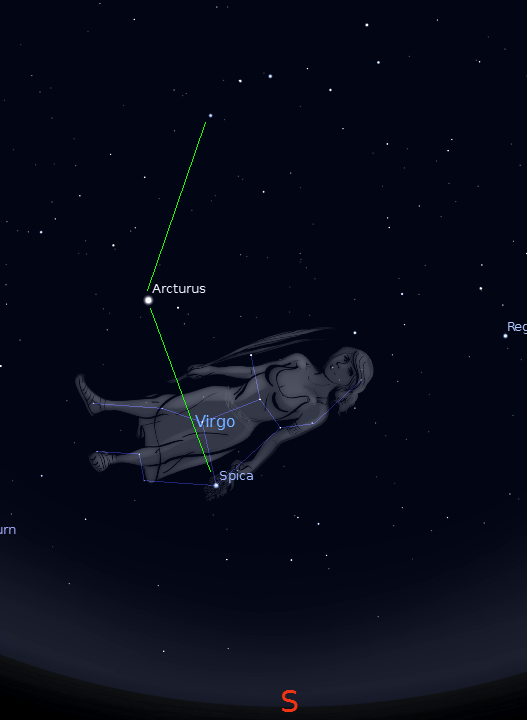
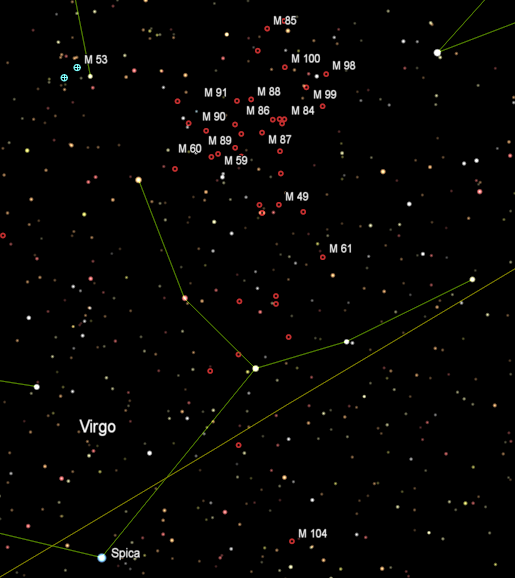
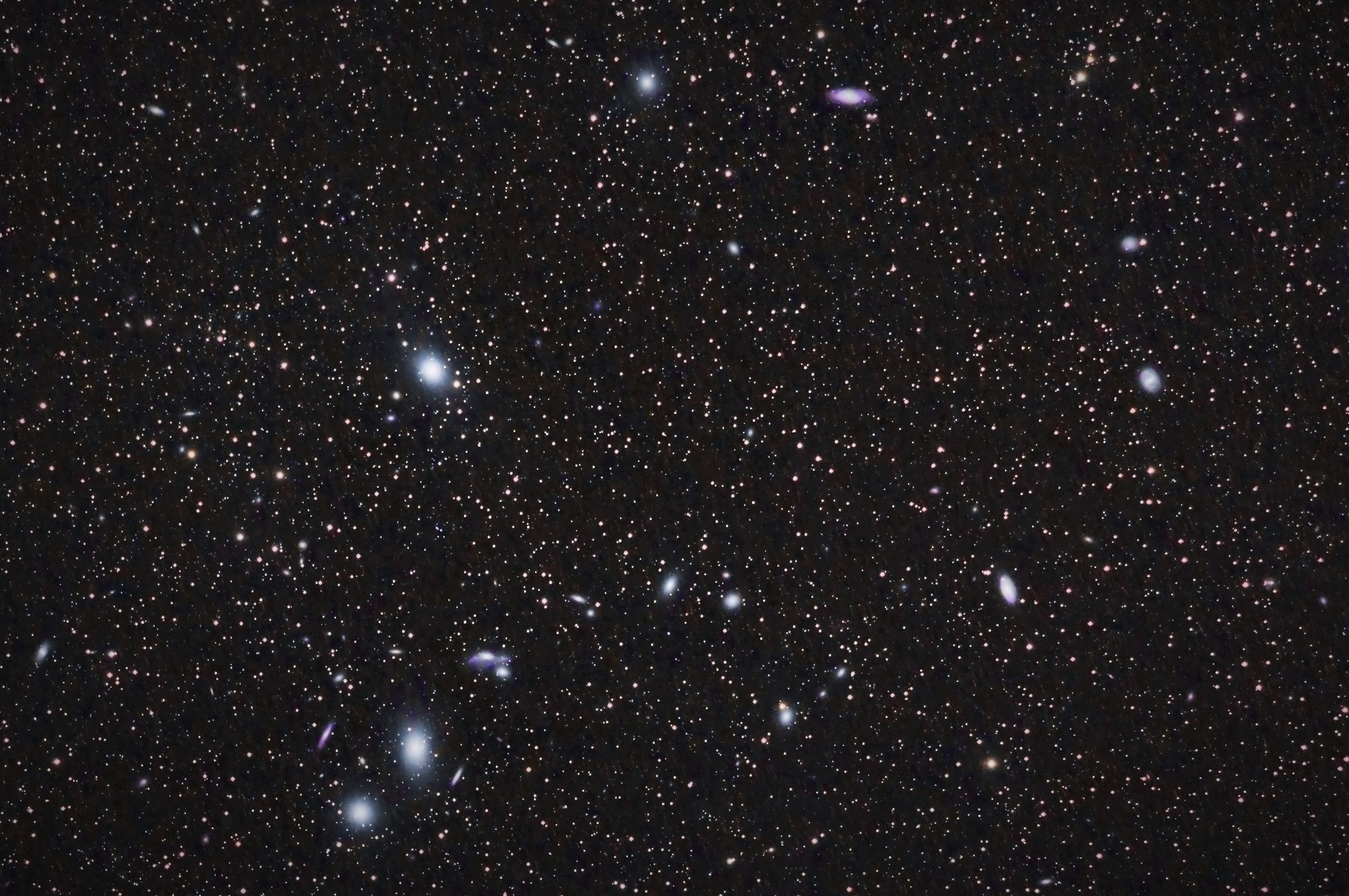
One of the large constellations we see in the south at 11 p.m. can be found using the Big Dipper overhead, follow the arc of the handle to the bright star Arcturus, then straighten the arc to a spike to reach Spica, a bright blue-white star in the south. Spica is the brightest star in the constellation Virgo, the virgin. She represents the goddess of the harvest, Virgo is holding a sheaf of wheat in depictions of her, and Spica is placed at the head of the sheaf. In the space between Spica and Leo the lion to her upper right is, a great cluster of thousands of galaxies just below naked eye visibility. The Virgo Cluster. Inside that cluster is galaxy M87, in whose center lies a black hole with the mass of 6.5 billion suns. The center of the cluster is at about 54 million light years away. The first black hole imaged by the Earth spanning Event Horizon Telescope.
The astronomical event times given are for the Traverse City/Interlochen area of Michigan (EDT, UT–4 hours). They may be different for your location.
Addendum
Ephemeris: 05/29/2024 – Where have the naked-eye planets wandered off to this week?
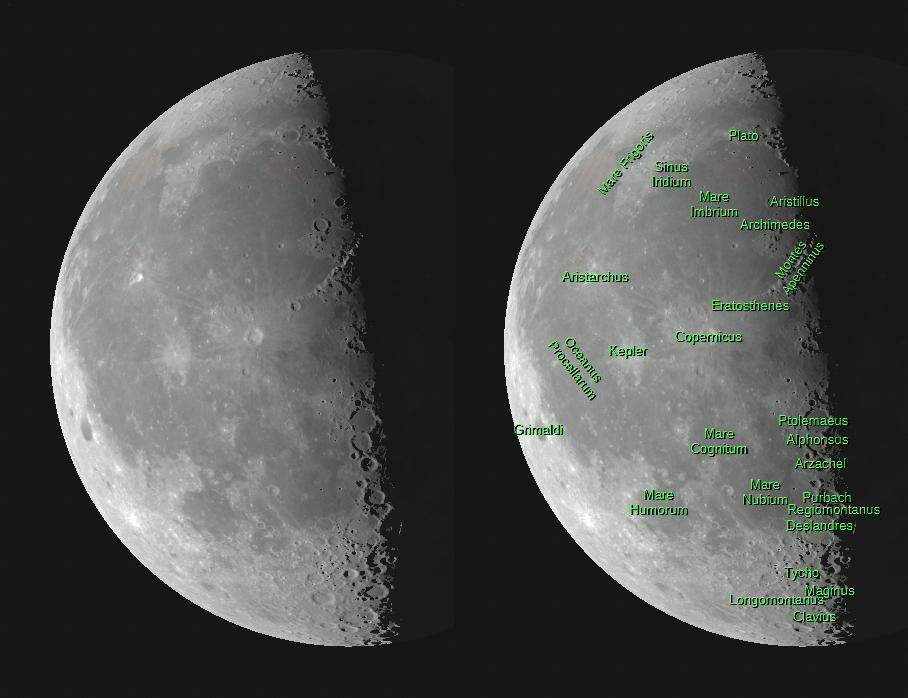
This is Ephemeris for Wednesday, May 29th. Today the Sun will be up for 15 hours and 17 minutes, setting at 9:19, and it will rise tomorrow at 6:01. The Moon, 1 day before last quarter, will rise at 2:31 tomorrow morning.
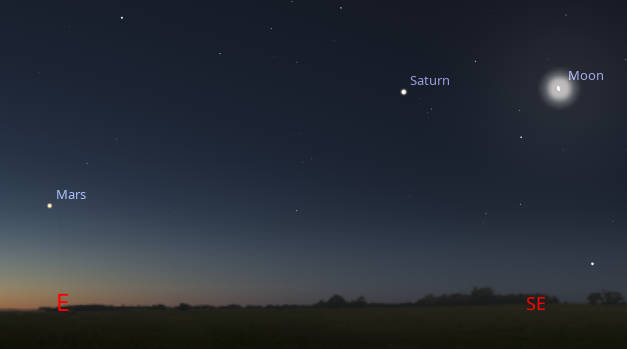
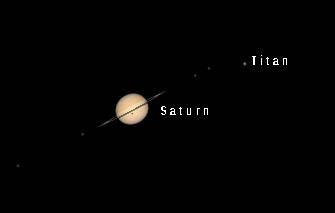
Let’s find out where the naked-eye planets have wandered off to this week, and see what planets are left. Venus, Mercury and Jupiter are now too close to the direction of the Sun to be seen. Venus will appear in the evening sky by July, while Jupiter may be visible in the morning in late June. By 5:15 tomorrow morning, or about 45 minutes before sunrise, Saturn will be low in the southeast and Mars will be lower still in the east. In telescopes, Saturn will look fairly different this year and next with its rings nearly edge on to us. They will open up a bit through October before closing again. We won’t see the rings go exactly edge on because Saturn will be too close to the Sun in the sky on March 23rd next year. After that, the rings will open up again.
The astronomical event times given are for the Traverse City/Interlochen area of Michigan (EDT, UT–4 hours). They may be different for your location.
Addendum
Ephemeris: 05/28/2024 – Finding Spica and Virgo
This is Ephemeris for Tuesday, May 28th. Today the Sun will be up for 15 hours and 15 minutes, setting at 9:18, and it will rise tomorrow at 6:01. The Moon, 2 days before last quarter, will rise at 2:06 tomorrow morning.
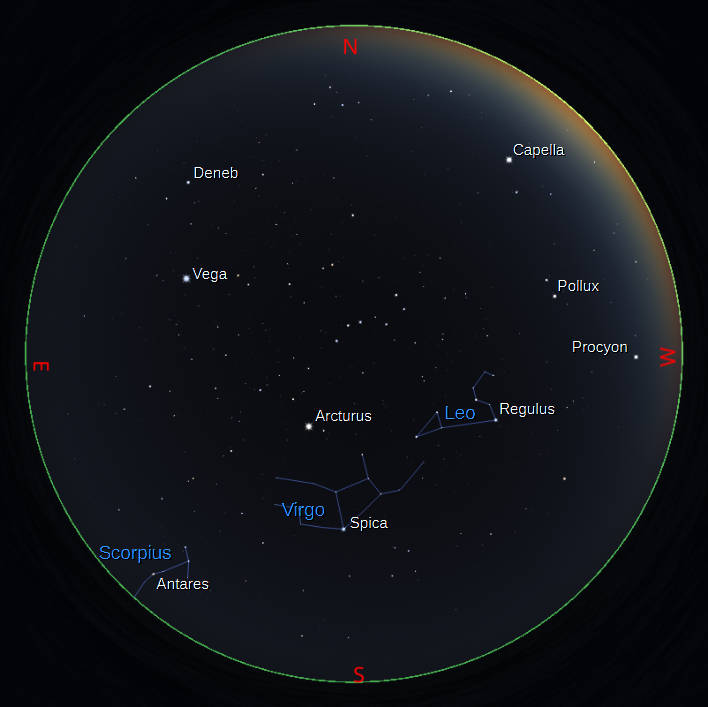
The Big Dipper, near the zenith at 10:30 pm points to several stars and constellations. It’s handle points to two bright stars. First we follow the arc of the handle to the bright orange star Arcturus, the 4th brightest nighttime star. The reason I say nighttime is that the Sun is a star also, but by definition is not out at night. The arc to Arcturus is a way to find Arcturus and a clue to its name. Arcturus, high in the south-southeast, lies at the base point of the kite shaped constellation of Boötes the herdsman. From Arcturus, straighten out the arc to a spike and one soon arrives at Spica a blue-white star in Virgo the virgin, now in the south. Spica is also sometimes pronounced ‘Speeka’.
The astronomical event times given are for the Traverse City/Interlochen area of Michigan (EDT, UT–4 hours). They may be different for your location.
Addendum
Ephemeris: 05/27/2024 The evening sky is transitioning into summer
This is Bob Moler with Ephemeris for Memorial Day, Monday, May 27th. Today the Sun will be up for 15 hours and 14 minutes, setting at 9:17, and it will rise tomorrow at 6:02. The Moon, 3 days before last quarter, will rise at 1:36 tomorrow morning.
The sky tonight at 10:30 is beginning to show the transition from spring to summer. Antares in Scorpius is very low in the southeast, rising and chasing away Orion who has disappeared in the West. According to Greek mythology, at least in one story, Orion was killed by the sting of a giant scorpion and so neither he nor Scorpius the scorpion can be in the sky at the same time. The bright star Spica in Virgo the virgin is due South at that time, with Leo the lion in the southwest. Very high in the southeast is the star Arcturus. The Big Dipper is overhead. And in the east-northeast high up this is the bright star Vega, one of the stars of the summer triangle. The second star of the triangle Deneb is lower in the northeast. The third star has yet to rise.
The astronomical event times given are for the Traverse City/Interlochen area of Michigan (EDT, UT–4 hours). They may be different for your location.
Addendum
Ephemeris: 05/24/2024 – The twilight zone
This is Ephemeris for Friday, May 24th. Today the Sun will be up for 15 hours and 9 minutes, setting at 9:14, and it will rise tomorrow at 6:04. The Moon, 1 day past full, will rise at 11:06 this evening.
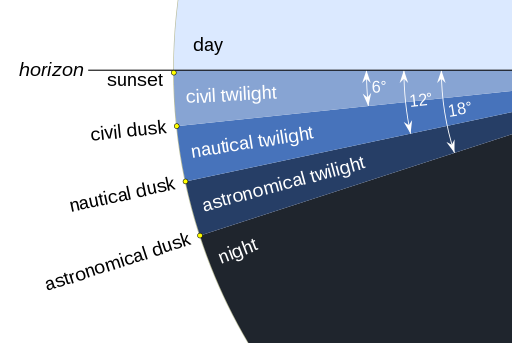
Let’s take a look at twilight, despite the fact it doesn’t end until 1132 PM. Of course the bright Moon will rise before then. By the 12th of June astronomical twilight will end at midnight and a couple of days before the summer solstice it will have extended itself to 12:05 AM. The Moon tonight will rise in the middle of astronomical twilight so we’ll get about 1/2 hour or so of semi dark sky viewing from about 10:37 PM to moonrise at 11:07. There are three intervals of twilight. Civil twilight which is the period between sunset and when the Sun is 6° below the horizon. Nautical twilight extends to when the Sun is 12° below the horizon, and astronomical twilight which ends when the Sun is 18° below the horizon.
The astronomical event times given are for the Traverse City/Interlochen area of Michigan (EDT, UT–4 hours). They may be different for your location
Addendum
Ephemeris: 05/23/2024 – My observations of the Earth as a globe
This is Bob Moler with Ephemeris for Thursday, May 23rd. Today the Sun will be up for 15 hours and 7 minutes, setting at 9:13, and it will rise tomorrow at 6:05. The Moon, at full today, will rise at 9:58 this evening.
As far as I can remember back in time I’ve always thought that the Earth was a globe. To me that the Earth is flat is nonsensical. And I’ve looked to the sky as confirmation that the Earth was indeed a globe. During my first trip to a southern state I saw it for myself. From our vantage point here in Michigan the constellation of Scorpius the scorpion just scrapes the southern horizon at its highest. When traveling down to Kentucky it was higher in the sky, so that was my first proof that the Earth is round. I’ve since gone to Hawaii and even using the programs I wrote and use for the times for Ephemeris, based on the Earth as a globe, I was able to predict when and where to see the Southern Cross. It was right there as calculated by my program.
The astronomical event times given are for the Traverse City/Interlochen area of Michigan (EDT, UT–4 hours). They may be different for your location.
Addendum
Ephemeris: 05/22/2024 – Where have the naked-eye planets wandered off to this week?
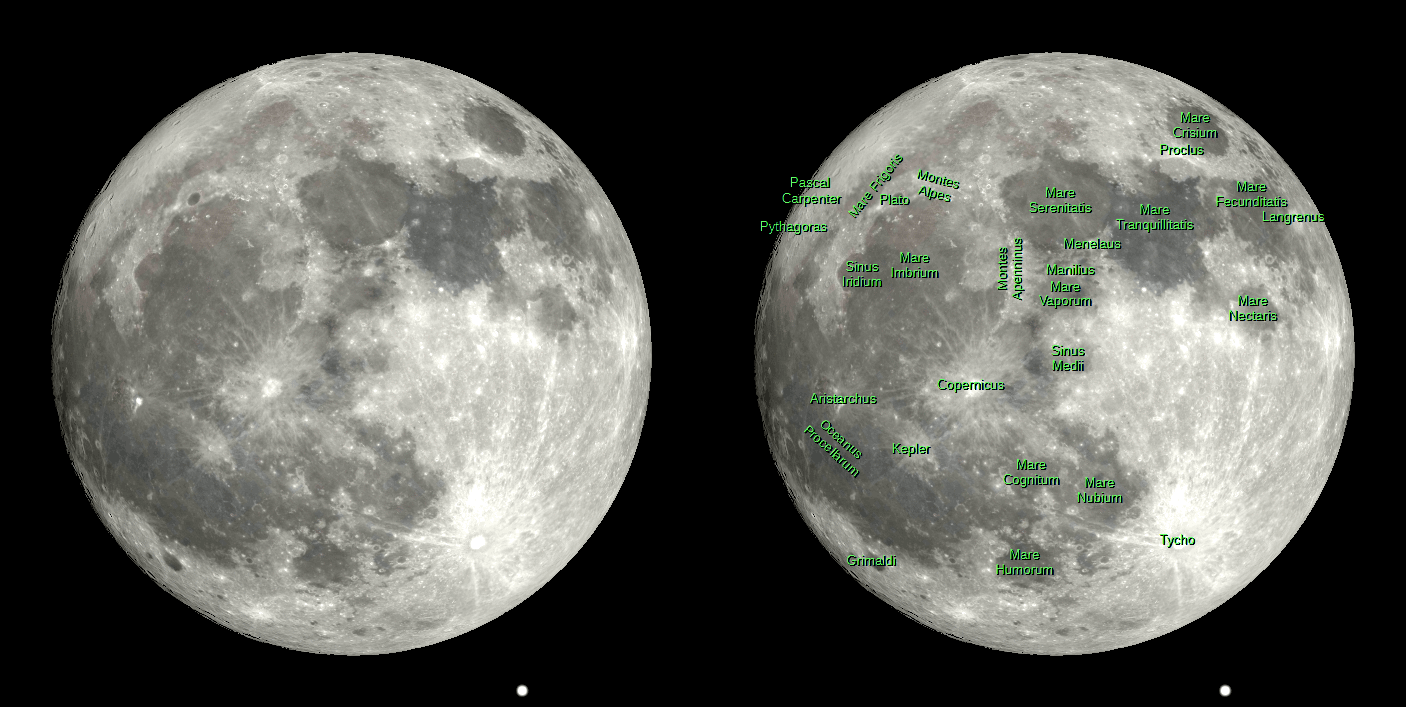
This is Ephemeris for Wednesday, May 22nd. Today the Sun will be up for 15 hours and 5 minutes, setting at 9:12, and it will rise tomorrow at 6:06. The Moon, 1 day before full, will set at 5:42 tomorrow morning.
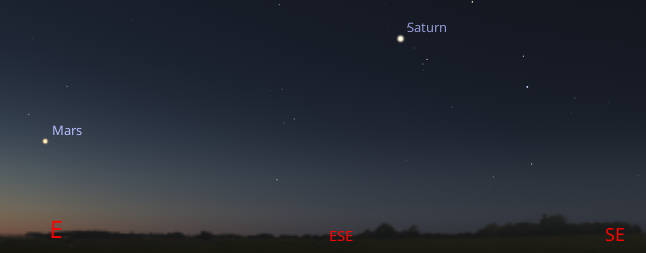
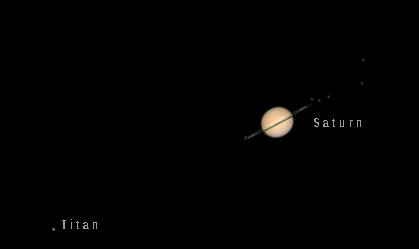
Let’s find out where the naked-eye planets have wandered off to this week, and see what planets are left. Jupiter now is too close to the direction of the Sun to be seen. It is on the morning side of the Sun, and by late June may be visible in the morning sky in twilight. By 5 tomorrow morning, about 66 minutes before sunrise, Saturn will be low in the east-southeast and Mars will be lower still in the east. In telescopes, Saturn will look fairly different this year and next with its rings nearly edge on to us. They will open up a bit through October before closing again. We won’t see the rings go exactly edge on because Saturn will be too close to the Sun in the sky on March 23rd next year. After that the rings will open up again.
The astronomical event times given are for the Traverse City/Interlochen area of Michigan (EDT, UT–4 hours). They may be different for your location.
Addendum
Ephemeris: 05/21/2024 – Looking ahead to the summer solstice
This is Ephemeris for Tuesday, May 21st. Today the Sun will be up for 15 hours and 3 minutes, setting at 9:11, and it will rise tomorrow at 6:07. The Moon, 2 days before full, will set at 5:14 tomorrow morning.
Summer is coming. Days are definitely warmer. The Sun’s out longer. Yesterday we passed the 15 hours of daytime. Summer will start a month from yesterday on the 20th of June. We normally expect the solstices on the 21st of June and 21st of December and the equinoxes on the 21st of March and the 23rd of September. However, we haven’t had, in our time zone at least, spring start on the 21st of March since 1987. The slow wondering of the equinox and solstice dates are due to the fact that the seasonal year, also called the tropical year, is not exactly 365 and a quarter days long. It is slightly shorter than that, which is the reason in 1582 Pope Gregory the 13th decreed that the calendar would be reformed which is the Gregorian Calendar we have now.
The astronomical event times given are for the Traverse City/Interlochen area of Michigan (EDT, UT–4 hours). They may be different for your location.
Addendum
I talk about the calendar in much more detail in this post: https://bobmoler.wordpress.com/2016/02/28/02282016-ephemeris-extra-the-years-of-our-lives/
Ephemeris: 05/20/2024 – Sunspots
This is Ephemeris for Monday, May 20th. Today the Sun will be up for 15 hours and 1 minute, setting at 9:10, and it will rise tomorrow at 6:07. The Moon, 3 days before full, will set at 4:52 tomorrow morning.
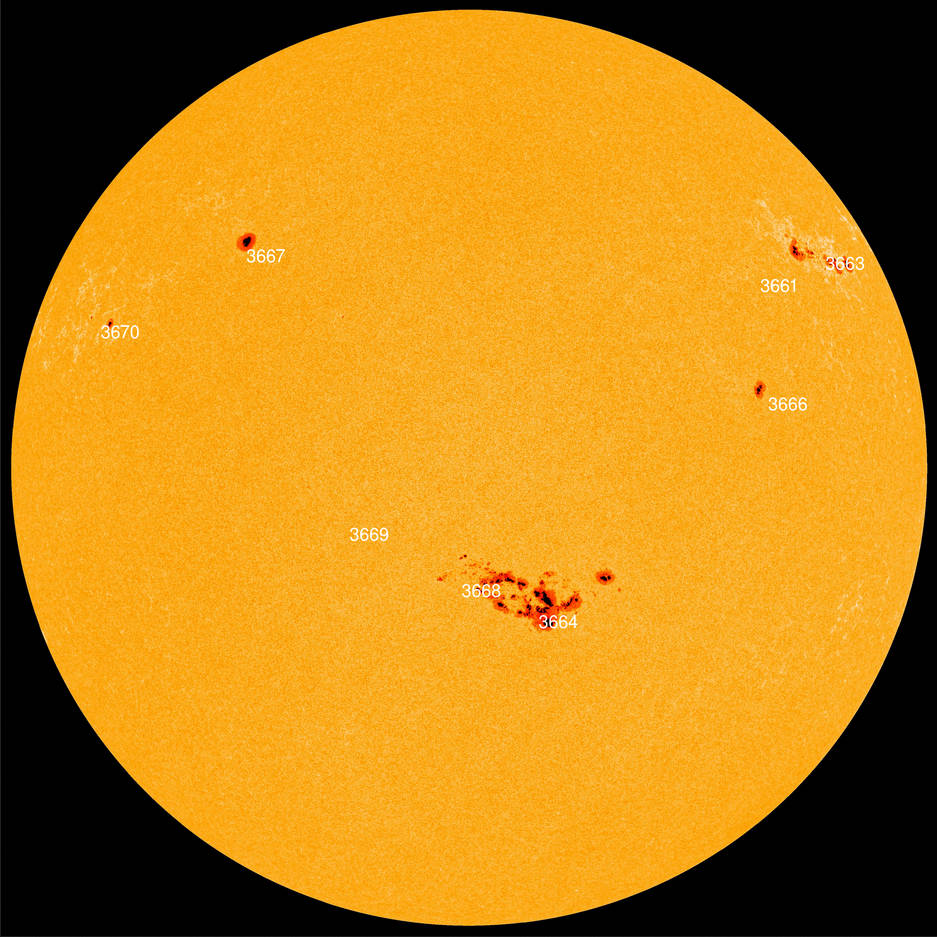
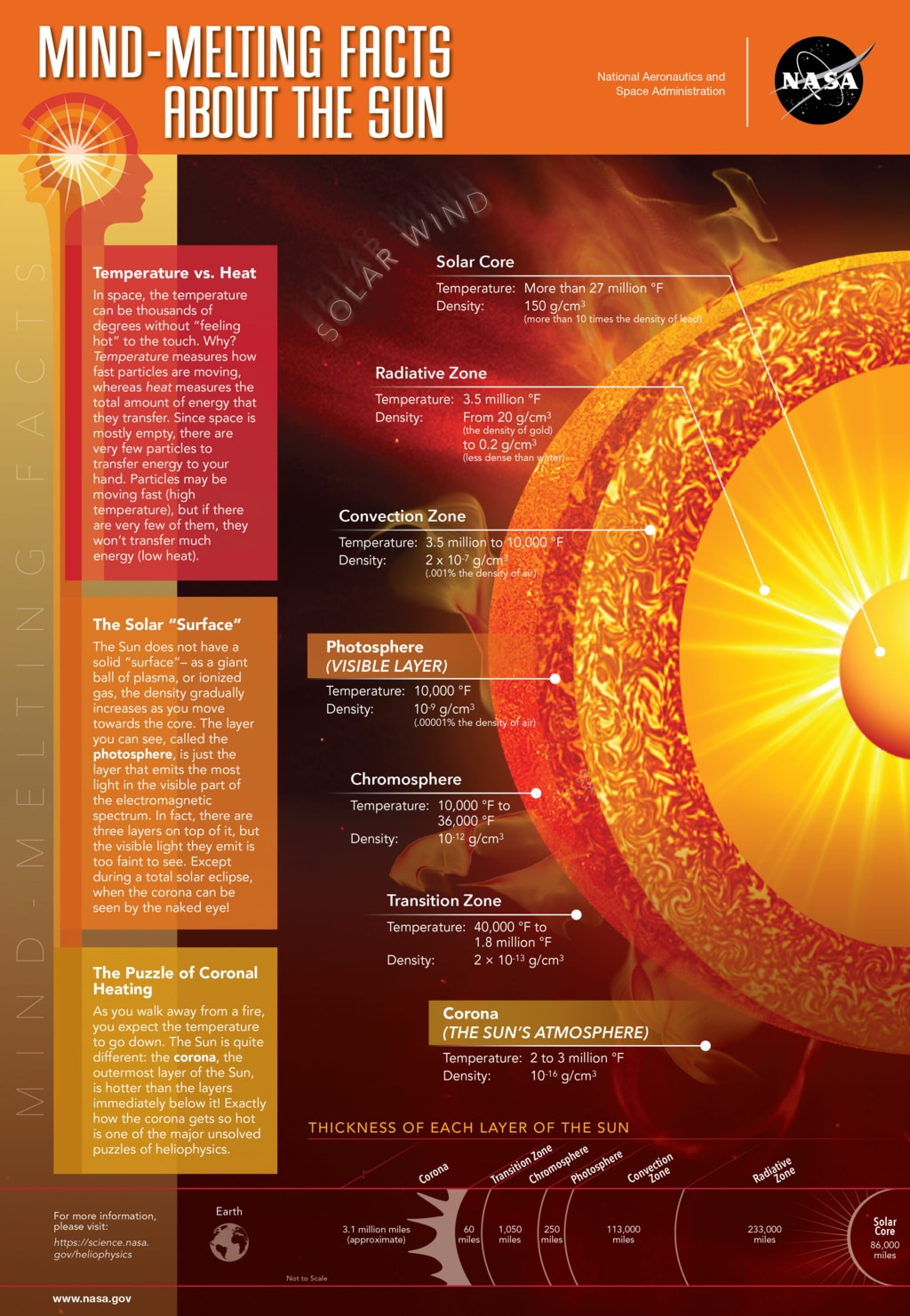
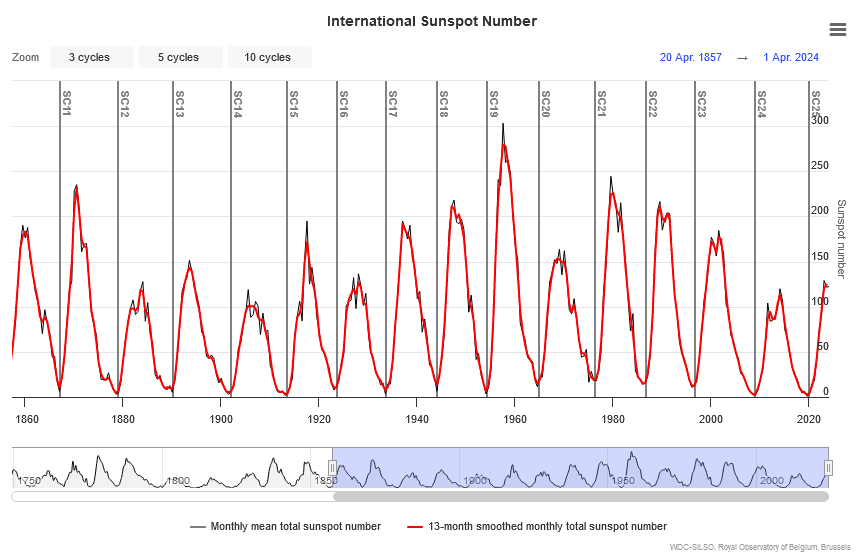
As can be seen with the northern light display more than a week ago that the Sun is becoming more active. It’s because particles, mostly protons, from the Sun in the form of the solar wind and enhancements in the solar wind called coronal mass ejections, tangle with the Earth’s magnetic field and stream through the upper atmosphere. The activity on the Sun is signaled by the ebb and flow of the number of dark spots called sunspots. Individual sunspots or sunspot groups only last for, maybe, a couple of weeks. They’re caused by the magnetic fields being generated in the Sun causing the gas to cool a bit and making them darker. Sunspot numbers ebb flow in a period of about 11 years, called a sunspot cycle. This sunspot cycle is reaching a higher peak than expected.
The astronomical event times given are for the Traverse City/Interlochen area of Michigan (EDT, UT–4 hours). They may be different for your location.
Addendum
 Bob Moler's Ephemeris Blog