Archive
Ephemeris: 07/17/2026 – Star Party scheduled for Sleeping Bear Dunes tomorrow night – Canceled due to Air Quality Alert!
This is Ephemeris for Friday, July 17th. Today the Sun will be up for 15 hours and 10 minutes, setting at 9:24, and it will rise tomorrow at 6:14. The Moon, 3 days past new, will set at 11:20 this evening.
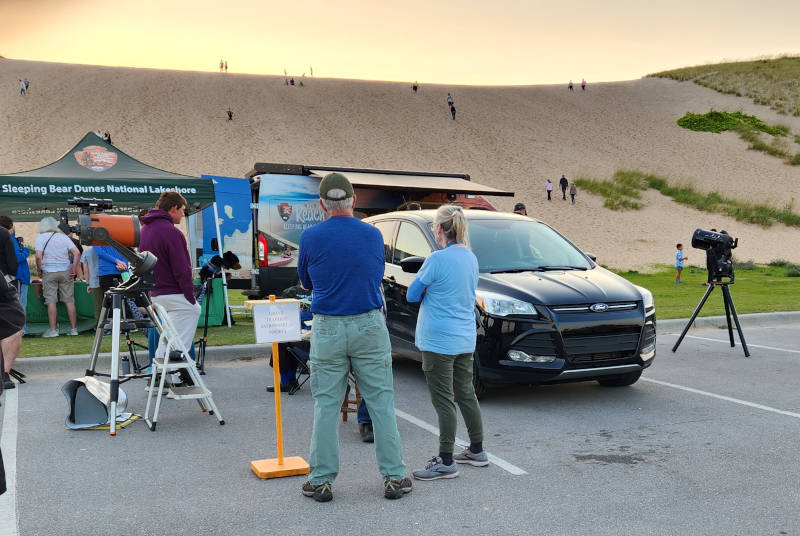
Tomorrow night, Saturday, July 18th, the Sleeping Bear Dunes National Lakeshore will team up with the Grand Traverse Astronomical Society to host a star party at the Dune Climb from 9 to 11 PM or later. It won’t be a star party only, because the featured attractions early on, will be Venus and the four day old crescent Moon. Planets and the Moon, when near the Sun in the summer appear low in the sk, and will set on the dune fairly early: Venus shortly after 10, and the moon by 10:30. Both should be visible before sunset. To my mind, Venus is best seen in telescopes during daylight, but the trick is to find it then. There will be much more to see as the sky darkens. The rangers have an alternate program, so you can still have an interesting time even if its cloudy.
The astronomical event times given in this blog are for the Traverse City/Interlochen area of Michigan (Lat 44.7° N, Long 85.7° W; EDT, UT – 4 hours) unless stated otherwise. Times will be different for other locations.
Addendum
Ephemeris: 07/16/2026 – What the Anishinaabe peoples saw in Scorpius
This is Bob Moler with Ephemeris for Thursday, July 16th. Today the Sun will be up for 15 hours and 12 minutes, setting at 9:24, and it will rise tomorrow at 6:13. The Moon, 2 days past new, will set at 10:59 this evening.
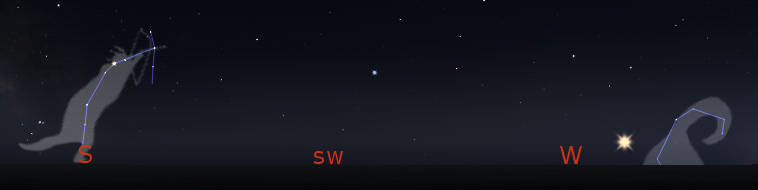
The Anishinaabe native peoples of our area gave another name to the star pattern we call Scorpius the scorpion, which is low in the southern sky these July evenings: Wenaboujou, a.k.a. Nanaboujou. He was an important character from their creation stories. He was a semi-spirit, trickster, and shapeshifter, able to turn himself into a hare. What they saw in the sky and the stars of Scorpius was him with a bow and arrow. The front three stars of the scorpion are a bent line that can look like a bow. He’s shooting an arrow all the way into the western sky at the receding constellation of Curly Tail, or the Great Underwater Panther, an early spring constellation. This month, only his tail remains in evening twilight, which we know as the head Leo the lion.
The astronomical event times given in this blog are for the Traverse City/Interlochen area of Michigan (Lat 44.7° N, Long 85.7° W; EDT, UT – 4 hours) unless stated otherwise. Times will be different for other locations.
Addendum
Ephemeris: 07/15/2026 – Taking our weekly look at the whereabouts of the naked-eye planets
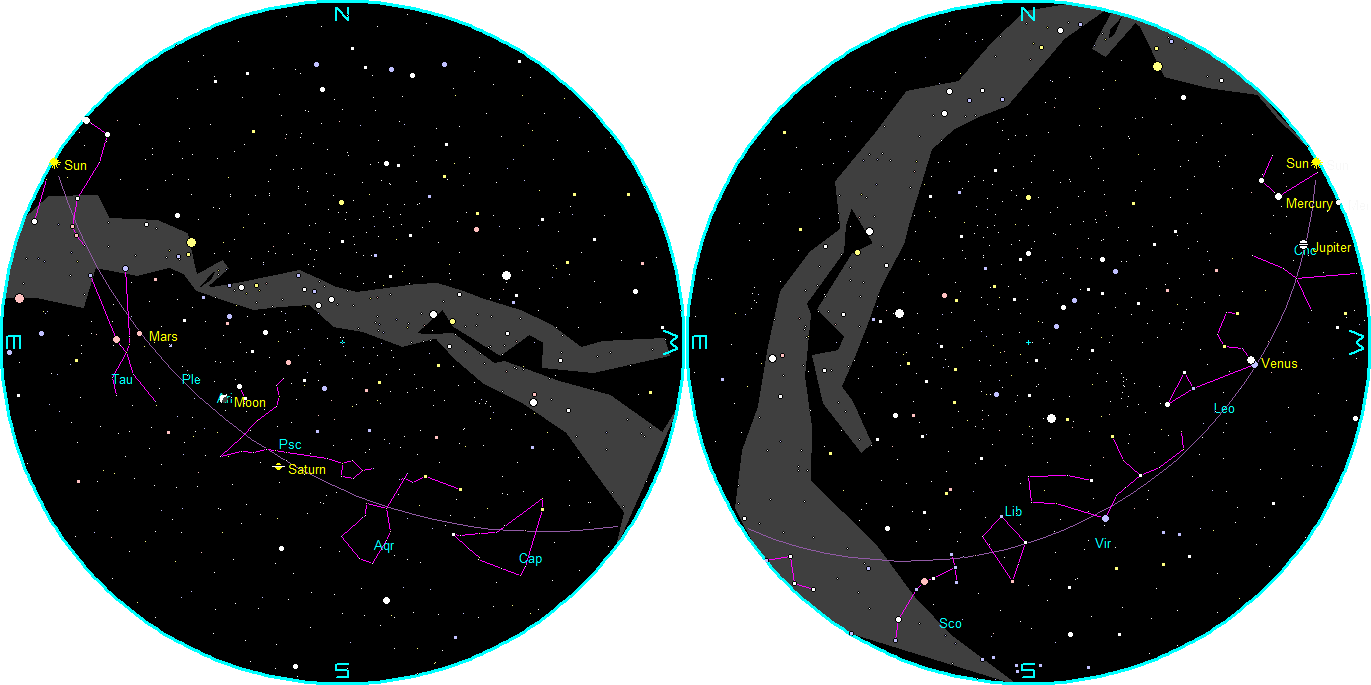
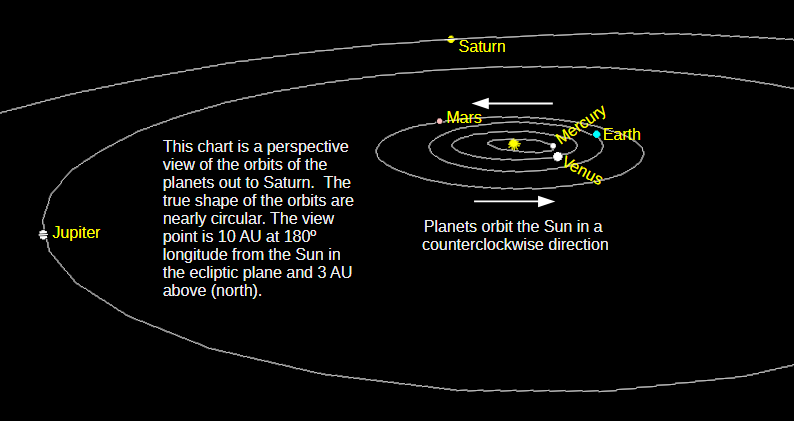
This is Ephemeris for Wednesday, July 15th. Today the Sun will be up for 15 hours and 13 minutes, setting at 9:25, and it will rise tomorrow at 6:12. The Moon, 1 day past new, will set at 10:35 this evening. | Let’s take our weekly look at the whereabouts of the naked-eye planets. By 10 PM tonight, a half-hour after sunset, Venus will be easily seen in the western sky. A telescope will show a very tiny gibbous disc of Venus because it is now closer than the Sun, at 86.9 million miles (139.9 million kilometers) away from us. Over the next nearly 3½ months, it will be moving closer to us and becoming much larger. In the morning, Saturn and Mars will be visible in the southeast and east, respectively. The Earth is now chasing down Mars, and later this year the launch window will open to send spacecraft to the Red Planet. Mars will be next closest to the Earth and opposite the sun in the sky next February.
The astronomical event times given in this blog are for the Traverse City/Interlochen area of Michigan (Lat 44.7° N, Long 85.7° W; EDT, UT – 4 hours) unless stated otherwise. Times will be different for other locations.
Addendum


Ephemeris: 07/14/2026 – What the bright star Antares’ name means
This is Bob Moler with Ephemeris for Tuesday, July 14th. Today the Sun will be up for 15 hours and 15 minutes, setting at 9:26, and it will rise tomorrow at 6:11. The Moon is new today and won’t be visible.
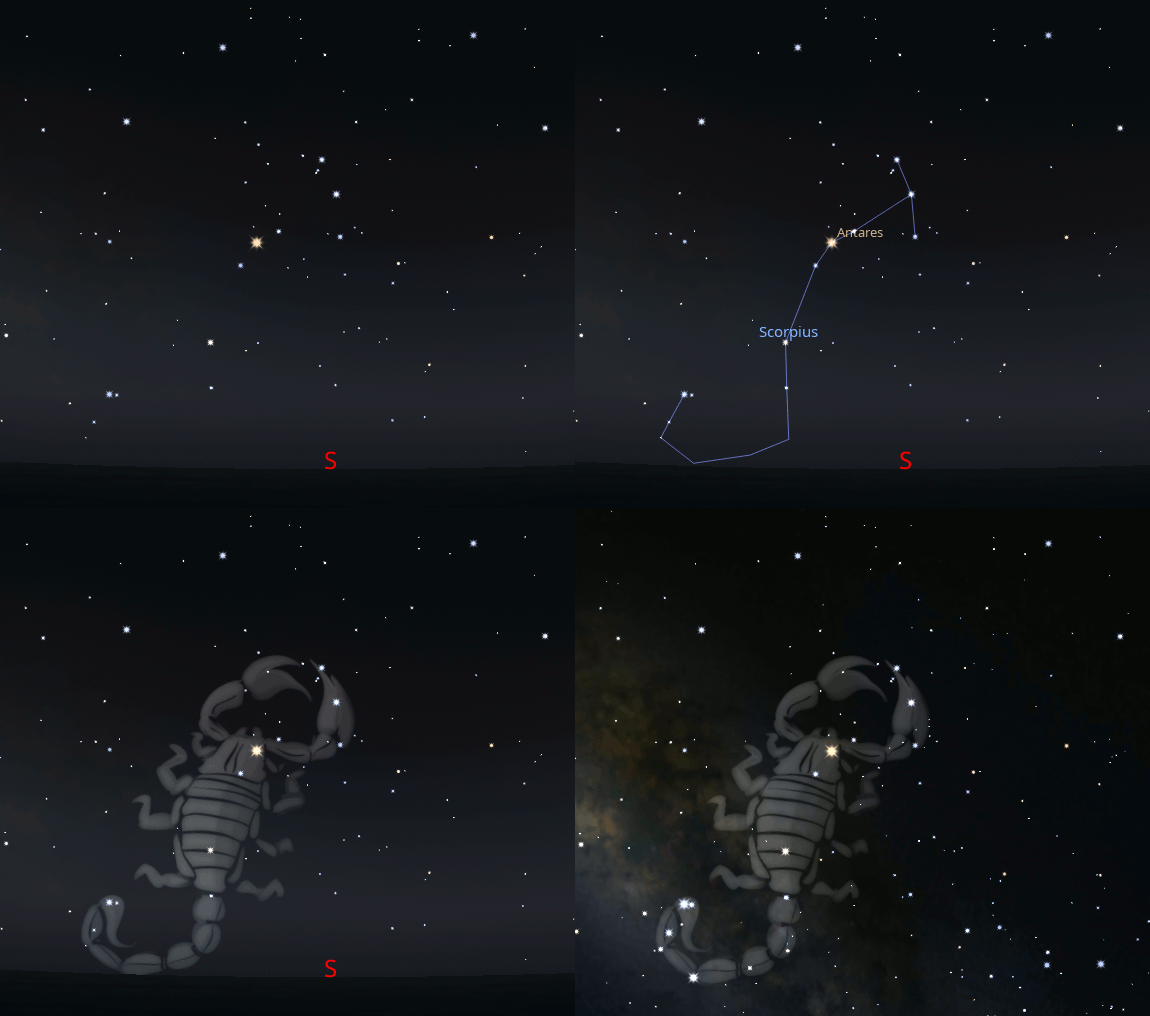
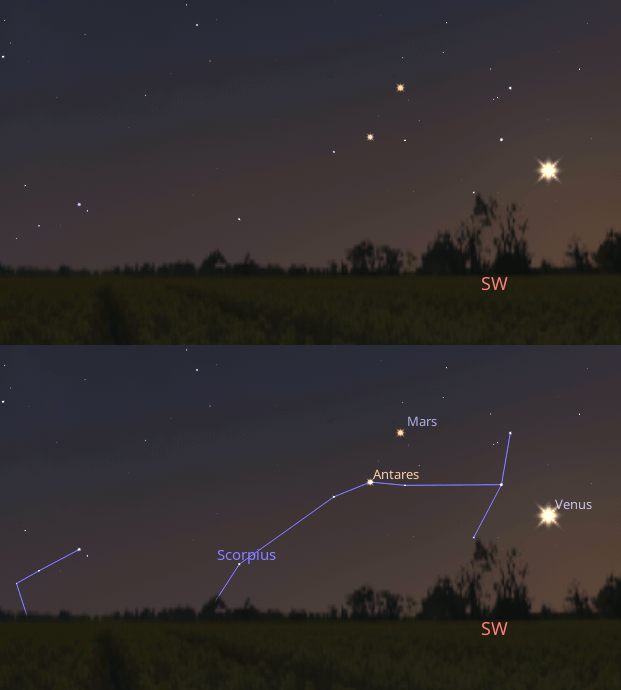
The constellation of Scorpius the scorpion is low in the south at 11 PM these nights. Its bright star Antares will pass due south around 10:30 this evening. Antares is an interesting star in that it is a red giant star, and its name, Antares, means “Rival of Mars,” alluding to the fact that it and Mars appear to be the same color. A little translation is needed here: “Ant” is anti, against, “Ares” is the Greek god of war that the Romans appropriated as Mars. About every two years, Mars passes near Antares, so unless you know your stars and planets, you could mistake them for each other. Antares lies at the heart of the scorpion. To its upper right is the front part of its body and claws, and the trail of stars running down the other way, nearly to the horizon, in the south and back up in the south-southeast to the two stars of its stinger, make up its characteristic tail.
The astronomical event times given in this blog are for the Traverse City/Interlochen area of Michigan (Lat 44.7° N, Long 85.7° W; EDT, UT – 4 hours) unless stated otherwise. Times will be different for other locations.
Addendum
Ephemeris: 07/13/2026 – Finding the celestial eagle, Aquila
This is Ephemeris for Monday, July 13th. Today the Sun will be up for 15 hours and 17 minutes, setting at 9:26, and it will rise tomorrow at 6:10. The Moon, 1 day before new, will rise at 6:04 tomorrow morning.
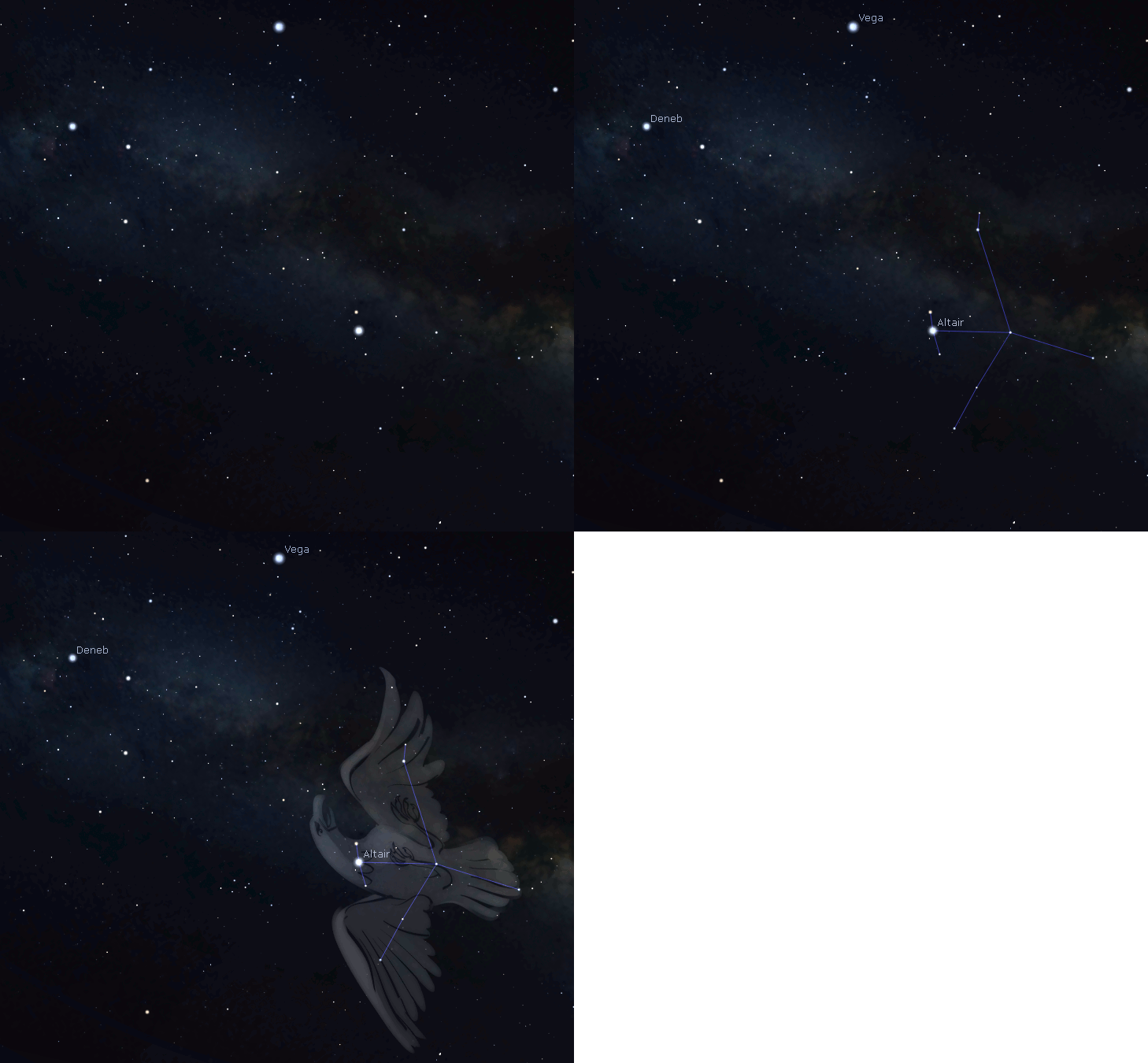
Aquila the eagle is a constellation that lies in the Milky Way. It’s in the southeastern sky as it gets dark. Its brightest star, Altair, is one of the stars of the Summer Triangle, a group of three bright stars dominating the eastern sky in the evening now. Altair, in the head of the eagle, is flanked by two slightly dimmer stars. The eagle is flying northeastward through the Milky Way. Its wings are seen in the wing tip stars. A curved group of stars to the lower right of Altair is its tail. Within Aquila, the Milky Way shows many dark clouds as part of the Great Rift that splits it here. The other summer bird is Cygnus the swan above and left of Aquila, flying in the opposite direction. It was said this was the eagle that attended the god Jupiter.
The astronomical event times given in this blog are for the Traverse City/Interlochen area of Michigan (Lat 44.7° N, Long 85.7° W; EDT, UT – 4 hours) unless stated otherwise. Times will be different for other locations.
Addendum
Ephemeris: 07/10/2026 – Examining Artemis II images
This is Ephemeris for Friday, July 10th. Today the Sun will be up for 15 hours and 21 minutes, setting at 9:28, and it will rise tomorrow at 6:08. The Moon, 3 days past last quarter, will rise at 2:38 tomorrow morning.
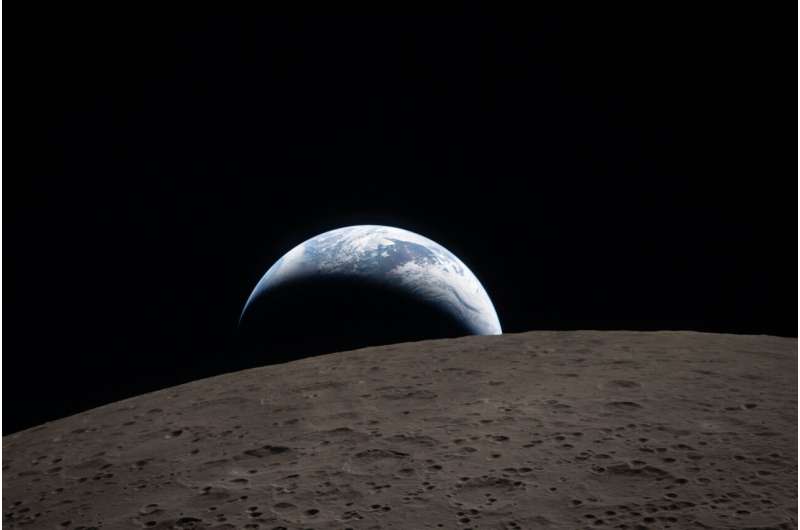
The Grand Traverse Astronomical Society will host its July meeting tonight at 9 PM at Northwestern Michigan College’s Joseph H Rogers Observatory. The later meeting time allows us to have viewing after the meeting starts in darker skies. The program is informal. The Artemis 2 mission brought back a treasure trove of photographs of the earth and the moon. We will be showing some of them and having everyone have a chance to comment on them, ask questions, explore them further, or explain them. This is the same topic that was proposed for the June meeting, which was canceled due to unforeseen circumstances. Afterward, about 10 PM, if it’s clear, there will be viewing of the heavens through the observatory’s telescopes. The observatory is located south of Traverse City, on Birmley Rd. The meeting is also on Zoom; see gtastro.org.
The astronomical event times given in this blog are for the Traverse City/Interlochen area of Michigan (Lat 44.7° N, Long 85.7° W; EDT, UT – 4 hours) unless stated otherwise. Times will be different for other locations.
Addendum
Ephemeris: 07/09/2026 – Looking for the Anishinaabek constellation of the Crane
This is Ephemeris for Thursday, July 9th. Today the Sun will be up for 15 hours and 22 minutes, setting at 9:29, and it will rise tomorrow at 6:07. The Moon, 2 days past last quarter, will rise at 1:57 tomorrow morning.
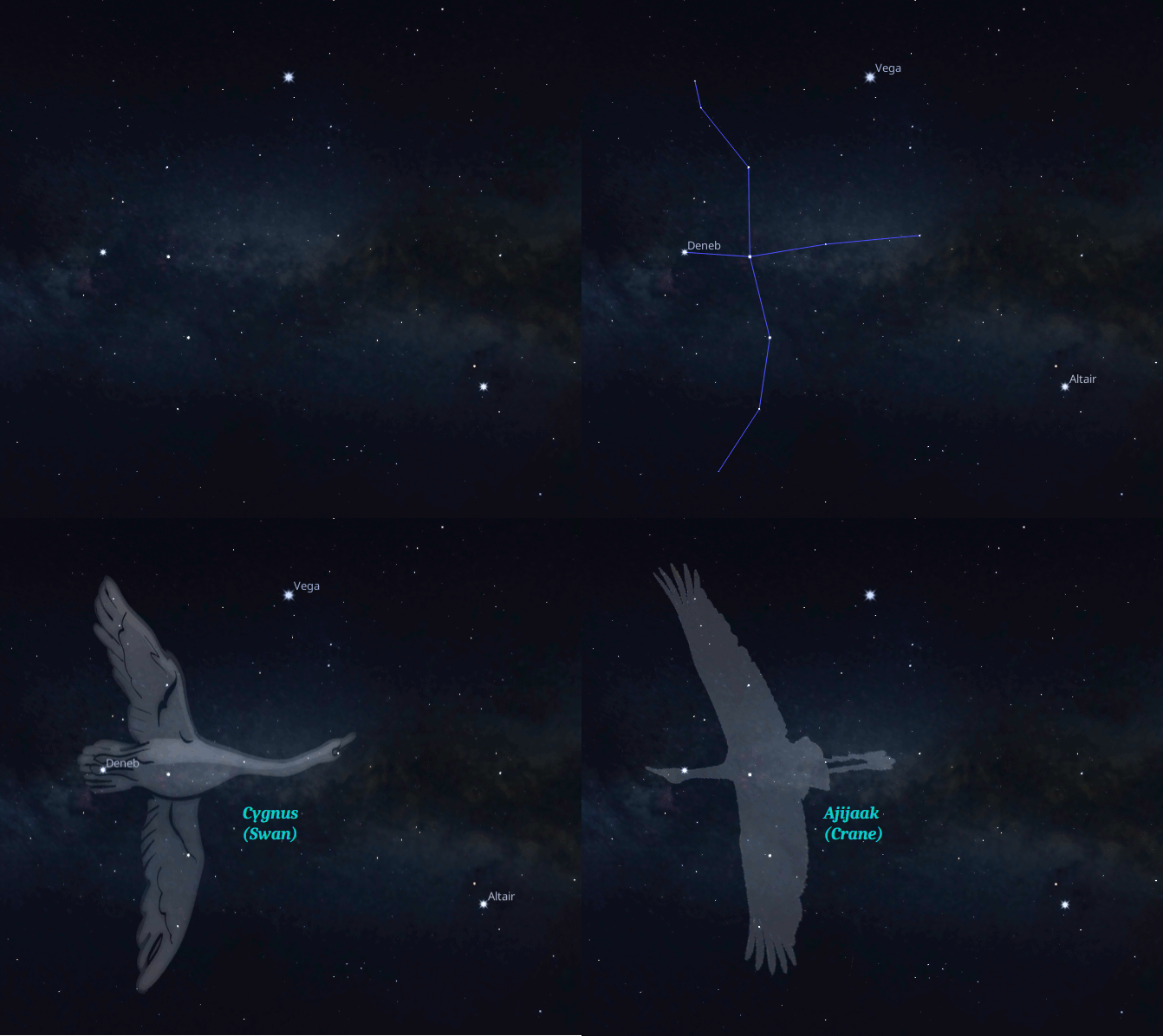
Tuesday I looked at the constellation of Cygnus the swan and the informal constellation, or asterism, made from most of its stars, the Northern Cross. They lie high in the eastern sky. Cygnus is the official International Astronomical Union constellation name. However, the indigenous Anishinaabe people of our area had another bird in mind when seeing these stars: Ajijaak, (pronounced a-ji-jock) a Sand Hill crane. While the swan is flying, neck outstretched to the south through the Milky Way, the crane is flying northward with its long legs trailing behind. The bright star Deneb is partway along its neck. The Anishinaabek have a name for another bird here, Bineshiihyi Okanin, which means Skeleton Bird.
The astronomical event times given in this blog are for the Traverse City/Interlochen area of Michigan (Lat 44.7° N, Long 85.7° W; EDT, UT – 4 hours) unless stated otherwise. Times will be different for other locations.
Addendum
Ephemeris: 07/08/2026 – Taking our weekly look at the whereabouts of the naked-eye planets
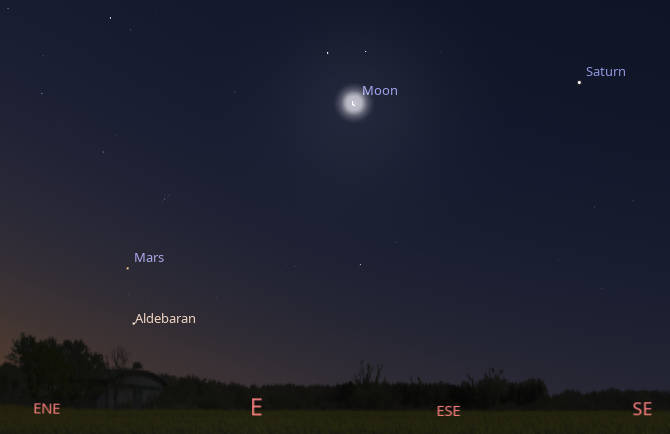
This is Ephemeris for Wednesday, July 8th. Today the Sun will be up for 15 hours and 23 minutes, setting at 9:29, and it will rise tomorrow at 6:06. The Moon, 1 day past last quarter, will rise at 1:26 tomorrow morning.
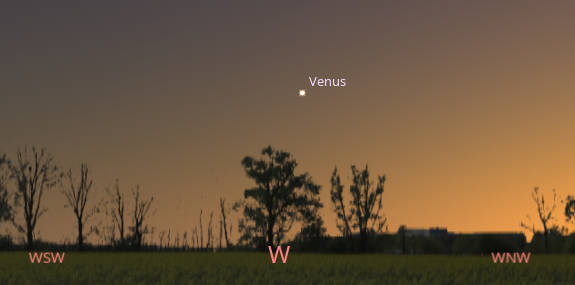
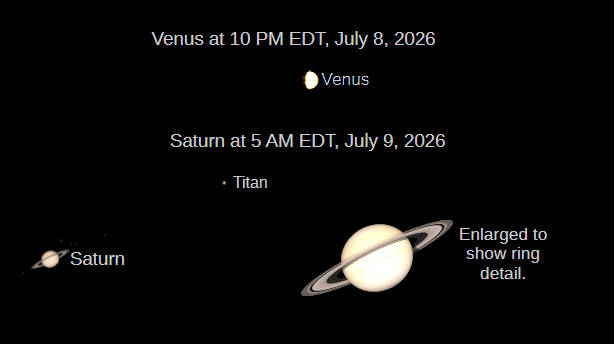
Let’s take our weekly look at the whereabouts of the naked-eye planets. By 10 PM tonight, a half-hour after sunset, Venus will be easily seen in the western sky. A telescope will show a very tiny gibbous disc of Venus, because it is just a little bit closer than the Sun, at 92.0 million miles (148 million kilometers) away from us. Over the next nearly 3½ months, it will be moving closer to us and becoming much larger. In the morning, Saturn and Mars will be visible, in the southeast and east respectively. The Earth is now chasing down Mars, and later this year the launch window will open to send spacecraft to the Red Planet. Mars will be next closest to the Earth and at opposition with the sun in February next year.
The astronomical event times given in this blog are for the Traverse City/Interlochen area of Michigan (Lat 44.7° N, Long 85.7° W; EDT, UT – 4 hours) unless stated otherwise. Times will be different for other locations.
Addendum
Ephemeris: 07/07/2026: Finding the Celestial Swan
This is Ephemeris for Tuesday, July 7th. Today the Sun will be up for 15 hours and 25 minutes, setting at 9:30, and it will rise tomorrow at 6:05. The Moon, at last quarter today, will rise at 1:02 tomorrow morning.
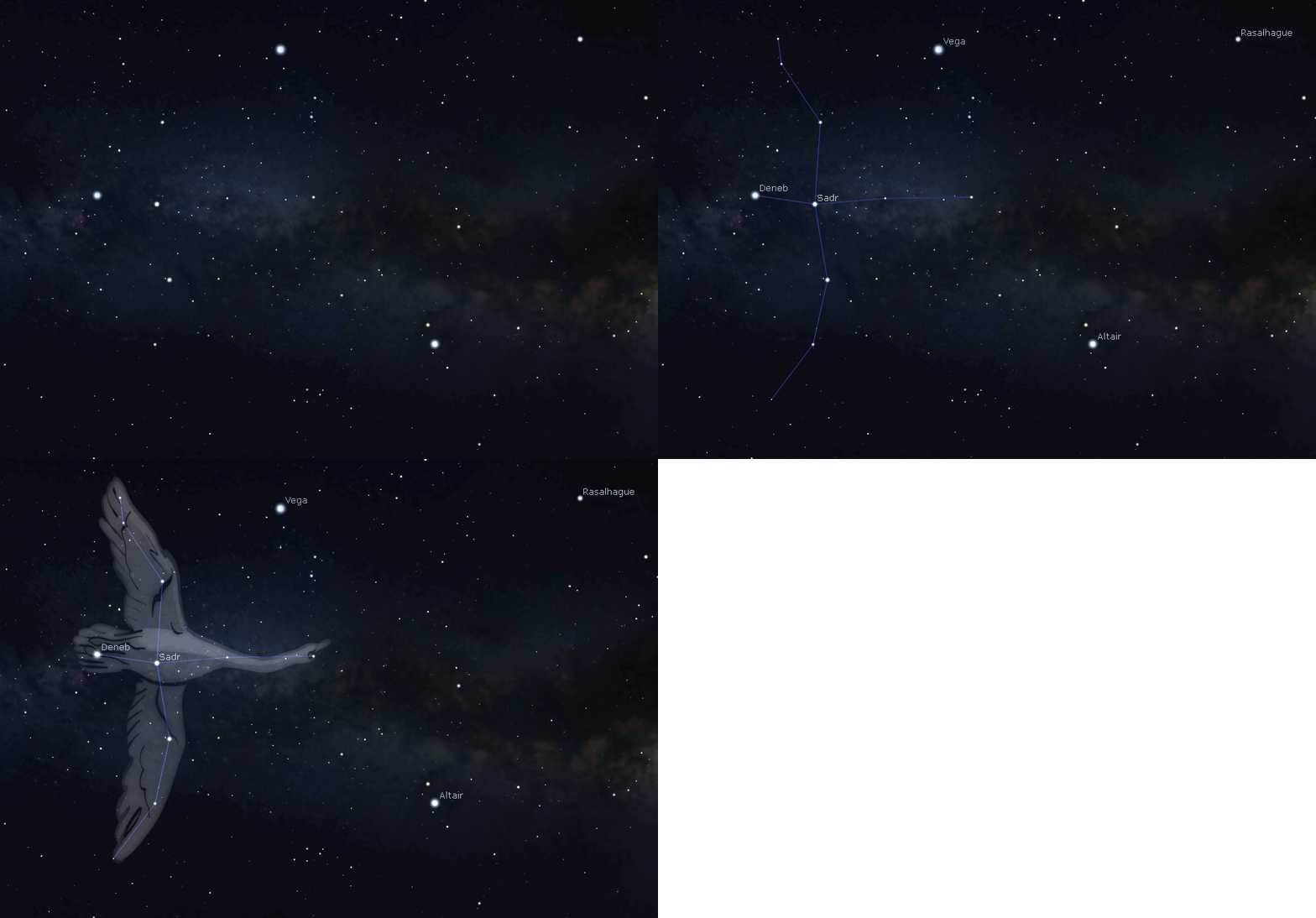
Located halfway to the zenith in the east at 11 p.m. is the constellation of Cygnus the swan, flying south through the Milky Way. It is also called the Northern Cross. At the left, the tail of the swan or the head of the cross is the bright star Deneb, one of the stars of the Summer Triangle. The next star right is at the intersection of the body and the wings of the swan seen in flight, or the intersection of the two pieces of the cross. There are two or three stars farther to the right that delineate the swan’s long neck or upright of the cross, that ends with the star Alberio in the beak of the swan or foot of the cross. The crosspiece of the cross extends to the stars on either side of the intersection star Sadr, while the swan’s wings extend to a couple more stars each.
The astronomical event times given in this blog are for the Traverse City/Interlochen area of Michigan (Lat 44.7° N, Long 85.7° W; EDT, UT – 4 hours) unless stated otherwise. Times will be different for other locations.
Addendum
Ephemeris: 07/06/2026 – The Sun is farthest away from Earth today!
This is Bob Moler with Ephemeris for Monday, July 6th. Today the sun will be up for 15 hours and 26 minutes, setting at 9:30, and it will rise tomorrow at 6:05. The Moon, 1 day before last quarter, will rise at 12:42 tomorrow morning.
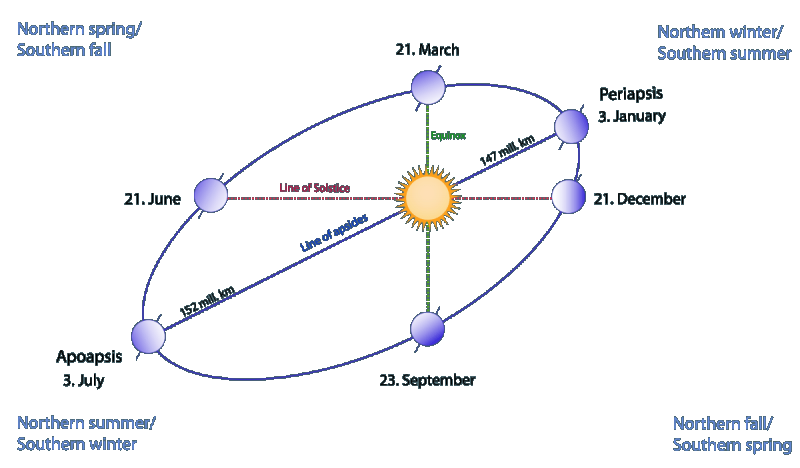
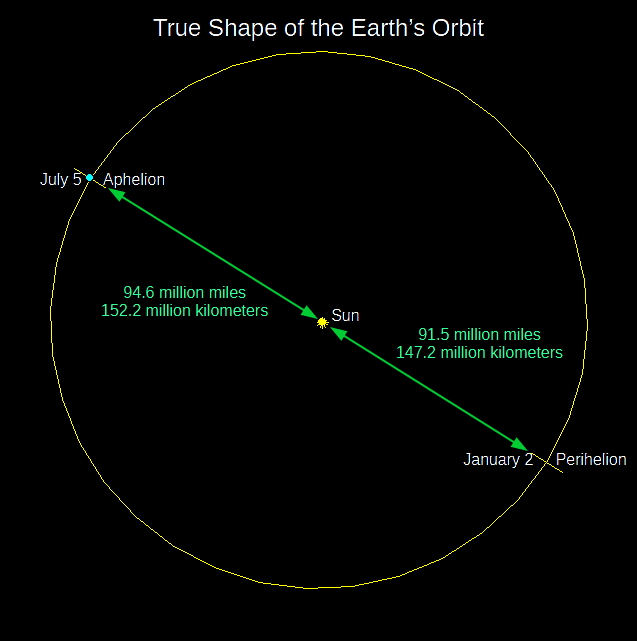
Today at 10:59 AM the Earth reaches aphelion from the Sun, the farthest it gets from it during the year. Earth will be 94 and a half million miles away from the Sun, a bit farther than our normal 93 million. In a planet’s orbit of the Sun, the Earth is no exception; it moves slowest when farthest from the Sun than when it’s closer, and fastest when at perihelion, its closest. It doesn’t make much difference in the amount of heat we get from the Sun being only 1½% farther than average. But it makes summer the longest season at 94 days, versus winter’s 89 days. OK, I know it doesn’t feel like it here in Northern Michigan, but count the days between each solstice and the next equinox.
The astronomical event times given in this blog are for the Traverse City/Interlochen area of Michigan (Lat 44.7° N, Long 85.7° W; EDT, UT – 4 hours) unless stated otherwise. Times will be different for other locations.
Addendum
 Bob Moler's Ephemeris Blog