Archive
Ephemeris: 05/07/2024 – Coma Berenices, a queen’s sacrifice
This is Ephemeris for Tuesday, May 7th. Today the Sun will be up for 14 hours and 32 minutes, setting at 8:55, and it will rise tomorrow at 6:22. The Moon is new today, and won’t be visible.
High in the south-southeast at 10:30 p.m. is a tiny and faint constellation of Coma Berenices, or Berenice’s Hair. In it are lots of faint stars arrayed to look like several strands of hair to the naked eye. The whole group will fit in the field of a pair of binoculars, which will also show many more stars. The story behind it was that Berenice was a real queen of Egypt, whose husband, the Pharaoh Ptolemy III, was away at war. This was in the days when the Greeks ruled Egypt after Alexander had conquered it. She offered her golden tresses to the gods for the king’s safe return. The hair, was placed in a temple. However, the offering disappeared when the king returned. Ever since then, the constellation of Coma Berenices has been seen to commemorate the queen’s sacrifice.
The astronomical event times given are for the Traverse City/Interlochen area of Michigan (EDT, UT–4 hours). They may be different for your location.
Addendum
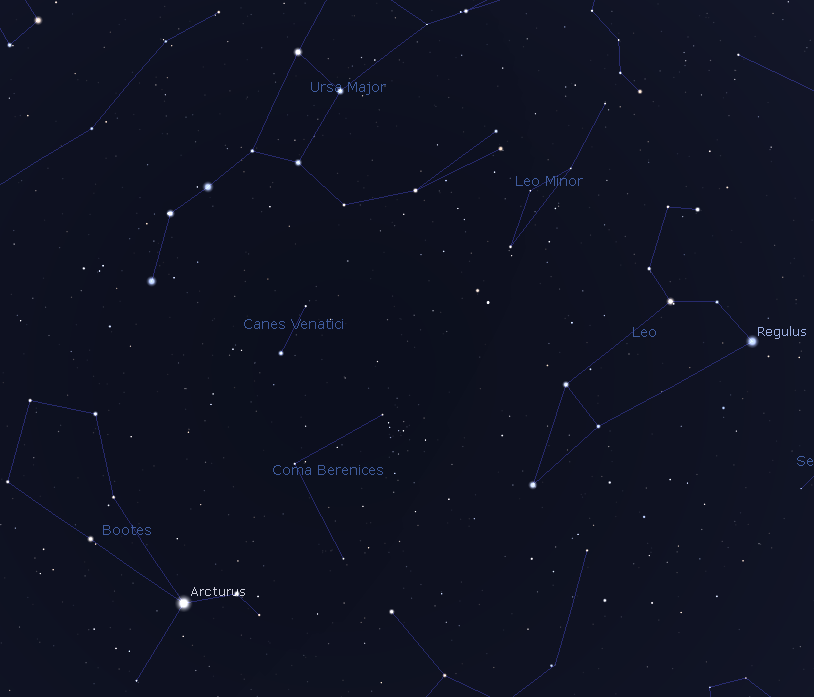
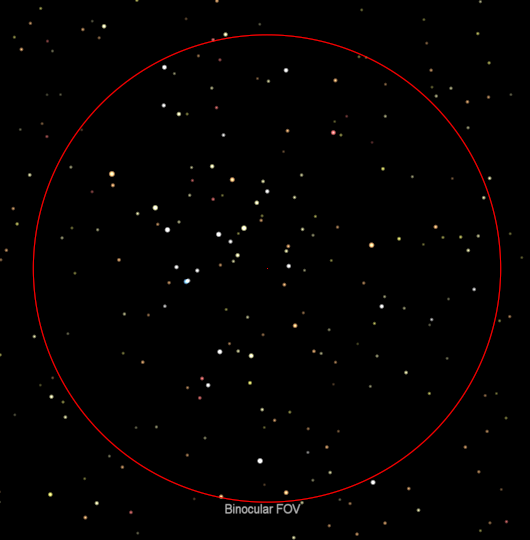
Do not confuse the Coma Berenices star cluster (Melotte 111 and Collinder 256) with the Coma Cluster (actually a supercluster of galaxies up to 300 million light years away) in the northern part of the constellation. The Coma Cluster contains upwards of 10,000 galaxies.
Ephemeris: 05/06/2024 – The star Arcturus: Not from around here
This is Ephemeris for Monday, May 6th. Today the Sun will be up for 14 hours and 29 minutes, setting at 8:54, and it will rise tomorrow at 6:23. The Moon, 1 day before new, will rise at 5:53 tomorrow morning.
Arcturus, a red giant star in the constellation of Boötes the herdsman, is about two thirds the way up the sky in the east-southeast at 10 pm. It’s one of the earliest stars to appear in twilight, being nearly tied in brightness with Vega, a white star low in the northeast. A pointer to Arcturus is the handle of the Big Dipper, following the arc of the handle to Arcturus. Though only 37 light years away, it’s not from around here. It’s passing through the galactic disk from north to south. Arcturus is about 7 billion years old, and is about 8% more massive than our Sun. It appears to be starting its red giant phase, after running out of hydrogen to fuse into helium in its core, and is beginning to fuse the helium. It’s 25 times the size of the Sun and 170 times brighter, and a preview of our Sun when it gets that old.
The astronomical event times given are for the Traverse City/Interlochen area of Michigan (EDT, UT–4 hours). They may be different for your location.
Addendum

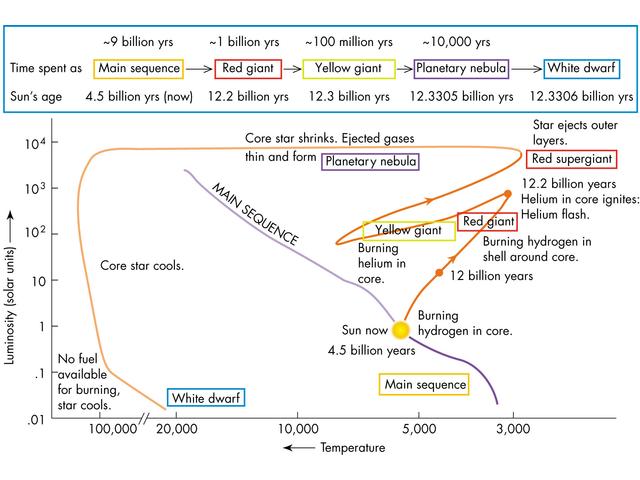
* Hertzsprung-Russell Diagram of a star’s surface (photosphere) temperature vs luminosity. The Main Sequence is where a star lives when it is burning hydrogen, and spends most of its life.
Ephemeris: 05/02/2024 – All about the constellation of Boötes and Ursa Major
This is Ephemeris for Thursday, May 2nd. Today the Sun will be up for 14 hours and 19 minutes, setting at 8:49, and it will rise tomorrow at 6:29. The Moon, 1 day past last quarter, will rise at 4:27 tomorrow morning.
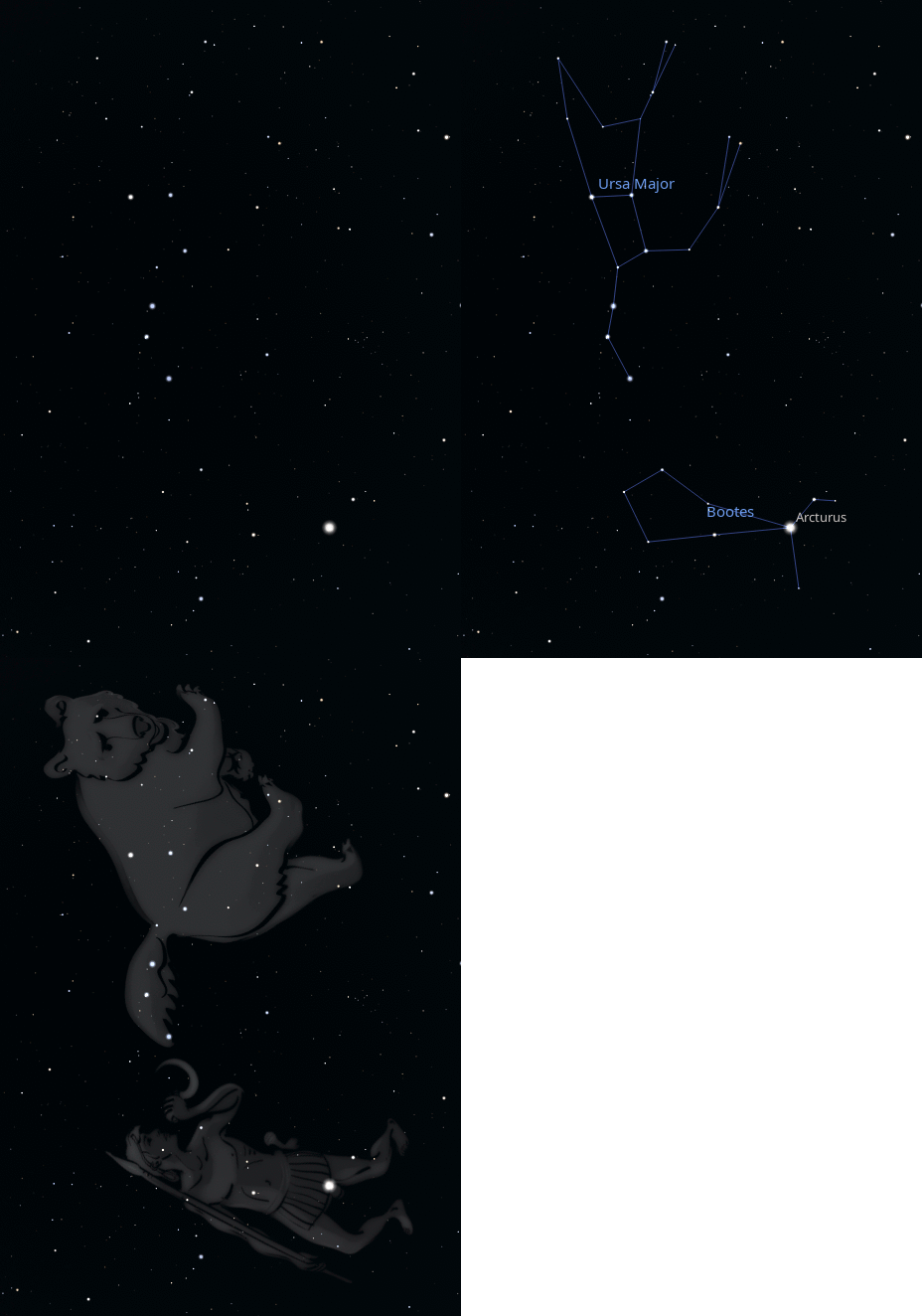
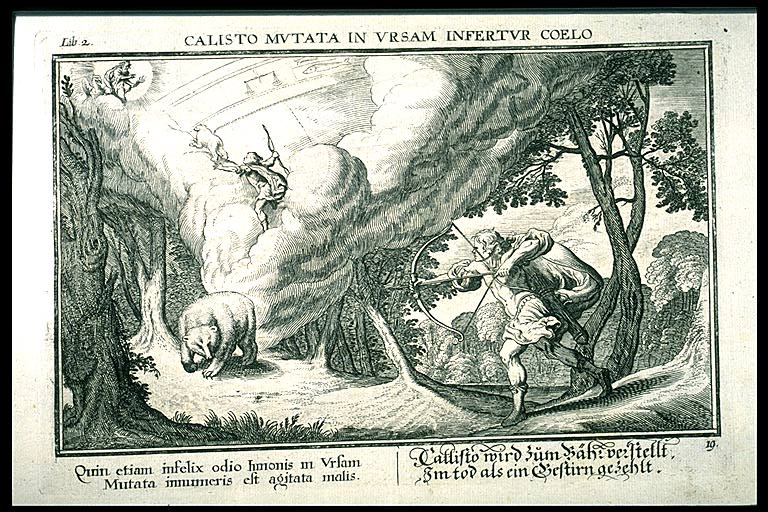
Seen in the east at 10:30 p.m. tonight is the kite shaped constellation of Boötes the herdsman. The bright star Arcturus is at the bottom of the kite to the right. It is pointed to by the arc of the handle of the Big Dipper, higher in the east. Boötes represents a young hunter named Arcas, son of Callisto, a beautiful young lady who had the misfortune of being loved by Zeus the chief of the Greek gods. Zeus’ wife Hera, found out about it, and since she couldn’t punish Zeus, turned the poor woman into a bear. Arcas, many years later, unaware of the events surrounding his mother’s disappearance was about to kill the bear when Zeus intervened and placed them both in the sky to save her, as Arcas still pursues her across the sky nightly.
The astronomical event times given are for the Traverse City/Interlochen area of Michigan (EDT, UT–4 hours). They may be different for your location.
Addendum
Ephemeris: 05/01/2024 – Where are all naked eye planets?
This is Bob Moler with Ephemeris for Wednesday, May 1st. Today the Sun will be up for 14 hours and 16 minutes, setting at 8:48, and it will rise tomorrow at 6:30. The Moon, at last quarter today, will rise at 4:03 tomorrow morning.
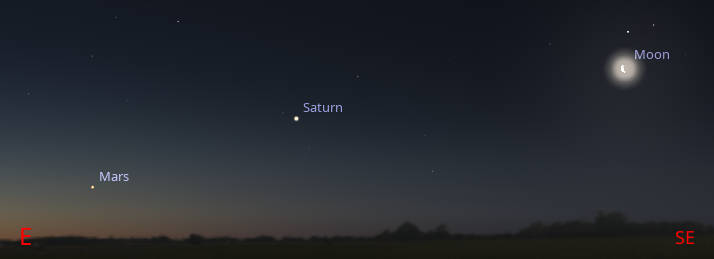
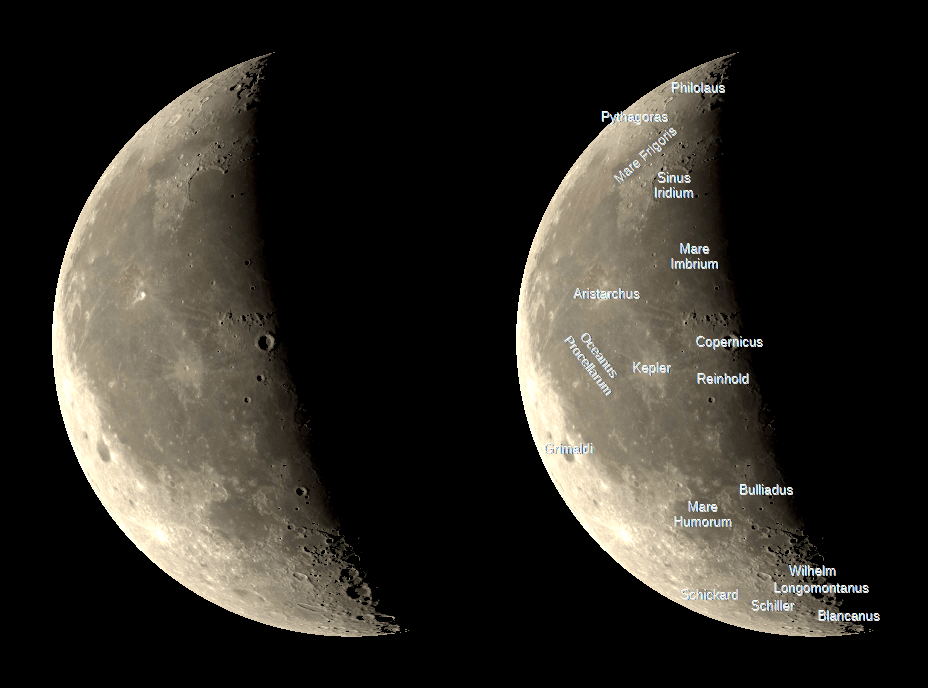
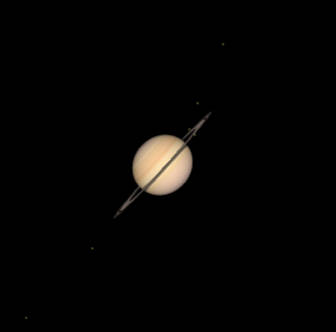
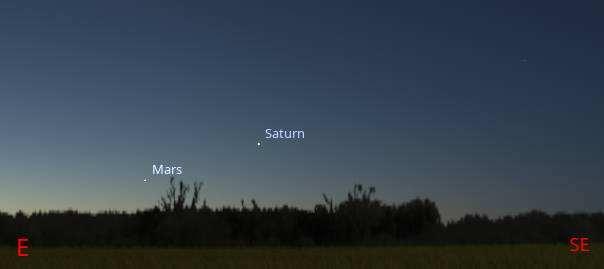
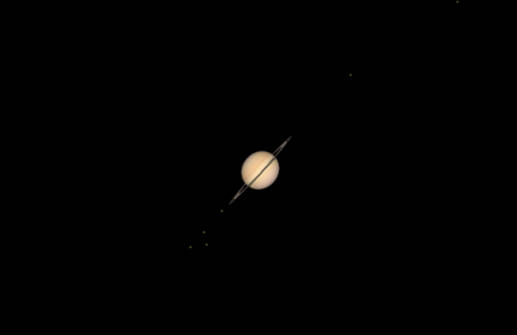
Let’s find out where the naked-eye planets have wandered off to this week, and see what planets are left. Jupiter now is too close to the direction of the Sun to be seen. It will set at 9:49 pm. It will move to be in conjunction with the Sun on the 18th of this month and by late July may be visible in the morning sky in twilight. By 5:30 tomorrow morning, about an hour before sunrise, the Moon, Saturn and Mars will be visible low and spread out from the southeast to east. The fat waning crescent Moon will be highest in the southeast and to the left of it, and a bit lower, will be Saturn. Farther to the east, and lower yet will be dimmer Mars. In telescopes, Saturn will look fairly different this year and next with its rings nearly edge on to us.
The astronomical event times given are for the Traverse City/Interlochen area of Michigan (EDT, UT–4 hours). They may be different for your location.
Addendum
Ephemeris: 04/30/2024 – Previewing May Skies
This is Ephemeris for Tuesday, April 30th. Today the Sun will be up for 14 hours and 13 minutes, setting at 8:47, and it will rise tomorrow at 6:31. The Moon, 1 day before last quarter, will rise at 3:34 tomorrow morning.
The merry month of May starts tomorrow. Daylight hours in the Interlochen/Traverse City area will increase from 14 hours and 16 minutes tomorrow to 15 hours 20 minutes on the 31st. The altitude, or angle, of the Sun above the southern horizon at local noon will ascend from 60 degrees tomorrow to 67 degrees at month’s end. The altitude of the Sun in the Straits area will be a degree lower than that, but the daylight hours will be a few minutes longer. The evening sky in May is devoid of the Milky Way which nearly rings the horizon, so during this time we are looking out the thin side of the Milky Way towards intergalactic space. There is the Virgo cluster of galaxies, some of which are visible in decent size amateur telescopes.
The astronomical event times given are for the Traverse City/Interlochen area of Michigan (EDT, UT–4 hours). They may be different for your location.
Addendum
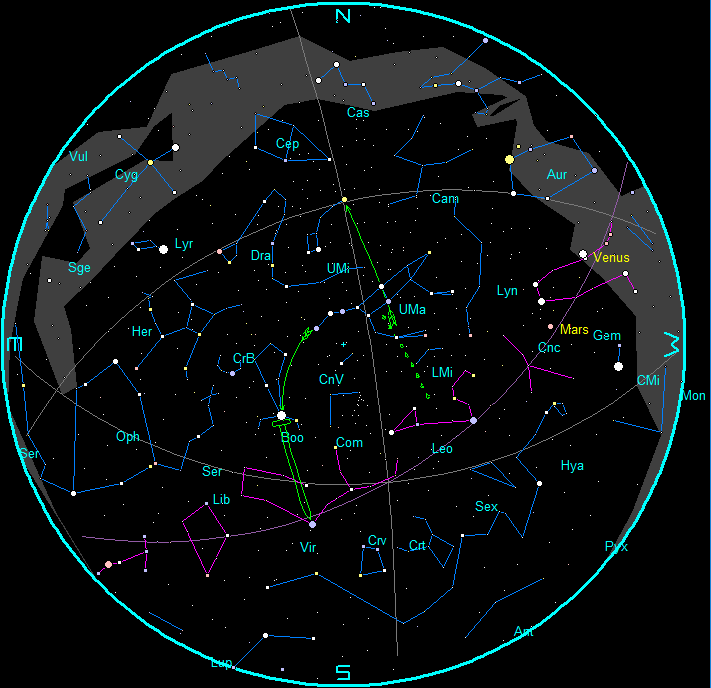
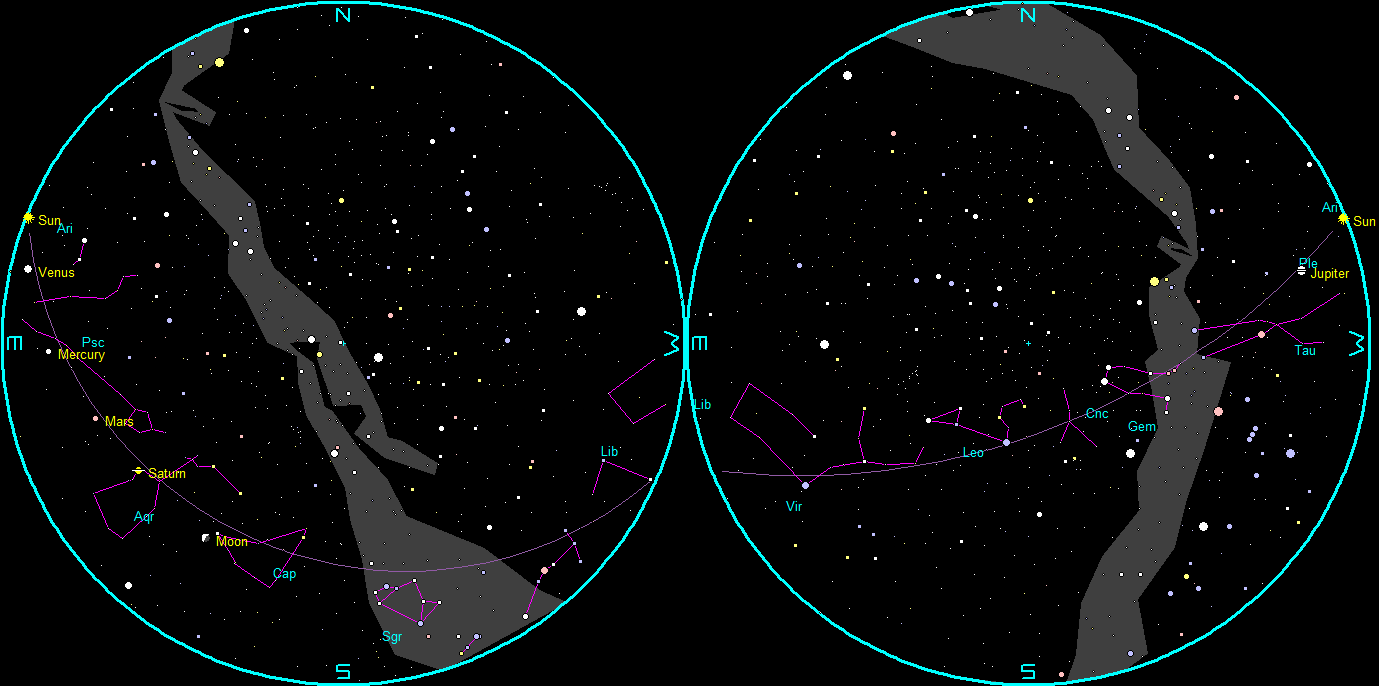
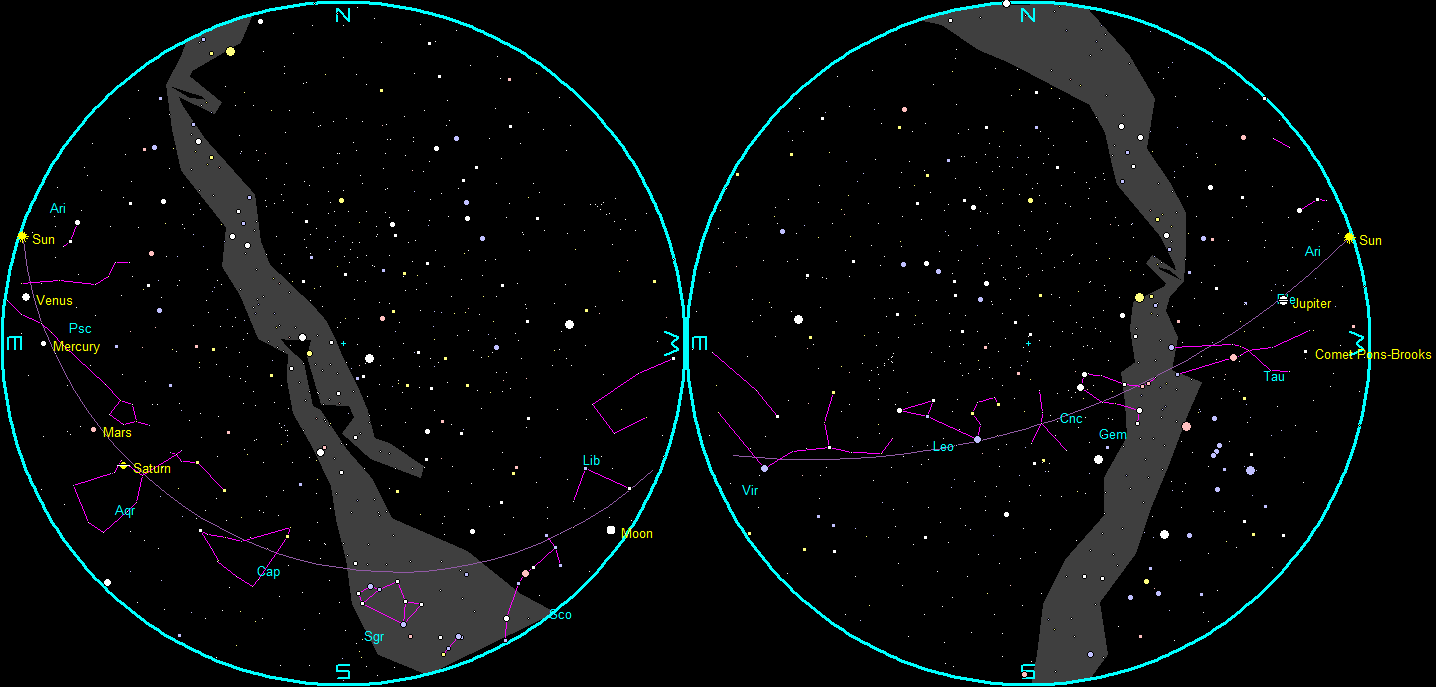
May Evening Star Chart
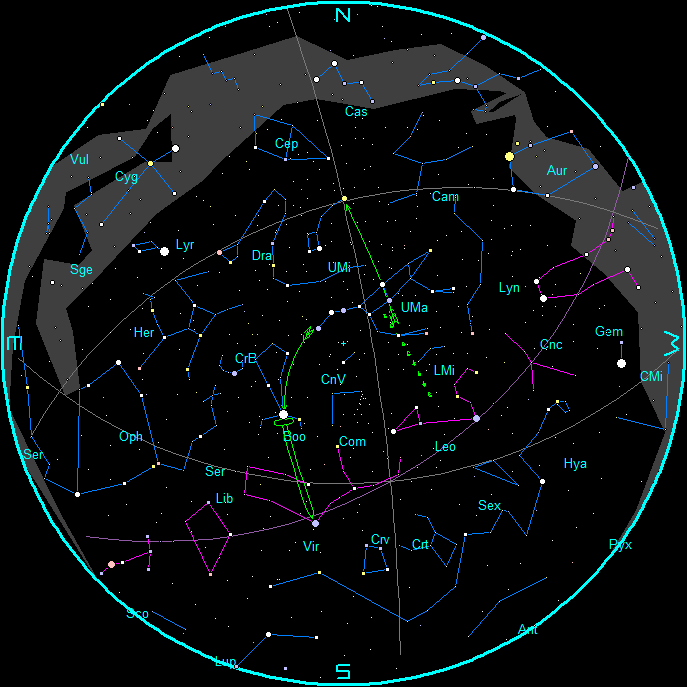
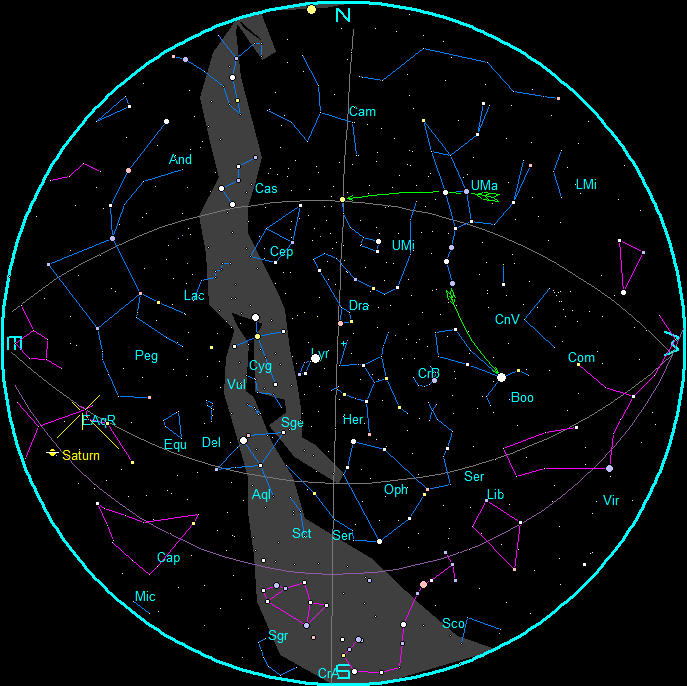
The planets and stars are plotted for the 15th at 11 p.m. EDT in the evening and 4 a.m. for the morning chart. These are the chart times. Note that Traverse City is located approximately 45 minutes behind our time meridian, West 75° longitude. (An hour 45 minutes behind our daylight saving time meridian during EDT). To duplicate the star positions on a planisphere you may have to set it to 1 hour 45 minutes earlier than the current time.
Note, the chart times of 11 p.m. and 4 a.m. are for the 15th. For each week before the 15th, add ½ hour (28 minutes if you’re picky). For each week after the 15th, subtract ½ hour or 28 minutes. The planet positions are updated each Wednesday on this blog. For planet positions on dates other than the 15th, check the Wednesday planet posts on this blog for weekly positions.
May Morning Star Chart
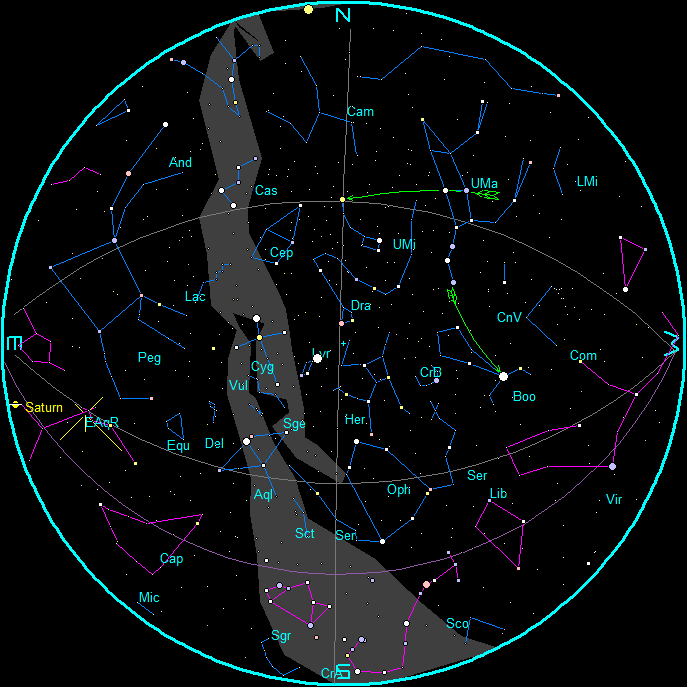
For a list of constellation names to go with the abbreviations, click here.
- Pointer stars at the front of the bowl of the Big Dipper point to Polaris, the North Star.
- Leaky dipper drips on Leo
- Follow the arc of the handle of the Big Dipper to the star Arcturus, and
- Extend like a spike to Spica,
- EaqR is the radiant of the Eta Aquariid meteor shower that peaks on the 5th.
Twilight Limits, Nautical and Astronomical
| EDT | |||||||
| Morning | Twilight | Evening | Twilight | Dark | Night | Moon | |
| Date | Astro. | Nautical | Nautical | Astro. | Start | End | Illum. |
| 2024-05-01 | 4h36m | 5h20m | 22h03m | 22h47m | 22h47m | 3h34m | 0.42 |
| 2024-05-02 | 4h34m | 5h19m | 22h04m | 22h49m | 22h49m | 4h03m | 0.31 |
| 2024-05-03 | 4h32m | 5h17m | 22h06m | 22h51m | 22h51m | 4h27m | 0.21 |
| 2024-05-04 | 4h29m | 5h15m | 22h08m | 22h53m | 22h53m | 4h29m | 0.12 |
| 2024-05-05 | 4h27m | 5h13m | 22h09m | 22h55m | 22h55m | 4h27m | 0.05 |
| 2024-05-06 | 4h25m | 5h12m | 22h11m | 22h57m | 22h57m | 4h25m | 0.01 |
| 2024-05-07 | 4h23m | 5h10m | 22h12m | 22h59m | 22h59m | 4h23m | 0.00 |
| 2024-05-08 | 4h21m | 5h08m | 22h14m | 23h01m | 23h01m | 4h21m | 0.02 |
| 2024-05-09 | 4h19m | 5h07m | 22h15m | 23h03m | 23h30m | 4h19m | 0.06 |
| 2024-05-10 | 4h17m | 5h05m | 22h17m | 23h05m | – | 4h17m | 0.12 |
| 2024-05-11 | 4h15m | 5h04m | 22h18m | 23h07m | 0h38m | 4h15m | 0.20 |
| 2024-05-12 | 4h13m | 5h02m | 22h20m | 23h09m | 1h32m | 4h13m | 0.28 |
| 2024-05-13 | 4h11m | 5h01m | 22h21m | 23h11m | 2h13m | 4h11m | 0.38 |
| 2024-05-14 | 4h09m | 4h59m | 22h23m | 23h13m | 2h44m | 4h09m | 0.47 |
| 2024-05-15 | 4h07m | 4h58m | 22h24m | 23h15m | 3h09m | 4h07m | 0.57 |
| 2024-05-16 | 4h05m | 4h56m | 22h26m | 23h17m | 3h28m | 4h05m | 0.66 |
| 2024-05-17 | 4h03m | 4h55m | 22h27m | 23h19m | 3h46m | 4h03m | 0.75 |
| 2024-05-18 | 4h01m | 4h53m | 22h29m | 23h21m | – | – | 0.82 |
| 2024-05-19 | 3h59m | 4h52m | 22h30m | 23h23m | – | – | 0.89 |
| 2024-05-20 | 3h58m | 4h51m | 22h32m | 23h25m | – | – | 0.94 |
| 2024-05-21 | 3h56m | 4h49m | 22h33m | 23h27m | – | – | 0.98 |
| 2024-05-22 | 3h54m | 4h48m | 22h35m | 23h29m | – | – | 1.00 |
| 2024-05-23 | 3h52m | 4h47m | 22h36m | 23h31m | – | – | 1.00 |
| 2024-05-24 | 3h51m | 4h46m | 22h37m | 23h32m | – | – | 0.97 |
| 2024-05-25 | 3h49m | 4h45m | 22h39m | 23h34m | 23h34m | – | 0.92 |
| 2024-05-26 | 3h47m | 4h44m | 22h40m | 23h36m | 23h36m | 0h07m | 0.86 |
| 2024-05-27 | 3h46m | 4h43m | 22h41m | 23h38m | 23h38m | 0h57m | 0.77 |
| 2024-05-28 | 3h44m | 4h42m | 22h43m | 23h40m | 23h40m | 1h36m | 0.67 |
| 2024-05-29 | 3h43m | 4h41m | 22h44m | 23h41m | 23h41m | 2h07m | 0.56 |
| 2024-05-30 | 3h42m | 4h40m | 22h45m | 23h43m | 23h43m | 2h31m | 0.45 |
| 2024-05-31 | 3h40m | 4h39m | 22h46m | 23h45m | 23h45m | 2h53m | 0.33 |
The twilight calendar was generated using Cartes du Ciel (Sky Charts), with some corrections.
See my blog post: Twilight Zone for the definitions of the different periods of twilight here: https://bobmoler.wordpress.com/2018/09/27/.
NASA Calendar of Planetary Events
May  1  We    Venus: 9.2° W
     1  We   7:27 am  Last Quarter
     3  Fr   6:26 pm  Moon-Saturn:  .8° N
     4  Sa   3:58 pm  Eta Aquarid Shower: ZHR = 60
     4  Sa  10:26 pm  Moon-Mars:  .2° S
     5  Su   5:54 pm  Moon Ascending Node
     5  Su   6:11 pm  Moon Perigee: 363200 km
     6  Mo   4:25 am  Moon-Mercury: 3.8° S
     7  Tu  11:22 pm  New Moon
     9  Th   4:59 pm  Mercury Elongation: 26.4° W
    11  Sa   3:45 am  Moon North Dec.: 28.5° N
    12  Su   6:17 pm  Moon-Pollux: 1.7° N
    13  Mo   6:45 am  Uranus Conjunction
    13  Mo   6:47 pm  Moon-Beehive: 3.7° S
    15  We   7:48 am  First Quarter
    17  Fr   3:00 pm  Moon Apogee: 404600 km
    18  Sa   2:02 pm  Jupiter Conjunction
    19  Su  12:35 pm  Moon Descending Node
    20  Mo   5:20 am  Moon-Spica: 1.5° S
    23  Th   9:53 am  Full Moon
    23  Th  10:31 pm  Moon-Antares:  .4° S
    25  Sa   3:58 pm  Moon South Dec.: 28.4° S
    30  Th   1:13 pm  Last Quarter
    31  Fr   4:01 am  Moon-Saturn:  .4° N
Jun  1  Sa            Venus:  .9° W
Sky Events Calendar by Fred Espenak and Sumit Dutta (NASA’s GSFC),
http://eclipse.gsfc.nasa.gov/SKYCAL/SKYCAL.html.
Sun and Moon Rising and Setting Events
LU                Ephemeris of Sky Events for Interlochen/TC
May, 2024    Local time zone: EDT
+-----------------------------------------------------------------------+
| DATE |  SUN     SUN  DAYLIGHT|   TWILIGHT*    |MOON  RISE OR    ILLUM |
|      |  RISE    SET    HOURS |  END    START  |PHASE SET** TIME FRACTN|
+=======================================================================+
|Wed  1| 06:31a  08:48p  14:16 | 10:00p  05:19a |L Qtr Rise 04:03a   44%|
|Thu  2| 06:30a  08:49p  14:19 | 10:02p  05:18a |      Rise 04:27a   33%|
|Fri  3| 06:29a  08:50p  14:21 | 10:04p  05:16a |      Rise 04:48a   22%|
|Sat  4| 06:27a  08:52p  14:24 | 10:05p  05:14a |      Rise 05:08a   13%|
+------+-----------------------+----------------+-----------------------+
|Sun  5| 06:26a  08:53p  14:27 | 10:07p  05:12a |      Rise 05:29a    6%|
|Mon  6| 06:24a  08:54p  14:29 | 10:08p  05:11a |      Rise 05:53a    2%|
|Tue  7| 06:23a  08:55p  14:32 | 10:10p  05:09a |New   Set  08:50p    0%|
|Wed  8| 06:22a  08:56p  14:34 | 10:11p  05:07a |      Set  10:12p    1%|
|Thu  9| 06:21a  08:58p  14:37 | 10:13p  05:06a |      Set  11:30p    5%|
|Fri 10| 06:19a  08:59p  14:39 | 10:15p  05:04a |      Set  12:37a   10%|
|Sat 11| 06:18a  09:00p  14:41 | 10:16p  05:02a |      Set  01:31a   18%|
+------+-----------------------+----------------+-----------------------+
|Sun 12| 06:17a  09:01p  14:44 | 10:18p  05:01a |      Set  02:12a   26%|
|Mon 13| 06:16a  09:02p  14:46 | 10:19p  04:59a |      Set  02:44a   36%|
|Tue 14| 06:15a  09:03p  14:48 | 10:21p  04:58a |      Set  03:08a   45%|
|Wed 15| 06:13a  09:05p  14:51 | 10:22p  04:56a |F Qtr Set  03:28a   55%|
|Thu 16| 06:12a  09:06p  14:53 | 10:24p  04:55a |      Set  03:45a   64%|
|Fri 17| 06:11a  09:07p  14:55 | 10:25p  04:53a |      Set  04:01a   73%|
|Sat 18| 06:10a  09:08p  14:57 | 10:27p  04:52a |      Set  04:17a   81%|
+------+-----------------------+----------------+-----------------------+
|Sun 19| 06:09a  09:09p  14:59 | 10:28p  04:51a |      Set  04:33a   88%|
|Mon 20| 06:08a  09:10p  15:01 | 10:29p  04:49a |      Set  04:52a   93%|
|Tue 21| 06:07a  09:11p  15:03 | 10:31p  04:48a |      Set  05:14a   97%|
|Wed 22| 06:07a  09:12p  15:05 | 10:32p  04:47a |      Set  05:42a  100%|
|Thu 23| 06:06a  09:13p  15:07 | 10:34p  04:46a |Full  Rise 09:58p  100%|
|Fri 24| 06:05a  09:14p  15:09 | 10:35p  04:44a |      Rise 11:06p   98%|
|Sat 25| 06:04a  09:15p  15:10 | 10:36p  04:43a |      Rise 12:07a   93%|
+------+-----------------------+----------------+-----------------------+
|Sun 26| 06:03a  09:16p  15:12 | 10:38p  04:42a |      Rise 12:57a   87%|
|Mon 27| 06:03a  09:17p  15:14 | 10:39p  04:41a |      Rise 01:36a   79%|
|Tue 28| 06:02a  09:18p  15:15 | 10:40p  04:40a |      Rise 02:06a   69%|
|Wed 29| 06:01a  09:19p  15:17 | 10:41p  04:39a |      Rise 02:31a   58%|
|Thu 30| 06:01a  09:20p  15:18 | 10:43p  04:38a |L Qtr Rise 02:52a   47%|
|Fri 31| 06:00a  09:21p  15:20 | 10:44p  04:37a |      Rise 03:12a   35%|
+-----------------------------------------------------------------------+
* Nautical Twilight
** Moonrise or moonset, whichever occurs between sunset and sunrise
Ephemeris: 04/29/2024 – Corona Borealis, the Northern Crown
This is Ephemeris for Monday, April 29th. Today the Sun will be up for 14 hours and 11 minutes, setting at 8:46, and it will rise tomorrow at 6:33. The Moon, 2 days before last quarter, will rise at 2:58 tomorrow morning.
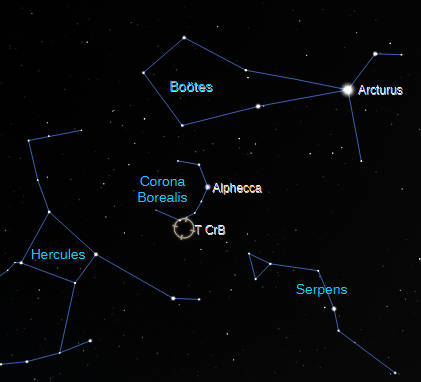
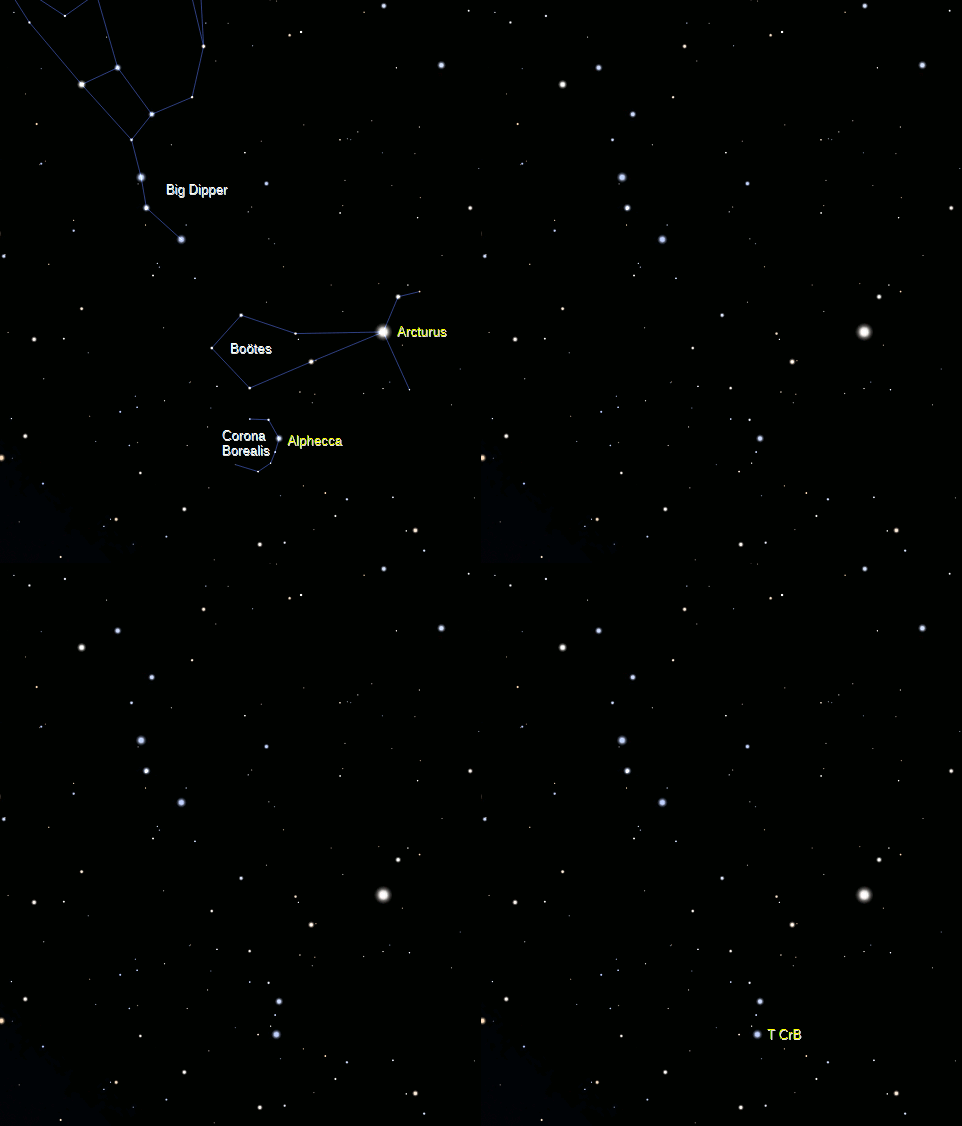
About a third of the way up the sky in the east at 10 p.m. can be found a small but easily spotted constellation of Corona Borealis, the Northern Crown. It is located just below the kite shaped constellation of Boötes, with its bright star Arcturus at the right. The Northern Crown is a three-quarter circle of stars, like a tiara, with a brighter star Alphecca at the bottom. Alphecca in Arabic means “The bright star of the broken ring of stars”, which is an accurate description of it. Check it out now for later this year we expect to have a bright star appear just below it. That star is T Coronae Borealis a recurrent Nova or exploding star. They occur when a white dwarf star is orbiting with a large red giant star and accumulating gas from that red giant star until it explodes.
The astronomical event times given are for the Traverse City/Interlochen area of Michigan (EDT, UT–4 hours). They may be different for your location.
Addendum
Ephemeris: 04/25/2024 – Finding Hydra, the longest constellation
This is Ephemeris for Thursday, April 25th. Today the Sun will be up for 14 hours exactly, setting at 8:41, and it will rise tomorrow at 6:39. The Moon, 2 days past full, will rise at 11:00 this evening.
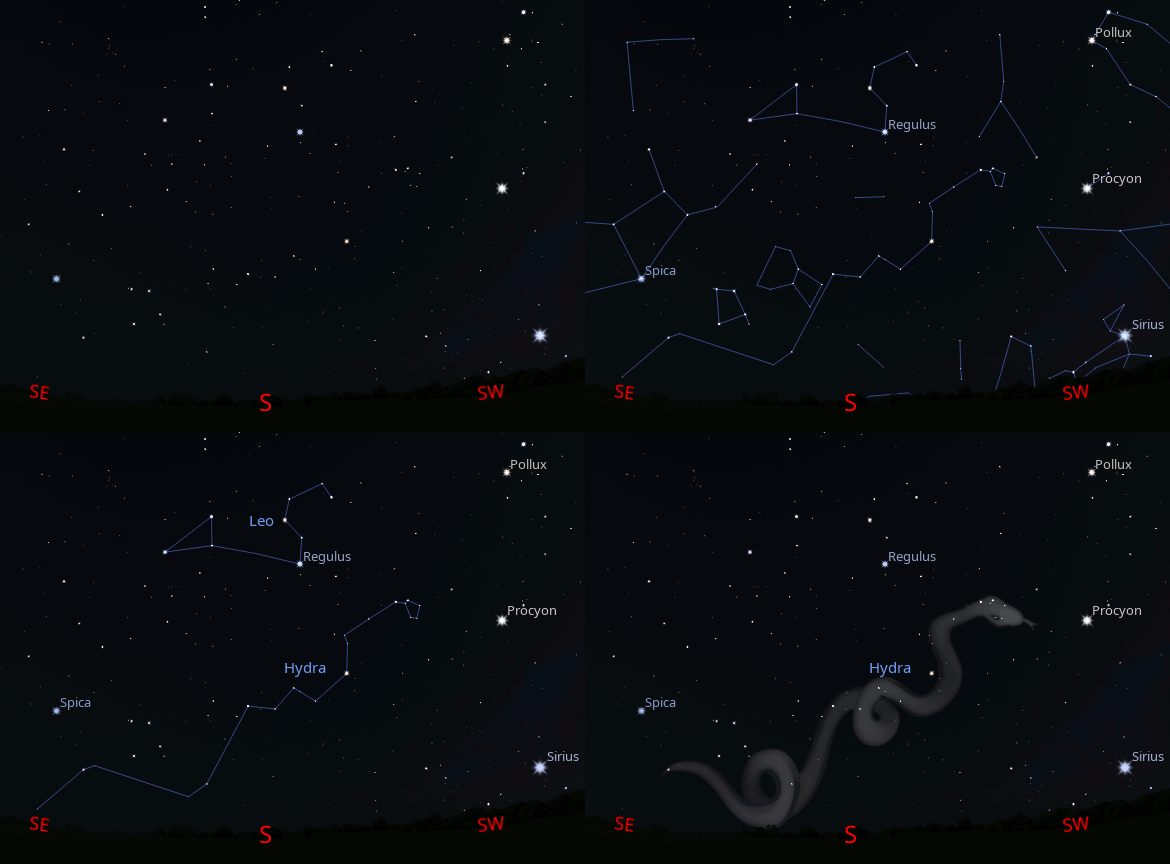
Stretching from midway up the sky in the southwest to low in the southeast at 10 p.m. can be found the constellation of Hydra the water snake, the longest constellation of all. Unlike the monster of the same name that Hercules slew, this Hydra has but one head, which is its most distinctive part. The head of Hydra is located between the bright stars Procyon in the southwest. Which is above the brighter star Sirius low in the sky, and Regulus in Leo the lion, higher in the south. Hydra’s head is a small but distinctive group of 6 stars that make a drooping loop to the right. The rest of Hydra wends its way in a reasonably straight line down to the southeastern horizon.
The astronomical event times given are for the Traverse City/Interlochen area of Michigan (EDT, UT–4 hours). They may be different for your location.
Addendum
Ephemeris: 04/24/2024 – Where have the naked-eye planets wandered off to this week?
This is Bob Moler with Ephemeris for Wednesday, April 24th. Today the Sun will be up for 13 hours and 57 minutes, setting at 8:39, and it will rise tomorrow at 6:41. The Moon, 1 day past full, will rise at 9:49 this evening.
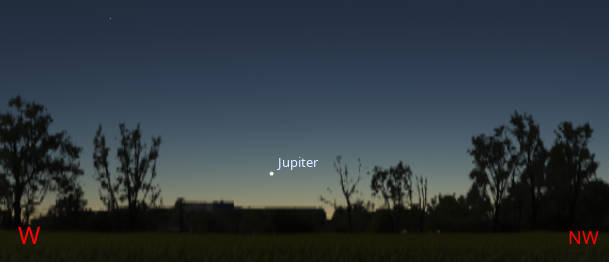
Let’s find out where the naked-eye planets have wandered off to this week, and see what planets are left. Jupiter, looking not-so bright in twilight is very low and in the west. It will set at 10:23 pm. I’m giving Jupiter another week of evening visibility. Comet 12P/Pons-Brooks now only visible to observers south of the equator. In the morning, Mars and Saturn will be close together in the east southeastern sky at 6 am. They will be fighting the bright morning twilight and low altitude then. Saturn will be difficult to see right now in the twilight. Mars will be harder to spot. Saturn will look fairly different this year and next with its rings nearly edge on to us. They will look more like a line through the planet.
The astronomical event times given are for the Traverse City/Interlochen area of Michigan (EDT, UT–4 hours). They may be different for your location.
Addendum
Ephemeris: 04/23/2024 – We are awaiting a bright nova
This is Bob Moler with Ephemeris for Tuesday, April 23rd. Today the Sun will be up for 13 hours and 54 minutes, setting at 8:38, and it will rise tomorrow at 6:42. The Moon, at full today, will rise at 8:40 this evening.
There is an event rarer than the appearance of Halley’s Comet. It’s an explosion of a star called T Coronae Borealis which means it’s in the constellation of the Northern Crown. Corona is a semicircle of stars located left of the bright star Arcturus, pointed to by the handle of the Big Dipper. The letter T means that it’s a variable star. It is something called a cataclysmic variable, or recurrent nova, and it blows up about every 80 years. The last time it did this was in 1946. Its brightness dips about 11 months before it goes kablooey. That dip has already happened. The star doesn’t destroy itself. It’s actually a white dwarf that’s siphoning off gases from a red giant star that it’s orbiting. When enough hydrogen gets accumulated, it ignites.
The astronomical event times given are for the Traverse City/Interlochen area of Michigan (EDT, UT–4 hours). They may be different for your location.
Addendum
Ephemeris: 04/18/2024 – Looking at the gibbous Moon tonight
This is Ephemeris for Thursday, April 18th. Today the Sun will be up for 13 hours and 39 minutes, setting at 8:32, and it will rise tomorrow at 6:50. The Moon, 3 days past first quarter, will set at 5:23 tomorrow morning.
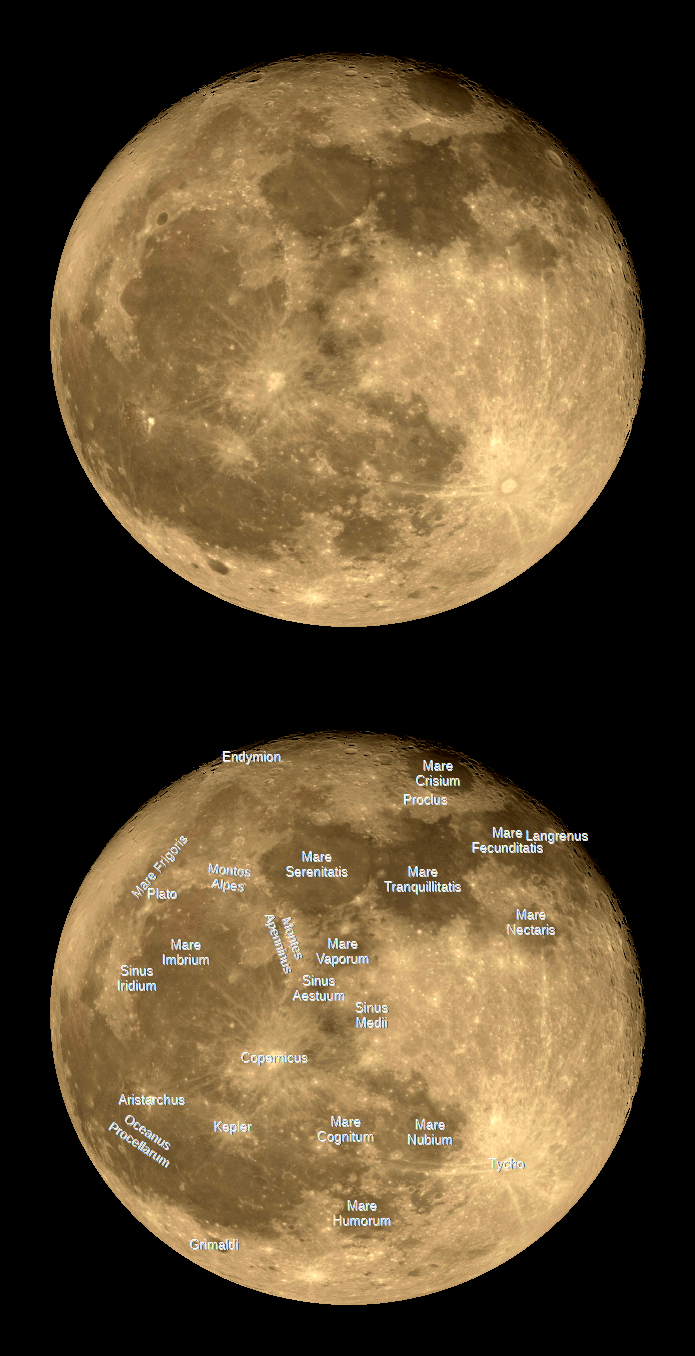
At 10 tonight the gibbous moon will be bright. At the moon’s left edge, just coming into sunlight will be what looks like a large half crater at the edge of the lunar sea called Mare Imbrium, the Sea of Showers. That feature is Sinus Iridium, or Bay of Rainbows. The arc of its mountainous edge is rainbow shaped, but it is as colorless as the rest of the Moon. The crater Copernicus, left of the Moon’s center sports few shadows and appears mostly as a bright spot surrounded by its ray system of ejecta craters that appear bright when the sun is high in their sky. At the south end of the Moon are the lunar highlands, bright, rugged and covered by large, mostly very old craters. The largest of these craters is Clavius, named for Christophorus Clavius who helped establish our Gregorian Calendar.
The astronomical event times given are for the Traverse City/Interlochen area of Michigan (EDT, UT–4 hours). They may be different for your location.
Addendum
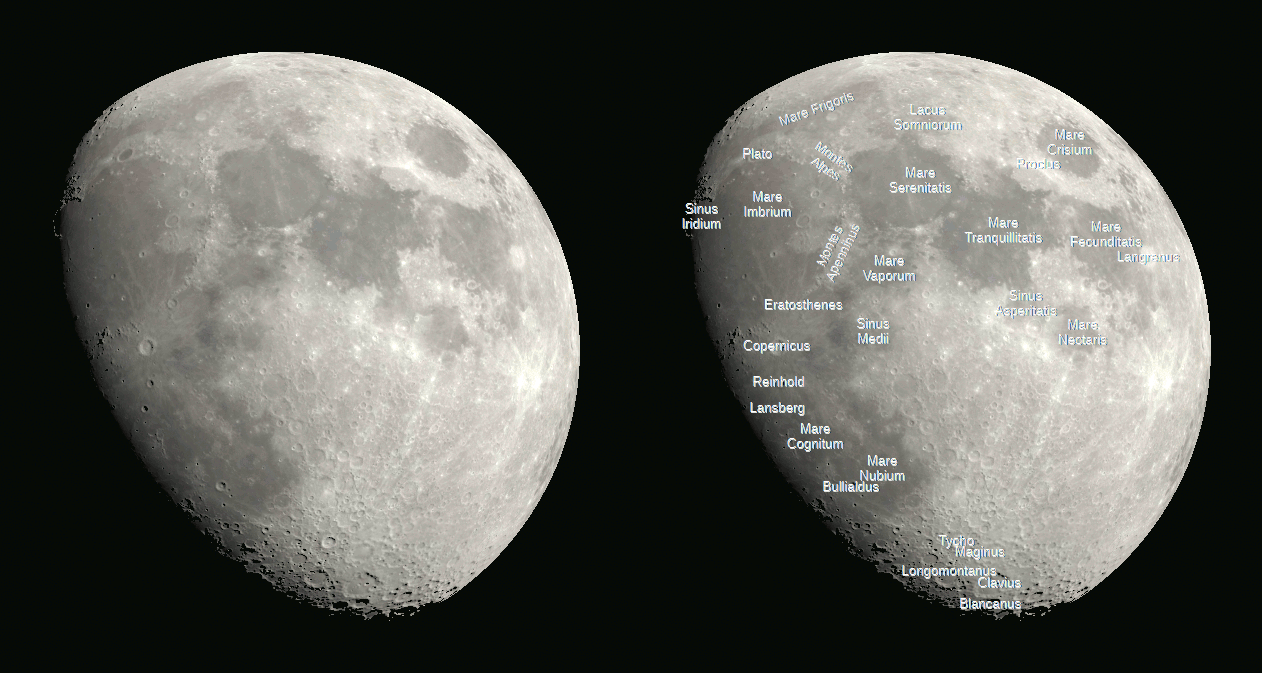
Translations of some lunar feature names according to Virtual Moon Atlas
Lacus Somniorum – Lake of Dreams
Mare Crisium – Sea of Crises
Mare Fecunditatis – Sea of Fertility
Mare Frigoris – Sea of Cold
Mare Imbrium – Sea of Showers
Mare Nectaris – Sea of Nectar
Mare Nubium – Sea of Clouds
Mare Serenitatis – Sea of Serenity
Mare Tranquillitatis – Sea of Tranquility
Mare Vaporum – Sea of Vapors
Montes Alpes – Alps Mountains
Montes Apenninus – Apennines Mountains
Sinus Asperitatis – Bay of Roughness
Sinus Iridium – Bay of Rainbows
Sinus Medii – Bay of the Center
Craters are generally named after astronomers, people of science, or explorers and are often Latinized.
Note that Mare is pronounced Mar-é.